Backcountry Pilot • Ultimate Backcountry Airplane

Ultimate Backcountry Airplane

Aircraft building and project-level overhaul forum -- Kitplanes, experimental amateur-built, homebuilding, or even restoration of certified aircraft.
60 postsPage 2 of 31, 2, 3

Re: Ultimate Backcountry Airplane

I agree the wing is something that needs to be meticulously thought out. with LE slats you could really have some awesome slow flight characteristics.

The helio courier H-295 could fly at 38 knts at 3800lbs and still be fully controllable. :shock:
cstolaircraft offline
User avatar
Posts: 523
Joined: Wed Sep 29, 2010 12:50 pm
Location: Blackwell, Mo
Mission Pilot in training. C-170B N8098A.
But they that wait upon the Lord shall renew their strength; they shall mount up on wings as eagles... Isaiah 40:31

Re: Ultimate Backcountry Airplane

highroad wrote:Decent cruise performance with Bushwheels is a must. Half wheel pants, semi retractable gear.....a big challenge, but if we are dreaming.......

Looking forward to hearing more about this.


Ahh I love this kind of topic.

I think streamlining and "free" speed is the biggest possible advantage with composite design. Bushwheels are a given, like cooling drag, but you can still streamline the rest and save precious knots elsewhere.
Minimise drag with a streamlined composite form.

I am sorely tempted by the 4 retracting slats on the Helio range, I have been lusting after them and dreaming of a retro-fit using lightweight composite materials.
Of course there is always a catch - they were apparently a big part of the reason the Courier developed a reputation as a maintenance hog. Three slats does not maketh the landing configuration. Combined with that geared G- series engine. One seemingly bad idea in an otherwise "perfect" bush plane.

Another afterthought, the bigger the cargo door - the heavier the structure which surrounds and supports it, and transfers the loads. The lightest door is no door at all.
Battson offline
Knowledge Base Author
User avatar
Posts: 1810
Joined: Wed May 09, 2012 11:19 pm
Location: New Zealand
Aircraft: Bearhawk 4-place
IO-540 260hp

Re: Ultimate Backcountry Airplane

mtv wrote:You've discussed fuselage, landing gear, doors, etc, but haven't mentioned the wing. For a good backcountry airplane, it really is all about the wing. Doors are convenience items, and important, but using the right airfoil and wing planform is essential to good performance.

Also, the design of control surfaces and wing devices are equally critical. Fowler type flaps are without doubt an important component, in my opinion. And, generally, the bigger the better. Aerodynamically balanced ailerons, with a selectable droop mechanism can provide additional lift at high AOA, while still minimizing stick forces.

Leading edge slats MAY be a good addition, though again the design of these devices may create substantial drag. The Helio slats are excellent, but complex and heavy. The Wayne Mackey slats are much simpler and lighter, but I suspect the drag coefficient on these at the speeds you're describing would be huge.

Do you go with a strut braced wing, or a cantilevered wing, like the Helio? Big differences in structures there as well. Are you considering a carbon fiber wing? That could reduce weight considerably, and offer virtually unlimited fuel tankage.

Speaking of which, I'd highly recommend incorporating larger tanks than you noted. 70 gallons will go a long ways with a diesel, no doubt, but I've never met an airplane that had too big a fuel capacity, particularly when you start exploring some of the remote parts of the world. You can always fly with partial fuel, but carrying extra fuel in cans or barrels, etc, is a huge pain in the arse, and isn't the safest way to haul fuel. Better to tanker it internally. This from a pilot who has moved a little over 1000 barrels of avgas, jet fuel, etc, as well as several hundred 100 pound propane cylinders in beavers, cessnas and a goose. Trust me, move barrels in airplanes just a little, and you'll never want to do so again.

Another notion, if you're planning on having to move fuel would be to build or have built, a separate tank that can be fitted into the cargo compartment of the airplane. I had a 110 gallon tank made for a 206 to tanker fuel to a remote fuel storage facility. It was limited to 110 gallons, since this was all done on floats, so the useful load was limiting. Nevertheless, this system was really slick, with a small electric pump and hose to transfer the fuel, etc. Of course, this requires that you have some sort of fuel storage capability in the remote area you're planning on storing fuel at, like a cabin, remote strip, lake, etc.

On the tail surfaces, you may want to consider building a horizontal tail surface that has an asymmetrical airfoil design. That and a trimmable horizontal stabilizer would help with both the slow flight and high speed capabilities of the plane. I'd adjust that horizontal stabilizer with a jackscrew....probably electrically activated.

I mostly agree with your choice of doors, etc.

As to control sticks, you might find a Cessna Skycatcher and look at the stick configuration in that little airplane. I really liked that. It has two control sticks, but instead of them being mounted to the floor, they are attached up behind the instrument panel, and extend under the bottom of the panel. The geometry almost exactly matches the action of floor mounted sticks, but the floor is flat and unencumbered by the controls. It also would be really easy to remove the right (or left) side stick to fly with single controls. I only flew the Skycatcher for an hour or so, but I was really impressed by that stick arrangement.

Good luck on your project.

MTV


I did see the sky catcher stick at Oshkosh several years ago MTV. I thought the design was very clever. I haven't given that any thought, but I will.

Ultimately, I am using the Cessna 180, the PA-18 and the Lancair ES airframes as the performance benchmarks. I believe that we can achieve cub low end and nearly ES cruise performance with C180 utility with a brand new carbon fiber airframe concept.

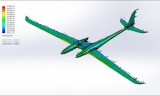
We are putting a lot of research in to the wing, building scale wing models and wind tunnel testing to plot the characteristic curves for several different configurations and find the sweet spot on the chosen arrangement. The wing will be all carbon fiber and cantilevered to eliminate wing struts. Ii have had the good fortune to be involved with the development of some of the highest performance composite airframes in existence, and cut my teeth alongside some extremely talented and practical engineers.

I will definitely not be using fixed slats, as the goal is to have the clean configuration very low drag, but we haven't ruled out retractable slats. What we have learned is that slats on the leading edge produce very high lift coefficients at high angles of attack (20 degrees or more) and double slotted fowler flaps result in pretty high lift coefficients at nearly zero angle of attack. Take a look at the Carribou in action with the double slotted flaps http://m.youtube.com/watch?v=TSjV7DQqoBA in contrast to the Mackey SQ2: http://m.youtube.com/watch?v=laFmA9bOn54 with the slats hard at work. Of course the landing speeds of these two aircraft are dramatically different, but the difference in arrangements couldn't be more obvious. The double slotted flaps will help to improve the visibility when approaching short rough stuff.

The planform will be semi elliptical and the wing area will be about 170 sq ft clean and closer to 178 sq ft with flaps extended. We are looking in to slight forward sweep to expand the cg range, but this feature is known to lead to flutter issues at high speeds. Might abandon it, but it's definitely on the table as a possibility right now

We have considered a cambered horizontal, but the drag penalty is hard to swallow. A trimming horizontal with a fairly fat airfoil is looking like the right answer. Large elevator deflections with a lot of protruding surface ahead of the hinge line to keep the forces light when off of trim is pretty attractive, as when the elevator is in trail the drag is as low as it can be.

The wing volume has the potential to hold at least a hundred gallons with a wet wing arrangement. You are right that you don't need to fly full, but 7 + hours of endurance at 140knots is a huge improvement over practically any bush rated bird in existence. 75 standard and 100 long range would be really neat.

So many things to consider...
Scolopax offline
Supporter
User avatar
Posts: 1696
Joined: Tue Sep 27, 2005 5:02 pm
Location: Nottingham
FindMeSpot URL: http://share.findmespot.com/shared/face ... 4aYqSexnZC

Re: Ultimate Backcountry Airplane

Scolopax wrote:The wing volume has the potential to hold at least a hundred gallons with a wet wing arrangement. You are right that you don't need to fly full, but 7 + hours of endurance at 140knots is a huge improvement over practically any bush rated bird in existence. 75 standard and 100 long range would be really neat.

So many things to consider...


Bush Hawk. :D
CapnMike offline
Supporter
User avatar
Posts: 842
Joined: Wed Mar 05, 2014 11:25 am
Location: Kamas, Utah and Sandpoint, Idaho
"If my wings should fail me Lord, please meet me with another pair" - Led Zeppelin
"It's all going in my report..." - CapnMike

Re: Ultimate Backcountry Airplane

The wing will be all carbon fiber and cantilevered to eliminate wing struts.
I have found wing struts to be indispensable at times for helping to turn ski planes in deep powder. Some folks here consider the cantilevered wings of the Found bush Hawk to be its main drawback during ski ops. Even so for the venerable Helio Courier. For a ski plane of the size you are proposing, give me struts.
Cool undertaking though, and most impressive.
-DP
denalipilot offline
Supporter
User avatar
Posts: 2789
Joined: Mon Oct 15, 2007 4:53 pm
Location: Denali
Aircraft: C-170B+

Re: Ultimate Backcountry Airplane

"Of course there is always a catch - they were apparently a big part of the reason the Courier developed a reputation as a maintenance hog"
In flying and maintaining my plane more than 1700 hours I find the Helio type slats to be all most maintenance free !
Doug
brown bear offline
Posts: 75
Joined: Tue Dec 30, 2008 6:49 pm
Location: kansas

Re: Ultimate Backcountry Airplane

Scolopax wrote:I will definitely not be using fixed slats, as the goal is to have the clean configuration very low drag, but we haven't ruled out retractable slats. What we have learned is that slats on the leading edge produce very high lift coefficients at high angles of attack (20 degrees or more) and double slotted fowler flaps result in pretty high lift coefficients at nearly zero angle of attack. Take a look at the Carribou in action with the double slotted flaps http://m.youtube.com/watch?v=TSjV7DQqoBA in contrast to the Mackey SQ2: http://m.youtube.com/watch?v=laFmA9bOn54 with the slats hard at work. Of course the landing speeds of these two aircraft are dramatically different, but the difference in arrangements couldn't be more obvious. The double slotted flaps will help to improve the visibility when approaching short rough stuff.

The wing volume has the potential to hold at least a hundred gallons with a wet wing arrangement. You are right that you don't need to fly full, but 7 + hours of endurance at 140knots is a huge improvement over practically any bush rated bird in existence. 75 standard and 100 long range would be really neat.

So many things to consider...


One of the things that many pilots fail to recognize is the difference in what the slats do versus what fowler flaps do for you,aerodynamically.

As you say, leading edge slats permit the wing to be driven to a very high AOA compared to a straight leading edge with no slats. The difference is huge: A conventional wing will stall at somewhere between 17 and 19 degrees AOA, whereas a slatted wing can be driven to over 25 degrees.

As you note, that kind of AOA is not useful in landing slower, because the deck angle is so dramatic, you're going to really beat up the tail structure trying to land at that kind of AOA.

BUT, to me, where the slats are VERY attractive is in preventing stalls in slow speed maneuvering and approaching in gusty winds, for example. In other words, I consider the slats to be a safety device, as opposed to a STOL device, though they obviously contribute to STOL performance.

Folder flaps, on the other hand, as you also noted, tend to lower the nose as they are deployed, and they ARE excellent STOL devices, because they dramatically reduce stall speed by increasing wing size and camber.

To me, the best of both worlds would be installed on the ultimate bush airplane: Retractable slats to provide safety at high AOA, and Fowler flaps to drive stall speed down and level the airplane on high AOA approaches.

FWIW.

MTV
mtv offline
Knowledge Base Author
User avatar
Posts: 10514
Joined: Sat Feb 25, 2006 1:47 am
Location: Bozeman

Re: Ultimate Backcountry Airplane

mtv wrote:
Scolopax wrote:I will definitely not be using fixed slats, as the goal is to have the clean configuration very low drag, but we haven't ruled out retractable slats. What we have learned is that slats on the leading edge produce very high lift coefficients at high angles of attack (20 degrees or more) and double slotted fowler flaps result in pretty high lift coefficients at nearly zero angle of attack. Take a look at the Carribou in action with the double slotted flaps http://m.youtube.com/watch?v=TSjV7DQqoBA in contrast to the Mackey SQ2: http://m.youtube.com/watch?v=laFmA9bOn54 with the slats hard at work. Of course the landing speeds of these two aircraft are dramatically different, but the difference in arrangements couldn't be more obvious. The double slotted flaps will help to improve the visibility when approaching short rough stuff.

The wing volume has the potential to hold at least a hundred gallons with a wet wing arrangement. You are right that you don't need to fly full, but 7 + hours of endurance at 140knots is a huge improvement over practically any bush rated bird in existence. 75 standard and 100 long range would be really neat.

So many things to consider...


One of the things that many pilots fail to recognize is the difference in what the slats do versus what fowler flaps do for you,aerodynamically.

As you say, leading edge slats permit the wing to be driven to a very high AOA compared to a straight leading edge with no slats. The difference is huge: A conventional wing will stall at somewhere between 17 and 19 degrees AOA, whereas a slatted wing can be driven to over 25 degrees.

As you note, that kind of AOA is not useful in landing slower, because the deck angle is so dramatic, you're going to really beat up the tail structure trying to land at that kind of AOA.

BUT, to me, where the slats are VERY attractive is in preventing stalls in slow speed maneuvering and approaching in gusty winds, for example. In other words, I consider the slats to be a safety device, as opposed to a STOL device, though they obviously contribute to STOL performance.

Folder flaps, on the other hand, as you also noted, tend to lower the nose as they are deployed, and they ARE excellent STOL devices, because they dramatically reduce stall speed by increasing wing size and camber.

To me, the best of both worlds would be installed on the ultimate bush airplane: Retractable slats to provide safety at high AOA, and Fowler flaps to drive stall speed down and level the airplane on high AOA approaches.

FWIW.

MTV


I am having trouble finding any information on why Helio decided to use a Stabilator rather than a horizontal/elevator arrnagement. Do you know anything about this MTV?

I am a big fan of the trimming horizontal, hinged elevator setup on the C180 and Cub. My 180 has very nice pitch stability with plenty of pitching power. I never seem to run out of elevator in my 180 even at the most forward center of gravity. There were a lot of design decisions made on the 180 that look like pretty good starting points for this craft.

I did notice that when I installed the Sportsman STOL on my C170 that it became "aft stick limited" when trying to put it in to a spin in the Utility envelope. It would just mush away at 300 fpm rate of descent with any power above idle when the elevator was set at the up stop. The underside of the horizontal would be the best place of all for installing VGs, but my goal is to be careful enough with airfoil selection and control surface throws so that it will never need any band aid type additions. The Sportsman drooped leading edge has a similar design intent to slats in keeping the flow attached at high AOA.
Scolopax offline
Supporter
User avatar
Posts: 1696
Joined: Tue Sep 27, 2005 5:02 pm
Location: Nottingham
FindMeSpot URL: http://share.findmespot.com/shared/face ... 4aYqSexnZC

Re: Ultimate Backcountry Airplane

Scolopax wrote:
mtv wrote:
Scolopax wrote:I will definitely not be using fixed slats, as the goal is to have the clean configuration very low drag, but we haven't ruled out retractable slats. What we have learned is that slats on the leading edge produce very high lift coefficients at high angles of attack (20 degrees or more) and double slotted fowler flaps result in pretty high lift coefficients at nearly zero angle of attack. Take a look at the Carribou in action with the double slotted flaps http://m.youtube.com/watch?v=TSjV7DQqoBA in contrast to the Mackey SQ2: http://m.youtube.com/watch?v=laFmA9bOn54 with the slats hard at work. Of course the landing speeds of these two aircraft are dramatically different, but the difference in arrangements couldn't be more obvious. The double slotted flaps will help to improve the visibility when approaching short rough stuff.

The wing volume has the potential to hold at least a hundred gallons with a wet wing arrangement. You are right that you don't need to fly full, but 7 + hours of endurance at 140knots is a huge improvement over practically any bush rated bird in existence. 75 standard and 100 long range would be really neat.

So many things to consider...


One of the things that many pilots fail to recognize is the difference in what the slats do versus what fowler flaps do for you,aerodynamically.

As you say, leading edge slats permit the wing to be driven to a very high AOA compared to a straight leading edge with no slats. The difference is huge: A conventional wing will stall at somewhere between 17 and 19 degrees AOA, whereas a slatted wing can be driven to over 25 degrees.

As you note, that kind of AOA is not useful in landing slower, because the deck angle is so dramatic, you're going to really beat up the tail structure trying to land at that kind of AOA.

BUT, to me, where the slats are VERY attractive is in preventing stalls in slow speed maneuvering and approaching in gusty winds, for example. In other words, I consider the slats to be a safety device, as opposed to a STOL device, though they obviously contribute to STOL performance.

Folder flaps, on the other hand, as you also noted, tend to lower the nose as they are deployed, and they ARE excellent STOL devices, because they dramatically reduce stall speed by increasing wing size and camber.

To me, the best of both worlds would be installed on the ultimate bush airplane: Retractable slats to provide safety at high AOA, and Fowler flaps to drive stall speed down and level the airplane on high AOA approaches.

FWIW.

MTV


I am having trouble finding any information on why Helio decided to use a Stabilator rather than a horizontal/elevator arrnagement. Do you know anything about this MTV?

I am a big fan of the trimming horizontal, hinged elevator setup on the C180 and Cub. My 180 has very nice pitch stability with plenty of pitching power. I never seem to run out of elevator in my 180 even at the most forward center of gravity. There were a lot of design decisions made on the 180 that look like pretty good starting points for this craft.

I did notice that when I installed the Sportsman STOL on my C170 that it became "aft stick limited" when trying to put it in to a spin in the Utility envelope. It would just mush away at 300 fpm rate of descent with any power above idle when the elevator was set at the up stop. The underside of the horizontal would be the best place of all for installing VGs, but my goal is to be careful enough with airfoil selection and control surface throws so that it will never need any band aid type additions. The Sportsman drooped leading edge has a similar design intent to slats in keeping the flow attached at high AOA.

I believe they use the stabilator because they needed the extra area to render the elevator effective at slow speeds.
cstolaircraft offline
User avatar
Posts: 523
Joined: Wed Sep 29, 2010 12:50 pm
Location: Blackwell, Mo
Mission Pilot in training. C-170B N8098A.
But they that wait upon the Lord shall renew their strength; they shall mount up on wings as eagles... Isaiah 40:31

Re: Ultimate Backcountry Airplane

The marketing video from '87 is on youtube, in two parts, and that briefly mentions why they chose the tailplane.
Battson offline
Knowledge Base Author
User avatar
Posts: 1810
Joined: Wed May 09, 2012 11:19 pm
Location: New Zealand
Aircraft: Bearhawk 4-place
IO-540 260hp

Re: Ultimate Backcountry Airplane

I wonder if the simplicity of fixed slots would make up for the AOA difference over q-controlled slats? Both would seem to give a safety margin like MTV mentioned.
CamTom12 offline
User avatar
Posts: 3705
Joined: Sun Jul 08, 2012 1:08 pm
Location: Huntsville
FindMeSpot URL: https://share.delorme.com/camtom12
Aircraft: Ruppe Racer
Experimental Pacer
home hand jam "wizard"

Re: Ultimate Backcountry Airplane

Scolopax mentioned that this would be a kit airplane, anyone got thoughts on that?

I have worked on a custom fiberglass 2 seat design built with old school Burt Rutan moldless composite techniques, worked on WACO YMF-5s, Great Lakes 2T-1As, and the all-aluminum RV-12. The old-school Rutan techniques are definitely the cheapest requiring very simple hand tools (a squeegee being the #1 tool) while the all aluminum RV requires similar tools to what one would use in your garage. That said, all carbon kit planes are like big plastic model airplane kits with very low part counts and again, some very simple tools. Check out the kit layout of the Lancair Legacy:
http://lancairlegacyn550bl.files.wordpr ... it-lg1.jpg

This is a great little video Burt Rutan and Mike Melville did comparing an aluminum structure to a fiberglass foam core structure from the time Burt designed the VariEze:
https://www.youtube.com/watch?v=WtvunEunOKM

And to give an idea of what some modern aerodynamics can do for aircraft handling and how nice of a package you can make with composites I encourage folks to check out my favorite Burt Rutan design (the sound is a bit funky so turn your speakers down at first):
https://www.youtube.com/watch?v=zG9LlHcX8lg

I am very curious about backcountry pilots' thoughts views on kit building.
WACO offline
User avatar
Posts: 6
Joined: Mon Oct 06, 2014 7:43 am
Location: Bend

Re: Ultimate Backcountry Airplane

I fly this one fairly regularly for my boss, and the elevator is very effective at minimum speeds. If you want any close up pictures for engineering purposes let me know. By the way, this plane is for sale, so you could just fly it away instead of building one. :D

Image
Hafast offline
User avatar
Posts: 557
Joined: Mon Oct 01, 2007 7:05 pm
Location: KDVT
Experience is what you get when you didn't get what you wanted.

Re: Ultimate Backcountry Airplane

Hafast - what final approach speeds do you typically see, and what cruise speeds?

I had real trouble finding that information from a reliable source.
Battson offline
Knowledge Base Author
User avatar
Posts: 1810
Joined: Wed May 09, 2012 11:19 pm
Location: New Zealand
Aircraft: Bearhawk 4-place
IO-540 260hp

Re: Ultimate Backcountry Airplane

I'm usually at about 55 to 60kts on short final to make a wheel landing, anything slower and you have to add power to keep the nose up, it's easy to touch the tail wheel first, but visibility goes to shit and it's usually not a pretty touch down. I've flown it at altitude indicating 30kts, wings level, lots of power, 1500 ft min decent with no stall break. The book does not have a stall speed, it just says "increased rate of descent".
I took it to Santa Fe New Mexico about a month ago for a potential buyer, at 11,500 full throttle, 19" mp 2400rpm, I was getting 127kts burning 17gph.
Hafast offline
User avatar
Posts: 557
Joined: Mon Oct 01, 2007 7:05 pm
Location: KDVT
Experience is what you get when you didn't get what you wanted.

Re: Ultimate Backcountry Airplane

Hafast wrote:I'm usually at about 55 to 60kts on short final to make a wheel landing, anything slower and you have to add power to keep the nose up, it's easy to touch the tail wheel first, but visibility goes to shit and it's usually not a pretty touch down. I've flown it at altitude indicating 30kts, wings level, lots of power, 1500 ft min decent with no stall break. The book does not have a stall speed, it just says "increased rate of descent".
I took it to Santa Fe New Mexico about a month ago for a potential buyer, at 11,500 full throttle, 19" mp 2400rpm, I was getting 127kts burning 17gph.

Thanks very much for that.
I have some video which I should upload from our STOL contest... the Helio (totally unloaded) was almost landing as short as the Cubs, a significantly impressive aeroplane.
I never did find a chance to talk to the pilot.

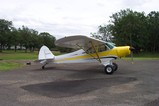
Edit: Here is that video
Last edited by Battson on Mon Oct 06, 2014 10:21 pm, edited 1 time in total.
Battson offline
Knowledge Base Author
User avatar
Posts: 1810
Joined: Wed May 09, 2012 11:19 pm
Location: New Zealand
Aircraft: Bearhawk 4-place
IO-540 260hp

Re: Ultimate Backcountry Airplane

Battson wrote:
Hafast wrote:I'm usually at about 55 to 60kts on short final to make a wheel landing, anything slower and you have to add power to keep the nose up, it's easy to touch the tail wheel first, but visibility goes to shit and it's usually not a pretty touch down. I've flown it at altitude indicating 30kts, wings level, lots of power, 1500 ft min decent with no stall break. The book does not have a stall speed, it just says "increased rate of descent".
I took it to Santa Fe New Mexico about a month ago for a potential buyer, at 11,500 full throttle, 19" mp 2400rpm, I was getting 127kts burning 17gph.

Thanks very much for that.
I have some video which I should upload from our STOL contest... the Helio (totally unloaded) was almost landing as short as the Cubs, a significantly impressive aeroplane.
I never did find a chance to talk to the pilot.


Probably an older one, this one is a 1984 H-800 with an IO720, it weighs 2800 empty and won't perform like the early ones.
Hafast offline
User avatar
Posts: 557
Joined: Mon Oct 01, 2007 7:05 pm
Location: KDVT
Experience is what you get when you didn't get what you wanted.

Re: Ultimate Backcountry Airplane

I do the annual inspections on a H-295 yearly.... We had to rebuild my Big strut pump this year so we could get some air in the main gear struts... Those things take 1000 psi before they will even think about moving...

I find that the slats are easy to maintain on the Helio, just a bunch of torque tubes and rollers to keep them straight... Overall, the aircraft has very few AD's to worry about...

I can see a lot of the control system of the Helio being copied on a well thought out experimental bush plane...

Brian
Brian-StevesAircraft offline
KB and Supporter
User avatar
Posts: 759
Joined: Tue Dec 13, 2005 1:13 pm
Location: Beagle (White City) Oregon
Pavement scares me..........

Dad's SPOT page

Re: Ultimate Backcountry Airplane

This is one of the first few landings that I made in the Helio that I fly.


Like Hafast said, you can drag it in with no visibility and get it stopped in about twenty feet less than in wheelie attitude but there isn't too much benefit to doing it that way. This Helio has an IO-540. It goes 125 knots on 15 GPH. It's a really neat plane, but feels extremely truckish. The aileron control circuit has pretty stiff springs that pull it back to neutral from any deflected state. The Tailwheel supports about 400 lbs when the ship is empty because the mains are so far forward. The slat installation seems very basic. The flaps are huge. The ailerons are just weird, But the thing will turn tighter that you would ever believe possible.
Scolopax offline
Supporter
User avatar
Posts: 1696
Joined: Tue Sep 27, 2005 5:02 pm
Location: Nottingham
FindMeSpot URL: http://share.findmespot.com/shared/face ... 4aYqSexnZC

Re: Ultimate Backcountry Airplane

From what's been said, this design you're working on is for a planned kitplane? I wonder how much market there is for such a machine, given that (in this country anyway) an AB-experimental can't be flown for hire. A guy I know bought an Antonov AN-2 figuring to do some back-country freighting (Idaho, etc) with it, but since it was registered experimental-exhibition (not type-certificated in this country) he legally couldn't do it.
I wonder if a modernized (carbon-fiber, etc) version of a Skywagon might have a broader appeal. Not too much else out there in the experimental world to fill that backcountry/utility role. Murphy Moose, and Comp-Air maybe, can't think of too many others.
BTW there's a turbine-powered CompAir taildragger on the ramp at Skagit Airport KBVS in western Washington. Had a big-time prop strike a couple years ago and has been sitting there ever since. Looking at the long nose and the long prop, I could see it happening if an old Skywagon pilot did a wheel-landing or pushed the tail up on the takeoff roll without thinking.
hotrod180 offline
Supporter
User avatar
Posts: 10534
Joined: Wed Jan 26, 2005 11:47 pm
Location: Port Townsend, WA
Cessna Skywagon -- accept no substitute!

DISPLAY OPTIONS

PreviousNext
60 postsPage 2 of 31, 2, 3

Who is online

Users browsing this forum: No registered users and 0 guests

Latest Features

Latest Knowledge Base