 I had a Lil fun stirring it at the ag convention this year as well.
wheel landing vs. 3 Point
Mon Feb 18, 2013 11:56 am
Re: wheel landing vs. 3 Point
I'm not a good writer or good at portraying my thoughts. But I agree 100% w you rob. I don't only do one or the other but do what is necessary. I don't have any "do it this way all the time" methods in my landing. Just seems that I come across guys that "only" 3 pt all the time and they seem to be the more adimitt ones about it. I disagree with that. Other than that, just a stir the pot for fun discussion. I had a Lil fun stirring it at the ag convention this year as well.
I had a Lil fun stirring it at the ag convention this year as well. Mon Feb 18, 2013 12:05 pm
Re: A chapter or three in landings
Rob wrote:'55, you are baddd....
Do people really have these conversations outside of the internet?
Sometimes I think we make this flying stuff wayyy more complicated than it really has to be... Very shortly after just learning to fly I gave up any thought as to what or why a three point or wheel landing even was
All I am ever concerned about when landing an airplane is Landing. Safety, and the next take off are pre requisites to that landing. The rest is just preference unless you are truly optimizing for a given parameter for example; flying an old ag plane with a geared motor that swings a prop so big you just need to keep it off the ground, or flying an airplane that is a tad short on tail surface and needs airflow to keep that tail active.
I think anyone who can't land with the tail up, tail down or anywhere in between just isn't proficient enough at that moment. Same goes for the ability to plant either main before the other. I think the notion behind the FAA's requirement to be able to land up on the mains, and down with your tail sagging is just for that purpose. To verify you can master the airplane's landing abilities. I am also of the opinion that any CFI that instructs these two landings as they are two separate actions and there is nothing in-between is doing their student a grave disservice. I view all landings as one action with 3 point or wheelie as the extreme ends of the same action, learning to land as opposed to learning to 3 point or wheelie is probably a better way to teach the whole thought process. I also think that landing at either of those two extremes may be some folks choice, but usually not the most efficient way to get the airplane down.... a valid preference, maybe, maybe even a valid choice for a particular parameter, but not usually...
3 point..... by simply analyzing the name we can deduce this is poor form, after all, basic landing 101 dictates that the upwind wheel needs to contact the ground first if you are showing any wind correction at all. For the purpose of basic landing, all landings should be 1 point (and not the tailwheel) A properly slowed up airplane kissing the earth on all 3 wheels simultaneously, looks beautiful . But realistically, beyond the artful look of it all, a true 3 point landing serves no functional purpose.
Wheel landing... If you are truly landing wings flat, it is highly unlikely you have in fact stalled the wing. Probably not anything wrong with flying an airplane into the ground, if that floats your boat, but the 3 pointers are not wrong when they say it can be done slower. Most ag pilots that are flying high repetitions of loads do this, but they are not interested in getting slowed up to park, they want only to get to the loading pad as quick as safely possible, because landing does not pay the bills. And again, any wind correction at all and it is truly a 'wheel' landing, because there is only going to be one wheel touching at the instant of contact.
Wind correction... if you exaggerate this, your landings will look like you are drunk. If you leave it out, not only will you look drunk, but you will bounce. Because most of our landing gear suspension systems don't allow the wheels to track straight up and down. They all move the wheels closer or farther apart in their travel up and down. This opposing force will have to be cancelled out, and physics 101 dictates that your airplane is whats going to give, and you are going to bounce. Strive to always set one wheel down first, and you will be amazed at how much less you bounce...
Angle of attack... let the angle of attack change too much too quick, and your going to bounce... this is flying 101, keep the tail following the rest of the airplane...
Brakes... As students, we have it beat in our heads to stay off the brakes... phooey... That notion comes from the days of poor mechanical excuses for a brake. If you choose to retain mechanical brakes today, you can continue to stay off them as much as possible. In some airplanes this may be desirable. If you have put modern brakes on your airplane, I suggest that your brake pads will be much more economical to maintain than wing tips and new props. Use all the tools in the box...
Exaggerated control movements... Many instructors teach to shove the stick here, or pin the stick there... meh... the tailwheel isn't going to let the tail rotate any farther if you hold enough pressure to keep the wheel down. Shoving the stick through your seat isn't going to change that... the pilots I strive to emulate, handle flight controls like a fine women. Most hacks I know are shoving and yanking on controls, and it shows in their flying, as well as their maintenance bill... But again... we all have choices...
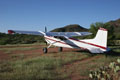
Landings may not be my strongest suit, but this is what I shoot for in 99% of what I fly, so far so good ;
Since I am somewhat vertically challenged (that means I'm short), this is what the immediately following sight picture looks like;
Notice the flaps are coming up and elevator is letting the tail fly, not forcing it to.. When it is done flying, I strive to let the tail down, again not forcing it to...
BTW, the only reason for the extended roll out is because the picnic area is 600' up the strip. Landing a properly slowed up cub as depicted should essentially be a 300' venture, with no brute force, or aerobatics needed... Properly added tidbits may cut that distance in half, but improperly added rigamarole will extend it... YMMV
FWIW, I don't instruct, I have a boatload of bad habits, and everything above is pure opinion
Sorry for the long winded response '55.... but you asked for it
Take care, Rob

I don't know shit about landing an airplane, but your photographer is fabulous!
Experience is what you get when you didn't get what you wanted.
Mon Feb 18, 2013 4:43 pm
Re: wheel landing vs. 3 Point
55wagon wrote:...Other than that, just a stir the pot for fun discussion.
Well come on wagon, you "stirred the pot" you can't come back now and dump a bucket of ice water into it. I brought up some pretty good anti-points to your contention that wheel landing was better for xwind control, how about we debate them.
For the record: I learned to fly in a J3 back in the 60's and to be honest I don't recall any discussions about wheel vs 3-point landings back then. It wasn't until I was getting checked out in a rental Citabria in the late 90's that the instructor went on about endorsements and how I had to demonstrate both 3-point and wheel landings. His case for wheel landings was pretty much the same as I hear from everyone and frankly, it doesn't make sense.
When my brother bought a new Maule in 2004 and was getting checked out with Ray Maule he told him flat out to NEVER wheel land one of their airplanes. Once we were out on or own however we found that it did wheel landings perfectly fine. So I know what you mean about certain people being adamant but they are on both sides of the fence.
Right now I'm flying a 7EC Champ that has the L16 gear. In flight it hangs down all pigeon-toed about 8 inches and looks the way a Helio Courier or Pilatus Porter gear looks. It doesn't like wheel landings or even "greasers", it just likes to be dropped on in the 3-point attitude. Even in a crosswind, because of the length of oleo travel it still ends up a 3-pointer because the upwind leg compresses enough to allow the downwind leg to make contact. So different aircraft want different techniques.
If we are talking about say, a Cub with 33 inch bushwheels then obviously a true 3-pointer would be a ridiculous attitude so you're pretty much always going to be making an at least modified wheel landing. But those are specialty wheels, designed for landing in the bush which, as I said is the only really good reason I can see for wheelies as it keeps the tailwheel off the rough terrain where it can get pretty banged up.
Anyway, if we're going to debate this "hot" topic, let's at least bring some smoking embers to the discussion

Things are not as they seem
Nor are they otherwise
Nor are they otherwise
Mon Feb 18, 2013 7:59 pm
Re: wheel landing vs. 3 Point
silvaire wrote:hicountry wrote:...think speed, wind, control during a wheel landing. Always wheel landing in heavy crosswinds= more control...
Since the ultimate goal of any landing is to obtain an airspeed of zero you're going to have to lose that extra speed. Once you have put the mains on and have slowed to the same speed at which the three-pointer touches down, what is your advantage?
Remember..sometimes you have to fly the damned thing right to the hangar..Oh well maybe you don't put up with the wnd we have here. When the wind is blowing 34 knots and the tail wheel will normally come off the ground around 20 knots...Oh forget I said, I'm just blowing in the wind.

'05 7GCBC High Country Explorer
The faster I go , the farther behind I get.
The faster I go , the farther behind I get.
Mon Feb 18, 2013 8:11 pm
Re: wheel landing vs. 3 Point
No doubt silvaire. Your not the category of guys I was referring to. Nor am I trying to convince one side or the other to switch. And I'm not in the wheel only category. Like I'm said. I'm not good at portraying my thoughts. They come faster than I can type then leave my brain before I can get em down. I guess a better way to put it would be that I definetly disagree with the "only way is to 3 pt crowd". Seems like they can't be convinced that wheelies have any place. Won't even hear you talking after "well what about...." And that surprises me sometimes because there's been many a non off field landing that I would personally not attempt in 3 pt configuration. I'm ALWAYS open to new strategies and ideas. Just haven't been convinced of this one yet by anyone who believes that way. I firmly believe you have to have as many tricks in your bag as possible to get full use out of your plane. If you pavement land 100% of the time and only do so in certain conditions, and are satisfied with that, then yes I believe 3pts all the time will be just fine for said person. That only took me 45 minutes to type on a iPad. 
I guess a better way to put it would be that I definetly disagree with the "only way is to 3 pt crowd". Seems like they can't be convinced that wheelies have any place. Won't even hear you talking after "well what about...." And that surprises me sometimes because there's been many a non off field landing that I would personally not attempt in 3 pt configuration. I'm ALWAYS open to new strategies and ideas. Just haven't been convinced of this one yet by anyone who believes that way. I firmly believe you have to have as many tricks in your bag as possible to get full use out of your plane. If you pavement land 100% of the time and only do so in certain conditions, and are satisfied with that, then yes I believe 3pts all the time will be just fine for said person. That only took me 45 minutes to type on a iPad. Mon Feb 18, 2013 8:20 pm
Re: wheel landing vs. 3 Point
I'm also not good at quoting speeds and angles and do this at that and that at this. That's why I would make a horrible instructor. I don't know how or why I do half the shit I do. Or how to explain it. Sometimes I can't even recall if someone asks me how do you do this. I just fly the motherf*+#er. And try not to have any fun doing it. Think I'll buy me a sirus, or however u spell it, with a garmin 5647838753 and just go to flight level. Then I won't have to worry about it.
Mon Feb 18, 2013 9:41 pm
Re: A chapter or three in landings
GumpAir wrote:Rob wrote: I have a boatload of bad habits, and everything above is pure opinion
Damn Curmudgeons.... Quit scaring the grandkids.
Gump
Easy now... I resemble that remark.. which also explains my lack of regard for the kids
55wagon wrote:I'm not a good writer or good at portraying my thoughts.
I resemble that remark too
but not to worry, we are on the same page, I have no doubts of that  and even if we weren't it wouldn't matter, because I just tend to make most of this shit up as I go.... which is not too much different than my style of flying
Hafast wrote:I don't know shit about landing an airplane, but your photographer is fabulous!
Only the best B...
 If I'm not mistaken the preceding shot or two may just be depicting some of those bad habits
All in good fun...
Take care, Rob


Mon Feb 18, 2013 9:43 pm
Re: wheel landing vs. 3 Point
silvaire wrote:Since the ultimate goal of any landing is to obtain an airspeed of zero you're going to have to lose that extra speed. Once you have put the mains on and have slowed to the same speed at which the three-pointer touches down, what is your advantage?
The difference in speeds between a well executed wheel landing and a full-stall, plunk it on the ground from a few inches up, may be just a mile or two an hour. Nothing in the grand scheme of things.
And Silvaire, I know you know this and are just stirring the pot too!
But for those who don't ever do one or the other, for whatever reason, you're shortchanging yourselves.
When landing, I want to minimize the time I transition from flying to driving. In heavy winds the quicker the better.
Wheel it in, pin the upwind wheel down and start braking and slowing down. You're stuck on and driving. A lot of times, even with a big crosswind I'll keep the tail in the air and use differential brakes to get slowed to a crawl. Then, if it wants to get sloppy, who gives a shit. You're not gonna ground loop, and you stop when you want to stop.
A full stall landing in a crosswind. You're still sitting there, pulling back on the yoke waiting for it to drop as it stalls. All the time correcting for the wind, ground effect, and everything else. Lots of moving parts. And still a period of time when you're there waiting for gravity to win out over lift.
You eliminate that step with a wheelie.
But, I'm in Rob's camp big time. I never think about it. I just land the damn thing. Push here, pull there. What and where do I want my airplane to go. Most days if a pax was to ask me on short, short final, "What kind of landing are you going to do?" I'd just look at them funny and go, "How the hell should I know, I haven't done it yet!"
If I mess up a wheelie, a lot of times as I bounce I just start honking back on the yoke and plop the airplane in three point as I come back down. Windy or not.
Or conversely, if I'm off trying to nail a three-pointer... As I slam back towards earth from my bounce mostly out of control, I'll get pissed that I don't know how to fly, and just pin it on with a touch of forward elevator (read that about 5 G's impact) and wheel the damn thing.
But, I'm a trained professional. Don't try this at home.

Gump
Mon Feb 18, 2013 11:13 pm
Re: wheel landing vs. 3 Point
Haha thoroughly enjoying this conversation...I'm just a rookie, but I'll give my humble and ignorant perspective. When I started flying 2 years ago I had zero aviation background and just dove in head first, naturally assuming tailwheel was the only way to go. All sorts of dudley do right pilot's/flight instructor's tried to convince me that the dirty tailwheel was like prodding an angry tiger. Fortunately, that went in one ear out the other, I got a bastard 180 and just flew like I'd ride a Harley, which is act first think later!!! My instructor had no clue what he was doin in a 180 and luckily I met an old fighter pilot that taught me to really fly and to forget all this fly by numbers crap they shove down your throat in flight training. Finesse, guts, and adrenalin are the only instruments I pay attention to
In the begining 3 points out here at moderate altitude (4600' MSL) in the thermally desert winds were the only way I would go due to inexperience and big scary rocks/brush on my runway at the time. After about 250 hours getting more confident in the rough, wheel lands became the norm cause I could put all the weight on the mains and spare the tailwheel any possible abuse, usually operate around gross landing at ranch n take off light.
Finally got some 29" Bushwheels and realized I shoulda dropped the $$$ day one. Now, almost always set up for a tail low full stall landing and at the last second push forward as I stall it on the mains. Almost always land idle power with 40 flaps, then drop flaps just after touchdown and usually slam brakes on grass and ease the brakes on gravel. Now got bout 400 hours on the bushwheels and only true wheel land for touch and go, otherwise its a tail low sometimes three point then usually tail low with brakes till tail wants to set gently back down. Wheelies (still tail low) are usually for checking out an unknown surface and having a little extra so I can throttle and be back in the air. As others have pointed out it seems like you know what you're going to do right about the time you do it. The only thing that related somewhat to flying when I started was going really fast whether it be motorcycles, hot rods, snowboarding, surfing or whatever...if you thought about what you were doing you were gonna crash, you don't have time to do anything but act in those situations.
Also, 55 you're a great teacher, I'll never forget the first time I flew with you haha Learned alot the easy way from guys like you that only know how to fly the motha, F the numbers BS!!! Well maybe that'll stir the pot 
In the begining 3 points out here at moderate altitude (4600' MSL) in the thermally desert winds were the only way I would go due to inexperience and big scary rocks/brush on my runway at the time. After about 250 hours getting more confident in the rough, wheel lands became the norm cause I could put all the weight on the mains and spare the tailwheel any possible abuse, usually operate around gross landing at ranch n take off light.
Finally got some 29" Bushwheels and realized I shoulda dropped the $$$ day one. Now, almost always set up for a tail low full stall landing and at the last second push forward as I stall it on the mains. Almost always land idle power with 40 flaps, then drop flaps just after touchdown and usually slam brakes on grass and ease the brakes on gravel. Now got bout 400 hours on the bushwheels and only true wheel land for touch and go, otherwise its a tail low sometimes three point then usually tail low with brakes till tail wants to set gently back down. Wheelies (still tail low) are usually for checking out an unknown surface and having a little extra so I can throttle and be back in the air. As others have pointed out it seems like you know what you're going to do right about the time you do it. The only thing that related somewhat to flying when I started was going really fast whether it be motorcycles, hot rods, snowboarding, surfing or whatever...if you thought about what you were doing you were gonna crash, you don't have time to do anything but act in those situations.
Also, 55 you're a great teacher, I'll never forget the first time I flew with you haha
Learned alot the easy way from guys like you that only know how to fly the motha, F the numbers BS!!! Well maybe that'll stir the pot Last edited by Skalywag on Tue Feb 19, 2013 11:13 am, edited 1 time in total.
Tue Feb 19, 2013 6:41 am
Re: wheel landing vs. 3 Point
But, I'm in Rob's camp big time. I never think about it. I just land the damn thing. Push here, pull there. What and where do I want my airplane to go. Most days if a pax was to ask me on short, short final, "What kind of landing are you going to do?" I'd just look at them funny and go, "How the hell should I know, I haven't done it yet!"
10-4 Gump, that's just how it usually happens.
10-4 Gump, that's just how it usually happens.
'05 7GCBC High Country Explorer
The faster I go , the farther behind I get.
The faster I go , the farther behind I get.
Tue Feb 19, 2013 8:04 am
Re: wheel landing vs. 3 Point

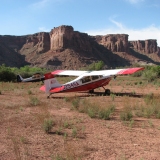
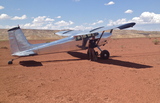
Good ol Red Creek. Worth every penny to get there.
Cheers
- OregonMaule offline

- Posts: 6986
- Joined: Fri Sep 01, 2006 9:44 pm
- Location: Orygun
My SPOT page
"They who can give up essential liberty to obtain a little temporary safety, deserve neither liberty nor safety". Ben Franklin
http://en.wikiquote.org/wiki/Benjamin_Franklin
"They who can give up essential liberty to obtain a little temporary safety, deserve neither liberty nor safety". Ben Franklin
http://en.wikiquote.org/wiki/Benjamin_Franklin
Tue Feb 19, 2013 9:54 am
Re: wheel landing vs. 3 Point
silvaire wrote:55wagon wrote:Right now I'm flying a 7EC Champ that has the L16 gear. In flight it hangs down all pigeon-toed about 8 inches and looks the way a Helio Courier or Pilatus Porter gear looks. It doesn't like wheel landings or even "greasers", it just likes to be dropped on in the 3-point attitude. Even in a crosswind, because of the length of oleo travel it still ends up a 3-pointer because the upwind leg compresses enough to allow the downwind leg to make contact. So different aircraft want different techniques.
I like those old long stroke oleos....checking folks out in the local Champ, I always tell them they get to land the thing TWICE on every pass....once landing the landing gear, and then landing the airplane ON the landing gear
. Heck, in a crosswind, they work great, cause you just put both the upwind wheel down first, then the downwind wheel, and the airplane can still be in a 45 degree bank into the wind... I agree fully with your primary assertion, however. Every airplane is different, and as Rob suggests, every situation presents a different set of problems as well.
I teach new tailwheel types to land the airplane every which way. The final task is one wheel touchdowns, followed by one wheel tail up taxi all the way down the runway, followed by a one wheel takeoff, never letting the "up" wheel touchdown. While it's on the runway, I want to see them drive it twenty feet left of the centerline, straighten it out, then drive it back to the centerline, then twenty feet right, etc. When they can do that, they can fly the airplane, and if nothing else, that exercise SHOULD demonstrate to them that they have sufficient control authority to make the airplane do whatever the pilot wants it to do. At least in reasonable conditions.
Then, I tell them to practice all sorts of landings in whatever airplane they are flying, and maintain proficiency in all types. But, use whatever technique works best for THEM and THAT airplane in the conditions that prevail.
WHen I was flying 185s pretty much every day, 90% of my landings were wheel landings, because for me NICE wheel landings were harder to pull off than nice three points in the 185, so I practiced them more. But, in certain conditions, I'd default to the three point, even though I could reliably wheel land the airplane in most any conditions that I cared to tackle in any case.
Oh, and one more thing: you should always recall that discretion is the better part of valor. Sometimes, it just makes more sense to go somewhere else, and/or land on a taxiway, grassy infield, or??
MTV


Tue Feb 19, 2013 12:01 pm
Re: wheel landing vs. 3 Point
It has been my experience that many pilots who profess the virtues of only 3-pointing their landings in all conditions are not proficient at other types of landings. Please, I know this is not true for ALL pilots so don't punish me here.
Others have pointed out that there are subtleties in the landing phase that cannot fully be differentiated by classifying them as wheel or 3-point. I would like to add a more in-depth look at power in the landing phase.
When I hear pilots talking about landing, the use of power to control rate of descent at touchdown as well as the rate of deceleration just prior to touchdown is often ignored. I believe that the discussion of power is equally as important in the context of wheelies vs. 3 pointers.
Whether the landing is tailwheel first, one main, two mains, or all three tires at the same time, how the plane was being controlled at touchdown in terms of deceleration and rate of descent is mostly dictated by the power used in the flare.
3-pointers and wheel landings with power at idle are very different than those landings with power. First, rudder and elevator effectiveness are improved with additional airflow provided by engine power. Landing attitude in constant airspeed conditions is dictated by the airspeed at touchdown and this is more easily controlled with power than by trying to time the airspeed in the flare as the plane is decelerating in low power conditions.
I use speed and power to my advantage depending on the wind and landing conditions. The more challenging the conditions, typically the more power I maintain all the way through the landing until I absolutely have control of the airplane on the ground, regardless of which wheel(s) touches first, and only then does the power comes off. I hate to see planes out of control skipping around doing the hop skippity or worse after touchdown. Proper use of power generally smoothes out the transition.
In calm winds, low power settings to create a decelerating airplane in the flare can be advantageous in certain landing conditions.
Others have pointed out that there are subtleties in the landing phase that cannot fully be differentiated by classifying them as wheel or 3-point. I would like to add a more in-depth look at power in the landing phase.
When I hear pilots talking about landing, the use of power to control rate of descent at touchdown as well as the rate of deceleration just prior to touchdown is often ignored. I believe that the discussion of power is equally as important in the context of wheelies vs. 3 pointers.
Whether the landing is tailwheel first, one main, two mains, or all three tires at the same time, how the plane was being controlled at touchdown in terms of deceleration and rate of descent is mostly dictated by the power used in the flare.
3-pointers and wheel landings with power at idle are very different than those landings with power. First, rudder and elevator effectiveness are improved with additional airflow provided by engine power. Landing attitude in constant airspeed conditions is dictated by the airspeed at touchdown and this is more easily controlled with power than by trying to time the airspeed in the flare as the plane is decelerating in low power conditions.
I use speed and power to my advantage depending on the wind and landing conditions. The more challenging the conditions, typically the more power I maintain all the way through the landing until I absolutely have control of the airplane on the ground, regardless of which wheel(s) touches first, and only then does the power comes off. I hate to see planes out of control skipping around doing the hop skippity or worse after touchdown. Proper use of power generally smoothes out the transition.
In calm winds, low power settings to create a decelerating airplane in the flare can be advantageous in certain landing conditions.
Tue Feb 19, 2013 12:52 pm
Re: wheel landing vs. 3 Point
Amen....
Tue Feb 19, 2013 2:05 pm
Re: wheel landing vs. 3 Point
My instructor always told me that you had to decide which you were doing, "there's no surer way to end up in trouble than trying to land somewhere in-between" [a 3 pointer and a wheeler] "you have to make a decision".
Any truth to that?
Any truth to that?
Tue Feb 19, 2013 2:13 pm
Re: wheel landing vs. 3 Point
mtv wrote:
I teach new tailwheel types to land the airplane every which way. The final task is one wheel touchdowns, followed by one wheel tail up taxi all the way down the runway, followed by a one wheel takeoff, never letting the "up" wheel touchdown. While it's on the runway, I want to see them drive it twenty feet left of the centerline, straighten it out, then drive it back to the centerline, then twenty feet right, etc. When they can do that, they can fly the airplane, and if nothing else, that exercise SHOULD demonstrate to them that they have sufficient control authority to make the airplane do whatever the pilot wants it to do. At least in reasonable conditions.
MTV
I am of the opinion that teaching a student to land like this will teach them more about flying than most anything they've probably learned up to that point.
unfortunately CFI's that can fly to that level themselves are getting farther and fewer inbetween, let alone CFI's that can fly well enough to let a student tackle those areas without hurting them both.squash, that was a great post. I think that learning energy management goes a long way towards making a more well rounded pilot.
Tue Feb 19, 2013 2:16 pm
Re: wheel landing vs. 3 Point
what a fun thread....
Last edited by flightlogic on Sun Feb 24, 2013 10:46 am, edited 1 time in total.
- flightlogic offline
- Posts: 616
- Joined: Wed Dec 24, 2008 2:51 pm
- Location: Prescott
Flying is dangerous. If you think otherwise, you are new at this sport. Mind the gravity not the gap.
Tue Feb 19, 2013 2:23 pm
Re: wheel landing vs. 3 Point
Battson wrote:My instructor always told me that you had to decide which you were doing, "there's no surer way to end up in trouble than trying to land somewhere in-between" [a 3 pointer and a wheeler] "you have to make a decision".
Any truth to that?
no
Tue Feb 19, 2013 2:40 pm
Re: wheel landing vs. 3 Point
No! Is right.
If you want to go work on wheelies, then that's what you go work on. To work on. I'll specifically do them just for the Zen of hopefully rolling the wheels on nice. Same with three pointers.
But day to day landings, I'm concentrating on stable approach, power for the flare, and gentle touch. Not what way it's gonna touch.
Gump
If you want to go work on wheelies, then that's what you go work on. To work on. I'll specifically do them just for the Zen of hopefully rolling the wheels on nice. Same with three pointers.
But day to day landings, I'm concentrating on stable approach, power for the flare, and gentle touch. Not what way it's gonna touch.
Gump
Tue Feb 19, 2013 2:55 pm
Re: wheel landing vs. 3 Point
GumpAir wrote:No! Is right.
If you want to go work on wheelies, then that's what you go work on. To work on. I'll specifically do them just for the Zen of hopefully rolling the wheels on nice. Same with three pointers.
But day to day landings, I'm concentrating on stable approach, power for the flare, and gentle touch. Not what way it's gonna touch.
Gump
I think it depends on your personality. There's certainly nothing wrong with consciously choosing what kind of landing you plan to execute, but don't let it box you into a corner. I'm probably more in Gump's camp nowadays, but many times I have planned for one style and ended up doing the other, and it usually goes something like this:
Oh yeah, looking good, airspeed perfect, sinking just right...
Rolling out, leveling off, good job, you dialed in just the perfect elevator trim, stick feels nice!
Pull, pull, we're level, rate of decent is imperceptible now, mains are gonna kiss at any moment
WTF? Guess I was a little fast. Pull some more, bleed that speed off. Damn, nose is a little high now. Don't let off.
Gonna be a 3-pointer I guess.
Too many times though, I set out to wheel it on, and touched tailwheel very low, and then brought it up dramatically for the wheelie effect. It was unnecessary on a nice surface, and looking back it just would have been better off as a 3-pointer.
Personally, for crosswinds, I prefer just a little flap, and a 3-pointer. Have done it both ways, sometimes with great excitement.

DISPLAY OPTIONS
Who is online
Users browsing this forum: No registered users and 1 guest
Latest Features
-
-
Featured Bush Planes
As one of the undisputed legends of bush flying, the Cessna 180 hauls a…Read More -
Aircraft Ownership and Maintenance
9 modification mistakes aircraft owners make when trying to "bush out" their birds—why some…Read More -
Live to Tell
A Minnesota pilot is surprised to learn that the sudden asymmetric drag of an…Read More




Latest Knowledge Base
-
Destinations
Canada offers some of the most spectacular backcountry flying on the continent. Here's what you need to know before you go.Read More -
Safety and Survival
Hope that you never have to use your survival vest but knowing you have it and knowing how to use…Read More -
Destinations
A regional guide with ideas for winter camping destinations in California, Nevada, New Mexico, and Arizona.Read More -
Aircraft
Finding an affordable aircraft that can handle the backcountry for $80K or less? A challenge for sure, but with the…Read More



