Rob wrote:Battson wrote:My instructor always told me that you had to decide which you were doing, "there's no surer way to end up in trouble than trying to land somewhere in-between" [a 3 pointer and a wheeler] "you have to make a decision".
Any truth to that?
no
Well, I'd have to argue that it depends......

As a FLIGHT INSTRUCTOR, I want to know precisely what to expect from a student (and I use the "student" title here as applies to anyone who's new to tailwheel ops). That means either I tell them, or they tell me whether each landing is going to be a three point or a wheel landing before we get there. So I know what to expect.
I think your flight instructor was getting at the point that, with the tail low, but the tailwheel not touching the surface, you are neither fish nor fowl. It's fine (and I do this regularly, and teach students to do so) to TOUCH DOWN in that attitude. But, once the main (s) are on the surface, that tail needs to get up to get the rudder into good clean air, or down into contact with the surface...otherwise you have very little steering. In a no flap airplane, this isn't TOO much of an issue, but there are vortices coming off the intersection of the fuselage and wing. Those vortices flow back and if the tail is low, can blanket the rudder. For flap equipped airplanes with the flaps deployed, these vortices can become really strong, and can really reduce rudder effectiveness. So, I LIKE to get the tail up in clean air, or down onto the surface right after initial touch.
If a student just sits there with the tail at half mast, I have a half a second or so to decide what he (or she) is trying to do, before it all starts going to shit. And, THEN, I have a big mess to try to salvage. Been there, done that.
Its fine for you high timers to advertise how you do things, but you may want to add "don't try this without adult supervision".
I for one think that a relatively LOW TIME taildragger type SHOULD have a plan for every landing. They may not yet have the skills or timing to react to what happens next without a plan. And, that plan needs to include exactly what they're going to do if it all goes to shit....like go around.
I tell students if they bounce a wheel landing, it's often easy to just turn it into a three point. Trying to salvage a bounced wheel landing can introduce you to engine teardowns and earn you a new propeller. MAYBE.
Bounce a little too high? Add a skoshi bit of power, and settle it on as a three point.
Once you have a little experience, THEN you can play it a little more free style.
Then again, as I noted earlier, there's the airplane type thing: My first Pitts flight, I asked the instructor whether he recommends three points or wheel landings. His response: "Shit, I dunno, I've always been way to busy to notice". A bit tongue in cheek, but I was soon to discover the truth to his advice.

Gotta love those little short coupled buggers, they are a load of fun.
And, for you Maule guys, a dear old friend of mine advised me the opposite of Ray Maule's advice: "Never three point a Maule".....go figure.
MTV

 On the coast in spring we have many a day of 40mph wind. I'm not good enough to 3 pt that yet if it's quartering
  The finding a good instructor is getting hard to find quote is true I believe. Like I said, I got my license from one; but my dad taught me how to "fly". I believe there's book pilots and pilots that feel it. I strive for the latter.



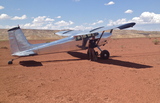
 I seriously might not b cut out for this writing stuff tho. This is the most Internet I've ever used(besides surfin barn and trade daily) and the only blog ive ever joined. Got no interest in much other than flyin huntin and one other ....in.
  and I'm married so the last ones out. Lol. I really lack in getting my thoughts on paper or screen. Lotta times I look at the stuff I wrote and go " what the...." I can talk your ear off in person tho. Then maybe you'll c where I'm coming from. Didn't mean to insinuate I'm badass in anyway. But can c reading it how it may come across that way. Didn't mean nor never do intend to stir shit. Just havin fun like we where sitting around a fire somewhere. That's why I hate Internet and text sometime. Lost in translation. The way I look at it is if your on a sight called backcountry pilot; odds are your a cool dude. Lotta wannabes and people looking to prove shit tho I guess anywhere you go. I love to fly. Do it for a living and then do it when I get off work. I'm not a badass. I got no rules. I judge no one. Just want everyone to survive and have a blast.