Who's done an airplane in Poly Fiber?
Fri Dec 05, 2008 9:06 am
Who's done an airplane in Poly Fiber?
I'm getting ready to recover the wings on my Avid Flyer using the Poly Fiber system. I have ZERO covering experience. I spent quite a while reading all the good tech on their site and I ordered their book and video that is supposed to hold your hand all the way through the process. I'm sure I'm gonna have questions though. If you have any covering experience let me know. I'm planning to ribstitch this time around so the fabric does not detach from the bottom of the ribs which is why I'm recovering in the first place.

Experimental Avid Flyer STOL 582 Rotax
Fri Dec 05, 2008 9:25 am
Polyfiber
I think Aircraft Spruce gives workshops on Polyfiber. I think they are in southern CA.
If you are not already an EAA member, join up and tap into their network. I am betting there are builders in the Sacratamato area.
TD
If you are not already an EAA member, join up and tap into their network. I am betting there are builders in the Sacratamato area.
TD
Fri Dec 05, 2008 10:34 am
Read the manual, watch the video since you ordered it and go along with it. You will be pleasantly surprised in the end, covering airplanes is not as hard as everyone would have you believe. I find rib stitching almost therapeutic, and no part of building an airplane is more satisfying than when you first start ironing the wings and they really start to look like wings!
If you don't know how to tie a seine knot the drawing in the polyfiber manual can be a little confusing and you will tie several and cut them off before you get the hang of it. A seminar helps there.
Having a partner to pass the needle back will save you a lot of walking. If you don't have a partner get a needle for every rib so you can do them all at once.
You said your fabric is detaching from the wing bottoms now? Please elaborate on that. What system and attachment?
Take care, Rob
If you don't know how to tie a seine knot the drawing in the polyfiber manual can be a little confusing and you will tie several and cut them off before you get the hang of it. A seminar helps there.
Having a partner to pass the needle back will save you a lot of walking. If you don't have a partner get a needle for every rib so you can do them all at once.
You said your fabric is detaching from the wing bottoms now? Please elaborate on that. What system and attachment?
Take care, Rob



Fri Dec 05, 2008 11:57 am
Hi hotrod,
do you know how the fabric was attached? I am curious about the delam... I have seen lot's of fabric "attached" with glue, but I think that is a disaster waiting to happen as the glues used with ceconite are designed with strength in the shear axis, rather than bonding. Every wing I have uncovered had glued leading edges that could readily be peeled off.
Stitching, screwing, or riveting all have their merits. I suppose lots hinges on preference (on an experimental) My preference is stitched, with a flat cord and blind knot. It is probably the most forgiving for future re-covering as well.
As to time efficiency, I recently stitched a complete extended supercub wing in a long morning, and I do not do it on a frequent basis. How much faster do you need to go?8)
Take care, Rob
do you know how the fabric was attached? I am curious about the delam... I have seen lot's of fabric "attached" with glue, but I think that is a disaster waiting to happen as the glues used with ceconite are designed with strength in the shear axis, rather than bonding. Every wing I have uncovered had glued leading edges that could readily be peeled off.
Stitching, screwing, or riveting all have their merits. I suppose lots hinges on preference (on an experimental) My preference is stitched, with a flat cord and blind knot. It is probably the most forgiving for future re-covering as well.
As to time efficiency, I recently stitched a complete extended supercub wing in a long morning, and I do not do it on a frequent basis. How much faster do you need to go?8)
Take care, Rob
Fri Dec 05, 2008 1:06 pm
Rob wrote: You said your fabric is detaching from the wing bottoms now? Please elaborate on that. What system and attachment?
Take care, Rob
The fabric was glued to the rib caps top and bottom. This was the way the manual said to do it. Times have changed and very few people are not doing some sort of physical attachment these days it seems. The fabric has only come loose on the farthest outboard rib on both wings but I suspect it'll keep going. I could screw it on like Aeronaca does but it's just a band aid. I'd like to inspect the wing also and there are no inspection rings on this thing. I also have to apply for an airworthiness certificate because this is an experimental and the original 40 hours were not flown off. An inspector is not going to like seeing peeling paint and wings with sheet metal screws holding the fabric on. I'll post a video I took tonite and you guys will see what I mean.
Experimental Avid Flyer STOL 582 Rotax
Fri Dec 05, 2008 8:41 pm
I covered my Kitfox with Polyfiber. I had no previous fabric experience. The manual leads you step by step. I riblaced using round riblacing cord because I wanted the airplane to have a vintage look about it. The flat cord would be easier to form the tapes over I think.
Here's my rib lacing rack.
http://www.sportflight.com/cgi-bin/uplo ... 1009991214
Here's my rib lacing rack.
http://www.sportflight.com/cgi-bin/uplo ... 1009991214

tcj
Sat Dec 06, 2008 12:43 am
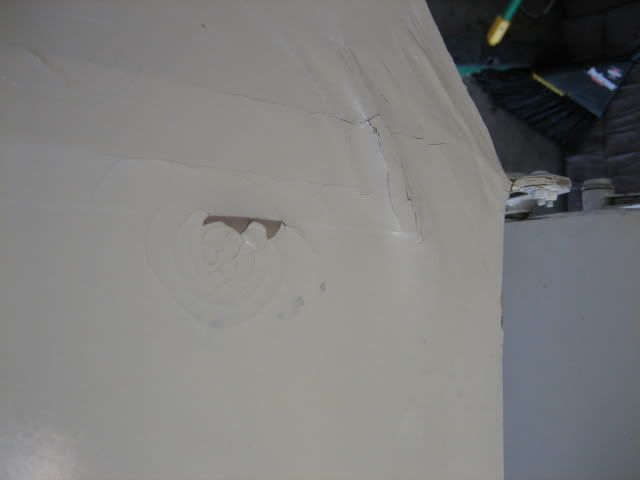
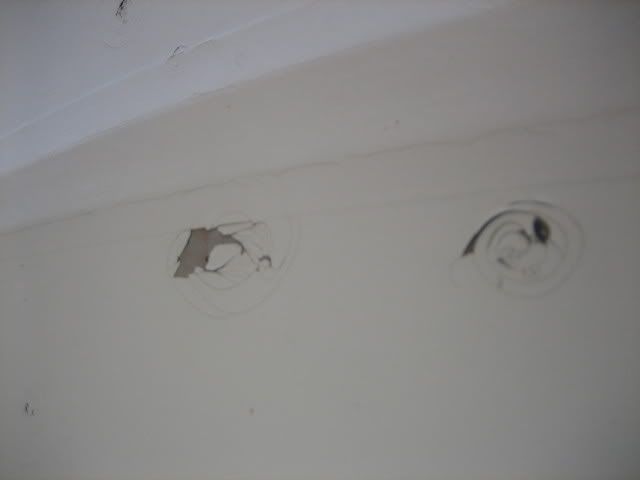
Here's a video and some pics of my fabric.. what do you guys think.. can it be saved or am I wasting my time?
http://www.youtube.com/watch?v=0WRQckV81Y0
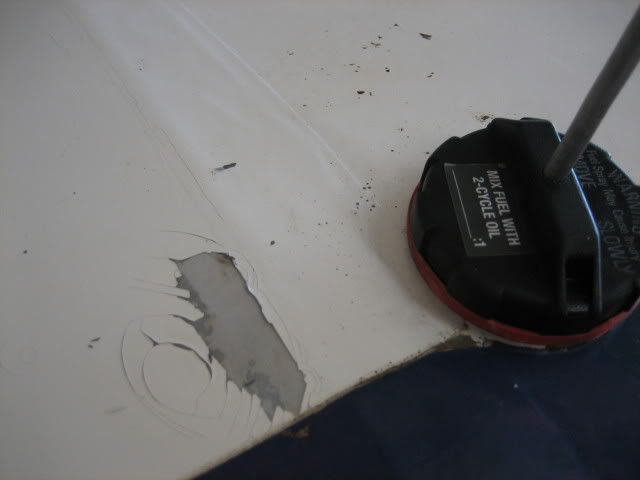
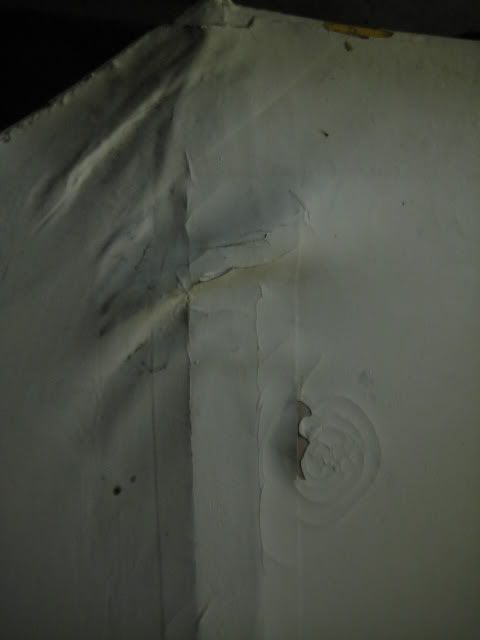
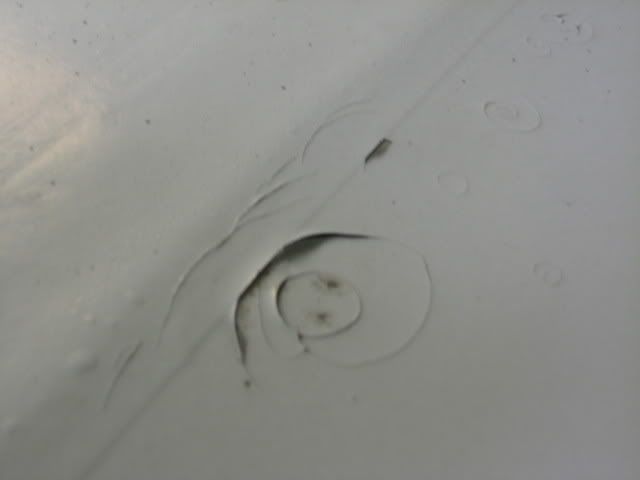
http://www.youtube.com/watch?v=0WRQckV81Y0
Experimental Avid Flyer STOL 582 Rotax
Sat Dec 06, 2008 4:59 am
I think it needs recovering.  JK By the looks of it.....is a spar cracked/busted under the fabric? That big wrinkle almost looks like it. Maybe the fabric wasn't shrunk good enough.???? As the other guys state, get the poly fiber manual and take it one step at a time. It really isn't that difficult. I was hesitant to do it myself and attended one of the seminars while at Oshkosh one summer and learned alot. The biggest thing is do NOT over heat the fabric. Use a calibrated iron, the one your wife uses is fine...just don't let her catch you. The manual tells you how to check the temp and mark the iron at different temps. Good Luck.
PS. Poly fiber is there in CA....why not contact them and see if they are having any seminars. Also, Join the EAA and find a local chapter. There always seem to be some guys that have fabric experience and will give you a hand or advice.
JK By the looks of it.....is a spar cracked/busted under the fabric? That big wrinkle almost looks like it. Maybe the fabric wasn't shrunk good enough.???? As the other guys state, get the poly fiber manual and take it one step at a time. It really isn't that difficult. I was hesitant to do it myself and attended one of the seminars while at Oshkosh one summer and learned alot. The biggest thing is do NOT over heat the fabric. Use a calibrated iron, the one your wife uses is fine...just don't let her catch you. The manual tells you how to check the temp and mark the iron at different temps. Good Luck.
PS. Poly fiber is there in CA....why not contact them and see if they are having any seminars. Also, Join the EAA and find a local chapter. There always seem to be some guys that have fabric experience and will give you a hand or advice.
Sat Dec 06, 2008 8:51 am
If you decide to recover, which doesn't sound like a bad idea, you might give some thought to using the Stewart system instead of polyfiber. There's some recent posts about this on supercub.org . Apparently alot easier to work with and to clean up. It doesn't sound like you are personally "grandfathered in" ( no offense to the granddads among us) to using the Stits process, unlike a lot of people, so you should be able to make a choice based on something other than "I've always done it that way".
Eric
Eric
Cessna Skywagon -- accept no substitute!
Sat Dec 06, 2008 10:32 am
Sat Dec 06, 2008 1:01 pm
I found this on youtube. There are three videos if your interested.
<object width="425" height="344"><param name="movie" value="http://www.youtube.com/v/QSnWpWrW5b4&hl=en&fs=1"></param><param name="allowFullScreen" value="true"></param><param name="allowscriptaccess" value="always"></param><embed src="http://www.youtube.com/v/QSnWpWrW5b4&hl=en&fs=1" type="application/x-shockwave-flash" allowscriptaccess="always" allowfullscreen="true" width="425" height="344"></embed></object>
<object width="425" height="344"><param name="movie" value="http://www.youtube.com/v/QSnWpWrW5b4&hl=en&fs=1"></param><param name="allowFullScreen" value="true"></param><param name="allowscriptaccess" value="always"></param><embed src="http://www.youtube.com/v/QSnWpWrW5b4&hl=en&fs=1" type="application/x-shockwave-flash" allowscriptaccess="always" allowfullscreen="true" width="425" height="344"></embed></object>
- Dokmow offline

- Posts: 246
- Joined: Wed Oct 18, 2006 1:17 pm
- Location: Eugene, Oregon
- FindMeSpot URL: http://share.findmespot.com/shared/face ... 738geaMOD6
Rans S7S
Sun Dec 07, 2008 9:52 am
Thanks for the info. While covering does not look all that hard theres the matter of where to do it. It has to be heated. I need a boatload of special tools that I don't have. With the poly system you need a fresh O2 supply. The list goes on. I'm a bit intimidated at this point.
Experimental Avid Flyer STOL 582 Rotax
Sun Dec 07, 2008 6:29 pm
Recover
Hi
Just to encourage you, my partner and I recovered our Maule this last winter/spring with no previous experience whatsover. We used Ceconite with the Airtech process per Maule factory and came out with a pretty good job.
Having viewed the Stewart Systems videos, if/when I do this again I think I 'd strongly consider the Steward System. It seems to have alot of advantages over the Polysystem or the Airtech process.
Good Luck!!
Just to encourage you, my partner and I recovered our Maule this last winter/spring with no previous experience whatsover. We used Ceconite with the Airtech process per Maule factory and came out with a pretty good job.
Having viewed the Stewart Systems videos, if/when I do this again I think I 'd strongly consider the Steward System. It seems to have alot of advantages over the Polysystem or the Airtech process.
Good Luck!!
Fly Safe
Mon Dec 08, 2008 12:57 pm
Re: Recover
M5guy wrote:Having viewed the Stewart Systems videos, if/when I do this again I think I 'd strongly consider the Stewart System.
If you're working in your garage, the Stewart system won't gas out the rest of the home occupants. It's really not at all unpleasant to work with.
The color-coat is a two-part catalyzed system, but due to some aspect of its design, forced air breathing isn't required, just a good carbon-canister mask. Initially, I was a little concerned about following that advice, afraid the Stewart's might just be a couple country hicks with no science behind them--but when you talk with them you find, a) they really do seem to have this stuff figured out, and b) they're about as nice of folks as you could imagine.
I recovered my Tri-Pacer wings this year. (Actually farmed out the main wing, but covered the flaps and ailerons myself for the experience.) I've worked with Randolph a little in the past. As a novice, I thought the Stewart process was dramatically easier to work with.
The other points in this thread have had good advice--you could probably do it yourself, but if you have someone that has done it before at your shoulder, it helps. If you do go the Stewart process, some of their non-Stewart experience will not carry over, but how to orient tapes and stitch spacing, how to tie the knots, etc, will. The Stewarts also include a DVD set plus CD of the manual with the kit. And that tip about having a needle per rib if you're working alone was worth the price of admission by itself. You can order the DVD/CDs separately, too, if you want to see what you're getting into.
Two other pluses for Stewart are no haz-mat fees for shipping, it comes regular UPS, and in a conversation with Dan (I think) at the factory, I remarked that left to themselves, my shop would have used Superflite. He said for an all-fabric plane, like a Super Cub, the Stewart process will be about 40 pounds lighter than (Superflite.)
Benton 8dec08
Mon Dec 08, 2008 1:32 pm
Thanks for all the info. I did not realize there were so many complete systems out there. I am still trying to find somebody real knowledgable on fabric in my area that can come and look at my wings and see if they are salvagable or not. Hopefully they are but if not I have a lot of good information to go on now.
Experimental Avid Flyer STOL 582 Rotax
Mon Dec 08, 2008 4:07 pm
I just finished my Kitfox using the polyfiber system and you don't need a fresh air system except for the final color coats and then only if you feel it is necessary. Polyfiber recommends an organic respirator for spraying the polybrush and polyspray coats. Personally, I didn't need a respirator while cementing the fabric as you are not dealing with enough chemical to really even smell it unless you stick your nose in your glue bottle. You will want a respirator for spraying though. I really don't think a forced air system is necessary for the topcoat either...if you did it everyday then yes it would be a necessity but for a one up job...call me crazy but I think it is overkill. I changed my filter cartridges a couple times during the color coats and could never smell any of the chemicals I was spraying.
As far as tools go, you don't need anything special...just a good set of scissors and some sharp pinking shears (Gingher makes great scissors and shears for this). Other than that, all you need is an iron and some small utility brushes.
Fabric is easy but it does require a bit of time...it is very satisfying though to see everything come together.
As far as tools go, you don't need anything special...just a good set of scissors and some sharp pinking shears (Gingher makes great scissors and shears for this). Other than that, all you need is an iron and some small utility brushes.
Fabric is easy but it does require a bit of time...it is very satisfying though to see everything come together.
Mon Dec 08, 2008 8:56 pm
Darinh wrote:I just finished my Kitfox using the polyfiber system and you don't need a fresh air system except for the final color coats and then only if you feel it is necessary.
I believe this is true as long as you are not spraying Aerothane or any other polyurethane paint. They contain isocyanate which is very bad stuff. I believe the normal organic cartridge respirator is not effective. Someone correct me if I'm wrong, I am not a paint professional

- Dokmow offline
- Posts: 246
- Joined: Wed Oct 18, 2006 1:17 pm
- Location: Eugene, Oregon
- FindMeSpot URL: http://share.findmespot.com/shared/face ... 738geaMOD6
Rans S7S
DISPLAY OPTIONS
Who is online
Users browsing this forum: No registered users and 0 guests
Latest Features
-
-
Featured Bush Planes
As one of the undisputed legends of bush flying, the Cessna 180 hauls a…Read More -
Aircraft Ownership and Maintenance
9 modification mistakes aircraft owners make when trying to "bush out" their birds—why some…Read More -
Live to Tell
A Minnesota pilot is surprised to learn that the sudden asymmetric drag of an…Read More


Latest Knowledge Base
-
Destinations
Canada offers some of the most spectacular backcountry flying on the continent. Here's what you need to know before you go.Read More -
Safety and Survival
Hope that you never have to use your survival vest but knowing you have it and knowing how to use…Read More -
Destinations
A regional guide with ideas for winter camping destinations in California, Nevada, New Mexico, and Arizona.Read More -
Aircraft
Finding an affordable aircraft that can handle the backcountry for $80K or less? A challenge for sure, but with the…Read More