While the Super Cub does call for full flaps on a STOL take off, the Cessna 182 in later POHs has 20 degrees max flap for take off.
Sparky Imeson recommended flap extension aligned with full aileron deflection, in fact around 20 degrees.
I can see partial flaps allowing early lift off in ground effect, but don’t see the advantage of applying full drag flap - imagine trying it in a Bird Dog. And yet quite a few backcountry exponents go down the pop full flaps on T/O in early manual flap 180/182 types.
On go around going to flaps 20 degrees from full flaps is an early action, which sort of makes this point from a different context.
Why pop full flaps on short take off
Fri Apr 17, 2020 6:50 am
Fri Apr 17, 2020 6:57 am
Re: Why pop full flaps on short take off
If using this technique, it has to be timed perfectly or it will just add drag and make for a longer takeoff. But when timed properly, the balloon of air created under the wing will pop you off into ground effect earlier then a standard takeoff. It really is a pop, as I'm pull full flaps to jump off the ground, then bleed down to 20 fairly quickly to accelerate. With a go around you are already in the air, so you need to bleed back to 20 to accelerate.

Fri Apr 17, 2020 7:17 am
Re: Why pop full flaps on short take off
It is a method of getting into low ground effect at the earliest possible moment. As the airspeed increases in low ground effect, yes full flaps in Cessnas with 40 degrees or more would pull too much air and negate the benefit of early low ground effect.
Most airplanes have insufficient flap to benefit from early deployment, full or less than full. Like the Pacer, they come off into low ground effect nicely by pulling full flaps. But the airspeed necessary to get off with just pulling full flaps is quite fast. In those, or Cessnas, pitching with elevator will get us into low ground effect as soon as possible. Using the elevator method, with flaps or not, requires pitching down significantly as soon as we come off into low ground effect. Dynamic proactive elevator movement is necessary to nail six inches of low ground effect without either touching back down or climbing into less efficient higher ground effect where way too much pitch attitude is necessary to stay there.
I was manipulating the controls in the 180 or more powerful Cessnas seldom enough that I just used the elevator method but A1Skinner method is fine. With less power and less possible flap, try the elevator and then dynamic proactive elevator movement technique.
The efficiency objective is low ground effect at the earliest possible moment. How we get there and stay there until maximum practicable acceleration is open to various technique.
Most airplanes have insufficient flap to benefit from early deployment, full or less than full. Like the Pacer, they come off into low ground effect nicely by pulling full flaps. But the airspeed necessary to get off with just pulling full flaps is quite fast. In those, or Cessnas, pitching with elevator will get us into low ground effect as soon as possible. Using the elevator method, with flaps or not, requires pitching down significantly as soon as we come off into low ground effect. Dynamic proactive elevator movement is necessary to nail six inches of low ground effect without either touching back down or climbing into less efficient higher ground effect where way too much pitch attitude is necessary to stay there.
I was manipulating the controls in the 180 or more powerful Cessnas seldom enough that I just used the elevator method but A1Skinner method is fine. With less power and less possible flap, try the elevator and then dynamic proactive elevator movement technique.
The efficiency objective is low ground effect at the earliest possible moment. How we get there and stay there until maximum practicable acceleration is open to various technique.
- contactflying offline
- Posts: 4972
- Joined: Wed Apr 03, 2013 7:36 pm
- Location: Aurora, Missouri 2H2
Download my free "https://tinyurl.com/Safe-Maneuvering" e-book.
Fri Apr 17, 2020 7:31 am
Re: Why pop full flaps on short take off
With the dynamic proactive elevator movement to stay in low ground effect, almost every pilot I trained worried about putting the prop into the ground, the same worry as with getting the tailwheel airplane level on the mains as soon as possible. I took the stick long enough to touch back down to mitigate their worry. TW or nose wheel, we will just dynamically pull right back off with no damage.
- contactflying offline
- Posts: 4972
- Joined: Wed Apr 03, 2013 7:36 pm
- Location: Aurora, Missouri 2H2
Download my free "https://tinyurl.com/Safe-Maneuvering" e-book.
Fri Apr 17, 2020 7:59 am
Re: Why pop full flaps on short take off
L18C-95 wrote:While the Super Cub does call for full flaps on a STOL take off, t.
Please cite your source for this statement.
MTV


Fri Apr 17, 2020 8:53 am
Re: Why pop full flaps on short take off
The flap lever can be set in any one of three positions, for full up flap, half flap, or full down flap. Full flap is recommended for minimum speed landings. Half or full flap can be applied to reduce takeoff run, the more flap used the shorter the run. A minimum takeoff distance is obtained by beginning the takeoff with flaps up, then applying full flaps when takeoff speed (30-35 MPH) has been reached. The best angle of climb is attained with full flap.
This is a quote from the later -150 POH, it is in the description Section II on flying controls.
Fri Apr 17, 2020 9:10 am
Re: Why pop full flaps on short take off
.
Last edited by glacier on Wed Feb 03, 2021 5:32 am, edited 1 time in total.
Fri Apr 17, 2020 9:24 am
Re: Why pop full flaps on short take off
-0-
Last edited by dogpilot on Wed Aug 05, 2020 11:28 pm, edited 1 time in total.
Fri Apr 17, 2020 11:48 am
Re: Why pop full flaps on short take off
L18C-95 wrote:The flap lever can be set in any one of three positions, for full up flap, half flap, or full down flap. Full flap is recommended for minimum speed landings. Half or full flap can be applied to reduce takeoff run, the more flap used the shorter the run. A minimum takeoff distance is obtained by beginning the takeoff with flaps up, then applying full flaps when takeoff speed (30-35 MPH) has been reached. The best angle of climb is attained with full flap.
This is a quote from the later -150 POH, it is in the description Section II on flying controls.
Thanks, I'd never seen that....then again, most of the Cubs I've flown were anything but "later" model airplanes.....
To the original question, I've never used full flaps on a Cub for takeoff.....except for a momentary increase in flap deflection from the half flap position to "Pop" the plane off the surface, followed by immediate retraction to half flaps to accelerate. Pretty common in seaplanes, not usually much benefit on wheels. Frankly, if you're operating that close to the edge that you NEED to do that.....you're probably going to be disappointed one day.
That said, I almost always use full flaps on the Husky, floats or wheels, but those are different flaps.
MTV
Fri Apr 17, 2020 2:33 pm
Re: Why pop full flaps on short take off
The sportsman cuff in the C180/185 recommends 30 degrees of flaps for take off but the POH for a non-cuffed 180 is 20 degrees. The ground roll is improved by at least 75 feet at gross weight over 20 degrees. I think 40 degrees would create too much drag. I have a PDF with flight testing made on a 1955 C180 comparing stall speed, glide ratio, and take off/landing conditions as performed with their flight testing. I uploaded it to the skywagon Facebook page but have had problems trying to upload it on BCP.
Josh
Josh
- Dog is my Copilot offline
- Posts: 433
- Joined: Thu Apr 12, 2018 11:38 am
- Location: Portland
- Aircraft: 1958 Cessna 180A
Fri Apr 17, 2020 3:34 pm
Re: Why pop full flaps on short take off
Go out and practice it. Use the flaps like another flight control on takeoff. Keep the button depressed and pull them into the relative wind and feel what they're doing. On a big flap like the Cessna you can feel when they're effective and the camber added is generating useful lift and when it's just dragging. With the little flaps on my Pacer it's not quite as fun.
- Zzz offline


- Posts: 2854
- Joined: Fri Oct 08, 2004 11:09 pm
- Location: northern
- Aircraft: Swiveling desk chair
Half a century spent proving “it is better to be thought a fool than to open your mouth and remove all doubt.”
Fri Apr 17, 2020 4:28 pm
Re: Why pop full flaps on short take off
I've had favorable results with my 170B, both floats and skis with an initial flap 10 setting to facilitate acceleration and a "pull" to flap 20 once sustained positive acceleration has been reach. I defined this by either an establish "good float" on the snow or reaching a stable "stepped" condition on floats. I continue to accelerate in ground effect and maintain the flap 20 setting until a stable, positive rate of climb has been established above ground effect. I'm some what concerned with aircraft configuration changes at a critical phase of flight it can lead pilot distraction, a destabilized aircraft state and opens door for issues unforeseen However my sense is this "technique" would serve me well in a pinch. This "blended" application of flap adheres to the POH as I read it, so my estate is protected for it's heirs and beneficiaries should I meet my demise !!!!
Full disclosure; I'm rarely operating within confined spaces any longer, those years are behind me so I have a bit of luxury on that front.
Full disclosure; I'm rarely operating within confined spaces any longer, those years are behind me so I have a bit of luxury on that front.
Last edited by Mapleflt on Sat Apr 18, 2020 4:17 am, edited 1 time in total.
Fri Apr 17, 2020 5:15 pm
Re: Why pop full flaps on short take off
I have used the POP the flaps deal on my Stinson when I was rolling through foot high brush and grass, I had no idea how much drag the grass would make. Anyway, by popping the flaps I could jump up out of the grass and accelerate, then sag back down and do it again. About three hops and I had enough speed to fly in ground effect and then climb out. If it hadn't been so scary it would have been fun!
Fri Apr 17, 2020 6:53 pm
Re: Why pop full flaps on short take off
-0-
Last edited by dogpilot on Wed Aug 05, 2020 11:28 pm, edited 1 time in total.
Sat Apr 18, 2020 8:28 am
Re: Why pop full flaps on short take off
It should go without restating for the millionth time that flight "training" you get via the internet is worth about as much as you paid for it, and may be totally hooey.  .
.
Yes, every airplane is different, so in general, generalities are pretty useless. Including everything I post here.
Flaps are but a tool in your toolbox. Like any other tool, you need to study the POH/AFM/Operators Manual, or whatever else is available for YOUR aircraft, then carefully experiment with the procedures recommended there. Early on at least, that's best done with the supervision of an instructor who's familiar with your aircraft type.
As dogpilot noted, the factory is pretty conservative as to the techniques they recommend. Talk to any lawyer and you'll understand pretty quick why that is. So, when you start trying techniques like "Popping" flaps on takeoff, or using a flap setting not recommended by the manufacturer, you are indeed somewhat of a test pilot.
Seaplane takeoffs will seriously test your ability to finesse an airplane up to flying speed, especially with a seaplane loaded close to it's legal weight, and on a nice, warm summer day. That is one area where use of flaps in methods other than those recommended by the manufacturer MAY help.
But, here's the rub: Every pilot I've ever met who tried these "techniques" for the first time actually LENGTHENED their takeoff run, rather than shortened it. After several hundred heavy/hot takeoffs in a loaded 206, I'd still occasionally "miss it" just a split second on timing, and have to shut down the takeoff run and try it again.....not very often, maybe once or twice a season, but still. Point is, this is VERY precise control inputs, not just of the flaps, but also of pitch.
The flaps may yard the plane off the surface, but now it's up to the nut behind the wheel to KEEP it there, and that's often the more difficult challenge. Miss catching it with pitch, and flying in ground effect, and you've just drastically lengthened your takeoff run.
So, again, if you're going to play this game, you'd best be really at the top of your game. And, again, getting someone familiar with your aircraft type to help at least initially is valuable.
I flew many Robertson STOL equipped Cessnas, and that kit's Flight Manual Supplement recommends 30 degrees of flap for short takeoffs. Their recommendation is simply to set 30 and go. And, in my experience, that works well on wheels.
Unless there's a gusty wind, for example. Point being, type of aircraft, configuration, pilot's proficiency with the technique AND other things like weather conditions may suggest using other techniques. All of these things will seriously affect the takeoff distance. Especially pilot proficiency.
As to insurance companies and back country flying, in my experience with three different outfits, they don't care, and they don't charge more. At least one did note that if I wrecked my plane in an "off airport" operation they'd pay the claim, but when it came time to renew, they'd take that into consideration. Can't really criticize that.
MTV
. Yes, every airplane is different, so in general, generalities are pretty useless. Including everything I post here.
Flaps are but a tool in your toolbox. Like any other tool, you need to study the POH/AFM/Operators Manual, or whatever else is available for YOUR aircraft, then carefully experiment with the procedures recommended there. Early on at least, that's best done with the supervision of an instructor who's familiar with your aircraft type.
As dogpilot noted, the factory is pretty conservative as to the techniques they recommend. Talk to any lawyer and you'll understand pretty quick why that is. So, when you start trying techniques like "Popping" flaps on takeoff, or using a flap setting not recommended by the manufacturer, you are indeed somewhat of a test pilot.
Seaplane takeoffs will seriously test your ability to finesse an airplane up to flying speed, especially with a seaplane loaded close to it's legal weight, and on a nice, warm summer day. That is one area where use of flaps in methods other than those recommended by the manufacturer MAY help.
But, here's the rub: Every pilot I've ever met who tried these "techniques" for the first time actually LENGTHENED their takeoff run, rather than shortened it. After several hundred heavy/hot takeoffs in a loaded 206, I'd still occasionally "miss it" just a split second on timing, and have to shut down the takeoff run and try it again.....not very often, maybe once or twice a season, but still. Point is, this is VERY precise control inputs, not just of the flaps, but also of pitch.
The flaps may yard the plane off the surface, but now it's up to the nut behind the wheel to KEEP it there, and that's often the more difficult challenge. Miss catching it with pitch, and flying in ground effect, and you've just drastically lengthened your takeoff run.
So, again, if you're going to play this game, you'd best be really at the top of your game. And, again, getting someone familiar with your aircraft type to help at least initially is valuable.
I flew many Robertson STOL equipped Cessnas, and that kit's Flight Manual Supplement recommends 30 degrees of flap for short takeoffs. Their recommendation is simply to set 30 and go. And, in my experience, that works well on wheels.
Unless there's a gusty wind, for example. Point being, type of aircraft, configuration, pilot's proficiency with the technique AND other things like weather conditions may suggest using other techniques. All of these things will seriously affect the takeoff distance. Especially pilot proficiency.
As to insurance companies and back country flying, in my experience with three different outfits, they don't care, and they don't charge more. At least one did note that if I wrecked my plane in an "off airport" operation they'd pay the claim, but when it came time to renew, they'd take that into consideration. Can't really criticize that.
MTV
Sun Apr 19, 2020 2:15 pm
Re: Why pop full flaps on short take off
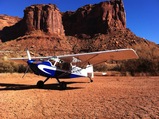
Hey, I played 1st trumpet in the marching band but I'm a little hesitant about pulling full flaps on takeoff. I have to lean a little to far forward to reach the handle.. I'm happy with my very short takeoff with one notch. Rans S7
Magnet
Sun Apr 19, 2020 5:33 pm
Re: Why pop full flaps on short take off
Dogpilot and MTV have great advice. When I was a low time pilot I almost wrecked my pacer when I popped the flaps on a raised spur road. I was behind some buildings when I started and did not notice the crosswind. I got in the air quick just past the buildings, but the wind just pushed me off the road, now I had one wing in ground effect and one out. I was able to keep flying but right wing was only a few feet off the road. I have a friend that totaled a cub when he popped it up and crosswind pushed him into a stump/log. I tend to pick the cub/Cessna into ground effect with the flaps on most takeoffs, just a habit for me. However I am very careful of doing it with crosswind/tailwind and make sure I the airspeed needed to maintain control once I am in the air. Like mike said nice tool to have just use it properly.
DENNY
DENNY
DENNY
Sun Apr 19, 2020 6:37 pm
Re: Why pop full flaps on short take off
An old spray pilot told me to always start your takeoff roll with the flaps you need to get off the ground, cause they might not be there if you wait to pop them. Flap motors fail, cables break, etc. Lucky for me, Ag Cat’s don’t have or need flaps, so I don’t have to worry about such things while working.
I’m a terrible dancer, and trying to coordinate popping flaps with all the other antics of a short takeoff in my 182 never seemed efficient. Felt like my wife trying to make me waltz all over again, it’s just ugly and uncoordinated. I just set flaps 20 and go.
I’m a terrible dancer, and trying to coordinate popping flaps with all the other antics of a short takeoff in my 182 never seemed efficient. Felt like my wife trying to make me waltz all over again, it’s just ugly and uncoordinated. I just set flaps 20 and go.
- CenterHillAg offline

- Posts: 204
- Joined: Sun Nov 09, 2014 3:13 pm
- Location: Texas Coast
- Aircraft: J3 Cub
'56 182
Sun Apr 19, 2020 7:03 pm
Re: Why pop full flaps on short take off
Me too. Elevator pitch off and then find six inch level in low ground effect works good and is more adjustable. With flap pull we still have to dynamically and proactively find level in low ground effect. High ground effect defeats the advantage of early low ground effect. And maintaining the high pitch attitude necessary to stay in high ground effect is worse than just rolling on the ground.
- contactflying offline
- Posts: 4972
- Joined: Wed Apr 03, 2013 7:36 pm
- Location: Aurora, Missouri 2H2
Download my free "https://tinyurl.com/Safe-Maneuvering" e-book.
Mon Apr 20, 2020 4:28 pm
Re: Why pop full flaps on short take off
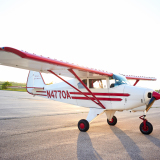
In our Tri Pacer, lightly loaded, on a low DA day, popping full flaps gives us a chance to protect the nose gear a little sooner. Once we have weight in the plane, it's naturally an aft-CG aircraft, nose wheel has almost no weight, and the "pop" isn't as effective anyway since we've hauling hundreds of additional pounds. Then there's no silly stuff with the johnson bar, just first notch at the beginning of the takeoff roll.

DISPLAY OPTIONS
Who is online
Users browsing this forum: No registered users and 12 guests
Latest Features
-
Live to Tell
A Minnesota pilot is surprised to learn that the sudden asymmetric drag of an out-of-rig ski can…Read More -
Creators
Working in some of the Yukon's most beautiful and remote environments, photographer Simon Blakesley captures aircraft in…Read More -
Aircraft Ownership and Maintenance
Upgrading to big tires can make a huge difference in backcountry performance, but with those gains come…Read More -
Tales from Yesteryear
In this tale from bush flying yesteryear, Don Cogger signs up to help Atlee Dodge Jr recovery…Read More


Latest Knowledge Base
-
Destinations
A regional guide with ideas for winter camping destinations in California, Nevada, New Mexico, and Arizona.Read More -
Aircraft
Finding an affordable aircraft that can handle the backcountry for $80K or less? A challenge for sure, but with the…Read More -
Aircraft
01.29.2018 - Zane - Updated tire diameter graphic to add 8.50x10 Guide to tires for use in the backcountry and off-airport landing…Read More -
Pilots
12.22.2013 - Initial article format Operating aircraft on skis and negotiating a snow-covered landscape is an entirely unique skillset and environment.…Read More


