Why so many radios
Mon Feb 06, 2017 6:19 pm
Why so many radios
I've seen and heard about having dual radios for IFR. Is it required or preference?
- DeltaRomeo offline

- Posts: 394
- Joined: Sun Oct 19, 2014 11:26 am
- Location: TX and NM
- Aircraft: M5 180C
Mon Feb 06, 2017 6:24 pm
Re: Why so many radios
It's not required but it helps.

Mon Feb 06, 2017 7:22 pm
Re: Why so many radios
Big preference, need to be able to check ATIS and still listen to ATC at the same time.
Mon Feb 06, 2017 7:43 pm
Re: Why so many radios
Most of the newer comms can monitor a second freq as well
Mon Feb 06, 2017 7:51 pm
Re: Why so many radios
Old old standard from tube radio days when you had to have two of everything in case (for when) one quit. Handy for monitoring a second freq, like ATIS, but now even a single radio can do that. Check the FAR for minimum IFR equipment.
'74 7GCBC, 26" ABW, Aera 660 feeding G5 and FC-10 FF.
Mon Feb 06, 2017 8:00 pm
Re: Why so many radios
In my day one good com was more important than two cheap ones. Radios are better now. Don't use a Super Homer with no whistle stop.
- contactflying offline
- Posts: 4972
- Joined: Wed Apr 03, 2013 7:36 pm
- Location: Aurora, Missouri 2H2
Download my free "https://tinyurl.com/Safe-Maneuvering" e-book.
Mon Feb 06, 2017 8:09 pm
Re: Why so many radios
Before GPS, two VORs made life much easier when navigating along airways by instruments. You could find intersections without calculating your position, or without DME. Redundance is nice too. Lost COMMS while in IMC is not my idea of a good time.
- Scolopax offline

- Posts: 1718
- Joined: Tue Sep 27, 2005 5:02 pm
- Location: Nottingham
- FindMeSpot URL: http://share.findmespot.com/shared/face ... 4aYqSexnZC
Mon Feb 06, 2017 9:48 pm
Re: Why so many radios
DeltaRomeo,
Don't worry about having just one radio if it works well. If you lose com, you just continue with your most recent clearance or expect further clearance. If you haven't lost all electric, they have you on radar. Regardless, you are covered all the way to your alternate. Most of us have never lost com while IMC. A crappie com is worse than no com.
Don't worry about having just one radio if it works well. If you lose com, you just continue with your most recent clearance or expect further clearance. If you haven't lost all electric, they have you on radar. Regardless, you are covered all the way to your alternate. Most of us have never lost com while IMC. A crappie com is worse than no com.
- contactflying offline
- Posts: 4972
- Joined: Wed Apr 03, 2013 7:36 pm
- Location: Aurora, Missouri 2H2
Download my free "https://tinyurl.com/Safe-Maneuvering" e-book.
Tue Feb 07, 2017 5:54 am
Re: Why so many radios
I view the second radio as an excellent situational awareness tool:
You can talk to ATC on #1 radio and monitor the CTAF for your destination on #2 radio (as you approach the destination).
Even with a late handoff from ATC to the CTAF, you have an idea of what is going on in the destination pattern...(and you can announce your position without going "off frequency")
IMO, a second radio is an important tool to help you...
You can talk to ATC on #1 radio and monitor the CTAF for your destination on #2 radio (as you approach the destination).
Even with a late handoff from ATC to the CTAF, you have an idea of what is going on in the destination pattern...(and you can announce your position without going "off frequency")
IMO, a second radio is an important tool to help you...

Tue Feb 07, 2017 6:01 am
Re: Why so many radios
Seems like the discussion of one or two comms is much like 3 PT, or wheel landings. What is it you prefer?
For me I voted to put in one GPS/Comm/Nav... the GTN-650... in my 180. It does everything I need (and I can monitor a second freq... back when I flew in the USAF and we only had one radio we told ATC to stby I'll be off freq for a minute... worked every time ). For the money and weight I saved on a second Comm I could afford the 650... at least that's what I told myself!
I don't cross-tune bearings, my backup radio is a handheld battery powered Icom. And I like the cleaner lighter panel. It's what works for me, Your Millage May Vary.
gunny
For me I voted to put in one GPS/Comm/Nav... the GTN-650... in my 180. It does everything I need (and I can monitor a second freq... back when I flew in the USAF and we only had one radio we told ATC to stby I'll be off freq for a minute... worked every time ). For the money and weight I saved on a second Comm I could afford the 650... at least that's what I told myself!
I don't cross-tune bearings, my backup radio is a handheld battery powered Icom. And I like the cleaner lighter panel. It's what works for me, Your Millage May Vary.
gunny
Tue Feb 07, 2017 6:55 am
Re: Why so many radios
Having come of age (pilot) in the GPS era, it clicks now that two VOR's would be handy to cross tune two airways to find the intersection. But now that 11 VOR's in Texas and 3 in NM are going off line soon (one's that I had been using), the use of ForeFlight has been indispensable. I'm trying to find out how to equip the Maule for IFR training.
- DeltaRomeo offline
- Posts: 394
- Joined: Sun Oct 19, 2014 11:26 am
- Location: TX and NM
- Aircraft: M5 180C
Tue Feb 07, 2017 7:54 am
Re: Why so many radios
I would put two radios in the "highly desirable" column for IFR, most notably in busier airspace around class B. For checking ATIS, pretuning CTAF, etc. Instead of asking "request frequency change for ATIS". I realize this can be accomplished with the monitor functions of some radios, which is a great money-saver for flying IFR. In IMC, however, I would prefer two independents for redundancy if possible. Also, with two, you can flip/flop controllers on your comm1 and keep comm2 for ATIS/CTAF/backup which is how I prefer to do it.
Another argument for a second nav is for missed approaches. Imagine you're doing an ILS and you have to go missed. If the missed relies on a different VOR (very very common), you will be tuning, identifying, twisting, etc while you're low, slow, and in the clouds. Not my favorite activity for ensuring safety. For example, ILS33 at KFNL's missed goes to GLL. So I keep GLL tuned on a second reciever so the missed is simply tracking the CDI.
I think a setup like a GNS430W plus an additional Nav/Comm is the minimum setup if you want to fly in the IFR system seriously and not have ANY limitations or what airports/approaches you can go to. Completely overkill for the "Just in case" crowd or the "just going to VFR-on-top" crowd, but man, the power of an IFR GPS is ridiculous when you need it. If anyone has a GNS/GTN and hasn't explored the real capabilities of it besides just being a moving map, you will be amazed.
That being said, I'd be comfortable flying in the IFR system with a single nav/com. Foreflight fixes the situational awareness aspect, so then you really just need the required equipment which is surprisingly little. Also I just bought a plane with a single comm(with monitoring) and a separate single nav/GS. I would feel perfectly fine flying IFR in it.
-asa
Another argument for a second nav is for missed approaches. Imagine you're doing an ILS and you have to go missed. If the missed relies on a different VOR (very very common), you will be tuning, identifying, twisting, etc while you're low, slow, and in the clouds. Not my favorite activity for ensuring safety. For example, ILS33 at KFNL's missed goes to GLL. So I keep GLL tuned on a second reciever so the missed is simply tracking the CDI.
I think a setup like a GNS430W plus an additional Nav/Comm is the minimum setup if you want to fly in the IFR system seriously and not have ANY limitations or what airports/approaches you can go to. Completely overkill for the "Just in case" crowd or the "just going to VFR-on-top" crowd, but man, the power of an IFR GPS is ridiculous when you need it. If anyone has a GNS/GTN and hasn't explored the real capabilities of it besides just being a moving map, you will be amazed.
That being said, I'd be comfortable flying in the IFR system with a single nav/com. Foreflight fixes the situational awareness aspect, so then you really just need the required equipment which is surprisingly little. Also I just bought a plane with a single comm(with monitoring) and a separate single nav/GS. I would feel perfectly fine flying IFR in it.
-asa
Tue Feb 07, 2017 8:30 am
Re: Why so many radios
I prefer two radios even for non-IFR. I can't remember the last time I didn't use both on a flight.
Some examples of how I use com2 VFR:
o Monitoring 121.5 and starting a pool amongst the passengers in terms of how many times a professional pilot will transmit on the wrong frequency. Also, more seriously, there are still a lot of 121.5 ELTs out there and dwindling monitoring. Dialing it up and monitoring is a free way of adding value to the community.
o Monitoring ATC/CTAF in the vicinity of airports while still coordinating with friends on 122.75
o Monitoring ATC/CTAF on two different frequencies when nearby airports don't share the same frequency
o Monitoring approach while still being able to talk with the non-towered airport I'm flying into.
As an example, for the last one, I was flying near Madison, WI and hadn't checked in with approach. They called me anyway saying something like "is the plane 12 SE of the radio towers on frequency?". I answered and was able to take a request from them to modify my flight by 10 degrees to make everyones life a little easier as they directed traffic into their pattern.
Some examples of how I use com2 VFR:
o Monitoring 121.5 and starting a pool amongst the passengers in terms of how many times a professional pilot will transmit on the wrong frequency. Also, more seriously, there are still a lot of 121.5 ELTs out there and dwindling monitoring. Dialing it up and monitoring is a free way of adding value to the community.
o Monitoring ATC/CTAF in the vicinity of airports while still coordinating with friends on 122.75
o Monitoring ATC/CTAF on two different frequencies when nearby airports don't share the same frequency
o Monitoring approach while still being able to talk with the non-towered airport I'm flying into.
As an example, for the last one, I was flying near Madison, WI and hadn't checked in with approach. They called me anyway saying something like "is the plane 12 SE of the radio towers on frequency?". I answered and was able to take a request from them to modify my flight by 10 degrees to make everyones life a little easier as they directed traffic into their pattern.
- rw2 offline
- Posts: 1799
- Joined: Sat Dec 22, 2012 1:10 pm
- Location: San Miguel de Allende
- FindMeSpot URL: https://share.delorme.com/LaNaranjaDanzante
- Aircraft: Experimental Maule
Follow my Flying, Cooking and Camping adventures at RichWellner.com
Tue Feb 07, 2017 9:58 am
Re: Why so many radios
Add me to the "dual COMM radio" preference list. I like to monitor 121.5 at all times (especially since the Feds made it "mandatory" after 9/11), and it's just a lot easier to leave that set in the 2nd COMM. And even though I use the "monitor" feature (when available) to listen to ATIS, etc., it's still nice to be able to tune in ATIS, Ground, Tower, and Departure all before starting to taxi. (Need something to do while waiting for oil temp to rise, anyway). For some reason, I'm a whole lot better at remembering 121.5 than all those other frequencies, so I can plug that one back in in flight with no problems.
If I had only VOR/ILS for IFR flight, I would definitely want two of them. Identifying intersections is a LOT easier that way, and I could not "legally" use ForeFlight to identify the intersection, as it is expressly prohibited to use non-certified or hand-held GPS for that purpose. (Insert argument here about how much more accurate ForeFlight + Stratus WAAS GPS is than a VOR... But that's a moot point as long as the FAA takes the stance it's taking today.)
The plane I'm flying today has a single KX-170 COMM/NAV radio that doesn't even have a secondary tuning window, so to tune a new frequency, you lose the one you're on. Hasn't been that big a deal, except on cross-country flights into "unfamiliar" airspace where I cannot easily anticipate which frequency I'll be assigned. I'm slightly dyslexic, so recalling the frequency the controller just gave me can be a problem. My solution is to read it back to them for confirmation as I write it on my kneeboard. Still, it would be a lot more comfortable to be able to tune it in the other radio (or the standby position, if I had one)...
My next plane (Bearhawk Patrol homebuilt in progress) will be set up for VFR-only. It will likely have a GPS-driven EFIS with a single COMM radio with standby tuning position. I'll also have a panel-mount for the iPad with ForeFLight, and a spot to plug in my handheld SP-400 in case the COMM radio ever acts up on me. I think the combination of ForeFlight + Stratus 2 and the SP-400's "emergency VOR/ILS" capability (shaky though it may be until you're really close to the airport) will be significantly better than nothing in a true "IMC emergency" situation. But I'm also planning to avoid conditions where VFR into IMC is anything more than a remote possibility... Still, I'd rather have some way of dealing with it if it ever does happen.
If I had only VOR/ILS for IFR flight, I would definitely want two of them. Identifying intersections is a LOT easier that way, and I could not "legally" use ForeFlight to identify the intersection, as it is expressly prohibited to use non-certified or hand-held GPS for that purpose. (Insert argument here about how much more accurate ForeFlight + Stratus WAAS GPS is than a VOR... But that's a moot point as long as the FAA takes the stance it's taking today.)
The plane I'm flying today has a single KX-170 COMM/NAV radio that doesn't even have a secondary tuning window, so to tune a new frequency, you lose the one you're on. Hasn't been that big a deal, except on cross-country flights into "unfamiliar" airspace where I cannot easily anticipate which frequency I'll be assigned. I'm slightly dyslexic, so recalling the frequency the controller just gave me can be a problem. My solution is to read it back to them for confirmation as I write it on my kneeboard. Still, it would be a lot more comfortable to be able to tune it in the other radio (or the standby position, if I had one)...
My next plane (Bearhawk Patrol homebuilt in progress) will be set up for VFR-only. It will likely have a GPS-driven EFIS with a single COMM radio with standby tuning position. I'll also have a panel-mount for the iPad with ForeFLight, and a spot to plug in my handheld SP-400 in case the COMM radio ever acts up on me. I think the combination of ForeFlight + Stratus 2 and the SP-400's "emergency VOR/ILS" capability (shaky though it may be until you're really close to the airport) will be significantly better than nothing in a true "IMC emergency" situation. But I'm also planning to avoid conditions where VFR into IMC is anything more than a remote possibility... Still, I'd rather have some way of dealing with it if it ever does happen.

Tue Feb 07, 2017 10:38 am
Re: Why so many radios
DeltaRomeo wrote:... I'm trying to find out how to equip the Maule for IFR training.
Just bolt in one of these.
https://www.gulfcoastavionics.com/produ ... n-750.aspx
A mere $14,895 plus installation.
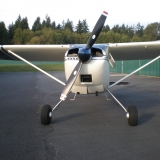
Cessna Skywagon -- accept no substitute!
Tue Feb 07, 2017 11:42 am
Re: Why so many radios
My 2 cents: I have an Avidyne IFD540/AMX240, which allows monitoring the standby frequency. Easy enough to get the ATIS or monitor a nearby airfield as I fly by for popup traffic while in direct communication with ATC. For backup, I have a handheld and a King KX-199 that I can plug the handheld into and access the external antenna. I fly a fair amount of IFR, and don't feel apprehensive about my prospects. Remember it's Aviate, Navigate and then Communicate!
Tue Feb 07, 2017 1:00 pm
Re: Why so many radios
DeltaRomeo wrote:I've seen and heard about having dual radios for IFR. Is it required or preference?
If your purpose is to minimally comply with the IFR requirements of the regs, look at 91.205 specifically. Of course, there are scads of other regs that you need to comply with, to build your own airplane, but that's a different story.
But if you're purpose is to realistically equip your airplane for IFR flight, then that's different--minimum can get pretty uncomfortable rapidly. Although I've flown IFR in minimally equipped airplanes (just a single navcom and a transponder for avionics), I wouldn't want to do it on a regular basis. Having a good IFR GPS and a second navcom makes life a whole lot easier.
If I were flying real IFR frequently in an airplane that was more IFR capable, I'd want that second radio to also be an IFR GPS, but for my purposes, the second navcom is adequate. FWIW, in my panel I have a Garmin 430W, a Narco navcom (which one of these days will be replaced, as they're getting harder to get repaired), and a King ADF, all of which work well and which I've used for IFR navigation. It is a good panel for me and for my airplane, a P172D. Having a more elaborate panel would be overkill. I wanted the ADF, because at the time there were still many NDB approaches in the country, and because it's a principal IFR navigation tool in Canada, which I may or may not fly through one of these days. But for most purposes, the ADF is unnecessary.
So I'd recommend to you that you install a WAAS GPS/navcom and a navcom as a minimum.
Cary
"I have slipped the surly bonds of earth..., put out my hand and touched the face of God." J.G. Magee
Tue Feb 07, 2017 2:54 pm
Re: Why so many radios
hotrod180 wrote:DeltaRomeo wrote:... I'm trying to find out how to equip the Maule for IFR training.
Just bolt in one of these.
https://www.gulfcoastavionics.com/produ ... n-750.aspx
A mere $14,895 plus installation.
I was hoping to do this without buying a whole other airplane...

- DeltaRomeo offline
- Posts: 394
- Joined: Sun Oct 19, 2014 11:26 am
- Location: TX and NM
- Aircraft: M5 180C
Tue Feb 07, 2017 3:39 pm
Re: Why so many radios
Delta Romeo,
I never put the initial and yearly cost into my own IFR airplane. As an instructor I had the opportunity to use other people's airplanes for IFR trips.
Compare upgrade costs with just renting for IFR trips. Don't just rent the airplane but also a pilot or instructor who flies IMC on a regular basis. Plan IFR trips in IMC. You will be glad you did and will get comfortable with IMC.
Contact
I never put the initial and yearly cost into my own IFR airplane. As an instructor I had the opportunity to use other people's airplanes for IFR trips.
Compare upgrade costs with just renting for IFR trips. Don't just rent the airplane but also a pilot or instructor who flies IMC on a regular basis. Plan IFR trips in IMC. You will be glad you did and will get comfortable with IMC.
Contact
- contactflying offline
- Posts: 4972
- Joined: Wed Apr 03, 2013 7:36 pm
- Location: Aurora, Missouri 2H2
Download my free "https://tinyurl.com/Safe-Maneuvering" e-book.
Tue Feb 07, 2017 4:22 pm
Re: Why so many radios
Another thought: with so many upgrading their panels to touch screens of one ilk or another, there are 430Ws on the market. Bennett Avionics (which is a good-guy type of dealer, fair and responsive) has them for $8,695. You'll also need a compatible indicator, and Bennett has those for $1,895. With both of those, you'll have the ability (once you learn how  ) to shoot every kind of approach except ADF: ILS, GPS/RNAV of all kinds, and VOR.
Do NOT let yourself get talked into a straight 430 non-WAAS. Those are available for about $2200 less than the W, but with the proliferation of GPS/RNAV LPV approaches around the country, the extra benefit of the WAAS is well worth it--it gives you an electronic glideslope just like an ILS. In the 4 years I've had my 430W, I have lost track of the LPV approaches I've flown for real, and like I said earlier, I don't do all that much actual IFR.
You might find a better deal more locally to you--avionics dealers don't like keeping used equipment any longer than necessary. But if you can't, my experience with Todd Bennett was very good some years ago when I bought my ADF from him. Either way, assuming you install it yourself, you'll need to have it certified by an appropriately rated avionics tech to do GPS-derived approaches.
Cary
) to shoot every kind of approach except ADF: ILS, GPS/RNAV of all kinds, and VOR. Do NOT let yourself get talked into a straight 430 non-WAAS. Those are available for about $2200 less than the W, but with the proliferation of GPS/RNAV LPV approaches around the country, the extra benefit of the WAAS is well worth it--it gives you an electronic glideslope just like an ILS. In the 4 years I've had my 430W, I have lost track of the LPV approaches I've flown for real, and like I said earlier, I don't do all that much actual IFR.
You might find a better deal more locally to you--avionics dealers don't like keeping used equipment any longer than necessary. But if you can't, my experience with Todd Bennett was very good some years ago when I bought my ADF from him. Either way, assuming you install it yourself, you'll need to have it certified by an appropriately rated avionics tech to do GPS-derived approaches.
Cary
"I have slipped the surly bonds of earth..., put out my hand and touched the face of God." J.G. Magee
DISPLAY OPTIONS
Who is online
Users browsing this forum: No registered users and 3 guests
Latest Features
-
-
Featured Bush Planes
As one of the undisputed legends of bush flying, the Cessna 180 hauls a…Read More -
Aircraft Ownership and Maintenance
9 modification mistakes aircraft owners make when trying to "bush out" their birds—why some…Read More -
Live to Tell
A Minnesota pilot is surprised to learn that the sudden asymmetric drag of an…Read More


Latest Knowledge Base
-
Destinations
Canada offers some of the most spectacular backcountry flying on the continent. Here's what you need to know before you go.Read More -
Safety and Survival
Hope that you never have to use your survival vest but knowing you have it and knowing how to use…Read More -
Destinations
A regional guide with ideas for winter camping destinations in California, Nevada, New Mexico, and Arizona.Read More -
Aircraft
Finding an affordable aircraft that can handle the backcountry for $80K or less? A challenge for sure, but with the…Read More