Ok guys. I know you told me to "run not walk" away from the experimental 170B but I can't do it yet without further provocation/comment from you. Here is the paperwork from the FAA on the experimental status of the plane. It says I can do 300 mile flights from my airport, but it seems to indicate I can't land anywhere else. Would this also prevent me from doing off-aiport work? Please shed any light that you may have from experience in these things.
1. No person may operate this aircraft unless Form 8130-7 is displayed at the cabin or cockpit entrance so that it is visible to passengers or flight crew members.
2. No person may operate this aircraft for other than the purpose of meeting the requirements of §91.319(b),as stated in the program letter (requiredby§ 21.193)for this aircraft. This aircraft must be operated in accordance with applicable air traffic and general operating rules of part 91, as well as all additional limitations herein prescribed under the provisions of § 91.319(e). These operating limitations are a part of the special airworthiness certificate, and are to be carried in the aircraft at all times and made available to the pilot in command of the aircraft.
4. In accordance with § 47.45, the FAA Aircraft Registry must be notifiedwithin30 days for any change of the aircraft registrant address. Such notification is to be made by submitting Aeronautical Center Form 8050-1 to AFS-750 in Oklahoma City.
6. Application must be made to the geographically responsible FSDO for any revision to these operating limitations.
7. This aircraft may not be operated over densely populated areas or in congested airways, except when otherwise directed by air traffic control.
10. No person may be carried in this aircraft during the exhibition of the aircraft's flight capabilities, performance, or unusual characteristics at airshows, or for motion picture, television, or similar productions, unless essential for the purpose of the flight. Passengers may be carried during flights to and from any event outlined in the program letter or during proficiency flying, limited to the design
seating capacity of the aircraft.
11. The pilot in command of this aircraft must advise each passenger of the experimental nature of this aircraft, and explain that it does not meet the certification requirements of a standard certificated aircraft.
12. No person may operate this aircraft for carrying persons or property for compensation or hire.
17. No person must operate this aircraft unless within the preceding 12 calendar months it has had a condition inspection performed in accordance with the scope and detail of appendix D to part 43, or other FAA-approved programs, and was found to be in a condition for safe operation. This inspection
will be recorded in the aircraft maintenance records.
20. Only FAA-certificated mechanics with appropriate ratings as authorized by § 43.3 may perform inspections required by these operating limitations.
21. The cognizant FSDO must be notified, and its response received in writing, prior to flying this aircraft after incorporation of a major change as defined by § 21.93.
22. This aircraft must display the word "EXPERIMENTAL" in accordance with § 45.23(b).
23. This aircraft must contain the placards, markings, etc., required by § 91.9.
25. The pilot in command of this aircraft must notify air traffic control of the experimental nature of this aircraft when operating into or out of airports with operating control towers. The pilot in command must plan routing that will avoid densely populated areas and congested airways when operating VFR.
30. No person may operate this aircraft for other than the purpose(s) of exhibition and proficiency/practice, to exhibit the aircraft, or participate in events outlined in owners program letter (or any amendments) describing compliance with § 21.193(d). In addition, this aircraft must be operated in accordance with applicable air traffic and general operating rules of part 91, and all additional limitations herein prescribed under the provisions of § 91.319(e). These operating
limitations are a part of Form 8130-7, and are to be carried in the aircraft at all times and be available to the pilot in command of the aircraft.
34. All proficiency/practice flights must be conducted within the geographical area described in the applicant's program letter and any modifications to that letter, but that area will not be more than 300 nautical miles from the aircraft's home base airport. Proficiency flights are limited to a nonstop flight that begins and ends at the aircraft's home base airport. An alternate airport selection is not permitted for this aircraft. However, an exception is permitted for proficiency flying outside of the
area stated above for organized formation flying, training, or pilot checkout in conjunction with a specific event listed in the applicant's program letter (or amendments). The program letter should indicate the location and dates for this proficiency flying.
36. This aircraft is restricted to airports that are within airspace classes C, D, E, and G during proficiency flights, except in the case of a declared emergency or when otherwise directed by air traffic control.
37. The owner/operator of this aircraft must submit an annual program letter update to the local FSDO that lists airshows, fly-ins, etc., that will be attended during the next year, commencing at the time this aircraft is released into phase II operation. This list of events may be amended, as applicable, by letter or fax to the FSDO prior to the intended operation amendments. A copy of the highlighted aeronautical chart, when applicable, must be carried aboard this aircraft and be available to the pilot.
38. This aircraft is authorized for flights or static display at airshows, air races, and in motion pictures conducted under a waiver issued in accordance with § 91.903.
39. After completion of phase I flight testing, unless appropriately equipped for night and/or instrument flight in accordance with § 91.205, this aircraft is only to be operated under day VFR.
40. Aircraft instruments and equipment installed and used under § 91.205 must be inspected and maintained in accordance with the applicable requirements of parts 43 and 91. Any maintenance or inspection of this equipment must be recorded in the aircraft maintenance records.
41. Aerobatic maneuvers that have been satisfactorily accomplished and recorded during the flight test time period may be performed.
44. This aircraft must not be used for glider towing, banner towing, or intentional parachute jumping.
45. This aircraft does not meet the requirements of the applicable, comprehensive, and detailed airworthiness code as provided by Annex 8 to the Convention on International Civil Aviation. The owner/operator of this aircraft must obtain written permission from another country's CAA before operating this aircraft in or over that country. That written permission must be carried aboard the aircraft together with the U.S. airworthiness certificate and, upon request, be made available to an ASI or the CAA in the country of operation.
46. Flights to airports other than an alternate airport and the airport where the aircraft is based are allowed for maintenance of the aircraft. (Maintenance, as defined in § 1.1, is the reference for the purpose of these flights.) Before the flight, the operator must notify and receive permission from the geographically responsible FSDO where the maintenance will take place, and notify the FSDO with the geographic responsibility where the aircraft is based of the intended maintenance flight. The maintenance performed in connection with the flight must be recorded in the aircraft records in accordance with part 43.
170 vs. 180 (an extension of my previous question)
Thu Mar 03, 2011 9:10 am
Thu Mar 03, 2011 9:34 am
Re: 170 vs. 180 (an extension of my previous question)
I think the restrictions speak loud and clear.
RUN!!!!!
Gump
RUN!!!!!
Gump
Thu Mar 03, 2011 9:38 am
Re: 170 vs. 180 (an extension of my previous question)
Gump, I know how I interpret these restrictions, but some folks I've talked to say that I can pretty much do what I want within 300 miles of my home strip. That radius is where I'll be doing 99% of my flying so maybe it's not that big a deal. I'm looking for opinions that don't take into account the resale-ability of the plane.
Thu Mar 03, 2011 10:01 am
Re: 170 vs. 180 (an extension of my previous question)
I'd be afraid of this language in the restrictions:
The way I read this (and I believe a black hat from the FAA would read it also) is that you are not permitted to fly this a/c for any other reason than the highlighted language - meaning no $100 hamburger runs, no cross-country trips (unless you can tell the enforcement official with a straight that the purpose of the flight was proficiency/practice), etc.
I'm new around here, but I'd say "RUN PUNDY!, RUN!"
30. No person may operate this aircraft for other than the purpose(s) of exhibition and proficiency/practice, to exhibit the aircraft, or participate in events outlined in owners program letter (or any amendments) describing compliance with § 21.193(d). In addition, this aircraft must be operated in accordance with applicable air traffic and general operating rules of part 91, and all additional limitations herein prescribed under the provisions of § 91.319(e). These operating
limitations are a part of Form 8130-7, and are to be carried in the aircraft at all times and be available to the pilot in command of the aircraft.
The way I read this (and I believe a black hat from the FAA would read it also) is that you are not permitted to fly this a/c for any other reason than the highlighted language - meaning no $100 hamburger runs, no cross-country trips (unless you can tell the enforcement official with a straight that the purpose of the flight was proficiency/practice), etc.
I'm new around here, but I'd say "RUN PUNDY!, RUN!"
- Sierra Hotel offline

- Posts: 64
- Joined: Mon Feb 14, 2011 3:18 pm
- Location: Chugiak, AK
Thu Mar 03, 2011 11:36 am
Re: 170 vs. 180 (an extension of my previous question)
Pundy wrote:Gump, I know how I interpret these restrictions, but some folks I've talked to say that I can pretty much do what I want within 300 miles of my home strip.
No you can't.
34. All proficiency/practice flights must be conducted within the geographical area described in the applicant's program letter and any modifications to that letter, but that area will not be more than 300 nautical miles from the aircraft's home base airport. Proficiency flights are limited to a nonstop flight that begins and ends at the aircraft's home base airport. An alternate airport selection is not permitted for this aircraft. However, an exception is permitted for proficiency flying outside of the
area stated above for organized formation flying, training, or pilot checkout in conjunction with a specific event listed in the applicant's program letter (or amendments). The program letter should indicate the location and dates for this proficiency flying.
Any deviation must be submitted to the Feds ahead of time. The ONLY thing that you realistically can do with this airplane is fly to airshows for display. That's it. And if that's what you want it for, go for it. Sounds like a cool airplane. But, that category is not one where you can just go fly for fun or go play. Ever.
I went through this with a friend of mine who has more $$$ than God. He was buying a Cobra gunship to play with out in the desert. I was drooling, and got to fly a couple of pure hard-on machines, and thought how cool this is gonna be, especially not having to pay the kerosene bill myself. But one we researched the regs (same category) things quickly cooled, and the deal got nixed. There was no way around the regs, and no real way to fly that ship for fun.
Gump
Last edited by GumpAir on Thu Mar 03, 2011 11:41 am, edited 1 time in total.
Thu Mar 03, 2011 11:39 am
Re: 170 vs. 180 (an extension of my previous question)
Which makes me wonder, why did anyone ever build this airplane when it really can't be used for anything practical?
Thu Mar 03, 2011 12:19 pm
Re: 170 vs. 180 (an extension of my previous question)
Pundy, you're trying way too hard to make the wrong decision.
Keep reading around here and you will get a sense of what people want to buy. Once you hand over that money for a frankenplane that no one else wants, has been on the market forever, you're stuck with it. I gotta tell ya, from where I'm at now, dreaming about what plane to buy is a feeling much like wearing fairy slippers. I can do anything I want. Even when I owned my 170B, I knew it was a well regarded model when original, and it was easy to sell. Stay the course, stick to aircraft people want. Too often the deals that many others have passed over are still on the market for a reason.
Choose wisely and never willingly accept more complication than is necessary.
Keep reading around here and you will get a sense of what people want to buy. Once you hand over that money for a frankenplane that no one else wants, has been on the market forever, you're stuck with it. I gotta tell ya, from where I'm at now, dreaming about what plane to buy is a feeling much like wearing fairy slippers. I can do anything I want. Even when I owned my 170B, I knew it was a well regarded model when original, and it was easy to sell. Stay the course, stick to aircraft people want. Too often the deals that many others have passed over are still on the market for a reason.
Choose wisely and never willingly accept more complication than is necessary.
- Zzz offline


- Posts: 2855
- Joined: Fri Oct 08, 2004 11:09 pm
- Location: northern
- Aircraft: Swiveling desk chair
Half a century spent proving “it is better to be thought a fool than to open your mouth and remove all doubt.”
Thu Mar 03, 2011 7:49 pm
Re: 170 vs. 180 (an extension of my previous question)
Barracks Lawyer's is what we called this type: "some folks I've talked to say that I can pretty much do what I want". Hear all kinds of this expert advice in the military.
Yep, you can do pretty much what you want, until you get caught!!! Talk to the local FAA guy and get the real story. What Gump and everyone one else has told you is what I am guessing the FAA guy is going to tell you. If he says you can fly around and have fun...well go have fun. I suspect he is going to have some bad news. Something has definitely got your interests peaked but as all previous guys have said...RUN!! Just my free opinion worth nothing.
WW
Yep, you can do pretty much what you want, until you get caught!!! Talk to the local FAA guy and get the real story. What Gump and everyone one else has told you is what I am guessing the FAA guy is going to tell you. If he says you can fly around and have fun...well go have fun. I suspect he is going to have some bad news. Something has definitely got your interests peaked but as all previous guys have said...RUN!! Just my free opinion worth nothing.
WW

Fri Mar 04, 2011 1:13 am
Re: 170 vs. 180 (an extension of my previous question)
I am just going to leave it at that plane looks like a terrible idea that you appear to really want to make.
Fri Mar 04, 2011 7:17 am
Re: 170 vs. 180 (an extension of my previous question)
If you are not going to listen to the wise advise found here (RUN!) do what WWHUNTER is suggesting. Call your local FSDO and ask for an inspector. I've done this several times in the past to clarify a point BEFORE getting into a possible violation. You will not be asked for your name. If you want, give them your first name, or an alias. Explain what you are looking at and what you would like to do with the plane. Ask, based upon the Experimental category and operating limitations, "can I fly this plane as I like, where I like?" My feeling is the answer will be a loud "No."
Fri Mar 04, 2011 9:01 am
Re: 170 vs. 180 (an extension of my previous question)
Best advice yet.
Gump
Gump
Sun Mar 06, 2011 2:05 pm
Re: 170 vs. 180 (an extension of my previous question)
Ok, I hear you all loud and clear. (please don't mistake my silence for ignoring you, I've been incommunicado for a few days) I'm going to call the FSDO tomorrow, but I feel they will respond in the manner that you all have indicated they might. As somebody indicated, I've probably just wanted it to work out too badly to be willing to hear what I don't want to. Thanks for all the input.
Wed Mar 09, 2011 8:29 am
Re: 170 vs. 180 (an extension of my previous question)
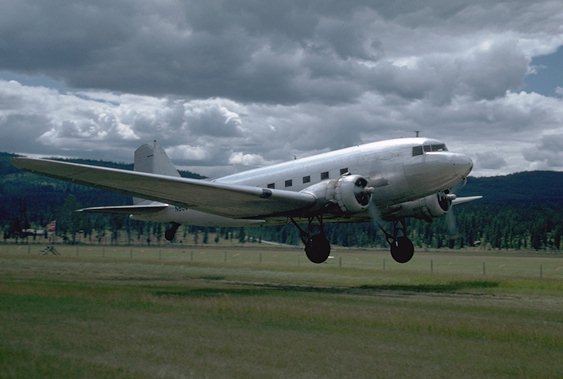
Rhyppa, most of that sort of experimental that I've seen are R&D birds, having been used to test/exhibit potential mods for future STCs.
I don't know one way or the other about this one in particular, but the taildragger C210 I posted a while back started out that way. I don't know *his* legal status at the moment, but it's a real pain in the butt to get any real mods for our factory airplanes without doing it. Heck, it's a pain in the butt either way. All that nifty P-ponk stuff, as well as the Wren and other conversions, had to be tried out on heavily restricted airframes before they could be released to the general public. There's a really interesting LS-Chevy conversion on a restricted C172 right now... which I really hope pans out.
If I were to allow my wife her full preference on baggage, this would be the logical choice for us. Too bad we couldn't afford the fuel.
I don't know one way or the other about this one in particular, but the taildragger C210 I posted a while back started out that way. I don't know *his* legal status at the moment, but it's a real pain in the butt to get any real mods for our factory airplanes without doing it. Heck, it's a pain in the butt either way. All that nifty P-ponk stuff, as well as the Wren and other conversions, had to be tried out on heavily restricted airframes before they could be released to the general public. There's a really interesting LS-Chevy conversion on a restricted C172 right now... which I really hope pans out.
If I were to allow my wife her full preference on baggage, this would be the logical choice for us. Too bad we couldn't afford the fuel.
"Oh, look... a dead bird"
-looks up- "Where?"
-looks up- "Where?"
Wed Mar 09, 2011 10:35 am
Re: 170 vs. 180 (an extension of my previous question)
Pundy,
Another thing to consider:
The current owner of that airplane has now lied to you about the airworthiness category of the aircraft, assuming your initial post was indeed accurate. According to your first post, the owner told you it is an Experimental/Amateur built airplane. It's not.
So, what else might not be exactly as represented?
MTV
Another thing to consider:
The current owner of that airplane has now lied to you about the airworthiness category of the aircraft, assuming your initial post was indeed accurate. According to your first post, the owner told you it is an Experimental/Amateur built airplane. It's not.
So, what else might not be exactly as represented?
MTV


Wed Mar 09, 2011 2:44 pm
Re: 170 vs. 180 (an extension of my previous question)
Maybe I missed it above but this sounds like Experimental Exhibition, not R&D. After you talk to your FSDO, if you're still tempted track down some Yak guys. I think those are generally registered in Exhibition and they can tell you in practical terms how the limitations of the category impact what can be done.
- Vick offline

- Posts: 823
- Joined: Fri Jan 06, 2006 2:21 pm
- Location: Grass Valley, CA
- FindMeSpot URL: http://share.findmespot.com/shared/face ... WUk8CX06AP
Solum Volamus
Fri Feb 03, 2012 12:38 pm
Re: 170 vs. 180 (an extension of my previous question)
So Pundy, what did you find out? What did the FSDO tell you?
Fri Feb 03, 2012 2:30 pm
Re: 170 vs. 180 (an extension of my previous question)
spacer wrote:Rhyppa, most of that sort of experimental that I've seen are R&D birds, having been used to test/exhibit potential mods for future STCs.
I don't know one way or the other about this one in particular, but the taildragger C210 I posted a while back started out that way. I don't know *his* legal status at the moment, but it's a real pain in the butt to get any real mods for our factory airplanes without doing it. Heck, it's a pain in the butt either way. All that nifty P-ponk stuff, as well as the Wren and other conversions, had to be tried out on heavily restricted airframes before they could be released to the general public. There's a really interesting LS-Chevy conversion on a restricted C172 right now... which I really hope pans out.
If I were to allow my wife her full preference on baggage, this would be the logical choice for us. Too bad we couldn't afford the fuel.
The airplane in question is Experimental Airshow and Exhibition, NOT Experimental R & D....BIG difference, but neither one of those offers a very functional recreational airplane.
MTV
Fri Feb 03, 2012 3:32 pm
Re: 170 vs. 180 (an extension of my previous question)
I just got off the phone with the local FSDO
The order that controls this aircraft is
http://www.faa.gov/documentlibrary/media/order/8130.2g.pdf
The 170 is a group 2 aircraft and there is no proficiency area required so you can fly it anywhere!! Period! ONLY GOOD IN THE USA THO!
Table 4-1. Operating Limitations to be Issued, page 4-78 tells you all the limitaions.
Also you have to have your annual letter to your controlling FSDO that tells them where you are planning on flying and to what events. You can modify that letter by faxing them an addition to you original letter to let them know of an event you want to go to. This is just for events!!
So to keep proficient is your call, not anyone else's. If you need to fly to the local burger place every 3 days to keep ahead of the plane then go for it. If you need to fly to Johnson Creek for High altitude grass strip proficiency, you can!!
You can not carry passengers unless they are part of your crew, so if you have a crew member along to wash the windows and tie the aircraft down, that's your crew.
Who knows the battery might discharge and you might need someone to prop it!!
You can not do any aerobatics with a passenger, unless they are a pilot.
So according to the guy I spoke to in the Spokane FSDO, he said have fun!!
GT
The order that controls this aircraft is
http://www.faa.gov/documentlibrary/media/order/8130.2g.pdf
The 170 is a group 2 aircraft and there is no proficiency area required so you can fly it anywhere!! Period! ONLY GOOD IN THE USA THO!
Table 4-1. Operating Limitations to be Issued, page 4-78 tells you all the limitaions.
Also you have to have your annual letter to your controlling FSDO that tells them where you are planning on flying and to what events. You can modify that letter by faxing them an addition to you original letter to let them know of an event you want to go to. This is just for events!!
So to keep proficient is your call, not anyone else's. If you need to fly to the local burger place every 3 days to keep ahead of the plane then go for it. If you need to fly to Johnson Creek for High altitude grass strip proficiency, you can!!
You can not carry passengers unless they are part of your crew, so if you have a crew member along to wash the windows and tie the aircraft down, that's your crew.
Who knows the battery might discharge and you might need someone to prop it!!
You can not do any aerobatics with a passenger, unless they are a pilot.
So according to the guy I spoke to in the Spokane FSDO, he said have fun!!
GT
- M6RV6 offline
- Posts: 2313
- Joined: Mon Feb 25, 2008 5:52 pm
- Location: Rice Wa. 82WN Magee Creek AERODROME
- FindMeSpot URL: http://share.findmespot.com/shared/face ... sWKXuhKlg2
Have as much Fun as is Safe, and Keep SMILIN! GT,
Fri Feb 03, 2012 5:04 pm
Re: 170 vs. 180 (an extension of my previous question)
Pundy what year is your 182? I may soon have another option for you. I own a 172 tailwheel ocnversion STC and sometime soon I will be adding the early 182's, allowing you to have the equivalent of an early 180.
This is not a done deal yet by any means, but I will be proceeding along these lines. PM me if you are interested
This is not a done deal yet by any means, but I will be proceeding along these lines. PM me if you are interested

.
DISPLAY OPTIONS
Who is online
Users browsing this forum: No registered users and 1 guest
Latest Features
-
Live to Tell
A Minnesota pilot is surprised to learn that the sudden asymmetric drag of an out-of-rig ski can…Read More -
Creators
Working in some of the Yukon's most beautiful and remote environments, photographer Simon Blakesley captures aircraft in…Read More -
Aircraft Ownership and Maintenance
Upgrading to big tires can make a huge difference in backcountry performance, but with those gains come…Read More -
Tales from Yesteryear
In this tale from bush flying yesteryear, Don Cogger signs up to help Atlee Dodge Jr recovery…Read More


Latest Knowledge Base
-
Destinations
A regional guide with ideas for winter camping destinations in California, Nevada, New Mexico, and Arizona.Read More -
Aircraft
Finding an affordable aircraft that can handle the backcountry for $80K or less? A challenge for sure, but with the…Read More -
Aircraft
01.29.2018 - Zane - Updated tire diameter graphic to add 8.50x10 Guide to tires for use in the backcountry and off-airport landing…Read More -
Pilots
12.22.2013 - Initial article format Operating aircraft on skis and negotiating a snow-covered landscape is an entirely unique skillset and environment.…Read More


