I was checking on my other half on the way to he islands.
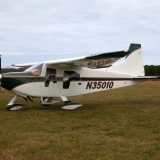
I came across this guy.
http://imgur.com/NnaPA
182 enroute to the islands...
Fri Feb 24, 2012 12:51 pm
Fri Feb 24, 2012 1:01 pm
Re: 182 enroute to the islands...
Long lonely trip, Imagine what it will feel like when he first sees the Island.

Fri Feb 24, 2012 2:30 pm
Re: 182 enroute to the islands...
Only 9 hrs left!
- piperpainter offline
- Posts: 968
- Joined: Sat Nov 29, 2008 10:57 pm
- Location: Auburn, WA
- Aircraft: C-205
Was Backcountry Mooney M20C
Fri Feb 24, 2012 3:37 pm
Re: 182 enroute to the islands...
crazy long time in a 182

Fri Feb 24, 2012 4:11 pm
Re: 182 enroute to the islands...
15 hours at 6000' and 135 kts is wide open...and likely about 12.5 gph...16 hrs is 200 gallons. its a 15 hr flight, and you'd want 2 hrs extra I'd imagine. That's 1344 in fuel. Plus the pilot and gear...
Not to mention the soda bottles you'd need to keep from turning yellow, and how to use said bottles with a survival suit...
Not to mention the soda bottles you'd need to keep from turning yellow, and how to use said bottles with a survival suit...
Fri Feb 24, 2012 4:47 pm
Re: 182 enroute to the islands...
I've been tracking his progress at the following link. He's past the halfway mark.
http://flightaware.com/live/flight/N7321Q
I sure hope he doesn't end up like the C-310 that left Monterey, CA to do the same flight. 2400 miles and he ran out of fuel 13 miles from Hilo. Less than 10 minutes in a 310. What a shame. Coast Guard picked him up put the plane was a loss. Great water landing.
Thank goodness he survived to fly another day!
http://www.youtube.com/watch?v=TJadOjAQq8A
http://flightaware.com/live/flight/N7321Q
I sure hope he doesn't end up like the C-310 that left Monterey, CA to do the same flight. 2400 miles and he ran out of fuel 13 miles from Hilo. Less than 10 minutes in a 310. What a shame. Coast Guard picked him up put the plane was a loss. Great water landing.
Thank goodness he survived to fly another day!
http://www.youtube.com/watch?v=TJadOjAQq8A
- SkylaneSam offline
- Posts: 143
- Joined: Thu Oct 06, 2011 7:38 pm
- Location: Puget Sound & Idaho
Sat Feb 25, 2012 6:47 am
Re: 182 enroute to the islands...
Well, he made it. 15hrs 6min. He had some faith in TCM and his mechanic.....and a lot of gas 
- RWM offline
- Posts: 253
- Joined: Tue Nov 01, 2011 8:06 pm
- Location: Sterling City, Texas
- FindMeSpot URL: http://share.findmespot.com/shared/face ... mlQOs5kZFh
- Aircraft: Maule MX7-235
Sun Feb 26, 2012 9:19 am
Re: 182 enroute to the islands...
He's back at it today. This time from Hilo to Pago Pago at a short 2600 miles and over 16 hours.
http://flightaware.com/live/flight/N7321Q
http://flightaware.com/live/flight/N7321Q
Sun Feb 26, 2012 9:23 am
Re: 182 enroute to the islands...
Just imagine that trip pre-GPS days.....
Gump
Gump
Sun Feb 26, 2012 10:49 am
Re: 182 enroute to the islands...
In the 1970s and 80s in the heyday of aviation, dozens of light aircraft were ferried all over the world.
The shortest route to Hawaii of 2150nm is the the longest necessary ocean crossing.
Star siteing at night and contrails by day was the norm.
Many aircraft left the west coast (Santa Barbara)as a group flight with one HF radio between them, in the evening when cooler, climb slowly for hours and emerge into daylight hopefully on course but having backup of contrails then the cloud buildups over islands to find the target.
Cherokees, C172s and all sorts of planes made the trip.
The Atlantic run from New Brunswick to the Azores i think is about 1650nm. Or, in summer you go by way of Greenland and Iceland.
Nowadays it is cheaper to pack in a 40ft container and ship. Timeing is similar as there is no need to tank and then wait for favourable winds.
An aquaintance of mine, flew a C185 to Hawaii and his fuel pump quit 250 nm short of HI, the boost pump got him up to 12,000msl before it quit.
He managed to find a freighter then had a nice long glide towards it.
He ditched closeby, into the wind as slow as possible. On impact it is surmised the gear broke back, the plane settled to wings on water, pilot had door jarred open, let water pressure equalize, got out thinking "darn I forgot to take off my cowboy boots for swimming) surfaced behind the wing and barely got to look around when a couple hands grabbed him by the collar and dragged him into the freighter's lifeboat.
The engine end sank in 4mins and tailcone slipped beneath the surface on its last flight to Davy Jones in 14mins.
The shortest route to Hawaii of 2150nm is the the longest necessary ocean crossing.
Star siteing at night and contrails by day was the norm.
Many aircraft left the west coast (Santa Barbara)as a group flight with one HF radio between them, in the evening when cooler, climb slowly for hours and emerge into daylight hopefully on course but having backup of contrails then the cloud buildups over islands to find the target.
Cherokees, C172s and all sorts of planes made the trip.
The Atlantic run from New Brunswick to the Azores i think is about 1650nm. Or, in summer you go by way of Greenland and Iceland.
Nowadays it is cheaper to pack in a 40ft container and ship. Timeing is similar as there is no need to tank and then wait for favourable winds.
An aquaintance of mine, flew a C185 to Hawaii and his fuel pump quit 250 nm short of HI, the boost pump got him up to 12,000msl before it quit.
He managed to find a freighter then had a nice long glide towards it.
He ditched closeby, into the wind as slow as possible. On impact it is surmised the gear broke back, the plane settled to wings on water, pilot had door jarred open, let water pressure equalize, got out thinking "darn I forgot to take off my cowboy boots for swimming) surfaced behind the wing and barely got to look around when a couple hands grabbed him by the collar and dragged him into the freighter's lifeboat.
The engine end sank in 4mins and tailcone slipped beneath the surface on its last flight to Davy Jones in 14mins.
- maules.com offline
- Posts: 561
- Joined: Mon Jan 09, 2006 9:35 pm
- Location: west coast
Sun Feb 26, 2012 3:23 pm
Re: 182 enroute to the islands...
Just imagine that trip pre-GPS days.....
Before GPS and Loran, those were mighty small dots in a mighty big ocean......
No thanks,
lc
Humor may not make the world go around, but it certainly cheers up the process... 
With clothing, the opposite of NOMEX is polypro (polypropylene cloth and fleece).
Success has many fathers...... Failure is an orphan.
With clothing, the opposite of NOMEX is polypro (polypropylene cloth and fleece).
Success has many fathers...... Failure is an orphan.
Sun Feb 26, 2012 4:16 pm
Re: 182 enroute to the islands...
Looks like they've diverted to Cassidy... maybe the winds shifted? At least this leg had some options unlike the flight to Hawaii. Impressive amount of flying!
Sun Feb 26, 2012 4:34 pm
Re: 182 enroute to the islands...
I can think of better places to be stuck... But, sure beats parking in the Pacific.
http://en.wikipedia.org/wiki/Kiritimati
Gump
http://en.wikipedia.org/wiki/Kiritimati
Gump
Sun Feb 26, 2012 7:27 pm
Re: 182 enroute to the islands...
Rando wrote:He's back at it today. This time from Hilo to Pago Pago at a short 2600 miles and over 16 hours.
http://flightaware.com/live/flight/N7321Q
Is that his actual track or an estimated track? Regardless, it's about beerthirty for him.
- mountainmatt offline

- Posts: 2803
- Joined: Sat Apr 11, 2009 2:43 pm
- Location: Colorful Colorado
FlyingPoochProductions
FlyColorado.org
FlyColorado.org
Sun Feb 26, 2012 7:56 pm
Re: 182 enroute to the islands...
mountainmatt wrote:Is that his actual track or an estimated track? Regardless, it's about beerthirty for him.
He started out going to Pago Pago but diverted. Guess he wasn't "feeling" it today.
Sun Feb 26, 2012 10:23 pm
Re: 182 enroute to the islands...
I would like to know the whole story here. Is he ferrying an aircraft for someone? or is this for the fun of doing it? Where is his final destination?
I want to do something like this some day. Either Alaska, Russia, Japan or Europe via Greenland, Iceland. I would also like to do it in a light sport type aircraft or maybe a motor glider. The Alaska, Alaska, Japan route might be fun with an amphib if it becomes possible to land in places other than those currently allowed in Russia.
D.
I want to do something like this some day. Either Alaska, Russia, Japan or Europe via Greenland, Iceland. I would also like to do it in a light sport type aircraft or maybe a motor glider. The Alaska, Alaska, Japan route might be fun with an amphib if it becomes possible to land in places other than those currently allowed in Russia.
D.

Mon Feb 27, 2012 6:21 am
Re: 182 enroute to the islands...
Years ago (during the last century) I worked in Santa Barbara. The folks at Southern Cross would install tanks in Santa Paula then ferry over to SBA for an O'dark30 departure to Hawaii. I bet they were doing at least one a month. One fine afternoon I flew in and as I was putting the Cheyenne I was flying to bed I spied a twin beech complete with oil drip pans which were actually almost dry under the engines. I asked the lineman about it and he said it was a Southern Cross flight due to depart very early the next morning. The next day I headed out to the airport for a flight around 8AM. It was FOGGY. Right on the deck foggy. As I finished my pre-flight I see the Beech in a different spot with a prop feathered and the drip pan under that engine full of oil. Thinking to myself "self, that doesn't look good" I asked the morning lineman what happened. Apparently he departed on time at 5AM and was back about 2 and a half hours later. About an hour into the flight he lost something and had to shut down the left engine and turn around. That poor Beech was so heavy he never got above 2000 feet, after feathering it he drifted down to about 500 feet which was just on top of the fog and headed back to SBA which due to certain granite formations in the area was the only airport he could make. OXR was zero/zero and farther away, at least by 7 AM SBA was, um, not zero/zero although I had to slow down to read the road signs on the freeway on my way to work. Anyway he intercepted the localizer and held it to the glide slope then put the gear down at which point he was committed to land and obviously made it. This was in the days before approach control had radar and Loran was still in the early planning stages so finding the ILS was a combination of DR and faintly being able to pick up the GVO VOR when he got closer.
SC would normally put in an ADF if it didn't already have one, a small HF and survival gear and off they would go. As I remember most of their deliveries were to the South Pacific, NZ, Australia, New Guinea etc. As far as I know they never lost anybody. At that altitude the guys got real good at reading the wind by looking at the water, making adjustments and pressing on. There are some good, high powered AM radio stations at both ends. If all else fails low level puffy clouds are quite often associated with land.
SC would normally put in an ADF if it didn't already have one, a small HF and survival gear and off they would go. As I remember most of their deliveries were to the South Pacific, NZ, Australia, New Guinea etc. As far as I know they never lost anybody. At that altitude the guys got real good at reading the wind by looking at the water, making adjustments and pressing on. There are some good, high powered AM radio stations at both ends. If all else fails low level puffy clouds are quite often associated with land.

John
KSBP
KSBP
Mon Feb 27, 2012 12:38 pm
- mountainmatt offline
- Posts: 2803
- Joined: Sat Apr 11, 2009 2:43 pm
- Location: Colorful Colorado
FlyingPoochProductions
FlyColorado.org
FlyColorado.org
Mon Feb 27, 2012 3:18 pm
Re: 182 enroute to the islands...
Rando wrote:He started out going to Pago Pago but diverted. Guess he wasn't "feeling" it today.
Even his "divert" was 15 hours, and 1,972 miles over open ocean. Whole lotta flying with an engine on auto-rough.....
Gump
Mon Feb 27, 2012 3:40 pm
Re: 182 enroute to the islands...
I can't believe I came across it by randomly clicking on an icon on the Flightaware page. There must be a lot of these going on all the time...
DISPLAY OPTIONS
Who is online
Users browsing this forum: No registered users and 8 guests
Latest Features
-
Live to Tell
A Minnesota pilot is surprised to learn that the sudden asymmetric drag of an out-of-rig ski can…Read More -
Creators
Working in some of the Yukon's most beautiful and remote environments, photographer Simon Blakesley captures aircraft in…Read More -
Aircraft Ownership and Maintenance
Upgrading to big tires can make a huge difference in backcountry performance, but with those gains come…Read More -
Tales from Yesteryear
In this tale from bush flying yesteryear, Don Cogger signs up to help Atlee Dodge Jr recovery…Read More


Latest Knowledge Base
-
Destinations
A regional guide with ideas for winter camping destinations in California, Nevada, New Mexico, and Arizona.Read More -
Aircraft
Finding an affordable aircraft that can handle the backcountry for $80K or less? A challenge for sure, but with the…Read More -
Aircraft
01.29.2018 - Zane - Updated tire diameter graphic to add 8.50x10 Guide to tires for use in the backcountry and off-airport landing…Read More -
Pilots
12.22.2013 - Initial article format Operating aircraft on skis and negotiating a snow-covered landscape is an entirely unique skillset and environment.…Read More


