Emory Bored wrote:
Those guys didn't have call signs. They went by names such as "Bubbles", "Moondoggie" "Potato Flake" etc. It's too bad we can't do that actually. EZflap this is Emery Board how copy?
The pilots in soaring competitions use "contest numbers", which originally were a combination of two numbers or letters or both (later three). 30 years ago (OMFG) mine was VB, other contest guys I flew with were 66, MS, R1, 3V, LB, and so on. Although we were supposed to use the aviation phonetic alphabet ("Romeo One", "Five Zulu" etc.), being the egomaniacal wacky racers that we were, we came up with handles and nicknames. MG was known far and wide as "Mighty Gorilla", "JP" who was a test pilot instructor at KEDW went by "Jet Pilot" and so on.
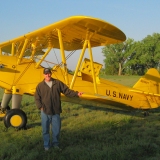
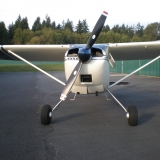
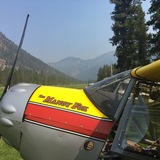
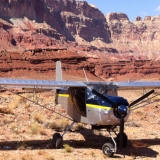
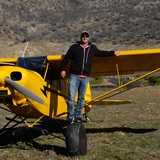
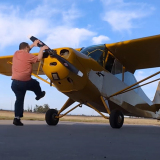
When I got back in to powered aircraft, at non-tower airports back in the "Unicom" days, people would identify themselves the same way as they would with a tower... "This is Cessna 7206A", etc. But in the past few years, I've seen a trend at some non-towered airports (notably Santa Paula here in SoCal) that makes a lot of sense to me. The other guy in the pattern doesn't give a damn what your N number is. They want to be able to identify you by what they see. So "White and blue Cessna, downwind abeam at 800 feet" is a lot more useful information for the guy listening than an N number or even model number.
This may be relevant to back country airstrips for two reasons. First, it gives other pilots an idea of what color and general type airplane they are looking for. Second, it can save a second or two worth of talking, which can make it easier for another person to find an open break to transmit. "November Three Seven Three Niner Foxtrot" should take less time than "Yellow Super Cub".
As someone has already pointed out, see and avoid must be the
first line of defense no matter what else you do, but I also must agree with another post that
anything that can add
another level of safety to that is fine with me so long as it is reasonable cost.
A guy at a BBQ today told me he just bought a little e-gadget that gives him ADS-B and traffic and a usable electronic attitude indicator and nationwide weather on his iPad, inflight, and in real-time. That kind of stuff scares the crap out of me, but if I had the brain power and mind-set to learn these new languages and gadgets I'd sure give it a try. An airplane's wing has to be somewhere, and there will always be someplace that the wing blocks your vision, where see and avoid will be difficult.
So I vote for a radio procedure to
augment see and avoid.
 The frequency blows up when San Francisco radio forgets to switch aircraft to the new primary frequency.