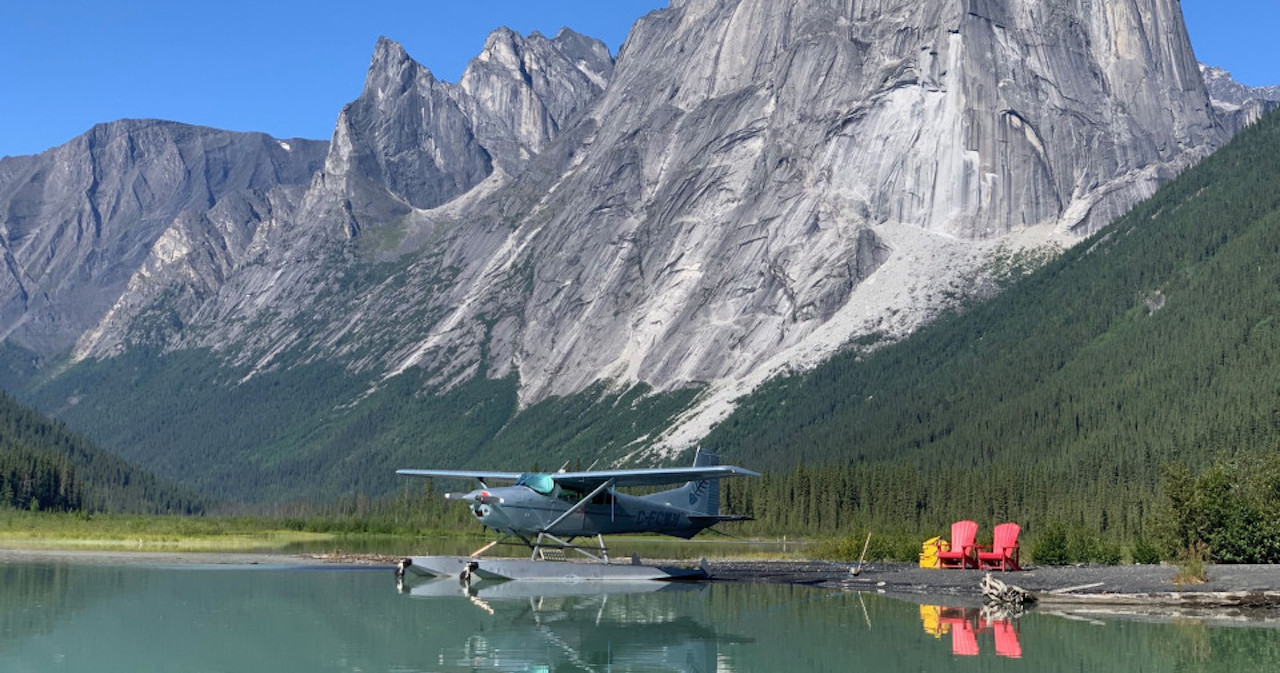
Looking for ideas on a suitable, lightweight, collapsible anchor to use in conjunction with this product for offshore mooring.
https://www.slideanchor.com/all-products/anchor-buddy
Anchor in a Storm
Wed Jun 15, 2022 3:54 pm

Wed Jun 15, 2022 5:05 pm
Re: Anchor in a Storm
Depends on your definition of “storm”. Personally, I’d be very skeptical of mooring out in big winds. In Kodiak, I carried a running line rig, with anchor, but no way I’d use that in big wind.
Other problem is what kind of bottom will you face?
Finally, a “proper” anchor setup requires a good stretch of heavy chain to keep the anchor properly oriented. All that stuff gets heavy. Especially in a 170.
MTV
Other problem is what kind of bottom will you face?
Finally, a “proper” anchor setup requires a good stretch of heavy chain to keep the anchor properly oriented. All that stuff gets heavy. Especially in a 170.
MTV


Wed Jun 15, 2022 6:56 pm
Re: Anchor in a Storm
All light winds, just need an "offshore" option when a can't leave it on the shore. I've looked at some aluminum anchors that seem to "pack" nicely but will they hold the bottom given a suitable structure.
Wed Jun 15, 2022 7:35 pm
Re: Anchor in a Storm
Mapleflt wrote:All light winds, just need an "offshore" option when a can't leave it on the shore. I've looked at some aluminum anchors that seem to "pack" nicely but will they hold the bottom given a suitable structure.
A long line and a chain rode to orient the anchor flat on bottom so it'll dig in. The chain also helps keep the anchor oriented right when the plane tends around as wind changes.
With a mud bottom, an anchor without a chain rode MAY hold well enough. In rocks, it depends. And, in rocks, they can foul.....
In 29 years of flying floats a lot, I never carried an anchor, except as noted above, as part of a running line rig. The running line was mostly due to big tides in Kodiak.
MTV
Thu Jun 16, 2022 6:04 am
Re: Anchor in a Storm
I too would like an offshore option, in my trips to arctic Quebec I've always carried a prop harness and an aluminum anchor. Never had the cajones to actually moor it off shore in a big wind though, I flooded the floats once to get it to stabilize in a big onshore wind.
I'd love to have the right gear and practice the skill of mooring the seaplane. I can't imagine getting a good nights sleep while its offshore though...
Brad
I'd love to have the right gear and practice the skill of mooring the seaplane. I can't imagine getting a good nights sleep while its offshore though...
Brad
- Durango Skywagon offline
- Posts: 281
- Joined: Sat Oct 27, 2007 6:29 pm
- Location: Durango, Colorado
- FindMeSpot URL: http://share.findmespot.com/shared/face ... 0mZtv6OxWk
How to Overthrow the System: brew your own beer; kick in your Tee Vee; kill your own beef; build your own cabin and piss off the front porch whenever you bloody well feel like it. - Edward Abbey
My Spot Page
My Spot Page
Thu Jun 16, 2022 6:54 am
Re: Anchor in a Storm
A guy I know does anchor testing & documents his results on you tube.
Here's a link to his 100th video, kind of a recap.
https://www.youtube.com/watch?v=smgWTtFuk3U
Here's a link to his 100th video, kind of a recap.
https://www.youtube.com/watch?v=smgWTtFuk3U
Cessna Skywagon -- accept no substitute!
Thu Jun 16, 2022 8:47 am
Re: Anchor in a Storm
MTV gave the rundown on a proper anchor setup, which frankly isn’t practical in a plane. The chain from the anchor to the rode (anchor line / “rope”) is as important as the anchor itself, it weights the rode to make sure the pull on the anchor is as close to perpendicular to the bottom as possible. Worth remembering we free and retrieve anchors from the bottom by lifting upwards on them. It also acts as the shock absorber, as whatever is attached to the rode up on the surface has to lift the chain off the bottom each tug, before the anchor has to take a hard jerk. Without chain an anchor has little chance of rehoooking when pulled as well, the chain makes sure it drags perpendicular to the bottom and has a chance to grab again.
Without the chain, you have a lunch hook, which is useful but can’t be relied on in anything beyond breezes, especially in anything that you could refer to as wind. If you had to use an anchor in wind, you’d need a massive scope (ratio of the amount of anchor rode [line / rope] out to the depth of the water). To weather a storm, you need at least a 7:1 scope and chain, and that’s minimum for a storm. 5:1 is considered the minimum for fair weather. That means for 20’ of water, you need 150’+ of rode to get 7:1 as the scope isn’t truly rode length, it’s actually longer as the rode takes the shortcut of the distance. But that’s a more involved talk. Gist is you need a ton of rode (rope) plus chain to have any kind of security.
Carrying a couple hundred feet of wet rode, and 25lbs of chain, plus anchor isn’t practical in most floatplanes. I believe MTV alluded to the next thought, and that’s shuttling out the plane between two fixed points in deep enough water. I’ve used this a lot, to keep the floatplane moored in tidal estuaries and inlets. Problem is it’s fixed at the nose and tail to the lines, which you operate like a clothes line to shuttle the plane off shore to deeper water, and then back in to retrieve. This means it can’t weather cock in strong wind, so it better be sheltered, it won’t ride out a storm. It requires a lot of rope too, hundreds of feet, to reach two trees or rocks and keep the plane off shore. A similar rig can be set up on a fixed mooring if you are always using the same spot, where the plane ends up on a buoy and can be retrieved from shore, a buoy on which it can weather cock. But that mooring would best be described as engine block sized, and is permanent.
These were the challenges that made me hire charters more and more often for coastal my outfitting operation, as running my own plane and keeping it safe was a constant source of stress. You can never leave it unattended.
Without the chain, you have a lunch hook, which is useful but can’t be relied on in anything beyond breezes, especially in anything that you could refer to as wind. If you had to use an anchor in wind, you’d need a massive scope (ratio of the amount of anchor rode [line / rope] out to the depth of the water). To weather a storm, you need at least a 7:1 scope and chain, and that’s minimum for a storm. 5:1 is considered the minimum for fair weather. That means for 20’ of water, you need 150’+ of rode to get 7:1 as the scope isn’t truly rode length, it’s actually longer as the rode takes the shortcut of the distance. But that’s a more involved talk. Gist is you need a ton of rode (rope) plus chain to have any kind of security.
Carrying a couple hundred feet of wet rode, and 25lbs of chain, plus anchor isn’t practical in most floatplanes. I believe MTV alluded to the next thought, and that’s shuttling out the plane between two fixed points in deep enough water. I’ve used this a lot, to keep the floatplane moored in tidal estuaries and inlets. Problem is it’s fixed at the nose and tail to the lines, which you operate like a clothes line to shuttle the plane off shore to deeper water, and then back in to retrieve. This means it can’t weather cock in strong wind, so it better be sheltered, it won’t ride out a storm. It requires a lot of rope too, hundreds of feet, to reach two trees or rocks and keep the plane off shore. A similar rig can be set up on a fixed mooring if you are always using the same spot, where the plane ends up on a buoy and can be retrieved from shore, a buoy on which it can weather cock. But that mooring would best be described as engine block sized, and is permanent.
These were the challenges that made me hire charters more and more often for coastal my outfitting operation, as running my own plane and keeping it safe was a constant source of stress. You can never leave it unattended.

Thu Jun 16, 2022 10:22 am
Re: Anchor in a Storm
Durango Skywagon wrote:I too would like an offshore option, in my trips to arctic Quebec I've always carried a prop harness and an aluminum anchor. Never had the cajones to actually moor it off shore in a big wind though, I flooded the floats once to get it to stabilize in a big onshore wind.
I'd love to have the right gear and practice the skill of mooring the seaplane. I can't imagine getting a good nights sleep while its offshore though...
Brad
I've partially flooded floats more than once while riding out a storm. There is no such thing as sleep in those kinds of deals.
Ardent did a much better job than I of describing the specifics of what's needed, even in a fairly light breeze. A true "storm" anchoring system just isn't practical to carry in a seaplane.
And, if you get into salt water, you're going to have a mess of wet line, soaked in salt water, INSIDE your plane....think about that for a bit.
The running line I used in Kodiak was generally a major cluster to gather up, put in the plane, and then set out, retrieve, etc, etc. And, I would NEVER put it inside the plane....went in a float compartment.....always salty.
In my experience, there simply is no safe and practical way to anchor a seaplane, assuming there will be any significant breeze. These things are giant wind catchers, BTW. And, they're also not boats.
MTV
Thu Jun 16, 2022 11:57 am
Re: Anchor in a Storm
I’ve seen them pull up on an anchored floating dock which is a great solution for a permanent deal. Keep a small boat tied to it to get back and forth. I don’t do floats but I do boats. I would not anchor a float plane out where I live.
Thu Jun 16, 2022 5:14 pm
Re: Anchor in a Storm
So I’m officially scrubbing the whole anchoring idea. It was primarily intended for when I couldn’t park onshore not high winds but the logistics seem a bit squishy
Thu Jun 16, 2022 6:33 pm
Re: Anchor in a Storm
I am scrubbing it too, thanks for all the input. I have been working on the anchoring idea ever since reading: Water Flying Concepts: An Advanced Text on Wilderness Water Flying. I kind of thought it was the best text going beyond the basics. The author has a chapter on offshore mooring and anchoring, maybe I was mistaken that he was advocating this for remote operations, it seems clear that you cannot carry the right gear to do it right. I'll have to re-read it.
I practice emergency medicine for a living in austere environments. I also teach it. The text books are full of things that don't work in real life situations. I always like the advice of seasoned practitioners.
Brad
I practice emergency medicine for a living in austere environments. I also teach it. The text books are full of things that don't work in real life situations. I always like the advice of seasoned practitioners.
Brad
- Durango Skywagon offline
- Posts: 281
- Joined: Sat Oct 27, 2007 6:29 pm
- Location: Durango, Colorado
- FindMeSpot URL: http://share.findmespot.com/shared/face ... 0mZtv6OxWk
How to Overthrow the System: brew your own beer; kick in your Tee Vee; kill your own beef; build your own cabin and piss off the front porch whenever you bloody well feel like it. - Edward Abbey
My Spot Page
My Spot Page
Sun Jul 03, 2022 11:57 am
Re: Anchor in a Storm
How much weight would the anchor have to have to be sufficient for a permanent mooring? For a 180, so about 2250 lbs.
Sun Jul 03, 2022 6:24 pm
Re: Anchor in a Storm
Ideally go to shore and hangar or flood the floats
Off shore you better have +8x the depth and 10’ plus of chain on the end.
Off shore you better have +8x the depth and 10’ plus of chain on the end.
Last edited by NineThreeKilo on Mon Jul 04, 2022 10:53 am, edited 1 time in total.
- NineThreeKilo offline
- Retired
- Posts: 1678
- Joined: Thu Dec 31, 2009 8:16 pm
- Location: _
Mon Jul 04, 2022 9:44 am
Re: Anchor in a Storm
NotTheCat wrote:How much weight would the anchor have to have to be sufficient for a permanent mooring? For a 180, so about 2250 lbs.
Far too many variables to even begin to answer a question like this.
What kind of bottom: Sand, Mud, rock, all the above, etc.
Is it in an area protected from wind, wave action, or open?
Subject to prevailing winds?
Etc, etc, etc.
MTV
Mon Jul 04, 2022 10:51 am
Re: Anchor in a Storm
One thought, if you don’t have a rocky bottom is dyneema it’s VERY strong, stronger than steel cable, and very light to the point it floats, takes abrasion better than most line, but not a replacement for chain if you have lots of rocks rubbing it.
https://www.westmarine.com/buy/samson-r ... P014895700
https://www.westmarine.com/buy/samson-r ... P014895700
- NineThreeKilo offline
- Retired
- Posts: 1678
- Joined: Thu Dec 31, 2009 8:16 pm
- Location: _
DISPLAY OPTIONS
Who is online
Users browsing this forum: No registered users and 1 guest
Latest Features
-
-
Featured Bush Planes
As one of the undisputed legends of bush flying, the Cessna 180 hauls a…Read More -
Aircraft Ownership and Maintenance
9 modification mistakes aircraft owners make when trying to "bush out" their birds—why some…Read More -
Live to Tell
A Minnesota pilot is surprised to learn that the sudden asymmetric drag of an…Read More


Latest Knowledge Base
-
Destinations
Canada offers some of the most spectacular backcountry flying on the continent. Here's what you need to know before you go.Read More -
Safety and Survival
Hope that you never have to use your survival vest but knowing you have it and knowing how to use…Read More -
Destinations
A regional guide with ideas for winter camping destinations in California, Nevada, New Mexico, and Arizona.Read More -
Aircraft
Finding an affordable aircraft that can handle the backcountry for $80K or less? A challenge for sure, but with the…Read More