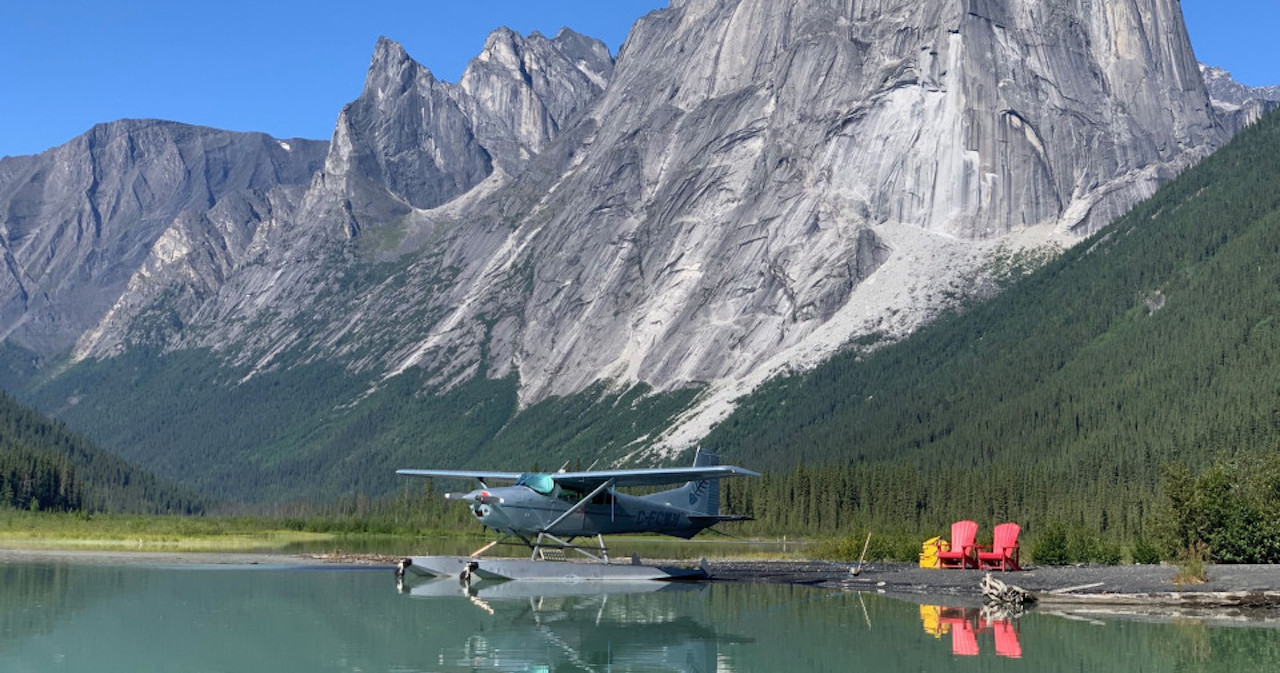
Hey guys, trying to acquire a broader understanding of propellors for backcountry/off airport flying. I'd really appreciate any information/experience on things like:
short blades vs. long blades
Max HP and Thrust
cruise and climb
2 blade vs 3 blade
Durability
Specifically, trying to understand the pro's and con's of the different options for an 0-470 powered skywagon. Already bought a 82" C66 for the new engine, planning on using it till I decide what is best for my mission. Kinda stumped on how to be clearer and more to the point, but just trying to learn from others who have already been down this road. Kinda like trying to find the perfect plane that does everything you want...
Thanks
-edited my original thread as it was probably way too broad.
Backcountry Propellor Options
Mon Feb 25, 2013 7:20 pm
Backcountry Propellor Options
Last edited by Skalywag on Mon Feb 25, 2013 11:29 pm, edited 1 time in total.
Mon Feb 25, 2013 9:21 pm
Re: Backcountry Propellor Education
He needs some help rob.  He wants to know if size matters.
  Is it possible to get max usage out of your motor with a 82" blade? 230-260hp. Can you have the blades indexed to work at a more beneficial short field app. How much difference between 82 & 88" blades? And all the other stuff to. Dont mean to cut you short bro. Been heavy on the Jameson to tonight.
  Don't worry. 6"s doesn't make that much difference.
He wants to know if size matters. Is it possible to get max usage out of your motor with a 82" blade? 230-260hp. Can you have the blades indexed to work at a more beneficial short field app. How much difference between 82 & 88" blades? And all the other stuff to. Dont mean to cut you short bro. Been heavy on the Jameson to tonight. Don't worry. 6"s doesn't make that much difference. Tue Feb 26, 2013 9:15 am
Re: Backcountry Propellor Options
I can't help you with specific propeller models and brands, or anything like that. But, for a job once, I wrote a piece of software that calculated electric motor efficiency, thrust and pitch speed for different propellers. So, I can write a little about the general theory of propeller aerodynamics.
The primary qualities of a propeller are thrust (in pounds, for example), which is the mass of air that your propeller moves from in front of the propeller to behind it, and pitch speed, which is the speed of the airstream created by the propeller. As you can imagine, it's not possible to ever fly faster than your propeller's pitch speed (unless in a descent). The only factors that effect thrust and pitch speed are the propellers diameter and pitch. Whether a propeller has 2 or 3 blades doesn't matter as much, except in terms of efficiency. A 3 blade propeller is more efficient.
Now think about what happens when a propeller blade turns one revolution, ignoring slippage and inefficiencies. It moves forward a distance exactly equal to the pitch. For the purposes of thrust, we can assume that we've moved the mass of air contained within the cylinder defined by the diameter of the propeller and the distance of its pitch. During climb, this is the most important quality, because your drag is the highest. Mostly from the large induced drag caused by the horizontal (backward) component of lift.
In cruise, we have a minimum amount of drag so we want to spend our horsepower moving just enough air to overcome drag as quickly as possible. In this case, pitch speed is more important.
In all cases we have constraints. For example, we don't want our tips breaking the speed of sound if we can help it. Also, the horsepower required increases roughly with the square of diameter. Those things set a limit on the diameter of propeller that we can use, that and ground clearance. On the other side of the coin, we want a prop that is a big as possible because, like wings, they have trailing vortices and that will rob power from a short prop. All of these factors contribute to a coefficient used to scale the theoretical equations into real life. This is where scimitar, 3-bladed, specific brands, etc. matter.
I'm very tired at the moment, so I hope I'm not too rambling. But that's almost everything I know about propellers. All this was in the context of radio control. So, things are VERY cheap. What most people do there is they use the calculator to choose a starting point (dia. and pitch) then hunt around in that range for a great prop. With real planes, that would cost a fortune! I hope that people with real experience chime in so we can really learn something.
The primary qualities of a propeller are thrust (in pounds, for example), which is the mass of air that your propeller moves from in front of the propeller to behind it, and pitch speed, which is the speed of the airstream created by the propeller. As you can imagine, it's not possible to ever fly faster than your propeller's pitch speed (unless in a descent). The only factors that effect thrust and pitch speed are the propellers diameter and pitch. Whether a propeller has 2 or 3 blades doesn't matter as much, except in terms of efficiency. A 3 blade propeller is more efficient.
Now think about what happens when a propeller blade turns one revolution, ignoring slippage and inefficiencies. It moves forward a distance exactly equal to the pitch. For the purposes of thrust, we can assume that we've moved the mass of air contained within the cylinder defined by the diameter of the propeller and the distance of its pitch. During climb, this is the most important quality, because your drag is the highest. Mostly from the large induced drag caused by the horizontal (backward) component of lift.
In cruise, we have a minimum amount of drag so we want to spend our horsepower moving just enough air to overcome drag as quickly as possible. In this case, pitch speed is more important.
In all cases we have constraints. For example, we don't want our tips breaking the speed of sound if we can help it. Also, the horsepower required increases roughly with the square of diameter. Those things set a limit on the diameter of propeller that we can use, that and ground clearance. On the other side of the coin, we want a prop that is a big as possible because, like wings, they have trailing vortices and that will rob power from a short prop. All of these factors contribute to a coefficient used to scale the theoretical equations into real life. This is where scimitar, 3-bladed, specific brands, etc. matter.
I'm very tired at the moment, so I hope I'm not too rambling. But that's almost everything I know about propellers. All this was in the context of radio control. So, things are VERY cheap. What most people do there is they use the calculator to choose a starting point (dia. and pitch) then hunt around in that range for a great prop. With real planes, that would cost a fortune! I hope that people with real experience chime in so we can really learn something.
Last edited by hpux735 on Tue Feb 26, 2013 12:07 pm, edited 2 times in total.
- hpux735 offline

- Posts: 86
- Joined: Thu Nov 22, 2012 9:47 pm
- Location: Corvallis, OR
- FindMeSpot URL: http://share.findmespot.com/shared/face ... ViDjGmD0RW
Tue Feb 26, 2013 9:16 am
Re: Backcountry Propellor Options
Finally, 3-bladed props look the coolest.
- hpux735 offline
- Posts: 86
- Joined: Thu Nov 22, 2012 9:47 pm
- Location: Corvallis, OR
- FindMeSpot URL: http://share.findmespot.com/shared/face ... ViDjGmD0RW
Tue Feb 26, 2013 9:32 am
- Glidergeek offline

- Posts: 1944
- Joined: Sat Sep 06, 2008 8:02 pm
- Location: Hesperia
- Aircraft: 1968 P206C
DG 400
Tue Feb 26, 2013 10:47 am
Re: Backcountry Propellor Options
hpux735 wrote:Whether a propeller has 2 or 3 blades doesn't matter as much, except in terms of efficiency. A 3 blade propeller is more efficient.
A three blade prop is not more efficient in general than a one (serious) or two blade prop.
A three blade prop lets the engine produce more HP with higher RPM by using a smaller diameter to keep from getting too close to sonic speed at the tips (which can dramatically increase drag losses). In general, 3-blade props have the edge at max RPM (takeoff and climb) due to its ability to avoid transonic drag. This advantage pretty much disappears as soon as the RPM is reduced. They are also heavier usually, and more expensive. That being said, they are also a lot quieter to fly behind, with lower vibe and cabin noise. The performance advantage during TO and climb can be significant. During cruise, the blade drag of 3-blade props is slightly higher, and a small penalty is paid in speed.
Tue Feb 26, 2013 10:58 am
Re: Backcountry Propellor Options
Hpux735, thanks for the info much appreciated.
Glidergeek, thanks for the references. I'd already read them all though and have talked with lots of pilots and mechanics...still not satisfied that I understand the big differences in performance, and the characteristics that cause them to perform as such.
55, I'd be poundin the Jameson if I'd been waiting to get my ride back for 3 months too, haha!!!
Lesuther, that's the kind of info I'm lookin for thank you.
I'm aware the MT is the latest greatest and that the 401 is the tried and true. The MT is crazy expensive, and per my research haven't found much data on the longevity of these gold lined props. The 401 sounds great minus it being so heavy. (slower?)
The 88" 2 blade sounds good so far, but I want to know how much I will lose in cruise speed. So I guess what I'm really looking for is a breakdown of the pro's and cons of all these props instead of just a topic about one or the other. Also, more info on how and why these props perform the way they do???
Glidergeek, thanks for the references. I'd already read them all though and have talked with lots of pilots and mechanics...still not satisfied that I understand the big differences in performance, and the characteristics that cause them to perform as such.
55, I'd be poundin the Jameson if I'd been waiting to get my ride back for 3 months too, haha!!!
Lesuther, that's the kind of info I'm lookin for thank you.
I'm aware the MT is the latest greatest and that the 401 is the tried and true. The MT is crazy expensive, and per my research haven't found much data on the longevity of these gold lined props. The 401 sounds great minus it being so heavy. (slower?)
The 88" 2 blade sounds good so far, but I want to know how much I will lose in cruise speed. So I guess what I'm really looking for is a breakdown of the pro's and cons of all these props instead of just a topic about one or the other. Also, more info on how and why these props perform the way they do???
Tue Feb 26, 2013 1:20 pm
Re: Backcountry Propellor Options
lesuther wrote:hpux735 wrote:Whether a propeller has 2 or 3 blades doesn't matter as much, except in terms of efficiency. A 3 blade propeller is more efficient.
A three blade prop lets the engine produce more HP with higher RPM by using a smaller diameter to keep from getting too close to sonic speed at the tips (which can dramatically increase drag losses).
I am guessing that is what he means by "more efficient". Fewer losses per output.
lesuther wrote:The performance advantage during TO and climb can be significant. During cruise, the blade drag of 3-blade props is slightly higher, and a small penalty is paid in speed.
In that case - why do so many higher speed planes have 3 blade props (over 50% in my estimation), and most serious STOL planes have looong 2 blade props? (borer, etc)
I'm not questioning your logic, because it makes sense, I'm asking a genuine question based on my observations. Clearly there is more to the decision making process.

Tue Feb 26, 2013 2:12 pm
Re: Backcountry Propellor Options
Battson wrote:I am guessing that is what he means by "more efficient". Fewer losses per output.
Ok. Perhaps...but only because of transonic losses...the theoretical efficiency is better with a 1- or 2-blade prop. It's all a trade.
Battson wrote:lesuther wrote:The performance advantage during TO and climb can be significant. During cruise, the blade drag of 3-blade props is slightly higher, and a small penalty is paid in speed.
In that case - why do so many higher speed planes have 3 blade props (over 50% in my estimation), and most serious STOL planes have looong 2 blade props? (borer, etc)
High speed/high HP planes also tend to want low vibration (less impulse per blade, and frequencies shifted upwards to be less irritating)...and the penalty at cruise can be quite small (from <1% to 2% efficiency). Three blade props also offer more prop clearance, which is a factor in some planes. Low speed performance in multi-engine ships is quite important, and having a little extra thrust on the remaining engine means better accel/stop distances, closer engine location to centerline, etc. So it can be a lot more important than the small penalty at cruise, the extra cost, or the extra weight.
Battson wrote:I'm not questioning your logic, because it makes sense, I'm asking a genuine question based on my observations. Clearly there is more to the decision making process.
Yes.
Tue Feb 26, 2013 7:10 pm
Re: Backcountry Propellor Options
Good stuff everyone, keep it comin!!!
As far as smoothness I've heard arguments for both 2 and 3 being smoother, is the 3 blade really the gold standard in smoothness? A friend owns/fly's a T-34 with a group of guys that do formation stuff in airshows. Out of all their T-34's he is the only one with a 2 blade and supposedly all agree his is absolutely the smoothest ride...
If you're reading Rob, I'd really appreciate your input on the 2 blade 88" vs. your 3 blade MT. Having tried them both, what do you think about performance between the two? What about 90" blades???
-Thanks
As far as smoothness I've heard arguments for both 2 and 3 being smoother, is the 3 blade really the gold standard in smoothness? A friend owns/fly's a T-34 with a group of guys that do formation stuff in airshows. Out of all their T-34's he is the only one with a 2 blade and supposedly all agree his is absolutely the smoothest ride...
If you're reading Rob, I'd really appreciate your input on the 2 blade 88" vs. your 3 blade MT. Having tried them both, what do you think about performance between the two? What about 90" blades???
-Thanks
Wed Feb 27, 2013 8:42 am
Re: Backcountry Propellor Options
Go with the MT , even if its more expensive, its sooo nice you will not regret it.
Great braking power when in full pitch in mine in the 182.
Good help for high approaches.
Great braking power when in full pitch in mine in the 182.
Good help for high approaches.
Wed Feb 27, 2013 9:49 am
Re: Backcountry Propellor Options
motoadve wrote:Go with the MT , even if its more expensive, its sooo nice you will not regret it.
Great braking power when in full pitch in mine in the 182.
Good help for high approaches.
Everyone seems to love them for vibe and TO performance. If the extra cost (which adds up to years of fuel costs for a lot of us) is lying around in the seat cushions, have at it.
As for braking power, a moderate side slip turns a 182 into a Simonized manhole cover. Steep approaches were never a difficult task in a Cessna.
Wed Feb 27, 2013 10:11 am
Re: Backcountry Propellor Options
Hi Skaly,
Dunno if you were paging this Rob (there are too many Rob's here...) I stayed out of this one because I dunno much about props in general.. wayyyy too open ended of a question for my feeble mind.
Then I wrote a big long dissertation (go figure) on what I thought about the current offerings for 180/182's... but it timed out on me and my reply went to BCP hell somewhere... .... probably for the best
I might try again, but my number one opinion on this, as with everything else airplane is first honestly define your mission (just saying back country doesn't cut it)... then make the right choice for you... screw what all the cool kids are doing. (unless their mission happens to mimic yours )
Take care, Rob
Dunno if you were paging this Rob (there are too many Rob's here...) I stayed out of this one because I dunno much about props in general.. wayyyy too open ended of a question for my feeble mind.
Then I wrote a big long dissertation (go figure) on what I thought about the current offerings for 180/182's... but it timed out on me and my reply went to BCP hell somewhere...
.... probably for the best I might try again, but my number one opinion on this, as with everything else airplane is first honestly define your mission (just saying back country doesn't cut it)... then make the right choice for you... screw what all the cool kids are doing. (unless their mission happens to mimic yours
)Take care, Rob

Wed Feb 27, 2013 10:25 am
Re: Backcountry Propellor Options
... and avoid putting too much weight in cookie cutter answers... there are tooo many variables in these airplanes to accept the cut and paste theories. As an example, I have run longer blades on some prop / engine / airframe combinations (same prop blade just longer length) and gone faster. I have also ran transonic prop speeds (accidentally) and produced more measurable thrust. Just too many variables out there to make blanket statements...
Take care, Rob
Oh and I totally agree with lesuther... The MT does have significant more air braking, but so what... pull the nose up, or slip the airplane and you now have the whole fuselage as an air brake ... but as a wiser old owl out there pointed out to me, that air braking prop may not be your best friend in a low level engine out scenario... and I have never been a fan of using the prop to drive the engine on a recip anyway... but that's just me
Take care, Rob
Oh and I totally agree with lesuther... The MT does have significant more air braking, but so what... pull the nose up, or slip the airplane and you now have the whole fuselage as an air brake ... but as a wiser old owl out there pointed out to me, that air braking prop may not be your best friend in a low level engine out scenario... and I have never been a fan of using the prop to drive the engine on a recip anyway... but that's just me
Wed Feb 27, 2013 10:56 am
Re: Backcountry Propellor Options
"Oh and I totally agree with lesuther... The MT does have significant more air braking, but so what... pull the nose up, or slip the airplane and you now have the whole fuselage as an air brake ... but as a wiser old owl out there pointed out to me, that air braking prop may not be your best friend in a low level engine out scenario... and I have never been a fan of using the prop to drive the engine on a recip anyway... but that's just me"
That's me too, when I put the 3 blade McCauley on the front of the Pponked 180 the first think I noticed on the very first flight
was significant sink (like a brick) when i pulled the power. The combination of braking & added weight on the nose is not a good engine out too far from a suitable landing zone scenario. The second thing I noticed after I started getting comfortable with the HP, torque and speed among other things, was the exceptional climb. When I can afford a 3 blade MT I most likely will transition to one.
That's me too, when I put the 3 blade McCauley on the front of the Pponked 180 the first think I noticed on the very first flight
was significant sink (like a brick) when i pulled the power. The combination of braking & added weight on the nose is not a good engine out too far from a suitable landing zone scenario. The second thing I noticed after I started getting comfortable with the HP, torque and speed among other things, was the exceptional climb. When I can afford a 3 blade MT I most likely will transition to one.
- Glidergeek offline
- Posts: 1944
- Joined: Sat Sep 06, 2008 8:02 pm
- Location: Hesperia
- Aircraft: 1968 P206C
DG 400
Wed Feb 27, 2013 11:02 am
Re: Backcountry Propellor Options
Yes in an engine out will glide like a brick at take off or climb with full pitch.
In my case I find the braking power very nice to have. (I remember I hated it at the first flight, you can really feel a big difference).
For short fields its super nice to have , I dont want to do a sideslip close to trees o in a 50mph short field approach in my 182, Im not that experienced.
I also liked it a lot for my local airport, I come really really high, there is a gully at the threshold that sucks you in , gives you turbulence and throws you everywhere when its windy, I come super high and can touch on the numbers, without being disturbed by the gully effects.And no need for a sideslip (which kind of scares passengers)
Taking weight off the nose its also a major plus for me , and the smoothness of the prop makes you feel you are in a new plane.
I know Im not the most experienced pilot here but I use it for backountry, and changed from a Hartzell.
So Im just tellling you from my personal experience.
So far 300hrs on the MT it and has been very nice.
In my case I find the braking power very nice to have. (I remember I hated it at the first flight, you can really feel a big difference).
For short fields its super nice to have , I dont want to do a sideslip close to trees o in a 50mph short field approach in my 182, Im not that experienced.
I also liked it a lot for my local airport, I come really really high, there is a gully at the threshold that sucks you in , gives you turbulence and throws you everywhere when its windy, I come super high and can touch on the numbers, without being disturbed by the gully effects.And no need for a sideslip (which kind of scares passengers)
Taking weight off the nose its also a major plus for me , and the smoothness of the prop makes you feel you are in a new plane.
I know Im not the most experienced pilot here but I use it for backountry, and changed from a Hartzell.
So Im just tellling you from my personal experience.
So far 300hrs on the MT it and has been very nice.
Wed Feb 27, 2013 11:29 am
Re: Backcountry Propellor Options
Moto, muchas gracias amigo, I keep hearing great things about the MT.......but the difference in price would pay for a sportsman and a good chunk of the dream Rans S7 or kit Cub I hope to build in the next year or so, or even a trip to Costa Rica to come ride with you bro!!! Also, I am definitely gonna wait and see how they handle the test of time first, so keep us posted on yours please.
Rob, yup wanted your input as you have tried many of these first hand. Bummed that your breakdown of the options for the 180/182 went into BCP purgatory...please re-write I had to learn that lesson the hard way too, always copy my text before previewing or submitting.
As ya'll said one can slip the heck outta these things and dang is it fun...I like the idea of max glide and plan on the sporstman next to help with that.
More than just my mission, I was hoping for broad info on how and why these props do what they do, but since you asked I'll give a breakdown of my mission......I want it ALL Just kidding
40% is loaded heavy 2-4 hour low-level XC, only go high if there's a whippin tailwind or its gettin dark. 40% is lightly loaded checking on cows, waterlines, and game. This consists of running canyon's and lots of gusty winds at high DA's 5-9K. The other 20% is just pure fun landing wherever I have the cojones to, running canyons, pretending the mountains are giant waves and surfing em, and flyin to fun places like NM and CO for whatever adventure I can find. I fly pretty much every day and am doing atleast 400 hours a year so far for my super long career of two years Flying is the shit and all other priorities are steadily moving out of its way haha!!!
Rob, yup wanted your input as you have tried many of these first hand. Bummed that your breakdown of the options for the 180/182 went into BCP purgatory...please re-write
I had to learn that lesson the hard way too, always copy my text before previewing or submitting. As ya'll said one can slip the heck outta these things and dang is it fun...I like the idea of max glide and plan on the sporstman next to help with that.
More than just my mission, I was hoping for broad info on how and why these props do what they do, but since you asked I'll give a breakdown of my mission......I want it ALL
Just kidding40% is loaded heavy 2-4 hour low-level XC, only go high if there's a whippin tailwind or its gettin dark. 40% is lightly loaded checking on cows, waterlines, and game. This consists of running canyon's and lots of gusty winds at high DA's 5-9K. The other 20% is just pure fun landing wherever I have the cojones to, running canyons, pretending the mountains are giant waves and surfing em, and flyin to fun places like NM and CO for whatever adventure I can find. I fly pretty much every day and am doing atleast 400 hours a year so far for my super long career of two years
Flying is the shit and all other priorities are steadily moving out of its way haha!!! Wed Feb 27, 2013 2:49 pm
Re: Backcountry Propellor Options
I've got a question. And yes rob you have the knowledge we need. Real world usage.
Is it possible for 82" blades to pull as hard as 88's. 2 blade and all else equal. Is it possible for an 82" blade to utilize all of your power assuming 230-260hp range. Can u re index 82's for Bette out of the whole power? Ok, so couple questions. the way my feeble mind sees it a prop is kind of like your tires on a hot rod. Not enough meat on the ground and you can't utilize your hp(small prop). To much and and your wasting hp trying to turn your tires or prop. A 3bld Mac is out of the question for me on an early bird for my app due to the weight. My personal choice would b 3bld mt(if I could afford) or the 88 2 bld(which ill be running). And man its fun to break glass sometimes when u want. I wouldn't put mufflers on my Harley either
Is it possible for 82" blades to pull as hard as 88's. 2 blade and all else equal. Is it possible for an 82" blade to utilize all of your power assuming 230-260hp range. Can u re index 82's for Bette out of the whole power? Ok, so couple questions.
the way my feeble mind sees it a prop is kind of like your tires on a hot rod. Not enough meat on the ground and you can't utilize your hp(small prop). To much and and your wasting hp trying to turn your tires or prop. A 3bld Mac is out of the question for me on an early bird for my app due to the weight. My personal choice would b 3bld mt(if I could afford) or the 88 2 bld(which ill be running). And man its fun to break glass sometimes when u want. I wouldn't put mufflers on my Harley either Wed Feb 27, 2013 3:16 pm
Re: Backcountry Propellor Options
55wagon,
We just chose & bought an 82" blade McCauley for our 260hp engine - we were advised that a longer blade would mean governing the RPM to back less than 2700 for noise & comfort considerations, say 2575 for example.
I wasn't really happy with the level of "scientificness" behind our decision, but the really experienced guys told me it was the best thing to do. I would have loved to know what gives the best thrust in that case - more hp or a larger blade swinging more slowly. In the end we went with horsepower, because "there is no substitute". I wanted to get the most from the engine, seems a shame to have hp you can't use!
We just chose & bought an 82" blade McCauley for our 260hp engine - we were advised that a longer blade would mean governing the RPM to back less than 2700 for noise & comfort considerations, say 2575 for example.
I wasn't really happy with the level of "scientificness" behind our decision, but the really experienced guys told me it was the best thing to do. I would have loved to know what gives the best thrust in that case - more hp or a larger blade swinging more slowly. In the end we went with horsepower, because "there is no substitute". I wanted to get the most from the engine, seems a shame to have hp you can't use!
Wed Feb 27, 2013 4:26 pm
Re: Backcountry Propellor Options
Battson,
What engine are you running? Just curious. Depends on your application I guess. I don't mind, actually like, the noise. And if you want or need to be quiet just give the knob a few twists. Usually not running that hard in cruise anyway.. I personally don't see anyway possible a 82 can pull as hard as an 88. But I was wrong once before.. I want more hp and the bigger prop.
What engine are you running? Just curious. Depends on your application I guess. I don't mind, actually like, the noise. And if you want or need to be quiet just give the knob a few twists. Usually not running that hard in cruise anyway.. I personally don't see anyway possible a 82 can pull as hard as an 88. But I was wrong once before.. I want more hp and the bigger prop.
DISPLAY OPTIONS
Who is online
Users browsing this forum: No registered users and 3 guests
Latest Features
-
-
Featured Bush Planes
As one of the undisputed legends of bush flying, the Cessna 180 hauls a…Read More -
Aircraft Ownership and Maintenance
9 modification mistakes aircraft owners make when trying to "bush out" their birds—why some…Read More -
Live to Tell
A Minnesota pilot is surprised to learn that the sudden asymmetric drag of an…Read More


Latest Knowledge Base
-
Destinations
Canada offers some of the most spectacular backcountry flying on the continent. Here's what you need to know before you go.Read More -
Safety and Survival
Hope that you never have to use your survival vest but knowing you have it and knowing how to use…Read More -
Destinations
A regional guide with ideas for winter camping destinations in California, Nevada, New Mexico, and Arizona.Read More -
Aircraft
Finding an affordable aircraft that can handle the backcountry for $80K or less? A challenge for sure, but with the…Read More