EZ,
AOA is important, but as you noted in your initial post, there is no RELIABLE INSTRUMENT in our light general aviation aircraft that provides us with that information. And, that includes the LRI and the other much hyped "stall warning indicator by another name".
Operating an airplane into confined areas is not rocket science, and as Gump and others have said, it's not that big a deal, once you have the feel for the airplane, and can fly it heads up, without spending a lot of time staring at airspeed indicators.
Once you get to that point, you will be operating the airplane at around 1.1 Vso in many cases, or even less, as you initiate the flare to land. Not on three mile final, but on short short final.
Now, of course, if you are operating in extremely rough air, as you describe, you're going to have to add a bit of speed to compensate for gust factors. Then again, if you're in that much turbulence, maybe trying to land in a really rough spot or a very confined area might be best left till tomorrow.
MTV
Best approach airspeed on short final
Tue Feb 01, 2011 6:02 am


Tue Feb 01, 2011 6:43 am
Re: Best approach airspeed on short final
Early on in in my flying I built an LRI gauge. This single instrument taught me more about flying my plane on the slow side than any other. I was told by many friends just feel the plane. Knowing how much lift in reserve allowed me to be more comfortable experimenting with slow flight. By doing so I now have a much better feel for my plane in slow flight, and seldom look at the gauge except maybe a downwind to base on a really windy day. Another bonus with the LRI is knowing best glide no matter what conditions are present( ie 300lb guy next to you, hot humid day).
I think if you are staring at a gauge your going to get yourself in trouble. On these short fields your head needs to be up and looking out. I'm not advocating the LRI as a tool to get into short strips but more of training aid and a backup instrument.
Have a nice day,
Nick W.
I think if you are staring at a gauge your going to get yourself in trouble. On these short fields your head needs to be up and looking out. I'm not advocating the LRI as a tool to get into short strips but more of training aid and a backup instrument.
Have a nice day,
Nick W.
There is a fine line between bravery and stupidity
Tue Feb 01, 2011 11:14 am
Re: Best approach airspeed on short final
38.52 knots
- Headoutdaplane offline
- Posts: 526
- Joined: Thu May 29, 2008 5:21 pm
- Location: Homer, AK
The winner is the person with the most stories when he dies, not the most gold.
www.belugaair.com
www.belugaair.com
Tue Feb 01, 2011 11:47 am
Re: Best approach airspeed on short final
It's pretty easy, as slow as you feel comfortable with.
On thing I did to learn the cub was,power off maintain an AOA and se how slow it would go.
Near 0 degrees AOA ,full flaps ,power to idle was 40 mph 500-600fpm decent, an easy approach. Remember its not airspeed its angle of attack and a bust of power will change the angle of attack of the propeller blast area, which will suspend the stall momentarily.
I like to go to 3500' agl and practice an approach to 3000' agl. Just keep slowing down until you reach you comfort limit, then test that out.
Sent from my HTC Evo using Tapatalk
On thing I did to learn the cub was,power off maintain an AOA and se how slow it would go.
Near 0 degrees AOA ,full flaps ,power to idle was 40 mph 500-600fpm decent, an easy approach. Remember its not airspeed its angle of attack and a bust of power will change the angle of attack of the propeller blast area, which will suspend the stall momentarily.
I like to go to 3500' agl and practice an approach to 3000' agl. Just keep slowing down until you reach you comfort limit, then test that out.
Sent from my HTC Evo using Tapatalk
Tue Feb 01, 2011 12:38 pm
Re: Best approach airspeed on short final
Headoutdaplane wrote:38.52 knots
Really? I think that is a little slow. I was thinking 38.53 knots.
- Skystrider offline
- Posts: 1232
- Joined: Wed Jan 24, 2007 1:44 pm
- Location: Saylorsburg
- Aircraft: Zenith CH701 w/ Jabiru 3300
Tue Feb 01, 2011 12:55 pm
Re: Best approach airspeed on short final
Mongo wrote:Just keep slowing down until you reach you comfort limit, then test that out.
And then hold your aircraft full aft stick in that sinking, mushing, stalled condition and keep the wings level by feathering the rudder.


Tue Feb 01, 2011 1:31 pm
Re: Re: Best approach airspeed on short final
Zane wrote:Mongo wrote:Just keep slowing down until you reach you comfort limit, then test that out.
And then hold your aircraft full aft stick in that sinking, mushing, stalled condition and keep the wings level by feathering the rudder.
But don't forget to flap your arms
Sent from my HTC Evo using Tapatalk
Tue Feb 01, 2011 10:09 pm
Re: Best approach airspeed on short final
Mongo wrote:Near 0 degrees AOA ,
 At 0 degrees AOA you don't make any lift - how was the gauge calibrated?
- Vick offline

- Posts: 823
- Joined: Fri Jan 06, 2006 2:21 pm
- Location: Grass Valley, CA
- FindMeSpot URL: http://share.findmespot.com/shared/face ... WUk8CX06AP
Solum Volamus
Wed Feb 02, 2011 8:03 am
Re: Best approach airspeed on short final
Vick wrote:Mongo wrote:Near 0 degrees AOA ,
Vick,
Your point is well taken, methinks he mis-spoke.
That said, a cambered wing will develop SOME lift at 0 AOA.
MTV
Wed Feb 02, 2011 9:22 am
Re: Best approach airspeed on short final
If there's any question how loading may effect stall behavior, do a "test stall" in landing configuration and at altitude prior to the approach. Doesn't seem all that complicated.

bumper
Minden, NV
Husky A1-B
Minden, NV
Husky A1-B
Wed Feb 02, 2011 12:02 pm
Re: Best approach airspeed on short final
mtv wrote:Your point is well taken, methinks he mis-spoke.
That's what I suspected, I wasn't trying to be a wise ass. From his comments it almost sounded like he was equating AoA with pitch or attitude which would represent a misunderstanding of the relationship between the two. Like you I don't think an AoA gauge is necessary in light aircraft but I do believe that understanding AoA is critical to understanding what you are asking your wing to do in maneuvering and slow flight.
- Vick offline
- Posts: 823
- Joined: Fri Jan 06, 2006 2:21 pm
- Location: Grass Valley, CA
- FindMeSpot URL: http://share.findmespot.com/shared/face ... WUk8CX06AP
Solum Volamus
Wed Feb 02, 2011 3:37 pm
Re: Best approach airspeed on short final
I have one of those little devices on my pitot tube that covers the tube sitting still and then when the wind hits it, it lifts up exposing the tube. It stuck closed one time for some reason and I didn't even notice my Airspeed indicator sitting on zero for a good 10 minutes. A small plane like mine is done mostly by feel for sure. My airspeed is nothing more than a rubber hose running off a little pipe in the wing going the ASI. The static is just a hole in the back of the indicator. It's actually surpisingly accurate at cruise speeds.

Experimental Avid Flyer STOL 582 Rotax
Wed Feb 02, 2011 3:50 pm
Re: Re: Best approach airspeed on short final
mtv wrote:Vick wrote:Mongo wrote:Near 0 degrees AOA ,
Vick,
Your point is well taken, methinks he mis-spoke.
That said, a cambered wing will develop SOME lift at 0 AOA.
MTV
I had no gauge just feel, so not acurate, I should have said cruse attitude.
A non cambered airfoil still produces lift at negative AoAs and a US-35A airfoil is a cambered airfoil.
http://www.worldofkrauss.com/foils/1408
Mine is actually a Riblet (still cambered)
For instance the rear wing on our Indy Car is a very low camber airfoil and we qualified it at Indy last year at -8 degrees, and I can show you data that it is still producing downforce at that point (but only for another 1.7 degrees)
Sent from my HTC Evo using Tapatalk
Sat Feb 05, 2011 11:47 am
Re: Best approach airspeed on short final
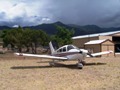
nmflyguy is flying a Cherokee, so his wing is a 65sub2-415. From memory, its zero lift AOA is about minus 3.5 degrees, so at 0 AOA, his lift coefficient is a little under 0.3. If he's flying at 1700 pounds, then his stall speed (not indicated stall speed) is reduced about 5 kts. I fly a Cherokee 150C and disagree with him about the hard landings. When I'm not trying to come in short, I use full flaps and idle power. If I need to steepen my approch I slow down and add in a slip. No problem with hard landings. If I need to get the Cherokee in short, I add in a lot of power and slow down still more (wind conditions permitting). I don't pay much attention to the airspeed, paying more attention to the way the yoke and rudders feel. For those who are interested in Cherokee performance, I recommend looking at Art Mattson's Cherokee short field takeoff video (Art keeps his two Cherokees at his 900 foot grass strip, which isn't short for a Cherokee).
That said, for short field stuff, I prefer an O-200 powered J-3 with a flat prop
That said, for short field stuff, I prefer an O-200 powered J-3 with a flat prop
Sat Feb 05, 2011 4:03 pm
Re: Best approach airspeed on short final
JimC wrote:nmflyguy is flying a Cherokee, so his wing is a 65sub2-415. From memory, its zero lift AOA is about minus 3.5 degrees, so at 0 AOA, his lift coefficient is a little under 0.3. If he's flying at 1700 pounds, then his stall speed (not indicated stall speed) is reduced about 5 kts. I fly a Cherokee 150C and disagree with him about the hard landings. When I'm not trying to come in short, I use full flaps and idle power. If I need to steepen my approch I slow down and add in a slip. No problem with hard landings. If I need to get the Cherokee in short, I add in a lot of power and slow down still more (wind conditions permitting). I don't pay much attention to the airspeed, paying more attention to the way the yoke and rudders feel. For those who are interested in Cherokee performance, I recommend looking at Art Mattson's Cherokee short field takeoff video (Art keeps his two Cherokees at his 900 foot grass strip, which isn't short for a Cherokee).
That said, for short field stuff, I prefer an O-200 powered J-3 with a flat prop
Jim - I didn't say that Cherokees with the hershey bar wing are prone to hard landings, just that they like some power all the way to the ground or else they can be more prone to hard landings. With a sink rate at best glide speed (80 mph) at idle rpm of something on the order of 1,000-1,200 fpm or greater, depending upon gross weight, you've got a much steeper glideslope than the 500 fpm that most light airplanes (and their passengers) like to see in the landing pattern. Meaning approaches at idle speed make the final roundout and flare more difficult to time than if making some power - at that descent rate it's easy to drop right though ground effect before rounding out the flare. Put the recommended 1,500 rpm of power on base, however, then down to about 1,300 on short final with full flaps, and greaser landings are the norm.
The taper wing Warriors and Archers, however, land best with idle power all the way down from downwind/midfield position, or otherwise they can tend to float with even a little extra power. The taper-winged Pipers descend at best glide airspeed, at idle power, right at 500 fpm.
However, the high sink rate in the hershey bar Cherokees is a nice advantage on short fields with constricted approaches, 'cause pulling power back to idle with full flaps is like taking the down escalator at the shopping mall ... sometimes those steep descents come in pretty handy!
Duane
"Sometimes the magic works, and sometimes it doesn't"
Chief Dan George, in "Little Big Man"
Chief Dan George, in "Little Big Man"
Sat Feb 05, 2011 7:16 pm
Re: Best approach airspeed on short final
Interesting. My 1966 Cherokee 150C (hershey bar) sink rate isn't anything like that at idle power. Typically, I start retarding the throttle and slowing down well before I enter the pattern, timing it so I'm at idle power when even with the threshold on downwind. I remain at idle power till on the ground, using 1 notch of flaps on downwind, 2 on base, and full flaps on final. When I need to steepen my approach, I slow down a bit more and add a slip to the full flaps. In the 34 years I've been flying the plane, I've never noticed a tendency to hard land.
Sun Feb 06, 2011 6:04 am
Re: Best approach airspeed on short final
.....J-3 with a flat prop.
My 'secret' is out.....

lc
Humor may not make the world go around, but it certainly cheers up the process...
With clothing, the opposite of NOMEX is polypro (polypropylene cloth and fleece).
Success has many fathers...... Failure is an orphan.
With clothing, the opposite of NOMEX is polypro (polypropylene cloth and fleece).
Success has many fathers...... Failure is an orphan.
Sun Feb 06, 2011 8:11 am
Re: Best approach airspeed on short final
Me too, Littlecub. I've got about 1500 hours in J3's, mostly off-field. I run a Mac 7142 on the O-200, and if they were legal, I'd run a 7438 on the 85 and either a 7440 or a 7535 on the O-200.
Sun Feb 06, 2011 10:59 am
Re: Best approach airspeed on short final
Jim, I don't know my length/pitch numbers, but we hung a 'seaplane' prop on it a decade+ ago-which is max length and flat.
I used to put it on floats every summer, but 'life' interferes too much with my flying and I will probably wait till retirement to mate up the floats to it again.
I only have 90 hp, but if I use some brain and plan ahead-it works pretty darn well.
lc
I used to put it on floats every summer, but 'life' interferes too much with my flying and I will probably wait till retirement to mate up the floats to it again.
I only have 90 hp, but if I use some brain and plan ahead-it works pretty darn well.
lc
Humor may not make the world go around, but it certainly cheers up the process...
With clothing, the opposite of NOMEX is polypro (polypropylene cloth and fleece).
Success has many fathers...... Failure is an orphan.
With clothing, the opposite of NOMEX is polypro (polypropylene cloth and fleece).
Success has many fathers...... Failure is an orphan.
Mon Feb 07, 2011 8:08 am
Re: Best approach airspeed on short final
The O-200 seaplane prop is the 7535, but they aren't legal on a J3. I did test one once, and at 55 mph I was turning 2850 rpm and achieving a respectible deck angle. I couldn't give it full throttle in level flight (didn't want to have to disassemble the engine), but did get 110 mph at 3150 rpm.
DISPLAY OPTIONS
Who is online
Users browsing this forum: No registered users and 9 guests
Latest Features
-
-
Featured Bush Planes
As one of the undisputed legends of bush flying, the Cessna 180 hauls a…Read More -
Aircraft Ownership and Maintenance
9 modification mistakes aircraft owners make when trying to "bush out" their birds—why some…Read More -
Live to Tell
A Minnesota pilot is surprised to learn that the sudden asymmetric drag of an…Read More




Latest Knowledge Base
-
Destinations
Canada offers some of the most spectacular backcountry flying on the continent. Here's what you need to know before you go.Read More -
Safety and Survival
Hope that you never have to use your survival vest but knowing you have it and knowing how to use…Read More -
Destinations
A regional guide with ideas for winter camping destinations in California, Nevada, New Mexico, and Arizona.Read More -
Aircraft
Finding an affordable aircraft that can handle the backcountry for $80K or less? A challenge for sure, but with the…Read More



