Backcountry Pilot • Breakfast or Near Death at 7500'

Breakfast or Near Death at 7500'

Near misses, close calls, and lessons learned the hard way. Share with others so that they might avoid the same mistakes.
24 postsPage 1 of 21, 2

Breakfast or Near Death at 7500'

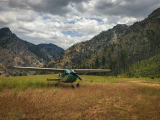
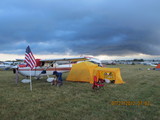
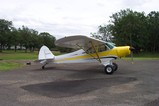
First some nice pictures:
Image

Image

Image


Sunday Andrea and I flew down to Lenhardt to meet Brent and his Rans S-7 then head for a breakfast run to the Dalles. The Rans cruises around 80-90mph. I cruise around 105mph. We flew direct to The Dalles and met up some of the McMinnville gang at a new restaurant at the airport, The Red Racer. Good breakfast, friendly staff, the bacon was perfect. Afterwards, Brent and I decide to fly up to Packwood going past Trout Lake then the west side of Adams. I’m flying around 80+, have the throttle back to 1800rpm and carb heat on as I'm below the green arc. The terrain is pretty rough with scant places to land. I'm just about to cross the last ridge to the hwy 12 valley where it opens up when the engine starts surging and almost dying. Just far enough back that clearing the ridge would be sketchy if it failed. I think “Carb ice”, probably, and give it a lot more power, then fiddle with the mixture, while the engine keeps surging and acting like it’s going to die at any second. Of course, I'm also wondering if it's something else and the engine is going to crap out with full power... after all, I did have carb heat on. I've had loss of power before and carb heat has cleared it, but nothing like this.

I tell Brent I’m having trouble and he says Kiona airstrip should be just to the left over the ridge. It’s not on my GPS but I know about where it will be. Meanwhile, Graham, who is over Tualitin by now, hears me talking to Brent and immediately makes a U-Turn with a quick stop in Kelso to get fuel, then beelines for Kiona. Graham's an A&P/IA so he's a great one to have on hand to diagnose any problems. The engine continues to run rough as I cross the ridge but, at least, I have a lot more places I can glide if it gives out. I spot the airstrip and head straight for it. At first I start a quick descent then remind myself that better to get over the strip first with altitude than risk being too low and not making the glide. The engine seems to be running better but I'm not going to diagnose it up here.

Kiona is a private strip and sometimes people who own these don’t like visitors… Too frikking bad, if that’s the case, we’re landing. So I circle over the airstrip losing altitude. I power up a few times just to make sure I don't just re-form ice if that was it was. We land uneventfully. There’s a lady in an orange shirt standing in front of her house watching. So I figure she’s either friendly or mad and I’m going to talk to her regardless and park in front of her house. We both get out, a bit shaken. Turns out the lady’s name is Marilyn. She heard us on the radio and is very friendly. She invites us in for coffee and the bathroom which she seems to know we might need. She’s also a pilot. Brent lands and we all visit for a while before deciding what to do next. Eventually Graham shows up and we look the airplane over and talk about possible reasons. Ice is still primary suspect but we also find two loose hose clamps on one of the intakes. Graham also mentions a placard for not having the fuel on Both tanks above 5000'. I know I'd seen it before and I usually do switch tanks when on cross country trips as matter of practice but I'd forgotten about it and it's hidden between the seats. New placard will be made and prominently displayed where I can see it.

I try a couple run-ups. Doesn’t seem like I’m getting full power but Graham says it’s within spec. Of course he is right. I looked it up when I got back. No way am I letting Andrea ride back with me. She rides back in Grahams plane to Kelso. I do a takeoff run and am getting good performance so I continue and am off the ground pretty quickly, in spite of a slight tailwind, which is a good thing. I picked that direction because emergency options were much better. Once airborne everything is reading, sounding, and acting normal, RPM’s are where they should be, so I continue up the valley where there are roads and fields “just in case” before turning. Eventually I make it to Kelso. Graham is already there and Brent shows up not too long after. Once at Kelso, Andrea and I fly back to Scappoose uneventfully.

A seasoned pilot at Kelso said same thing happened to him back in the day and reaffirms the carb ice theory. The FBO manager had a similar story. It must have been a fair amount of ice. Now it's also possible that it's the tank issue. I did descend below 5000' but I can't honestly say I knew when the engine sounded good again. Being a bit freaked, the engine really didn't sound fully ok until after I'd landed even though it was acting normal.

Once again I'm also reminded that altitude=options and options=safety. Flying that slow with the throttle pulled back for an extended time, just not a good idea. Also realized given the OAT, carb heat probably put everything in perfect conditions for icing.

I'm also reminded just how friendly and helpful pilots are. What a great bunch of people.

As Nietzsche said, “That which does not kill us, makes for a good story.”

GroundLooper offline
User avatar
Posts: 1168
Joined: Wed Jun 13, 2007 6:52 pm
Location: Vancouver, WA
BCP Poser.
Life is good. Life is better with wings.

Breakfast or Near Death at 7500'

Good writeup, Craig! Graham mentioned you guys had some excitement but it's always nice to read the details.

I'd be interested to hear more about the BOTH above 5,000 thing. I imagine the fuel system in my old 170 and your 172 is similar if not exactly the same, and I never once switched away from the BOTH position whether at 10,000 or 1,000. Never had any issues.

I have enjoyed carb ice plenty around here though, but nothing to the degree that it surged like that.
Zzz offline
Janitorial Staff
User avatar
Posts: 2854
Joined: Fri Oct 08, 2004 11:09 pm
Location: northern
Aircraft: Swiveling desk chair
Half a century spent proving “it is better to be thought a fool than to open your mouth and remove all doubt.”

Re: Breakfast or Near Death at 7500'

Good job working it out and still flying the airplane. Good reminder for us all.
gbflyer offline
User avatar
Posts: 2317
Joined: Sun Oct 14, 2007 5:35 pm
Location: SE Alaska

Re: Breakfast or Near Death at 7500'

Thank you for the writeup Craig. I am glad to hear that everything turned out ok! Sounds like you did everything right. \:D/
Crzyivan13 offline
User avatar
Posts: 1811
Joined: Sat Nov 24, 2012 9:50 pm
Location: Ohio- OI27 Checkpoint Charlie
FindMeSpot URL: https://share.delorme.com/EvanDavis
Aircraft: 1957 Cessna 182A

Re: Breakfast or Near Death at 7500'

GroundLooper wrote: Also realized given the OAT, carb heat probably put everything in perfect conditions for icing.


Yes. Running partial carb heat is generally not a good idea. Also, bear in mind that the certification standard to prove that a carb heat system will clear a carb ice encounter is with the engine running at 70 % power or more. So, at low power settings, you don't have as much heat as at full power.

Nothing wrong with running relatively low power settings, but don't run carb heat full time while doing so. Then, periodically, pull on full carb heat, and maybe push up the power for a few moments to generate a little more heat.

Good job figuring it out and getting it on the ground. And, now you have a new friend on an airstrip.

MTV
mtv offline
Knowledge Base Author
User avatar
Posts: 10514
Joined: Sat Feb 25, 2006 1:47 am
Location: Bozeman

Re: Breakfast or Near Death at 7500'

mtv wrote:
GroundLooper wrote: So, at low power settings, you don't have as much heat as at full power.


And you have more vacuum, exacerbating the issue.
Zzz offline
Janitorial Staff
User avatar
Posts: 2854
Joined: Fri Oct 08, 2004 11:09 pm
Location: northern
Aircraft: Swiveling desk chair
Half a century spent proving “it is better to be thought a fool than to open your mouth and remove all doubt.”

Re: Breakfast or Near Death at 7500'

Here's something I found on the International 170 forum regarding running on one tank above 5000'

Some 172 owners reported engine surging above 5K feet and Cessna went to great lengths to duplicate the problem but never could. They even installed clear fuel lines in a vain attempt to observe the vapor bubbles which never appeared. The FAA was certain there was a fuel head-pressure problem, so Cessna gave up fighting it and accepted this AD note. It only applies to 172's. It presumes that a clogged fuel vent line on one tank might reduce fuel head pressure sufficiently to cause formation of vapor bubbles which in turn might cause engine surging. Switching to one tank should either isolate or identify the offending fuel tank. Selecting the opposite tank would cure the problem. (No one seems to have noticed that if a tank's vent is fleetwide problematical, that selecting that tank would worsen the problem fleetwide in some consistently identifiable manner and therefore confirm the need for, or uselessness of the subject AD. Since no one has subsequently complained, the FAA feels they have correctly solved the non-existant problem, and the AD remains in effect.)

And more on it:
I just got off the phone with Cessna Technical Rep. Tim Fischer who had consulted with the retired Cessna Rep. responsible for developing this procedure that responds to the AD 72-07-02. Here's their answer:
The airplanes that experienced problems were later model Lycoming-powered 172's. Although with an altered fuel system which included short vent lines connecting the fuel delivery pipes to the fuel vent pipes, the problem continued. Although the factory was unable to duplicate all the symptoms reported by some operators, they did develop this procedure which eliminated all further complaints. (The Lycoming engine's greater fuel consumption may have contributed to a lowered head pressure in a system primarily designed for the C145/O300 engine.) Although none of the Continental-powered airplanes suffered from the problem, Cessna thought it conservative to include them in the AD note. (After carefully listening to the development of the conversation, I suspect it was to avoid casting dispersion upon their newly selected engines of choice, since Continentals would no longer be offered in the 172. In other words, they were not going to go back to the Continental as they'd bought over 4,000 Lycomings and had them in stock, so in order to not make it look like they'd selected a troublesome engine, they were anxious to make it apply to all previous aircraft. My own suspicion.-gh)
Even though the straight 1956 model 172 has exactly the same fuel system as the 170B none of the taildraggers ever had any such problems. (Nor in fact did any of the Continental 172's.) Proving this point to the FAA would cost Cessna a lot of time and money on airplanes no longer manufactured. Cessna took the easy way out with the FAA.


I'm much more likely to believe it was heavy ice but switching tanks periodically can't hurt and would point out if one of the fuel lines is clogged. Better to know early one has a half the fuel available than expected.

And I did keep that mantra in my head, "fly the airplane", maybe because I've heard it repeated so many times on this forum.
At least I'm still not a member of the dead stick club and happy for it.
GroundLooper offline
User avatar
Posts: 1168
Joined: Wed Jun 13, 2007 6:52 pm
Location: Vancouver, WA
BCP Poser.
Life is good. Life is better with wings.

Re: Breakfast or Near Death at 7500'

The best part of the whole experience has to be Andrea's take away. it wasn't "I'm never flying with you or anyone else ever again!"

Nope, it was "You need to get a tablet and one of those mounts for it" The takeaway is I need more toys, I mean essential tools, for better situational awareness.. I love that woman.
GroundLooper offline
User avatar
Posts: 1168
Joined: Wed Jun 13, 2007 6:52 pm
Location: Vancouver, WA
BCP Poser.
Life is good. Life is better with wings.

Re: Breakfast or Near Death at 7500'

After following a shoreline one night in ugly weather in an old Cessna 150, I got to where I had to cross 30 miles of ocean. Low cloud, mist and rain, winter. Leaving the shoreline porch lights and into the black I climbed to 500' to get away from the water (couldn't see anything anyway) and took up a compass heading. I thought the engine was starting to sound a little rough and that the rpm had dropped a bit so I gave it a blast of carb heat. If I was imagining it before I sure wasn't afterward as the engine started popping and farting like I'd lost a cylinder. Now feeling thoroughly sorry for myself I stuck with the plan and proceeded crossing the ocean to the airport on the other side (not much choice really).

Turned out the carb heat hose that loops down from the front engine baffle had pooled some water that over time had rusted the spiral wire inside. My inopportune blast of carb heat had picked up a couple of rusty bits of that wire and sent them through the engine where they promptly stuck themselves to some spark plugs. I poked a small drain hole in the scat hose after that.

I like your "fly the plane" mantra, and the dead stick club is one you want to avoid as long as possible (I'm a member).
Karmutzen offline
User avatar
Posts: 711
Joined: Tue Apr 24, 2012 7:47 pm
Location: Great Bear Rainforest
'74 7GCBC, 26" ABW, Aera 660 feeding G5 and FC-10 FF.

Re: Breakfast or Near Death at 7500'

Yes Craig it was lot for Andrea to take in and she is a good lady. With some new toys you may have a good Navigator in the making. I kind of thought is was a great opportunity for her to see how the Aviation community and especially BCP'ers help each other out.

We were within 20 miles of 55S and I notice you turning about 30 degrees to the left and running away from me! Nose down you were scooting along. Then you called that you were dealing with carb ice. I kept wondering how you were able to run off like that but could hear the concern and focus in your voice.

As it turns out I think you made two very good decisions that flight. The first, when you knew something wasn't right, you didn't mess around. You got yourself and your passenger on the ground as quickly as possible. The second, when you ran up your engine and it sounded fine to most everyone else, you said no - its still not right.
DCO-65 offline
Supporter
User avatar
Posts: 151
Joined: Thu Jun 03, 2010 3:55 pm
Location: Portland, OR
FindMeSpot URL: http://share.findmespot.com/shared/face ... 6b98KGsYbF

Re: Breakfast or Near Death at 7500'

Karmutzen wrote: If I was imagining it before I sure wasn't afterward as the engine started popping and farting like I'd lost a cylinder. Now feeling thoroughly sorry for myself I stuck with the plan and proceeded crossing the ocean to the airport on the other side (not much choice really).

Did you ever get the butt cheek creases out of the seat? I was clenched up enough just trying to get over a ridge that only took a few minutes but seemed like an eternity. 30 miles... I'm surprised you didn't die an old man by the time that crossing was done based on how it must have felt.

I like your "fly the plane" mantra, and the dead stick club is one you want to avoid as long as possible (I'm a member).

Can't take credit for the mantra, I give that credit to everyone else who's posted about close calls, but very happy to carry it with me.
GroundLooper offline
User avatar
Posts: 1168
Joined: Wed Jun 13, 2007 6:52 pm
Location: Vancouver, WA
BCP Poser.
Life is good. Life is better with wings.

Re: Breakfast or Near Death at 7500'

Sounds like a bunch of good decisions that day, I'm glad it worked out! You gave a great example of what to do when things appear to be going south!


I have only gotten carb ice once, but it was a pivotal point in my FW flying. I was getting too comfortable with the hum and smooth flight and wasn't really thinking about forced landings like you do in a helo (especially a single engine!).

It came out of nowhere and when the engine started running rough it startled the crap out of me! It was one of those 60 degree high humidity days too so I should have seen it coming! Anyway, it helped me re-cage my FW flying. Especially when not behind a pair of turbines.
CamTom12 offline
User avatar
Posts: 3705
Joined: Sun Jul 08, 2012 1:08 pm
Location: Huntsville
FindMeSpot URL: https://share.delorme.com/camtom12
Aircraft: Ruppe Racer
Experimental Pacer
home hand jam "wizard"

Re: Breakfast or Near Death at 7500'

Groundlooper, what kind of aircraft & powerplant are you flying?
hotrod180 offline
Supporter
User avatar
Posts: 10534
Joined: Wed Jan 26, 2005 11:47 pm
Location: Port Townsend, WA
Cessna Skywagon -- accept no substitute!

Re: Breakfast or Near Death at 7500'

hotrod180 wrote:Groundlooper, what kind of aircraft & powerplant are you flying?


172-B with a continental O-300-D.
GroundLooper offline
User avatar
Posts: 1168
Joined: Wed Jun 13, 2007 6:52 pm
Location: Vancouver, WA
BCP Poser.
Life is good. Life is better with wings.

Re: Breakfast or Near Death at 7500'

Glad you made it safely to the ground. Great story.

The C85 I the Luscombe was a ice making machine so I got used to experiencing it but the first time was unnerving. A year ago when I was flying across the Frank Church in a Bearhawk with my family the engine started running rough. I thought it was carb ice and as usual when I pulled the carb heat it got worse...but this time it never got better. I started fiddling with everything trying to get it running smooth again but it just seemed to keep getting worse. By the time I was on the ground in Challis I was ready to quite flying right then and there. Scared me to death to have my wife and two kids with me over rough terrain behind a poor running engine. Never did figure out what was going on.
whee offline
User avatar
Posts: 3386
Joined: Fri Jan 20, 2006 1:59 pm
Location: SE Idaho

Re: Breakfast or Near Death at 7500'

Stuck valve ??
brown bear offline
Posts: 75
Joined: Tue Dec 30, 2008 6:49 pm
Location: kansas

Re: Breakfast or Near Death at 7500'

Since I have little choice but to fly above 5000', I think that issue is hooey. When I lived in Laramie at 7300' MSL, I flew 172s of various power plants, both Lycomings and Continentals, with never a rough running issue involving altitude. My P172D, which is converted to a Lycoming 360, 180hp, has never had an altitude-related rough running situation. It's hangared at the lowest elevation airport I've ever used consistently--just under 4700' MSL--so it's always flying above 5000' MSL except when I trek off to the Midwest in the summer time. It's been to 15,000' MSL more than once. When I fly in the mountains, I'm often at 12,000' or more. Although I usually switch from one tank to the other on cross countries, primarily for more accurate fuel management to minimize lateral imbalance (most 172s will draw more from one tank than the other for awhile, before starting to draw from the heavier tank, and I'd rather be the one to make that determination), I've certainly flown a lot of hours on "both" without a hitch.

But carb ice, that's something else. In the last 42 years, I've had numerous significant carb ice situations in 172s, 182s, an Archer, and at least twice in the last 11 years in my own airplane--always at a lower power setting. Other than something more permanent, such as a stuck valve or some other mechanical anomaly, it's awfully easy to get carb ice that makes you think the engine's about to fall out of the airplane, and yet when it melts, it goes away and the engine runs smoothly. The problem is getting it to melt, if you've already allowed the engine to cool. Often enough, though, after you've landed, the ice will then melt because of the residual heat in the engine. Half an hour on the ground, and nobody can find a thing wrong.

Here's a carb ice chart (there are many different sources--this one is from AOPA):

Image

I think the chart makes this obvious: While you can't eliminate carb icing, you can minimize it by maintaining higher power settings, and turning on carb heat while the engine is still warm. In other words, don't wait until you've slowed below the green arc (or if no green arc, 1500 rpm is common). Pull it on at cruise power, then slow down--or at the very least, pull it on as soon as you've reduced power, not after you've been putting along at that reduced power setting.

For sure, you did the right thing to set down when things were pretty dicey. But don't think that switching from "both" to one tank or the other would have prevented what you experienced. My money is on carb ice and nothing more.

BTW, I am a member of the dead stick club, also--and I'd just as soon not re-up my membership! :)

Cary
Cary offline
User avatar
Posts: 3801
Joined: Sun Jan 10, 2010 6:49 pm
Location: Fort Collins, CO
"I have slipped the surly bonds of earth..., put out my hand and touched the face of God." J.G. Magee

Re: Breakfast or Near Death at 7500'

brown bear wrote:Stuck valve ??


Nope, definitely not. I've had enough stuck valves to know it wasn't. We still went through and checked compressions on each cylinder.
I've also not had one spontaneously become unstuck.
GroundLooper offline
User avatar
Posts: 1168
Joined: Wed Jun 13, 2007 6:52 pm
Location: Vancouver, WA
BCP Poser.
Life is good. Life is better with wings.

Re: Breakfast or Near Death at 7500'

Thanks Cary. Good info. What also scared me is that I already had Carb heat in!!! Yikes. All I could do was hope more power would help and being able to descend as soon as I could get over that danged ridge and also assuming it was carb ice. I'm sure it was now but I certainly wasn't sure then.
GroundLooper offline
User avatar
Posts: 1168
Joined: Wed Jun 13, 2007 6:52 pm
Location: Vancouver, WA
BCP Poser.
Life is good. Life is better with wings.

Breakfast or Near Death at 7500'

When we did our certification of the 0-360 conversion on the PA-22 we were required to have a 90 degree heat rise difference when carb heat is applied.... It took A LOT to get it there... Our mufflers have blast cones in them that blows all the hot exhaust against the outer tube of the mufflers. That combined with a short 3 inch SCAT hose got our carb heat rise to just barely get that magic 90 degree difference...

Now , with that in mind.... Take a look at where your carb heat is taken off the exhaust of most Cessna's.... A lot of them are very simple leaky shrouds or just a small cuff pointed at an exhaust junction... Plus most of the mufflers used are just large cans with no baffling to help keep the heat in... Along with long SCAT runs to the carberator... I believe a lot of carb icing problems can be solved with better carb heat systems... Or at the least maintaining the original systems by sealing up the shrouds and making sure the mufflers are intact internally..

Brain
Brian-StevesAircraft offline
KB and Supporter
User avatar
Posts: 759
Joined: Tue Dec 13, 2005 1:13 pm
Location: Beagle (White City) Oregon
Pavement scares me..........

Dad's SPOT page

DISPLAY OPTIONS

Next
24 postsPage 1 of 21, 2

Who is online

Users browsing this forum: No registered users and 1 guest

Latest Features

Latest Knowledge Base