Planning to upgrade my stock 170A to a Lycoming O360 A1A and a Hartzell 80" constant speed prop using the DelAir STC.
Anyone have recommendations on the best route to go?
Try to find low time usable engine vs newly overhauled vs ?
Factory new is above the budget...
Appreciate input especially from those who have gone before me...
C 170A upgrade to O360
Sat Aug 22, 2015 10:43 pm
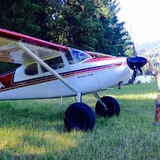
1952 C-170B (with the sexy rounded tail)
Sat Aug 22, 2015 11:00 pm
Re: C 170A upgrade to O360
I went a slightly different route a year ago, from stock 170B to Lycoming IO-360 M1B and MT prop. Been completely pleased. Not suggesting that's the best route for everyone necessarily, but I'd do it the same way again. Not even sure if the STCs I used cover the 170A or not. You're bound to enjoy the 180Hp and the CS prop regardless.
I would take a close look at the MT if you're eligible for it. I suspect your new configuration will acquire a more forward CG, and I was glad to shave the weight off the nose. Plus it's a sweet prop IMHO.
I would also recommend the CGR-30P to instrument your new engine. Very compact, versatile, and informative. As a minor perk, it will start with zero time, so if you find a 'zero-time' engine and new prop, they will all be synchronized.
Hoping for regular updates here, and best of luck!
-DP
I would take a close look at the MT if you're eligible for it. I suspect your new configuration will acquire a more forward CG, and I was glad to shave the weight off the nose. Plus it's a sweet prop IMHO.
I would also recommend the CGR-30P to instrument your new engine. Very compact, versatile, and informative. As a minor perk, it will start with zero time, so if you find a 'zero-time' engine and new prop, they will all be synchronized.
Hoping for regular updates here, and best of luck!
-DP
- denalipilot offline


- Posts: 2789
- Joined: Mon Oct 15, 2007 4:53 pm
- Location: Denali
- Aircraft: C-170B+
Sun Aug 23, 2015 7:28 am
Re: C 170A upgrade to O360
I would stay far, far away from the Hartzell 80 inch propeller. I operated a couple of those. They pull fine, BUT:
1. That propeller requires a harmonic damper assembly to eliminate vibration. Those dampers are not common and not cheap. So, in addition to the cost of the prop, you'll have to find a damper assembly and probably have it overhauled.
2. That combination (the prop and damper assy) is VERY heavy. The damper assy alone weighs nearly ten pounds.....right up as far forward as you can get on the plane. The O-360 equipped 170s tend to be a little forward CG anyway....this makes it far worse. When I switched from this propeller/damper to an MT two blade prop, I took 29 pounds (!!!!!) off the nose of the airplane. That is huge.
3. While this propeller pulls well, the MT in my opinion (based on making this change on two aircraft, a Husky and a 170), the MT pulls just as hard and maybe a bit harder. And, everything else about the MT prop was better, again in my opinion.
4. Be careful buying a used Hartzell hub. Hartzell has a habit of issuing AD notes on these compact hubs. They got two of my hubs with ADs. First one condemned the hub.....buy another used hub, have it inspected and overhauled, and a few years later, Hartzell issued another AD (different topic) which required repetitive inspections at 100 time in service OR replacement of the hub. This is good for Hartzell's business....put the onus and liability on the inspector at 100 hrs or Hartzell will sell you a new hub....what's not to like? I refuse to EVER buy another Hartzell product. MT props are expensive, no doubt, but in the long term, I spent a lot more money on Hartzell props than I did on MT props.
The MT props are approved on this installation. So, if you're starting from scratch, buy an MT.
Give a lot of thought to converting an A model 170 to the O-360. You're putting a LOT of money into an airplane that is a lot less desirable to buyers than the 170 B model. Flaps are the difference. I realize that you probably already have the airplane fixed up the way you want it, but this is a huge money decision, so give this some careful consideration.
Frankly, I'd never do a conversion of this type. You're going to spend a huge sum of money on this. I'd find a 170B with the O-360 already installed, buy that and sell your A model. The down side there is that A models are harder to sell......which is precisely my point on modifying the A model in the first place.
I know....you're not planning on selling that airplane ever. And, you may keep it for a lot of years. But, when you do go to sell it, a B model will sell faster and for more money.
My 170B had the Avcon conversion. The Del Aire conversion is a much better conversion in my opinion.
Depending on what you're doing with the airplane, you probably will want more gas. The O-360 is a little thirstier engine than the O-300. Del Aire has a conversion for that as well....effectively installing 175 tanks in place of the stock tanks, for a useable fuel of 48 gallons or so. Or, Flint tip tanks. Both spell bring money.....bring lots.
Again, I'd find one that's already been converted. They're hard to find, but for the price, even if you had to overhaul a high time engine, you'll be FAR better off, money wise.
MTV
1. That propeller requires a harmonic damper assembly to eliminate vibration. Those dampers are not common and not cheap. So, in addition to the cost of the prop, you'll have to find a damper assembly and probably have it overhauled.
2. That combination (the prop and damper assy) is VERY heavy. The damper assy alone weighs nearly ten pounds.....right up as far forward as you can get on the plane. The O-360 equipped 170s tend to be a little forward CG anyway....this makes it far worse. When I switched from this propeller/damper to an MT two blade prop, I took 29 pounds (!!!!!) off the nose of the airplane. That is huge.
3. While this propeller pulls well, the MT in my opinion (based on making this change on two aircraft, a Husky and a 170), the MT pulls just as hard and maybe a bit harder. And, everything else about the MT prop was better, again in my opinion.
4. Be careful buying a used Hartzell hub. Hartzell has a habit of issuing AD notes on these compact hubs. They got two of my hubs with ADs. First one condemned the hub.....buy another used hub, have it inspected and overhauled, and a few years later, Hartzell issued another AD (different topic) which required repetitive inspections at 100 time in service OR replacement of the hub. This is good for Hartzell's business....put the onus and liability on the inspector at 100 hrs or Hartzell will sell you a new hub....what's not to like? I refuse to EVER buy another Hartzell product. MT props are expensive, no doubt, but in the long term, I spent a lot more money on Hartzell props than I did on MT props.
The MT props are approved on this installation. So, if you're starting from scratch, buy an MT.
Give a lot of thought to converting an A model 170 to the O-360. You're putting a LOT of money into an airplane that is a lot less desirable to buyers than the 170 B model. Flaps are the difference. I realize that you probably already have the airplane fixed up the way you want it, but this is a huge money decision, so give this some careful consideration.
Frankly, I'd never do a conversion of this type. You're going to spend a huge sum of money on this. I'd find a 170B with the O-360 already installed, buy that and sell your A model. The down side there is that A models are harder to sell......which is precisely my point on modifying the A model in the first place.
I know....you're not planning on selling that airplane ever. And, you may keep it for a lot of years. But, when you do go to sell it, a B model will sell faster and for more money.
My 170B had the Avcon conversion. The Del Aire conversion is a much better conversion in my opinion.
Depending on what you're doing with the airplane, you probably will want more gas. The O-360 is a little thirstier engine than the O-300. Del Aire has a conversion for that as well....effectively installing 175 tanks in place of the stock tanks, for a useable fuel of 48 gallons or so. Or, Flint tip tanks. Both spell bring money.....bring lots.
Again, I'd find one that's already been converted. They're hard to find, but for the price, even if you had to overhaul a high time engine, you'll be FAR better off, money wise.
MTV


Sun Aug 23, 2015 2:06 pm
Re: C 170A upgrade to O360
Well I will start by saying you have a nice 170A and should be proud of it and what you have done. Now may you feel an emotional attachment to this airplane, which is fine if you want to do this conversion to be able to keep an airplane which is important to you, but the numbers will never work out. Three months ago I bought a 54 170B with 6600 hrs total time, a O360A1A 1850 smoh, and 400 since new on a 80 inch Hartzell. The paint is poor and the interior is fair. It has some of the mods you will want to do. Baggage door, Javelin fuel tank (as MTV says you will be hunting fuel all the time without it). Has a ky97a and a kt76a. It is on the heavy side and weighs 1499. On 10 gal a hour it indicates 128 mph at 2500 ft. I bought this airplane for 44 thousand because the seller need a quick sale to start building a house after selling the house he and his family were living in, he set the price not me. The airplane needs a little tlc including one flap. I was flying and still have until I get around to selling it a 49 170A. This 180 horsepower bird is great fun but it still is not a 180. I would not have bought it if the selling price had been any higher. I didn't buy it for the long term as I have a 180 project setting in my garage. For the same money as it will cost you to convert your airplane or maybe less you can get an early 180 which will fly the same speed on the same fuel or 30 mph faster for 2 or 3 gals more an hour while legally carrying 200 pounds more. I wish it would work out as the view out the front of a 170 is hard to beat and I have enjoyed the four that I have owned at various times. The 180 and 185 I have had were great fun also and if flown at 170 speeds used the same fuel and had the same light control feel.
Your airplane + conversion kit ($10,000) + prop ($10 -12,000) + engine ($15,000 for 1/2 time to $25,000 for core and overhaul) = more than a 180. Notice I didn't enter a number for the 80 or 100 hours (just a guess) of labor to do the conversion. One only reason the numbers worked to buy the one I did was if I have to overhaul the engine before I sell it I can still make out selling for $65,000, I just hope to finish my 180 and sell the 170B before I need to overhaul the engine.
Sorry I don't have better news.
Tim
Your airplane + conversion kit ($10,000) + prop ($10 -12,000) + engine ($15,000 for 1/2 time to $25,000 for core and overhaul) = more than a 180. Notice I didn't enter a number for the 80 or 100 hours (just a guess) of labor to do the conversion. One only reason the numbers worked to buy the one I did was if I have to overhaul the engine before I sell it I can still make out selling for $65,000, I just hope to finish my 180 and sell the 170B before I need to overhaul the engine.
Sorry I don't have better news.
Tim
Sun Aug 23, 2015 2:50 pm
Re: C 170A upgrade to O360
Strictly as an observer...
Might it be, that you never intend to sell the aircraft, AND you intend to fly the heck out of it during the next 10 years?
If so, the value +/- doesn't really weigh in as a factor, because you're not selling it.
Now, obviously, this in't the best choice for the poor man's budget. However, can we price memories and the nostalgia??
Go for it:
1.) Obtain the STC /Kit and start hunting for the engine. In the meanwhile, buy an MT.
2.) Patiently look for a good set of 175 wings. I say patiently, because it might take a little digging.
2b.) While you're looking for wings, buy a '53, '54, or '55 cowling. This will take some hunting too, but will save you time later.
3.) Sell the A wings to pay for the shipping costs of the 'new' wings.
3b.) Sell the early model cowling.
3c.) I'm assuming you could sell your current engine/prop as well. Might want to do that, before pulling the wings.
By this time, you might be kikking yourself far even starting.., so;
4.) Take a vacation with the family!
After step 4, report back, and let's see where you're at! Have fun!
- Joseph
Might it be, that you never intend to sell the aircraft, AND you intend to fly the heck out of it during the next 10 years?
If so, the value +/- doesn't really weigh in as a factor, because you're not selling it.
Now, obviously, this in't the best choice for the poor man's budget. However, can we price memories and the nostalgia??
Go for it:
1.) Obtain the STC /Kit and start hunting for the engine. In the meanwhile, buy an MT.
2.) Patiently look for a good set of 175 wings. I say patiently, because it might take a little digging.
2b.) While you're looking for wings, buy a '53, '54, or '55 cowling. This will take some hunting too, but will save you time later.
3.) Sell the A wings to pay for the shipping costs of the 'new' wings.
3b.) Sell the early model cowling.
3c.) I'm assuming you could sell your current engine/prop as well. Might want to do that, before pulling the wings.
By this time, you might be kikking yourself far even starting.., so;
4.) Take a vacation with the family!
After step 4, report back, and let's see where you're at! Have fun!
- Joseph

Sun Aug 23, 2015 5:05 pm
Re: C 170A upgrade to O360
I seriously doubt you could convince anyone in the FAA to approve Cessna 175 wings on a 170 A. Same goes for swapping cowlings. And, by the way, those aren't just bolt ons.
Good luck in any case.
MTV
Good luck in any case.
MTV
Sun Aug 23, 2015 6:38 pm
Re: C 170A upgrade to O360
If you check with DelAir (the owners of the STC), I'm pretty sure it REQUIRES the 53 or later cowl.
The cowl will bolt on without mods.
The 175 wings will need some approval. They will bolt on but your control cables and pulleys will have to be upgraded to a '52 or later. (Too much work to be worth it)
DelAir has an STC for extended range tanks at a reasonable price.
The great thing about he DelAir 360 STC is that it comes with EVERYTHING less motor and prop. It is very complete and instructions are very well written (so I hear) - all of this allows you to better estimate costs up front.
By comparison, The Continental IO-360 210HP STC sold by Tom Anderson gets you nothing except legal permission to figure out how to do it. (But it's one hell of a motor)
I'm sure if you dig around, you can find a prop for a lot less than $10k.
I picked mine up for $2,500 with fresh blades.
A Lycoming 360 a pretty bullet proof motor so I wouldn't fear a mid or high time motor.
The cowl will bolt on without mods.
The 175 wings will need some approval. They will bolt on but your control cables and pulleys will have to be upgraded to a '52 or later. (Too much work to be worth it)
DelAir has an STC for extended range tanks at a reasonable price.
The great thing about he DelAir 360 STC is that it comes with EVERYTHING less motor and prop. It is very complete and instructions are very well written (so I hear) - all of this allows you to better estimate costs up front.
By comparison, The Continental IO-360 210HP STC sold by Tom Anderson gets you nothing except legal permission to figure out how to do it. (But it's one hell of a motor)
I'm sure if you dig around, you can find a prop for a lot less than $10k.
I picked mine up for $2,500 with fresh blades.
A Lycoming 360 a pretty bullet proof motor so I wouldn't fear a mid or high time motor.
Sun Aug 23, 2015 8:31 pm
Re: C 170A upgrade to O360
A friend is an A/P mechanic, and converted his 170b with the Del Aire conversion. He said it was a well engineered and complete package.
He also admitted that it took longer than he expected to get it done. It's a BIG job. If you're paying someone $60 or $70 an hour to do the work......
MTV
He also admitted that it took longer than he expected to get it done. It's a BIG job. If you're paying someone $60 or $70 an hour to do the work......
MTV
Mon Aug 24, 2015 10:29 am
Re: C 170A upgrade to O360
bat443 wrote:....For the same money as it will cost you to convert your airplane or maybe less you can get an early 180 which will fly the same speed on the same fuel or 30 mph faster for 2 or 3 gals more an hour while legally carrying 200 pounds more. ......Your airplane + conversion kit ($10,000) + prop ($10 -12,000) + engine ($15,000 for 1/2 time to $25,000 for core and overhaul) = more than a 180. Notice I didn't enter a number for the 80 or 100 hours (just a guess) of labor to do the conversion.....
Fishdoc-- this is not what you were asking for, and I hate to rain on your parade, but I have to agree with Bat443. I think it's generally cheaper and easier to buy an airplane already converted, rather than do it yourself. I'd also prefer having the bigger B-model flaps. And I also think that when the dust settles, you'll have as much or more money into your 170A than it would cost to buy a decent early 180. I bought mine not quite a year ago-- a very straight 1953 model with a mid time K engine & some good mods (jump seats, harnesses, etc) for $62K. I owned a ragwing 170 for 10 or 12 years, and lusted after a 180hp B model, but discovered when I test flew a couple that while they perform a lot better than stock....the 180's just a lot more airplane for not much more money.
That said, if you do go ahead with modifying your 170, I'm sure you'll enjoy flying it with the 180hp. Good luck whichever way you go.
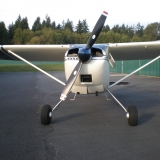
Cessna Skywagon -- accept no substitute!
Mon Aug 24, 2015 4:55 pm
Re: C 170A upgrade to O360
If you love that particular 170A, and you don't care about making your numbers/investments pencil out nicely in the end, drop a new engine and prop in her.
Others have echoed the common sentiment though-- 1) The B model flaps are valuable enough to think twice about upgrading an A model, and 2) investment will not be equivalent to resale. The aircraft WILL be a whole lot more fun to fly though. Big engine 170s are a hoot.
It's the same conversation every time for this question. Live with the higher cost of a fun flying 170 or consider upgrading to a 180. Sometimes the devil you know is better.
Others have echoed the common sentiment though-- 1) The B model flaps are valuable enough to think twice about upgrading an A model, and 2) investment will not be equivalent to resale. The aircraft WILL be a whole lot more fun to fly though. Big engine 170s are a hoot.
It's the same conversation every time for this question. Live with the higher cost of a fun flying 170 or consider upgrading to a 180. Sometimes the devil you know is better.
- Zzz offline


- Posts: 2855
- Joined: Fri Oct 08, 2004 11:09 pm
- Location: northern
- Aircraft: Swiveling desk chair
Half a century spent proving “it is better to be thought a fool than to open your mouth and remove all doubt.”
Tue Aug 25, 2015 4:44 pm
Re: C 170A upgrade to O360
Good information here. I was considering getting a 170 to put a O360 in and pretty much came to the same conclusions. It's nice to hear it from people with experience.

Wed Aug 26, 2015 11:30 am
Re: C 170A upgrade to O360
I agree that the conversion does't pencil out, but then again nothing else in aviation does, either. I also agree that you get more airplane with a 180, but disagree that you don't pay dearly for it. I vacillated between a converted 170 and a 180 and chose the 170 for economic reasons. It simply costs more to own and operate a 180 than an 170, and to me it was the difference between a reasonable expense for a household to bear and something better suited to a business. There's about 10 hours a year where I wish I had a 180 and the other 8,750 I'm damn glad I don't. Even if you "loose" money on the conversion, if you end up with the plane you want to own and fly then you made the right choice. A buddy of mine is at least $100k up-side-down on his 180 and it doesn't bother him a bit. He's got the plane he wants and isn't looking to sell.
I'm in the minority here, but for flying around the western US I think the stock 39 gallon fuel tanks are fine. Of all the things I could upgrade on my 180hp 170B, the tanks are at the bottom of the list. Heck, they're not even on the list.
I'm almost always flying at an altitude/power-setting where I can lean to around 8gph in cruise. That gives me just shy of four hours with a comfortable reserve, and I very rarely fly that long without stopping. I simply cannot sit in the airplane for long enough to run out of fuel. An engine analyzer and fuel flow computer help me get the most out of the red knob and takes all the guess work out of how much fuel is left. Running one tank dry at a comfortable altitude while the other tank is half full means there's a negligible amount of unusable fuel in the system.
If I'm doing an extended trip where it's inconvenient to refuel, I'll put one or (rarely) two six-gallon fuel bladders in the plane. This is less convenient but infinitely more versatile than having larger tanks. Hell of a lot cheaper and lighter, too. If I'm going into Vines, for example, the absolute last thing I want is another 72 pounds of unneeded fuel with me. That amount of weight in a 180hp airplane is VERY noticeable. With fuel bags I can drop that extra 12 gallons at a more suitable airstrip and pick it up later. You can't do that with larger tanks.
Even at the easier backcountry strips I'm loathe to have full tanks...more fuel capacity wouldn't appeal to me at all. It's pretty hard to find a backcountry strip in the lower 48 that doesn't have access to fuel within 30 or 40 minutes. IFR flying is another issue, but for the most part IFR in the western US isn't realistic for a 170, regardless of fuel capacity.
Someone flying on floats, or flying around Alaska at lower altitudes and higher fuel burns with fewer available fuel stops would probably benefit from bigger tanks, but I don't see the value down here. It's certainly not something I'd pay extra for.
I'm in the minority here, but for flying around the western US I think the stock 39 gallon fuel tanks are fine. Of all the things I could upgrade on my 180hp 170B, the tanks are at the bottom of the list. Heck, they're not even on the list.
I'm almost always flying at an altitude/power-setting where I can lean to around 8gph in cruise. That gives me just shy of four hours with a comfortable reserve, and I very rarely fly that long without stopping. I simply cannot sit in the airplane for long enough to run out of fuel. An engine analyzer and fuel flow computer help me get the most out of the red knob and takes all the guess work out of how much fuel is left. Running one tank dry at a comfortable altitude while the other tank is half full means there's a negligible amount of unusable fuel in the system.
If I'm doing an extended trip where it's inconvenient to refuel, I'll put one or (rarely) two six-gallon fuel bladders in the plane. This is less convenient but infinitely more versatile than having larger tanks. Hell of a lot cheaper and lighter, too. If I'm going into Vines, for example, the absolute last thing I want is another 72 pounds of unneeded fuel with me. That amount of weight in a 180hp airplane is VERY noticeable. With fuel bags I can drop that extra 12 gallons at a more suitable airstrip and pick it up later. You can't do that with larger tanks.
Even at the easier backcountry strips I'm loathe to have full tanks...more fuel capacity wouldn't appeal to me at all. It's pretty hard to find a backcountry strip in the lower 48 that doesn't have access to fuel within 30 or 40 minutes. IFR flying is another issue, but for the most part IFR in the western US isn't realistic for a 170, regardless of fuel capacity.
Someone flying on floats, or flying around Alaska at lower altitudes and higher fuel burns with fewer available fuel stops would probably benefit from bigger tanks, but I don't see the value down here. It's certainly not something I'd pay extra for.

Wed Aug 26, 2015 4:26 pm
Re: C 170A upgrade to O360
Well I have a 170A and did the Delair conversion. its well engineered and value for money. Firstly I used a new engine from Superior but in a kit form. Had it built up by a friends shop. the engine was carburated and a fixed pitch prop was used. It was Sensenich with a 60 in pitch. Top cowl had to be modified by fitting blisters supplied in the kit from Delair. They also supply the upper and lower nose cowl. these are easily fitted to the existing cowl. However my existing cowl had to be shorten about 1.5 ins to suit the engine.
Overall it wasn't too hard to do but I ended up making the lower cowl myself due to repairs on repairs from previous owners. This aircraft is a lot faster but take offs are incredible. The best thing I also fitted was a EI fuel computer. I have EGT/CHT gauges and lean engine to the required figures. At 7500ft and Gs speed of about 120 kts a fuel consumption of 36 litres a hour. Total weight of aircraft is now 1483 LBS. Total cost was about $30,000 plus a heap of fun.
The best advice I can give is read the instructions carefully over a couple of beers and then reread the instructions again another day over a couple of beers. Again the next day have a few beers OH! read the instructions. Then organize the parts into little boxes so you know which goes where .
Overall it wasn't too hard to do but I ended up making the lower cowl myself due to repairs on repairs from previous owners. This aircraft is a lot faster but take offs are incredible. The best thing I also fitted was a EI fuel computer. I have EGT/CHT gauges and lean engine to the required figures. At 7500ft and Gs speed of about 120 kts a fuel consumption of 36 litres a hour. Total weight of aircraft is now 1483 LBS. Total cost was about $30,000 plus a heap of fun.
The best advice I can give is read the instructions carefully over a couple of beers and then reread the instructions again another day over a couple of beers. Again the next day have a few beers OH! read the instructions. Then organize the parts into little boxes so you know which goes where .
- david j nelson offline
- Posts: 10
- Joined: Fri Aug 25, 2006 10:30 pm
- Location: australia
david j nelson
Wed Aug 26, 2015 6:04 pm
Re: C 170A upgrade to O360
Well, as usual, the hyperbole involving the comparison of C-170 vs 180 has appeared in this thread. I have owned both a good solid 180 and a 180 hp equipped C-170B.
In my opinion, there is really very little comparison between these aircraft. That point I certainly wouldn't argue. So, if indeed your mission is primarily what the 180 does best (longer cross country flights), and you really need a true four place airplane, buy a 180. They are great airplanes. And, I rue the day I sold mine. That said, I wouldn't even consider owning a 180 today. My mission doesn't pen out to the 180's strong points. And, as others have noted, the 180 is indeed a more expensive airplane to maintain and operate.
So, what does the 170 do better? Short field operations, for one thing. A 180 hp 170 will do 90 % of what most Super Cubs will do in that regard. The gent who bought my 170 a couple years ago sent me a message in which he described full gross weight takeoffs and landings of less than 300 feet. Which is to say, he's got it figured out. Try that with your 180. Put a Sportsman cuff on that airplane and it'll do better yet.
Now, the 170A isn't going to do that well, due to the different flaps. But, it too is a nice lightweight machine that will get in and out of some pretty challenging strips.
The 170 is slow, compared to the 180, and when you consider fuel used in terms of miles per gallon (as opposed to gallons per hour), the 180 really shines. But, with the C-180s power pulled way back to improve fuel economy, you reduce speed, which is really the 180's forte. Why buy a fast airplane and fly it slow?
The 170 is a really great two place airplane, with lots of room for all the camping gear you could want. It's a decent three place airplane with some gear and full stock fuel. But, four average size people is going to push gross weight and possibly require downloading fuel.
The 180, on the other hand, can legally carry four full size humans, at least most of them can. Depending on the model year, they can often do so with a lot of gas on board. And, you still have some baggage capability.
Finally, the 170 is a LOT lighter on the controls, compared to the 180. The 180 is a bit heavier on the controls, and the view out the front is significantly better in a 170. In fact, the 170 provides one of the best forward views of any taildragger I've flown.
They are two different airplanes, and each has its strengths. For just going out and bashing around the back country, though, a 170B with a 180 hp engine is hard to beat. Headed for the other coast? That's where a 180 really shines.
Now, to stock fuel vs extended fuel......there's an old saying: The only time you have too much fuel is when you're on fire. Up to a point, and that point is max gross weight. My 170B was pretty light, and I could fill the mains and the Flint tip tanks and still legally carry two people and some gear. Now, recall that performance noted in the first paragraph of this missal.
A classic example of where extra fuel capacity really pays off is when you're trying to work around weather or as the NW is currently experiencing: Smoke. Deviations due to visibility become less of an issue with lots of gas on board. A fuel computer is a great tool to manage fuel, particularly with big tanks.
As to carrying gas in bags or cans: You're risking fuel contamination by introducing more containers. Take care, and that's not a huge issue, but if you're in an accident, those bags/cans are going to cause problems. Carrying gas in portable containers in the cockpit is just plain dangerous in off airport or back country operations. And, yes, I've done so many times. Never liked it and avoid it like the plague if I can.
Don't need that much gas? Leave the tips empty, or simply load as much gas as you need for the mission. But, I can tell you that even in the Lower 48, having lots of gas can really pay off with some frequency.
MTV
In my opinion, there is really very little comparison between these aircraft. That point I certainly wouldn't argue. So, if indeed your mission is primarily what the 180 does best (longer cross country flights), and you really need a true four place airplane, buy a 180. They are great airplanes. And, I rue the day I sold mine. That said, I wouldn't even consider owning a 180 today. My mission doesn't pen out to the 180's strong points. And, as others have noted, the 180 is indeed a more expensive airplane to maintain and operate.
So, what does the 170 do better? Short field operations, for one thing. A 180 hp 170 will do 90 % of what most Super Cubs will do in that regard. The gent who bought my 170 a couple years ago sent me a message in which he described full gross weight takeoffs and landings of less than 300 feet. Which is to say, he's got it figured out. Try that with your 180. Put a Sportsman cuff on that airplane and it'll do better yet.
Now, the 170A isn't going to do that well, due to the different flaps. But, it too is a nice lightweight machine that will get in and out of some pretty challenging strips.
The 170 is slow, compared to the 180, and when you consider fuel used in terms of miles per gallon (as opposed to gallons per hour), the 180 really shines. But, with the C-180s power pulled way back to improve fuel economy, you reduce speed, which is really the 180's forte. Why buy a fast airplane and fly it slow?
The 170 is a really great two place airplane, with lots of room for all the camping gear you could want. It's a decent three place airplane with some gear and full stock fuel. But, four average size people is going to push gross weight and possibly require downloading fuel.
The 180, on the other hand, can legally carry four full size humans, at least most of them can. Depending on the model year, they can often do so with a lot of gas on board. And, you still have some baggage capability.
Finally, the 170 is a LOT lighter on the controls, compared to the 180. The 180 is a bit heavier on the controls, and the view out the front is significantly better in a 170. In fact, the 170 provides one of the best forward views of any taildragger I've flown.
They are two different airplanes, and each has its strengths. For just going out and bashing around the back country, though, a 170B with a 180 hp engine is hard to beat. Headed for the other coast? That's where a 180 really shines.
Now, to stock fuel vs extended fuel......there's an old saying: The only time you have too much fuel is when you're on fire. Up to a point, and that point is max gross weight. My 170B was pretty light, and I could fill the mains and the Flint tip tanks and still legally carry two people and some gear. Now, recall that performance noted in the first paragraph of this missal.
A classic example of where extra fuel capacity really pays off is when you're trying to work around weather or as the NW is currently experiencing: Smoke. Deviations due to visibility become less of an issue with lots of gas on board. A fuel computer is a great tool to manage fuel, particularly with big tanks.
As to carrying gas in bags or cans: You're risking fuel contamination by introducing more containers. Take care, and that's not a huge issue, but if you're in an accident, those bags/cans are going to cause problems. Carrying gas in portable containers in the cockpit is just plain dangerous in off airport or back country operations. And, yes, I've done so many times. Never liked it and avoid it like the plague if I can.
Don't need that much gas? Leave the tips empty, or simply load as much gas as you need for the mission. But, I can tell you that even in the Lower 48, having lots of gas can really pay off with some frequency.
MTV
Thu Aug 27, 2015 7:31 am
Re: C 170A upgrade to O360
Lots of good hard earned wisdom on this thread. One would be wise to take it to heart. Been there done that with the 170... Ended up taking a hard look at reality and bought a Skywagon.
- Bigrenna offline


- Posts: 2339
- Joined: Sun Sep 25, 2011 4:02 pm
- Location: New England
- Aircraft: C180H / C170B
www.bushwagoneast.com
www.avthreads.com
Thu Aug 27, 2015 7:41 am
Re: C 170A upgrade to O360
bigrenna wrote:Lots of good hard earned wisdom on this thread. One would be wise to take it to heart. Been there done that with the 170... Ended up taking a hard look at reality and bought a Skywagon.
I will be one that also had a 170B, a couple maules and when you find you need more or a change in the aircraft you are in just sell it and get a skywagon .

- mountainwagon offline
Thu Aug 27, 2015 8:14 am
Re: C 170A upgrade to O360
...also, this notion that the C180 is "more expensive" to operate is just plain hogwash. This is one of those wive's tales that get conjured up to convince themselves of one decision or another. My annuals cost exactly the same, and fuel costs are the same. I regularly operate at 45-50% power and burn 6.8-7.5 gph, which is what I did in the C170 (and the Wagon flies faster at that burn) When I want to go faster, yes I can burn a little bit more, but I get there faster so less flying. The net net is about the same.
If you are infinitely rich and just dont care, than put the 180HP in the C170, but realize that a hopped up C170 will NEVER be a C180. Its damn cool for sure and you can get close, but just aint the same no matter how much you try to convince yourself.
If you are infinitely rich and just dont care, than put the 180HP in the C170, but realize that a hopped up C170 will NEVER be a C180. Its damn cool for sure and you can get close, but just aint the same no matter how much you try to convince yourself.
- Bigrenna offline
- Posts: 2339
- Joined: Sun Sep 25, 2011 4:02 pm
- Location: New England
- Aircraft: C180H / C170B
www.bushwagoneast.com
www.avthreads.com
Thu Aug 27, 2015 8:51 am
Re: C 170A upgrade to O360
I have wasted hours of thought on putting a 180hp into my 170. Periodically I get excited about it but I always come to the same conclusion that it makes no sense financially.
I have an airframe I trust and know and I don't want to sell it, but I would like more power. I think the only way to do this in a 170 is to buy one that someone else has done.
And I love the round tailfeathers.
Nothing much logical about this airplane stuff though...
I have an airframe I trust and know and I don't want to sell it, but I would like more power. I think the only way to do this in a 170 is to buy one that someone else has done.
And I love the round tailfeathers.
Nothing much logical about this airplane stuff though...
- daedaluscan offline

- Posts: 1269
- Joined: Sat Jan 12, 2013 1:06 pm
- Location: Texada BC
Thu Aug 27, 2015 9:22 am
Re: C 170A upgrade to O360
bigrenna wrote:...also, this notion that the C180 is "more expensive" to operate is just plain hogwash. This is one of those wive's tales that get conjured up to convince themselves of one decision or another. My annuals cost exactly the same, and fuel costs are the same. I regularly operate at 45-50% power and burn 6.8-7.5 gph, which is what I did in the C170 (and the Wagon flies faster at that burn) When I want to go faster, yes I can burn a little bit more, but I get there faster so less flying. The net net is about the same.
If you are infinitely rich and just dont care, than put the 180HP in the C170, but realize that a hopped up C170 will NEVER be a C180. Its damn cool for sure and you can get close, but just aint the same no matter how much you try to convince yourself.
Yes, direct operating expenses CAN be close to the same. That's not what I was referring to. Cylinders get replaced on the big Continentals, those jackscrew tails require some maintenance, and there are other LONG TERM maintenance issues that 180s experience, but don't apply to the 170. Trust me, you'll be facing some of those the longer you own that 180. I've operated 180 and 185 aircraft thousands of hours, and they are more maintenance intensive than the 170. Is that difference massive? Not on an annual basis, but over time it does add up.
I couldn't agree more with the comment about money. Converting a 170 is a VERY expensive program. You're probably going to spend more on the conversion than the airplane cost originally, and then some.
I agree that a 170 will never be a 180, but by the same token a 180 will never be a 170. You'll never get the STOL performance from a 180 that can be gotten from a good big engine 170.
To each his own. And, again, it depends on your particular mission.
MTV
Thu Aug 27, 2015 10:38 am
Re: C 170A upgrade to O360
Coming from a 180/185 guy that flew a 170 early on....I do see a "mission" for a 180 horse 170. Great airplane, flies really nice. No, it doesn't make economic sense to convert in most cases, but I look at it differently. If you have a proven 170 that you have upgraded and trust in every way other than the C-145, mitigate the conversion cost and just wait till TBO. Not spending money rebuilding a C145 and doing the conversion at rebuild time can take the sting out. If I had a rock solid 170 that I loved, and my mission didn't creep to "4 place" then I'd do the conversion. Probably fixed pitch too.
Bill
Bill
- fiftynineSC offline
- Posts: 390
- Joined: Mon Dec 07, 2009 11:41 am
- Location: Frisco
- Aircraft: Cessna 185F
DISPLAY OPTIONS
Who is online
Users browsing this forum: No registered users and 3 guests
Latest Features
-
Live to Tell
A Minnesota pilot is surprised to learn that the sudden asymmetric drag of an out-of-rig ski can…Read More -
Creators
Working in some of the Yukon's most beautiful and remote environments, photographer Simon Blakesley captures aircraft in…Read More -
Aircraft Ownership and Maintenance
Upgrading to big tires can make a huge difference in backcountry performance, but with those gains come…Read More -
Tales from Yesteryear
In this tale from bush flying yesteryear, Don Cogger signs up to help Atlee Dodge Jr recovery…Read More


Latest Knowledge Base
-
Destinations
A regional guide with ideas for winter camping destinations in California, Nevada, New Mexico, and Arizona.Read More -
Aircraft
Finding an affordable aircraft that can handle the backcountry for $80K or less? A challenge for sure, but with the…Read More -
Aircraft
01.29.2018 - Zane - Updated tire diameter graphic to add 8.50x10 Guide to tires for use in the backcountry and off-airport landing…Read More -
Pilots
12.22.2013 - Initial article format Operating aircraft on skis and negotiating a snow-covered landscape is an entirely unique skillset and environment.…Read More


