Cessna 170A
Mon Jul 19, 2021 8:45 pm
Cessna 170A
I am new to the page, looking to make new friends and learn some things. I have an opportunity to trade my Zenith stol 750 for a really nice Cessna 170A. I know what the differences are between all the 170 models. I know the B model is a better plane but I'm getting a great deal on an A model. Can an A model be a worthy Backcountry plane? Thanks

Mon Jul 19, 2021 9:22 pm
Re: Cessna 170A
I would say absolutely can be. Slips are fun. Fly it lots and enjoy.
Zeniths are capable planes too but I’m too vain to own one. I’d sure choose one over no plane though:)
Zeniths are capable planes too but I’m too vain to own one. I’d sure choose one over no plane though:)
- daedaluscan offline


- Posts: 1269
- Joined: Sat Jan 12, 2013 1:06 pm
- Location: Texada BC
Tue Jul 20, 2021 5:20 am
Re: Cessna 170A
I get by with mine. It’s a better airplane than I am a pilot.


Sent from my iPhone using Tapatalk
Sent from my iPhone using Tapatalk
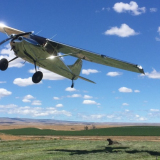
'49 170A. (his)
'56 172. (hers)
'56 172. (hers)
Tue Jul 20, 2021 6:21 am
Re: Cessna 170A
The difference, after slipping down to short final, is that the nose will be higher with the same airspeed and Vso will be different. That said, we are not touching down slowly and softly at Vso. We are touching down slowly and softly at whatever airspeed will just barely support the weight at one inch ground effect.
We get slow the same way as with 40 degrees of flap on the later Cessnas. We pitch up on short final enough to create a good sink. Pitch attitude will be much higher in the 170A, but the rounded windscreen with the round fuselage allows pretty good visibility ahead and down. We are aiming, with rudder and throttle only (aileron will screw this up), at the numbers (desired touchdown spot exactly, exactly.) Rudder maintains longitudinal alignment (and keeps the wing level at the same time) and throttle movement directs us down the desired glide angle and manages rate of descent to touchdown. Exactly same thing in a crosswind with the wing in stabilized bank into the crosswind (use aileron to maintain wing bank angle but not, absolutely not, to direct the nose down the centerline. That is a rudder only job. Throttle and engine power, perhaps lots, to touchdown. If we have to round out and close the throttle we are going too fast, even in a 170A or Citabria. Hold off with elevator controlling speed (which it does very well) and altitude (which it does very poorly) is not a short field technique.
Welcome, by the way. So no problem with the airplane. Pilot needs to learn power/pitch deceleration on short final to touchdown well below Vso on the numbers consistently for short off field operations. Read Safe Maneuvering Flight Techniques for the apparent brisk walk rate of closure approach. Email me [email protected]. It is free.
We get slow the same way as with 40 degrees of flap on the later Cessnas. We pitch up on short final enough to create a good sink. Pitch attitude will be much higher in the 170A, but the rounded windscreen with the round fuselage allows pretty good visibility ahead and down. We are aiming, with rudder and throttle only (aileron will screw this up), at the numbers (desired touchdown spot exactly, exactly.) Rudder maintains longitudinal alignment (and keeps the wing level at the same time) and throttle movement directs us down the desired glide angle and manages rate of descent to touchdown. Exactly same thing in a crosswind with the wing in stabilized bank into the crosswind (use aileron to maintain wing bank angle but not, absolutely not, to direct the nose down the centerline. That is a rudder only job. Throttle and engine power, perhaps lots, to touchdown. If we have to round out and close the throttle we are going too fast, even in a 170A or Citabria. Hold off with elevator controlling speed (which it does very well) and altitude (which it does very poorly) is not a short field technique.
Welcome, by the way. So no problem with the airplane. Pilot needs to learn power/pitch deceleration on short final to touchdown well below Vso on the numbers consistently for short off field operations. Read Safe Maneuvering Flight Techniques for the apparent brisk walk rate of closure approach. Email me [email protected]. It is free.
- contactflying offline
- Posts: 4972
- Joined: Wed Apr 03, 2013 7:36 pm
- Location: Aurora, Missouri 2H2
Download my free "https://tinyurl.com/Safe-Maneuvering" e-book.
Wed Jul 21, 2021 3:05 pm
Re: Cessna 170A
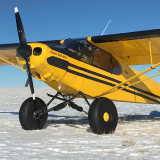
The A model is a well kept secret. The book full flap stall speed for the A model is 1 MPH higher than the B model so no difference. Yeah the B model has bigger flaps for steeper approaches but you cant slip a B model but you can slip an A model so I guess they both can have equally steep approaches. The B has a better heater and the B wing has dihedral which makes it a little bit more stable and hands off in level flight. As far as I am concerned the B model is slightly better but not worth the price difference. Put 1000 hours on my A model in the mountains of Montana and Idaho. I routinely landed off airport and on gravel bars. Loved that plane but sold it for a Supercub which I like even more.
Wed Jul 21, 2021 9:13 pm
Re: Cessna 170A
Thanks. I think I’m going to be very happy with it.
Thu Jul 22, 2021 3:33 am
Re: Cessna 170A
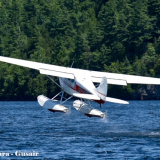
Plus your now a lifetime member of The Knights of the Round Tail & Holy Order of the Round Tails. We are a bit of a motley crew but get the job done in style.
Thu Jul 22, 2021 4:20 am
Re: Cessna 170A
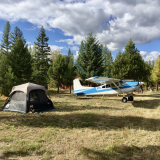
I'd but the 170A and never look back. My hangar mate has a Duke. He watched me have so much fun in my 185 he decided to buy a 170A as well. I love flying it! I think you will be happy.
MW
MW
- 185Midwest offline
- Posts: 437
- Joined: Sun Sep 30, 2018 11:58 am
- Location: Fort Wayne
- Aircraft: C-185
Thu Jul 22, 2021 5:19 am
Re: Cessna 170A
cowpilot wrote:I get by with mine. It’s a better airplane than I am a pilot.
Sent from my iPhone using Tapatalk
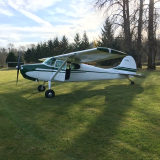
Great looking 170! Did you paint your gear? I'm in the process of of stripping my Cessna 175 and I'm not sure what to do with the main gear yet.
Jason
- Sand Hill CNC offline

- Posts: 5
- Joined: Mon Sep 16, 2019 3:35 pm
- Location: West Baden Springs
- Aircraft: Cessna 175
Thu Jul 22, 2021 6:38 am
Re: Cessna 170A

There’s a lot to love about an A model. If you don’t have a lot of Taildragger time get yourself a good tail wheel flight Instructor and spend some good quality time with him.
Sent from my iPhone using Tapatalk
Thu Jul 22, 2021 7:24 am
Re: Cessna 170A
Sand Hill CNC wrote:Great looking 170! Did you paint your gear? I'm in the process of of stripping my Cessna 175 and I'm not sure what to do with the main gear yet.
Jason
Thanks! Yes, the gear and wingtips are just rattle canned. The strip and polish, along with the spartan interior are all in an effort to keep it as light as possible.
Brent
Sent from my iPhone using Tapatalk
'49 170A. (his)
'56 172. (hers)
'56 172. (hers)
Thu Jul 22, 2021 7:37 am
Re: Cessna 170A
cowpilot wrote:Sand Hill CNC wrote:Great looking 170! Did you paint your gear? I'm in the process of of stripping my Cessna 175 and I'm not sure what to do with the main gear yet.
Jason
Thanks! Yes, the gear and wingtips are just rattle canned. The strip and polish, along with the spartan interior are all in an effort to keep it as light as possible.
Brent
Sent from my iPhone using Tapatalk
Thanks for the response. That is probably how I will deal with mine as well. I may have a stripe down the middle of the fuselage too. I'm in a process of lightening mine as well so when I get the Airglas fork and 8.50x6 tires on, it won't be such a weight penalty. Plus my paint job looked like Earl Shively did it, so a polish should be a big upgrade.
- Sand Hill CNC offline
- Posts: 5
- Joined: Mon Sep 16, 2019 3:35 pm
- Location: West Baden Springs
- Aircraft: Cessna 175
DISPLAY OPTIONS
Who is online
Users browsing this forum: No registered users and 2 guests
Latest Features
-
Live to Tell
A Minnesota pilot is surprised to learn that the sudden asymmetric drag of an out-of-rig ski can…Read More -
Creators
Working in some of the Yukon's most beautiful and remote environments, photographer Simon Blakesley captures aircraft in…Read More -
Aircraft Ownership and Maintenance
Upgrading to big tires can make a huge difference in backcountry performance, but with those gains come…Read More -
Tales from Yesteryear
In this tale from bush flying yesteryear, Don Cogger signs up to help Atlee Dodge Jr recovery…Read More


Latest Knowledge Base
-
Destinations
A regional guide with ideas for winter camping destinations in California, Nevada, New Mexico, and Arizona.Read More -
Aircraft
Finding an affordable aircraft that can handle the backcountry for $80K or less? A challenge for sure, but with the…Read More -
Aircraft
01.29.2018 - Zane - Updated tire diameter graphic to add 8.50x10 Guide to tires for use in the backcountry and off-airport landing…Read More -
Pilots
12.22.2013 - Initial article format Operating aircraft on skis and negotiating a snow-covered landscape is an entirely unique skillset and environment.…Read More


