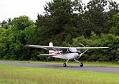
ShadowAviator wrote:Cary wrote:I'm not much of a believer in reinventing the wheel. The 180hp Lycoming 360s have been stuffed into 172s forever, with both CS and fixed pitch props, both as STC'd and factory OEM. The CS prop has a performance edge, of course, because you can have both climb and cruise capabilities, but it adds about 30# to the equation. Mine's an Avcon, which is a good conversion with lousy support (lousy = pretty much non-existent). The Lycoming 360 also has a stellar reputation, although that's no guarantee of much of anything.
I frankly doubt that you'll find much different in $$, no matter what your upgrade is. For myself, I'd stick with the tried and true. Get yourself a good, meticulous engine builder, and if you're as fortunate as I've been with my custom-built engine, it'll be better than new.
Cary
Yeah, time will tell. Remember, though, every tried and true engine was once a new thing.
I am not sure on the CS prop, though. Heavier and more costly. I don't know how much performance improvement would be.
Look at it this way: a fixed climb prop on a 172 gives excellent acceleration and climb characteristics, but every one that I've seen requires throttling back quite a bit at cruise to keep the rpm under redline, i.e., cruise speed suffers. At the other end, a cruise prop is really crummy on acceleration and climb, but once leveled out for cruise, allows a decent cruise speed without any danger of overspeeding rpm into the red. A CS prop gives the best of both worlds. As a consequence, my airplane climbs better than most climb prop equipped 172s and cruises faster than most cruise prop equipped 172s.
For instance, my prop governor is set so that I get just under redline rpm of 2700 for take off. After I've reached a few hundred feet, I typically dial it back to 2550 to climb out. Once level, I dial it back to 2400. I can run at slower rpm, but once I get down around 2350, I begin to lose IAS, so it doesn't make much sense. Also, I get the "feeling" that I'm lugging the engine, much like being in too high a gear in a stick shift transmission.
An added benefit to a CS prop is that when it's time to descend, I just point it down. The rpm stays the same, the airplane speeds up, and I make up some for the slower climb speed at the beginning of the trip. Similarly, it's really nice that in normal flight, changing altitudes here and there, there's no need to watch the rpm to prevent nudging redline on any descents.
There are, of course, some downsides to CS props, besides the weight penalty, compared to fixed pitch. The primary one is that they're more expensive, both to purchase and to overhaul when that becomes necessary. Normally there's not much maintenance, but once they start to leak, if an overhaul isn't necessary, a re-sealing job is required.
So just like most things in life, you have to weigh the ups and downs and decide which makes more sense to you. For me, the CS prop does.
Cary