The guy in Erie, CO is Jim Hillis. PM me and I can give you his contact information. We just spent some time with him & Vicki in Durango.
Rich
Cessna 180 cowling gill vents
Fri Sep 23, 2016 8:08 pm
- rfinkle offline


- Posts: 334
- Joined: Sat Feb 21, 2009 9:27 pm
- Location: KSZP, KCCR, 18AZ
- FindMeSpot URL: http://share.findmespot.com/shared/face ... gujelTKUbh
You're never too old to learn something stupid.
Mon Sep 26, 2016 6:57 am
Re: Cessna 180 cowling gill vents
My cht gauge has the green arc starting at 350 and ending at 450. red line is 500. How does that compare to other models, I have a 53 with an "A" engine.
Tue Sep 27, 2016 4:50 pm
Re: Cessna 180 cowling gill vents
My original CHT probably says the same. I don't look at it much because I have a JPI engine monitor. I have the alarm set at 390°F. If any of the six cylinders get that temp it starts the display flashing.
Why 390°F? Well, Mike Bush (Savvy Aviator) had an article (or webinar) where he explained that the material in the engines gets significantly weaker at temperatures above 400°F. I know the Cessna gages have a green arc higher than that which is puzzling.
I have personal experience that bears this out due to a baffle around the front air inlet to the carburetor improperly installed at annual. The missing baffle allowed ram air pressure into the cowl below the cylinder heads which equalized the ram air pressure on top of the cylinder heads. Result was no flow across the cylinders. I could not keep the temps below 425-430°F during climb, and barely below 400° during cruise, and had to run cowl flaps open all the time. I discovered the problem, and fixed the baffle around the air filter. Temperatures dropped back into the "normal" range.
I always sample my oil, and on the next oil change the sample showed significant increase in aluminum and wear metals in the oil. After fixing the baffle and operating with temperatures at 350 to 380 the next oil sample came back with normal metal levels.
I have 1700 hrs. on a 0-470-J-11 engine, and all compressions good. Burns about 1qt every 10 hours. I think a contributing factor is the use of a JPI engine monitor to manage the cylinder temperatures. The stock CHT only reports one cylinder. Very often it is different cylinders that are the hottest depending on AOA, air speed, mixture, throttle setting, and RPM. A single point CHT just doesn't cut it.
The -11 on the engine number is for a high capacity oil cooler installed to replace the original one. With the larger cooler oil temperatures have never been the limiting factor for engine heat. With the larger cooler oil never gets over 220°F even on 100°F days. In the winter however, I have to blank about half of it off because it cools the oil too much.
DEGJR
Why 390°F? Well, Mike Bush (Savvy Aviator) had an article (or webinar) where he explained that the material in the engines gets significantly weaker at temperatures above 400°F. I know the Cessna gages have a green arc higher than that which is puzzling.
I have personal experience that bears this out due to a baffle around the front air inlet to the carburetor improperly installed at annual. The missing baffle allowed ram air pressure into the cowl below the cylinder heads which equalized the ram air pressure on top of the cylinder heads. Result was no flow across the cylinders. I could not keep the temps below 425-430°F during climb, and barely below 400° during cruise, and had to run cowl flaps open all the time. I discovered the problem, and fixed the baffle around the air filter. Temperatures dropped back into the "normal" range.
I always sample my oil, and on the next oil change the sample showed significant increase in aluminum and wear metals in the oil. After fixing the baffle and operating with temperatures at 350 to 380 the next oil sample came back with normal metal levels.
I have 1700 hrs. on a 0-470-J-11 engine, and all compressions good. Burns about 1qt every 10 hours. I think a contributing factor is the use of a JPI engine monitor to manage the cylinder temperatures. The stock CHT only reports one cylinder. Very often it is different cylinders that are the hottest depending on AOA, air speed, mixture, throttle setting, and RPM. A single point CHT just doesn't cut it.
The -11 on the engine number is for a high capacity oil cooler installed to replace the original one. With the larger cooler oil temperatures have never been the limiting factor for engine heat. With the larger cooler oil never gets over 220°F even on 100°F days. In the winter however, I have to blank about half of it off because it cools the oil too much.
DEGJR
Wed Sep 28, 2016 9:26 am
Re: Cessna 180 cowling gill vents
The guys who teach the Advanced Pilot Seminars in Ada, OK have an extremely sophisticated engine test lab (probably the most advanced in the world for aircraft engines) where they can do all sorts of tests. They originated the recommendation to try to keep CHTs below 380* and Mike Busch has helped to spread that word far and wide. The rationale behind it is interesting, and somewhat obfuscated by Mike's talking points.
Yes, there is a significant decrease in the strength of the metal alloys in the cylinders and heads as temperatures go up. The "rough" numbers (rounded slightly for ease of discussion) are that at about 400*F, the alloy has lost a bit over 1/3 of its "yield point tensile strength" measured in PSI. At about 450*F, where Lycoming typically sets the bottom of the "yellow" band, the alloy has lost over 1/2 its strength. At 500*F, it is down to less than 1/4 of the original strength. No one I've ever heard of has any argument with that data - it's generally accepted by metalurgists for many years.
Where the argument begins is at what point do we enter the "danger zone" for engine operations? Several factors influence that analysis, and one of them is absolutely HUGE.
If you're using a spark-plug "ring" thermocouple to measure CHTs, the APS folks have proven that those probes read easily 20-50*F HIGHER than a bayonet-type thermocouple inserted into the CHT measurement ports ("wells") in an aircraft engine. It seems that most of the "factory" supplied gauges in the past (when the vast majority of airplanes were certified and built) came equipped with a single-point CHT (1 cylinder) that used the ring-type thermocouple installed under the spark plug of the "usually hottest" cylinder. Since those ring-type thermocouples typically indicate higher CHTs than those measured by the "well-type" thermocouples (generally accepted as being more accurate), both Lycoming and Continental (and by extension Cessna, Piper, Beech, etc.) appear to have made allowances for that difference in setting the "yellow-arc" and "red-line" temps for their engines. Thus we often see "book" limits of 450*F for continuous operation and 500*F for "do not exceed" limits.
If you are using an all-cylinder digital engine monitor on your engine, as Mike Busch (and the APS folks) STRONGLY recommend, it is highly likely that you are using the well-type thermocouples on all the "newly equipped" cylinders. Some will retain the "factory" ring-type thermocouple on the originally monitored cylinder, but it is not recommended by JPI, EI, Mike B, the APS guys, or pretty much anyone else. Use the same "well-type" probes in all your cylinders if you're spending the money to be monitor them. Why would you want one cylinder probe that constantly reports a known higher temp than the others? So, moving forward with the assumption that you now have a more accurate indication of the actual temps, when your digitally-monitored engine reports CHTs of 450*F, it is highly likely that the cylinder head temps are ACTUALLY around 450*F. When you were using the factory ring-type temp probe, a report of 450*F would almost certainly mean that you were actually running somewhat lower temps - closer to 400*F.
Look back at the paragraph about the effect of temperature on alloy strength, and note the difference between 400*F and 450*F. Pretty dramatic, right? Note also the difference between 450*F and 500*F. The APS guys determined that between 450-500*F, cylinders became more "plastic" and began to go "out of round" resulting in scuffing of the cylinder walls. Once temperatures actually rose above 450*F, the CHTs could rise so quickly that even dramatic pilot intervention could not bring the temperatures down before CHTs went WAY above the 500*F point. And going above 500*F for any length of time can be absolutely fatal to the cylinder. They hypothesized that the "mental" red-line (as measured with well-type thermocouples typically used with digital engine monitors) should be adjusted to 450*F to prevent those issues, and likewise the mental "yellow-arc" should begin at about 400*F.
To validate their hypothesis, the APS folks began doing a whole series of tests (mostly with Continental engines, but validated with Lycoming engines as well) that showed that for most pilots, when "high CHT" alarms were set to alert the pilot as CHTs went above 400*F (under conditions that might lead to continued rise of those CHTs), most pilots could respond in sufficient time to prevent excursions above 450*F, but only barely, and only if they were focused on that task to the exclusion of other tasks. Add in "normal pilot workload" that you typically see in high-power situations (takeoff, initial climb out, go-around, etc.) and the pilot's reaction was slowed enough that they might NOT be able to catch the rising CHTs in time to prevent exceeding 450*F. Thus the APS folks recommend setting the initial "high CHT" alarm on your digital engine monitor to alert the pilot when the CHT increases above 380*F, and that pilots take immediate action to reduce the CHTs (lowering the nose slightly in climb, etc.) and to closely monitor CHTs once that 380*F number is exceeded. If the CHTs continue to rise towards the 400*F number, they strongly recommend the pilot be prepared to take whaever action it takes to correct the problem. That typically means significantly enriching the engine (perhaps even going to full rich at lower altitudes), but may (in the case of LOP operations) mean leaning even further (once you go LOP, leaning the mixture further results in reduced EGTs and CHTs).
Mike Busch attended the APS, but in his recommendations he often glosses over the part about "if you have an all-cylinder digital engine monitor" when he makes the recommendation that the APS also makes - keep the CHTs below 380*F if at all possible. The APS guys would observe that if you have a factory, ring-style CHT probe, it is highly unlikely that you'll be able to keep CHTs below 380*F in climb or other high-power situations, since that would mean the CHTs might be actually somewhere closer to 330*F, which is simply unrealistic. Mike's advice is GOLDEN - but only if you have the well-type CHT probes. If you don't, it would seem that the "book" limits (perhaps reduced by 20*F to allow for "pilot response time") would be a more realistic goal.
If you get the chance, the APS seminar (http://www.advancedpilot.com) is probably the absolute best value for your aviation dollar. I thought I was reasonably knowledgeable about engine operations before I took the course, but I learned so much it was incredible. There is an online course and a "live" classroom course. Online is less expensive, and after you take that course, they will credit you the full cost towards the "live" course. I did both, and although I learned a LOT from the online course, the live course was FAR more valuable. It was, quite simply, the best-structured educational experience I've ever had - and I spent an entire career in IT, where ongoing training and education is mandatory if you want to remain relevant. I've been to literally thousands of hours of training courses, and the APS was the best I've ever seen. Well worth the cost, and if you currently have a digital engine monitor, the APS course will probably save you more money on maintenance over the next 2-3 years that it costs you.
I know the knowledge I gained in the APS course may well have saved my life when I used what I learned to figure out that I had an otherwise undiagnosed induction system leak on my turbo-normalized fuel-injected engine. When we investigated that induction system leak, we determined that leak was actually caused by a pinhole exhaust leak (completely hidden by the engine/exhaust structure, and with no visible discoloration even viewing with a mirror and light) that had not only cut through the intake gasket, but would likely have eventually have burned through a fuel line with disastrous consequences... My mechanic and I just looked at each other for about 5 minutes, with him apologizing for missing it, and both of us wondering how he could possibly have known without the indications I saw from the engine monitor... and without the knowledge I had gained from APS to interpret that data.
Yes, there is a significant decrease in the strength of the metal alloys in the cylinders and heads as temperatures go up. The "rough" numbers (rounded slightly for ease of discussion) are that at about 400*F, the alloy has lost a bit over 1/3 of its "yield point tensile strength" measured in PSI. At about 450*F, where Lycoming typically sets the bottom of the "yellow" band, the alloy has lost over 1/2 its strength. At 500*F, it is down to less than 1/4 of the original strength. No one I've ever heard of has any argument with that data - it's generally accepted by metalurgists for many years.
Where the argument begins is at what point do we enter the "danger zone" for engine operations? Several factors influence that analysis, and one of them is absolutely HUGE.
If you're using a spark-plug "ring" thermocouple to measure CHTs, the APS folks have proven that those probes read easily 20-50*F HIGHER than a bayonet-type thermocouple inserted into the CHT measurement ports ("wells") in an aircraft engine. It seems that most of the "factory" supplied gauges in the past (when the vast majority of airplanes were certified and built) came equipped with a single-point CHT (1 cylinder) that used the ring-type thermocouple installed under the spark plug of the "usually hottest" cylinder. Since those ring-type thermocouples typically indicate higher CHTs than those measured by the "well-type" thermocouples (generally accepted as being more accurate), both Lycoming and Continental (and by extension Cessna, Piper, Beech, etc.) appear to have made allowances for that difference in setting the "yellow-arc" and "red-line" temps for their engines. Thus we often see "book" limits of 450*F for continuous operation and 500*F for "do not exceed" limits.
If you are using an all-cylinder digital engine monitor on your engine, as Mike Busch (and the APS folks) STRONGLY recommend, it is highly likely that you are using the well-type thermocouples on all the "newly equipped" cylinders. Some will retain the "factory" ring-type thermocouple on the originally monitored cylinder, but it is not recommended by JPI, EI, Mike B, the APS guys, or pretty much anyone else. Use the same "well-type" probes in all your cylinders if you're spending the money to be monitor them. Why would you want one cylinder probe that constantly reports a known higher temp than the others? So, moving forward with the assumption that you now have a more accurate indication of the actual temps, when your digitally-monitored engine reports CHTs of 450*F, it is highly likely that the cylinder head temps are ACTUALLY around 450*F. When you were using the factory ring-type temp probe, a report of 450*F would almost certainly mean that you were actually running somewhat lower temps - closer to 400*F.
Look back at the paragraph about the effect of temperature on alloy strength, and note the difference between 400*F and 450*F. Pretty dramatic, right? Note also the difference between 450*F and 500*F. The APS guys determined that between 450-500*F, cylinders became more "plastic" and began to go "out of round" resulting in scuffing of the cylinder walls. Once temperatures actually rose above 450*F, the CHTs could rise so quickly that even dramatic pilot intervention could not bring the temperatures down before CHTs went WAY above the 500*F point. And going above 500*F for any length of time can be absolutely fatal to the cylinder. They hypothesized that the "mental" red-line (as measured with well-type thermocouples typically used with digital engine monitors) should be adjusted to 450*F to prevent those issues, and likewise the mental "yellow-arc" should begin at about 400*F.
To validate their hypothesis, the APS folks began doing a whole series of tests (mostly with Continental engines, but validated with Lycoming engines as well) that showed that for most pilots, when "high CHT" alarms were set to alert the pilot as CHTs went above 400*F (under conditions that might lead to continued rise of those CHTs), most pilots could respond in sufficient time to prevent excursions above 450*F, but only barely, and only if they were focused on that task to the exclusion of other tasks. Add in "normal pilot workload" that you typically see in high-power situations (takeoff, initial climb out, go-around, etc.) and the pilot's reaction was slowed enough that they might NOT be able to catch the rising CHTs in time to prevent exceeding 450*F. Thus the APS folks recommend setting the initial "high CHT" alarm on your digital engine monitor to alert the pilot when the CHT increases above 380*F, and that pilots take immediate action to reduce the CHTs (lowering the nose slightly in climb, etc.) and to closely monitor CHTs once that 380*F number is exceeded. If the CHTs continue to rise towards the 400*F number, they strongly recommend the pilot be prepared to take whaever action it takes to correct the problem. That typically means significantly enriching the engine (perhaps even going to full rich at lower altitudes), but may (in the case of LOP operations) mean leaning even further (once you go LOP, leaning the mixture further results in reduced EGTs and CHTs).
Mike Busch attended the APS, but in his recommendations he often glosses over the part about "if you have an all-cylinder digital engine monitor" when he makes the recommendation that the APS also makes - keep the CHTs below 380*F if at all possible. The APS guys would observe that if you have a factory, ring-style CHT probe, it is highly unlikely that you'll be able to keep CHTs below 380*F in climb or other high-power situations, since that would mean the CHTs might be actually somewhere closer to 330*F, which is simply unrealistic. Mike's advice is GOLDEN - but only if you have the well-type CHT probes. If you don't, it would seem that the "book" limits (perhaps reduced by 20*F to allow for "pilot response time") would be a more realistic goal.
If you get the chance, the APS seminar (http://www.advancedpilot.com) is probably the absolute best value for your aviation dollar. I thought I was reasonably knowledgeable about engine operations before I took the course, but I learned so much it was incredible. There is an online course and a "live" classroom course. Online is less expensive, and after you take that course, they will credit you the full cost towards the "live" course. I did both, and although I learned a LOT from the online course, the live course was FAR more valuable. It was, quite simply, the best-structured educational experience I've ever had - and I spent an entire career in IT, where ongoing training and education is mandatory if you want to remain relevant. I've been to literally thousands of hours of training courses, and the APS was the best I've ever seen. Well worth the cost, and if you currently have a digital engine monitor, the APS course will probably save you more money on maintenance over the next 2-3 years that it costs you.
I know the knowledge I gained in the APS course may well have saved my life when I used what I learned to figure out that I had an otherwise undiagnosed induction system leak on my turbo-normalized fuel-injected engine. When we investigated that induction system leak, we determined that leak was actually caused by a pinhole exhaust leak (completely hidden by the engine/exhaust structure, and with no visible discoloration even viewing with a mirror and light) that had not only cut through the intake gasket, but would likely have eventually have burned through a fuel line with disastrous consequences... My mechanic and I just looked at each other for about 5 minutes, with him apologizing for missing it, and both of us wondering how he could possibly have known without the indications I saw from the engine monitor... and without the knowledge I had gained from APS to interpret that data.

Wed Sep 28, 2016 1:22 pm
Re: Cessna 180 cowling gill vents
Wow JP256, thank you for that posting. Clears up a lot of things. I've always known that the ring type thermocouples are less accurate, but the effect that this inaccuracy can have on the pilot's understanding of what the engine is actually doing is significant. Thank you for the explanation.

.
Wed Sep 28, 2016 6:36 pm
Re: Cessna 180 cowling gill vents
JP256 wrote:I know the knowledge I gained in the APS course may well have saved my life when I used what I learned to figure out that I had an otherwise undiagnosed induction system leak on my turbo-normalized fuel-injected engine. When we investigated that induction system leak, we determined that leak was actually caused by a pinhole exhaust leak (completely hidden by the engine/exhaust structure, and with no visible discoloration even viewing with a mirror and light) that had not only cut through the intake gasket, but would likely have eventually have burned through a fuel line with disastrous consequences... My mechanic and I just looked at each other for about 5 minutes, with him apologizing for missing it, and both of us wondering how he could possibly have known without the indications I saw from the engine monitor... and without the knowledge I had gained from APS to interpret that data.
*like*
Sounds like a worthwhile course!
- CamTom12 offline

- Posts: 3705
- Joined: Sun Jul 08, 2012 1:08 pm
- Location: Huntsville
- FindMeSpot URL: https://share.delorme.com/camtom12
- Aircraft: Ruppe Racer
Experimental Pacer
home hand jam "wizard"
Thu Sep 29, 2016 4:45 am
Re: Cessna 180 cowling gill vents
Now that's a response, Thank you, extremely enlightening
Fri Sep 30, 2016 4:28 am
Re: Cessna 180 cowling gill vents
JP256-
You nailed it. Best summary I've seen in a very long time. George, John and Walter would be happy. Especially Walter- he is the educator in the bunch. Excellent!
gunny
You nailed it. Best summary I've seen in a very long time. George, John and Walter would be happy. Especially Walter- he is the educator in the bunch. Excellent!
gunny

Fri Sep 30, 2016 2:40 pm
Re: Cessna 180 cowling gill vents
Gunny wrote:JP256-
You nailed it. Best summary I've seen in a very long time. George, John and Walter would be happy. Especially Walter- he is the educator in the bunch. Excellent!
gunny
Thanks for your kind words! I'm just trying to "pay it forward"...
I am very grateful to all three of them, and very happy that they actively encourage APS graduates to 'share the knowledge' with others. But as you know (assuming you're an APS graduate as well), what I conveyed in that post is a TINY fraction of what we learned in the course. I honestly believe its the best $$ I've spent on aviation training, and was the best "upgrade" I ever did for the airplanes I've owned and operated since!
Fri Sep 30, 2016 10:55 pm
Re: Cessna 180 cowling gill vents
I don't fly an air cooled engine, so it doesn't really apply to me.. but, that was a really good informative and interesting post. Makes sense! Good read 
- GravityKnight offline
- Posts: 266
- Joined: Tue Sep 15, 2015 10:03 am
- Location: Colorado
- Aircraft: RANS S7S / EP912STi /
Robert's gear / 29" ABWs
VG's / T3 / 75" ww
Sat Oct 01, 2016 12:04 am
Re: Cessna 180 cowling gill vents
@ JP256:
Regarding the course. I went to their website.
How important do you think it is to buy the actual course manual they offer for an additional $ 100 if you are planning to take it online?
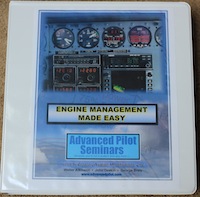
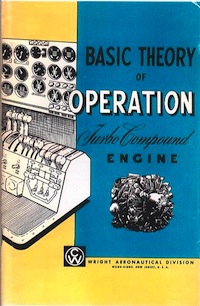
Also, any thoughts on any of the four books they offer in their website Store?
Link: http://www.advancedpilot.com/store.html
Regarding the course. I went to their website.
How important do you think it is to buy the actual course manual they offer for an additional $ 100 if you are planning to take it online?
Also, any thoughts on any of the four books they offer in their website Store?
Link: http://www.advancedpilot.com/store.html
Sat Oct 01, 2016 5:13 am
Re: Cessna 180 cowling gill vents
In the interest of full disclosure. George, John and Walter are all very long time friends of mine. I was an early GAMI convert and attended the course when it was new. I reviewed the online course for Walter when he was ready to stand it up.
The online curse is excellent and well done, you will learn a lot of information. But as was said earlier.... it pales in comparison to the actual course. There is so much information and it is so well presented that I would say you should go to the course. If you want to really understand your engine and keep it healthy... go to the course. The online version is acceptable, but it just doesn't get into the depth the classroom does.
But having the books is very important. The thing is you will actually use them for years.... got a question, go back to the book. Can't quite remember... go to the books. Of course YMMV.
gunny
The online curse is excellent and well done, you will learn a lot of information. But as was said earlier.... it pales in comparison to the actual course. There is so much information and it is so well presented that I would say you should go to the course. If you want to really understand your engine and keep it healthy... go to the course. The online version is acceptable, but it just doesn't get into the depth the classroom does.
But having the books is very important. The thing is you will actually use them for years.... got a question, go back to the book. Can't quite remember... go to the books. Of course YMMV.
gunny
Sat Oct 01, 2016 1:07 pm
Re: Cessna 180 cowling gill vents
The course manual is an excellent idea, because you can use it to make notes as you go along, and refer to them later. The other books are NOT needed before the course. As Gunny said, the online course is very good, but it is NOT exactly the same as the "live" course. The good news is that if you take the online course they will credit that amount towards the "live" course when you decide to take it. Likewise, if you sign up for the "live" course, they give you access to the online course for a full year as part of the course fee.
So my take would be to purchase the course manual, and go through the online course. When you think you've learned all the material in the online course, sign up and attend the live course. You'll be amazed at both how much you learned in the online, and how much there is left to learn from the live course!
As for the other books, you may decide you want to buy them based on how they are referred to in the course, but you may not. I bought John's book, and it's a good read. Certainly not integral to the course material, though. The other two are more technical references that (to a real gear-head or engineer) will probably help you as reference material for the rest of your aviation career. But still optional to the course itself.
So my take would be to purchase the course manual, and go through the online course. When you think you've learned all the material in the online course, sign up and attend the live course. You'll be amazed at both how much you learned in the online, and how much there is left to learn from the live course!
As for the other books, you may decide you want to buy them based on how they are referred to in the course, but you may not. I bought John's book, and it's a good read. Certainly not integral to the course material, though. The other two are more technical references that (to a real gear-head or engineer) will probably help you as reference material for the rest of your aviation career. But still optional to the course itself.
Mon Jan 16, 2017 11:56 am
Re: Cessna 180 cowling gill vents
I am looking for a source/contact info to get a set of these louvres.
Thanks
Gary
Thanks
Gary
- shortfielder offline

- Posts: 2350
- Joined: Sun Mar 05, 2006 7:14 pm
- Location: Durango, Colorado
- FindMeSpot URL: http://share.findmespot.com/shared/face ... D263l9HKFb
If you want to go up, pull back on the controls. If you want to go down, pull back farther.
My SPOT page
My SPOT page
Mon Jan 16, 2017 12:10 pm
Re: Cessna 180 cowling gill vents
PM sent...
- Bigrenna offline


- Posts: 2339
- Joined: Sun Sep 25, 2011 4:02 pm
- Location: New England
- Aircraft: C180H / C170B
www.bushwagoneast.com
www.avthreads.com
Mon Jan 16, 2017 8:02 pm
Re: Cessna 180 cowling gill vents
I have been flying glider tow for 17 years. I have found a bit of carb heat on the non cowl flaps equipped 182a will keep the chts about 400 at 65 mph. Now the summertime oil temp can get to redline quickly. Our towplane engines make to tbo most of the time on original cylinders. Robert Nin Marfa,Texas.
Sat Jul 27, 2019 6:05 am
Re: Cessna 180 cowling gill vents
Sorry for resurrecting an old thread but does anyone sell these vents?

Sat Jul 27, 2019 7:32 am
Re: Cessna 180 cowling gill vents
Skywagon City sells them. Skywagon Club allegedly holds an STC but it is not listed on the website.
Sat Jul 27, 2019 12:26 pm
Re: Cessna 180 cowling gill vents
FAA.gov STC search using terms "louvers" and "Cessna" reveals
http://rgl.faa.gov/Regulatory_and_Guidance_Library/rgstc.nsf/0/A5896864C0F56B8D86256EBE00684211?OpenDocument&Highlight=louver%205a6
STC Number:
SA777NE
This certificate issued to:
Alphin Aircraft Inc
STC Holder's Address:
Route 12 Box 94 Oaks Road
Hagerstown MD 21740
United States
Description of the Type Design Change:
Installation of Cessna louvers.
Application Date:
02/09/1990
Status:
Amended, 05/06/2004
Responsible Office:
New York ACO Branch, Tel: +1 (516) 228-7300
I'd start with a call to the New York ACO...
http://rgl.faa.gov/Regulatory_and_Guidance_Library/rgstc.nsf/0/A5896864C0F56B8D86256EBE00684211?OpenDocument&Highlight=louver%205a6
STC Number:
SA777NE
This certificate issued to:
Alphin Aircraft Inc
STC Holder's Address:
Route 12 Box 94 Oaks Road
Hagerstown MD 21740
United States
Description of the Type Design Change:
Installation of Cessna louvers.
Application Date:
02/09/1990
Status:
Amended, 05/06/2004
Responsible Office:
New York ACO Branch, Tel: +1 (516) 228-7300
I'd start with a call to the New York ACO...
Sun Jul 28, 2019 4:26 am
Re: Cessna 180 cowling gill vents
Followup on the STC. Here is the answer to my email to the Pres of the Skywagon Club regarding the STC.
Eddie,
Interesting that you ask. We discussed that at the board meeting. The guy that held the STC left it to the club in his will. There are some issues that I don't fully understand but we are working on it. I will copy Bo on this and see if I can help you get some clarification.
Eric
Eddie,
Interesting that you ask. We discussed that at the board meeting. The guy that held the STC left it to the club in his will. There are some issues that I don't fully understand but we are working on it. I will copy Bo on this and see if I can help you get some clarification.
Eric
DISPLAY OPTIONS
Who is online
Users browsing this forum: No registered users and 0 guests
Latest Features
-
Live to Tell
A Minnesota pilot is surprised to learn that the sudden asymmetric drag of an out-of-rig ski can…Read More -
Creators
Working in some of the Yukon's most beautiful and remote environments, photographer Simon Blakesley captures aircraft in…Read More -
Aircraft Ownership and Maintenance
Upgrading to big tires can make a huge difference in backcountry performance, but with those gains come…Read More -
Tales from Yesteryear
In this tale from bush flying yesteryear, Don Cogger signs up to help Atlee Dodge Jr recovery…Read More


Latest Knowledge Base
-
Destinations
A regional guide with ideas for winter camping destinations in California, Nevada, New Mexico, and Arizona.Read More -
Aircraft
Finding an affordable aircraft that can handle the backcountry for $80K or less? A challenge for sure, but with the…Read More -
Aircraft
01.29.2018 - Zane - Updated tire diameter graphic to add 8.50x10 Guide to tires for use in the backcountry and off-airport landing…Read More -
Pilots
12.22.2013 - Initial article format Operating aircraft on skis and negotiating a snow-covered landscape is an entirely unique skillset and environment.…Read More


