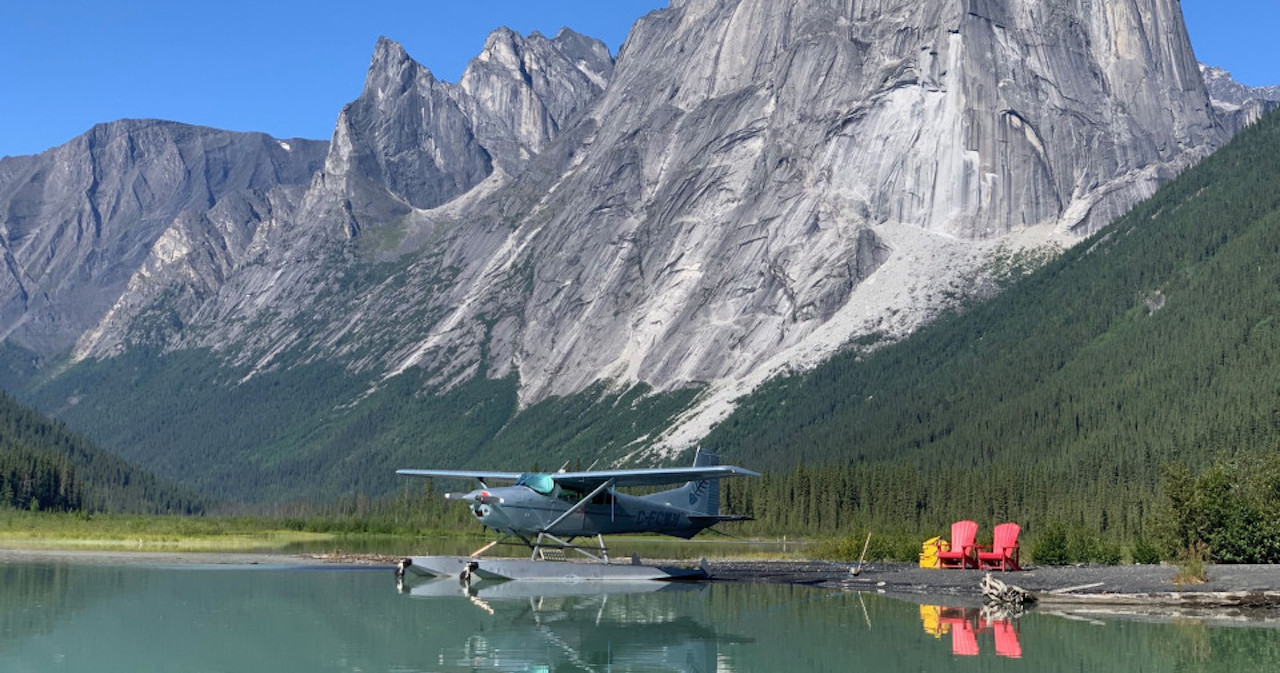
Cessna 185 floatplane glide ratio
Mon Apr 01, 2019 8:42 am
Re: Cessna 185 floatplane glide ratio
Thank you, albravo. That link does not have the emergency section, where the glide ratio is located.

Mon Apr 01, 2019 8:57 am
Re: Cessna 185 floatplane glide ratio
-0-
Last edited by dogpilot on Thu Aug 06, 2020 12:58 am, edited 1 time in total.
Mon Apr 01, 2019 9:09 am
Re: Cessna 185 floatplane glide ratio
FWIW here's a C180 glide ratio graphic,
not for a floatplane but at least it's something.
About 8:1 glide ratio-- a mile-and-a-half glide for every thousand feet altitude.
Theoretically(!)
BTW the early 180 owners manuals don't have this info,
someone was kind enough to scan it out of a later model POH and send it to me.

not for a floatplane but at least it's something.
About 8:1 glide ratio-- a mile-and-a-half glide for every thousand feet altitude.
Theoretically(!)
BTW the early 180 owners manuals don't have this info,
someone was kind enough to scan it out of a later model POH and send it to me.

Cessna Skywagon -- accept no substitute!
Mon Apr 01, 2019 1:40 pm
Re: Cessna 185 floatplane glide ratio
aqua wrote:I
BTW, does anyone have the 185 POH?
Aqua,
I have a couple 185 POHs, one of which is a late model, with seaplane supplement. What do you want from there? It's a one inch thick manual.....unlike the early ones.
I have had zero luck lately trying to post pictures on this forum, so gave up.....too many brain cells already sacrificed. So, tell me what pages you want to see, send me a PM with your email, and I'll forward to you, and you can post here or??
MTV


Tue Apr 02, 2019 1:35 pm
Re: Cessna 185 floatplane glide ratio
So I was intrigued with this post, and since I've got glide info in Foreflight for the SQ2 I decided to try it out yesterday.
First, you'd need to be flying at altitude for it to be useful, something I rarely do unless I'm going over mountains or catching a favorable wind.
So assuming one was at a high enough altitude that the glide ring was big enough to supply some actionable data, and after all attempts to get the plane running again had failed, a quick glance at the glide ring could show lakes (if on floats) or airports (probably only useful in the lower 48 where strips are plentiful - or maybe in the Anchorage bowl) that could be a landing area that one might not otherwise consider.
I do see one place up here I can use it, and that is flying across the Cook Inlet at the Forelands. Now I can check, with an alternate source of data, what altitude I really need to be at to safely glide to one shore or the other if the fan on the front quits working.
Just another arrow in the quiver, albeit a very, very small one.
First, you'd need to be flying at altitude for it to be useful, something I rarely do unless I'm going over mountains or catching a favorable wind.
So assuming one was at a high enough altitude that the glide ring was big enough to supply some actionable data, and after all attempts to get the plane running again had failed, a quick glance at the glide ring could show lakes (if on floats) or airports (probably only useful in the lower 48 where strips are plentiful - or maybe in the Anchorage bowl) that could be a landing area that one might not otherwise consider.
I do see one place up here I can use it, and that is flying across the Cook Inlet at the Forelands. Now I can check, with an alternate source of data, what altitude I really need to be at to safely glide to one shore or the other if the fan on the front quits working.
Just another arrow in the quiver, albeit a very, very small one.
- Barnstormer offline
- Posts: 2700
- Joined: Sun Oct 14, 2012 7:42 am
- Location: Alaska
- Aircraft: C185
Wed Apr 03, 2019 1:25 pm

Wed Apr 03, 2019 2:15 pm
Re: Cessna 185 floatplane glide ratio
From that it looks like 6:1D/H might work. It's been a few but I recall maybe 1200'/min or more descent power off ??? Mike or others recall it any better?
Gary
Gary
Wed Apr 03, 2019 3:51 pm
Re: Cessna 185 floatplane glide ratio
One of the many things I learned when I took my seaplane training was how much drag those "dangly bits" (dogpilot's words) do to the airplane. My training airplane was a 1965 172E with the same Avcon engine conversion I have, so it was amazingly similar to fly. But it cruised much slower, and it glided very rock-like at a noticeably steeper descent angle. Mine also has the benefit, such as it is, of the super droopy tips (they really do increase the glide ratio somewhat), which the seaplane didn't have. So with or without the benefit of a 180 or 185 book glide ratio with floats, I think it would be smart to experiment.
Cary
Cary
"I have slipped the surly bonds of earth..., put out my hand and touched the face of God." J.G. Magee
Mon Aug 23, 2021 11:06 pm
Re: Cessna 185 floatplane glide ratio
On a related note, there was a pretty sweet podcast recently about using this glide feature in a smart way. The pilot flies a bit differently than most BC pilots, however used this exact feature smartly for his inflight SA, and in doing so saved himself and his plane. Always good to keep learning, and staying proficient with the tools we have available!
https://podcasts.apple.com/us/podcast/a ... 0517709977
https://podcasts.apple.com/us/podcast/a ... 0517709977
- chugachman offline
- Posts: 43
- Joined: Mon Aug 08, 2011 4:00 pm
- Location: Anchorage
- Aircraft: C180K
Wed Aug 25, 2021 3:48 pm
Re: Cessna 185 floatplane glide ratio
I operated my 185 amphib in the same area as you.
IMHO the glide advisor, I don’t use it, unless it’s also getting air data to match with the GPS and terrain, it’s not showing you a real picture.
For mine
Best glide 70kts and glide ratio 7.6:1
This is on about the slickest amphibs you can get away with on a 185

If you’re flying in the ADK IMC, well there is a small window you can get away with that without being FIKI, but make sure you have a good engine analyzer and be very hands on and proactive with your ships maintenance
Glide just use a under estimate rule of thumb for your glide per 1,000’, if you have a moving map with range rings, keep it ringed to about what that glide for your altitude will give you, always be wind aware.
IMHO the glide advisor, I don’t use it, unless it’s also getting air data to match with the GPS and terrain, it’s not showing you a real picture.
For mine
Best glide 70kts and glide ratio 7.6:1
This is on about the slickest amphibs you can get away with on a 185
If you’re flying in the ADK IMC, well there is a small window you can get away with that without being FIKI, but make sure you have a good engine analyzer and be very hands on and proactive with your ships maintenance
Glide just use a under estimate rule of thumb for your glide per 1,000’, if you have a moving map with range rings, keep it ringed to about what that glide for your altitude will give you, always be wind aware.
- NineThreeKilo offline
- Retired
- Posts: 1678
- Joined: Thu Dec 31, 2009 8:16 pm
- Location: _
Thu Aug 26, 2021 7:06 am
Re: Cessna 185 floatplane glide ratio
I like the fact that those glide ratio graphs show different "best glide" airspeeds for different weights.
Most don't.
Most don't.
Cessna Skywagon -- accept no substitute!
Thu Aug 26, 2021 10:00 am
Re: Cessna 185 floatplane glide ratio
One thing to point out in this discussion that hasn't been discussed much is wind. As in direction and speed. A well flown off airport landing to even pretty rugged terrain can be survivable IF the pilot reduces the touchdown (impact) speed to the absolute minimum safe speed.
What that means in an emergency to me is that I'd rather land INTO a wind (assuming it's more than a couple knots) in a rockpile than downwind to a somewhat "friendlier" surface. I realize that's pretty hard to define in an engine out scenario, but.....
Point is, ALWAYS try to land into the wind if you're in an engine out situation. It may save your life.
So, how does that relate to the "glide ring" referenced here? If a likely landing spot is even close to the edge of that ring, and the wind is wrong, you're going to have to maneuver to land into the wind there. That glide ring doesn't compensate for that.....so YOU need to.
A good friend parked a Single Otter with nine souls aboard in a tree on the north side of the Yukon River. There was a big sand bar on the south side of the river. When asked by the NTSB why he didn't try for the sandbar, his response was simple: He said he had visions of nine people trying to egress that Otter, while it was sinking in the deep, very cold waters of the Yukon River. One of his passengers suffered a broken ankle. To me, that was a GREAT piece of decision making.
If an engine quits on me, my plan is to find something CLOSE that looks survivable. I'll use up the airplane to keep me and my passengers alive and well if at all possible. Stretching a glide is a recipe for disaster.
After I parked my favorite Cessna 185 on a mountainside, pretty well using up the plane in the process, but only minor injury to me, I was in a funk.
An old timer friend asked me why I was acting so down. I told him that I had picked that plane up new and flown it thousands of hours over the last ten years. He thought about that for a minute, then responded: "You know, I'm like you....I just love the planes that I'm flying......right up to the point where one of them tries to kill me. At that point, I will do everything in my power to survive and protect my passengers, including turning that plane into scrap metal and walk away smiling.
Good attitude, actually.
MTV
What that means in an emergency to me is that I'd rather land INTO a wind (assuming it's more than a couple knots) in a rockpile than downwind to a somewhat "friendlier" surface. I realize that's pretty hard to define in an engine out scenario, but.....
Point is, ALWAYS try to land into the wind if you're in an engine out situation. It may save your life.
So, how does that relate to the "glide ring" referenced here? If a likely landing spot is even close to the edge of that ring, and the wind is wrong, you're going to have to maneuver to land into the wind there. That glide ring doesn't compensate for that.....so YOU need to.
A good friend parked a Single Otter with nine souls aboard in a tree on the north side of the Yukon River. There was a big sand bar on the south side of the river. When asked by the NTSB why he didn't try for the sandbar, his response was simple: He said he had visions of nine people trying to egress that Otter, while it was sinking in the deep, very cold waters of the Yukon River. One of his passengers suffered a broken ankle. To me, that was a GREAT piece of decision making.
If an engine quits on me, my plan is to find something CLOSE that looks survivable. I'll use up the airplane to keep me and my passengers alive and well if at all possible. Stretching a glide is a recipe for disaster.
After I parked my favorite Cessna 185 on a mountainside, pretty well using up the plane in the process, but only minor injury to me, I was in a funk.
An old timer friend asked me why I was acting so down. I told him that I had picked that plane up new and flown it thousands of hours over the last ten years. He thought about that for a minute, then responded: "You know, I'm like you....I just love the planes that I'm flying......right up to the point where one of them tries to kill me. At that point, I will do everything in my power to survive and protect my passengers, including turning that plane into scrap metal and walk away smiling.
Good attitude, actually.
MTV
Thu Aug 26, 2021 4:20 pm
Re: Cessna 185 floatplane glide ratio
hotrod180 wrote:I like the fact that those glide ratio graphs show different "best glide" airspeeds for different weights.
Most don't.
Wonder if it has to do with when the aircraft was certified.
- NineThreeKilo offline
- Retired
- Posts: 1678
- Joined: Thu Dec 31, 2009 8:16 pm
- Location: _
Thu Aug 26, 2021 8:59 pm
Re: Cessna 185 floatplane glide ratio
I have recently been teaching speed to fly (Vsf) when considering best glide speed to take into account for the wind - either headwind or tailwind. Below is a great AOPA article that discusses the nuances but essentially one should increase Vg when flying into a headwind and decrease Vg downwind. Speed to fly is used in the glider world and takes into account the effect of ground speed on distance covered horizontally. When faced with a strong headwind increasing Vg by 1/4 of the headwind component and lowering Vg with a tailwind will result in greater horizontal distance traveled. With strong winds it can make a big difference.
https://www.aopa.org/news-and-media/all ... g-up-short
It also gets one thinking about what the wind direction is doing immediately following an engine out. Landing upwind is almost always preferable to landing downwind - a consideration when making a possible turnback to the airport. There are still situations where a turnback may be the best alternative. The issue of training and practicing the impossible turn has been brought up in recent FAA circulars. I started teaching the procedure and would recommend reading the work of Brain Schiff. Good to practice all of these procedures frequent and often.
Josh
https://www.aopa.org/news-and-media/all ... g-up-short
It also gets one thinking about what the wind direction is doing immediately following an engine out. Landing upwind is almost always preferable to landing downwind - a consideration when making a possible turnback to the airport. There are still situations where a turnback may be the best alternative. The issue of training and practicing the impossible turn has been brought up in recent FAA circulars. I started teaching the procedure and would recommend reading the work of Brain Schiff. Good to practice all of these procedures frequent and often.
Josh
- Dog is my Copilot offline
- Posts: 433
- Joined: Thu Apr 12, 2018 11:38 am
- Location: Portland
- Aircraft: 1958 Cessna 180A
Sun Oct 24, 2021 2:30 pm
Re: Cessna 185 floatplane glide ratio
mtv wrote:I don’t mean to be harsh here, but in the event of an engine failure, the last thing you should be looking at is your iPad.
Glide range in a seaplane is really pretty simple: Look out the window, find something close and head there. Now, work emergency checklist.
To me, trying to use that iPad feature would take too much time and attention away from primary duties, and perhaps best case, just confuse matters.
Or not. But as you alluded to, there’s no such thing as “standard” glide ratio far any seaplane. Pick a number, a VERY conservative one.
But, me, I’d lose that “feature”. And, that’s based on three power failures in flight.
MTV
Good post, as usual. I’ve only had one engine failure but there wasn’t long to deal with it, helicopter. The only place your eyes should be after the noise stops is out, with quick glances at airspeed being the only exception.

DISPLAY OPTIONS
Who is online
Users browsing this forum: No registered users and 3 guests
Latest Features
-
-
Featured Bush Planes
As one of the undisputed legends of bush flying, the Cessna 180 hauls a…Read More -
Aircraft Ownership and Maintenance
9 modification mistakes aircraft owners make when trying to "bush out" their birds—why some…Read More -
Live to Tell
A Minnesota pilot is surprised to learn that the sudden asymmetric drag of an…Read More


Latest Knowledge Base
-
Destinations
Canada offers some of the most spectacular backcountry flying on the continent. Here's what you need to know before you go.Read More -
Safety and Survival
Hope that you never have to use your survival vest but knowing you have it and knowing how to use…Read More -
Destinations
A regional guide with ideas for winter camping destinations in California, Nevada, New Mexico, and Arizona.Read More -
Aircraft
Finding an affordable aircraft that can handle the backcountry for $80K or less? A challenge for sure, but with the…Read More