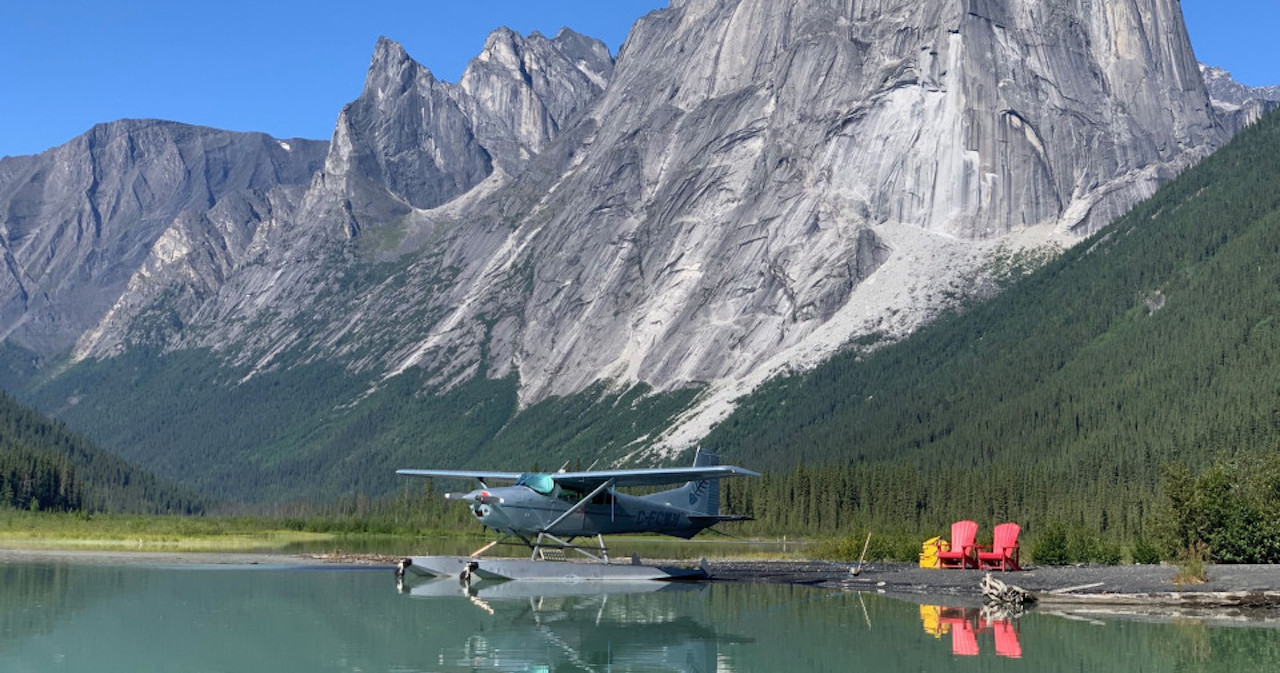
Climatic wind.
Fri Jan 08, 2021 6:35 am
Re: Climatic wind.
Differential heating, snow slopes and dry plain, atmospheric rapids make for a wild ride. On the front range the wave whip gets cracked with smaller ranges east of the divide and then get dumped into the foothills and plains. Harupt, two, three, four.
- contactflying offline
- Posts: 4972
- Joined: Wed Apr 03, 2013 7:36 pm
- Location: Aurora, Missouri 2H2
Download my free "https://tinyurl.com/Safe-Maneuvering" e-book.
Fri Jan 08, 2021 8:40 am
Re: Climatic wind.
Hey Jim, don’t want to hijack this thread so you might want to move this subject to a new thread.
What re your thoughts about gusting winds on landing? Conventional thinking is to add (and keep?) 1/2 of the gust factor to your approach speed. Say normal approach at 50 knots, now wind 20 knots — gusting to 30. So approach at 55 knots. If this seems to not be working out, go around. To make it simple, let’s assume wind straight down the runway.
I kinda infer your thinking from your words on ABWROC but having you address this topic would be appreciated. Also what differences do you see for a plane that approaches at 90 knots as opposed to 50 knots.
Blue skies,
Tom
What re your thoughts about gusting winds on landing? Conventional thinking is to add (and keep?) 1/2 of the gust factor to your approach speed. Say normal approach at 50 knots, now wind 20 knots — gusting to 30. So approach at 55 knots. If this seems to not be working out, go around. To make it simple, let’s assume wind straight down the runway.
I kinda infer your thinking from your words on ABWROC but having you address this topic would be appreciated. Also what differences do you see for a plane that approaches at 90 knots as opposed to 50 knots.
Blue skies,
Tom
Fri Jan 08, 2021 11:09 am
Re: Climatic wind.
Tommy.
First, the numbers used for the approach and the increase for gust spread have nothing to do with nor are they anywhere near the number the wing will stall at in 2" ground effect. Given the increase from 50 to 55 with 10 gust spread, we should round out at 5 less ground speed than in steady wind with no gust. That still has nothing to do with landing the airplane. We will still deal with the gust spread in the long hold off waiting for the relative wind to come down to stall in low ground effect airspeed.
If we are using elevator to decelerate on short final and power to control sink rate at less than 1,3 Vso approach airspeed, we will have the exact control in play that best handles gust spread: the throttle. Now when we encounter shear that increases relative wind, we simply reduce throttle to prevent the balloon. When we encounter the shear decreased relative wind, we simply add throttle to prevent sink below glide angle. In extreme gust spread, say 30, we would be rapidly moving the throttle closed in the balloon and then adjusting. We would rapidly be moving the throttle full in the bad sink situation and then adjusting.
Carefully observing the half of gust spread increase makes the round out and hold off technique work fine on long runways, but never addresses the balloon and sink on the long hold off. The normal elevator control of both altitude and airspeed simply does not work in gusts. We still have to bring the throttle back into play. Now we are looking anxiously at the end of that long runway.
The airplane that approaches at 90 knots is a twin, heavy single, or short winged normal weight. If a short winged Piper for example, 90 is way too fast. They are trying to control sink rate with airspeed instead of power in the POH. The appropriate elevator to control rate of closure on short final and power to control the extra sink of short winged airplanes at slower airspeed will easily keep the airplane flying well above our of ground effect stall airspeed, around 60 knots but decelerating, on short final until safely slower coming into ground effect.
What is happening commonly and causing incidents and accidents is that small airplanes are landing at faster ground speed in strong headwind components with gusts spread than in no wind conditions. That screams in the face of wind management. My math ability is limited but I figure we should be touching down at slower ground speed in a headwind component.
Jim
First, the numbers used for the approach and the increase for gust spread have nothing to do with nor are they anywhere near the number the wing will stall at in 2" ground effect. Given the increase from 50 to 55 with 10 gust spread, we should round out at 5 less ground speed than in steady wind with no gust. That still has nothing to do with landing the airplane. We will still deal with the gust spread in the long hold off waiting for the relative wind to come down to stall in low ground effect airspeed.
If we are using elevator to decelerate on short final and power to control sink rate at less than 1,3 Vso approach airspeed, we will have the exact control in play that best handles gust spread: the throttle. Now when we encounter shear that increases relative wind, we simply reduce throttle to prevent the balloon. When we encounter the shear decreased relative wind, we simply add throttle to prevent sink below glide angle. In extreme gust spread, say 30, we would be rapidly moving the throttle closed in the balloon and then adjusting. We would rapidly be moving the throttle full in the bad sink situation and then adjusting.
Carefully observing the half of gust spread increase makes the round out and hold off technique work fine on long runways, but never addresses the balloon and sink on the long hold off. The normal elevator control of both altitude and airspeed simply does not work in gusts. We still have to bring the throttle back into play. Now we are looking anxiously at the end of that long runway.
The airplane that approaches at 90 knots is a twin, heavy single, or short winged normal weight. If a short winged Piper for example, 90 is way too fast. They are trying to control sink rate with airspeed instead of power in the POH. The appropriate elevator to control rate of closure on short final and power to control the extra sink of short winged airplanes at slower airspeed will easily keep the airplane flying well above our of ground effect stall airspeed, around 60 knots but decelerating, on short final until safely slower coming into ground effect.
What is happening commonly and causing incidents and accidents is that small airplanes are landing at faster ground speed in strong headwind components with gusts spread than in no wind conditions. That screams in the face of wind management. My math ability is limited but I figure we should be touching down at slower ground speed in a headwind component.
Jim
- contactflying offline
- Posts: 4972
- Joined: Wed Apr 03, 2013 7:36 pm
- Location: Aurora, Missouri 2H2
Download my free "https://tinyurl.com/Safe-Maneuvering" e-book.
Fri Jan 08, 2021 5:46 pm
Re: Climatic wind.
Tommy,
The experience base of my fuss both with pilots climbing at slow airspeed on takeoff and landing way too fast comes from giving way to all aircraft while flying 200' all day on pipelines. Landing, especially in strong crosswind, I follow planes that turn off at the last taxiway while I am turning off at the first. Landing in strong crosswinds, I often didn't even go down to the first taxiway but just turned off at the beginning of the runway.
The experience base of my fuss both with pilots climbing at slow airspeed on takeoff and landing way too fast comes from giving way to all aircraft while flying 200' all day on pipelines. Landing, especially in strong crosswind, I follow planes that turn off at the last taxiway while I am turning off at the first. Landing in strong crosswinds, I often didn't even go down to the first taxiway but just turned off at the beginning of the runway.
- contactflying offline
- Posts: 4972
- Joined: Wed Apr 03, 2013 7:36 pm
- Location: Aurora, Missouri 2H2
Download my free "https://tinyurl.com/Safe-Maneuvering" e-book.
Sat Jan 09, 2021 3:57 pm
Re: Climatic wind.
Thanks for your explanations Jim; seems quite logical. Am trying to get insight if using the throttle as you describe works as well in larger, faster planes than my 182.
Re a faster plane, I was thinking about the Piper Meridian, a SETP.. Note that I have no turbo-prop experience. The Meridian has a pretty good wingspan at 43 ft. and is a pretty decent glider. Vso 69 knots.
I am a bit confused by various landing techniques that I see on YouTube videos and read about in various forums.
For example:
One instructor has the student approach the landing with less than full flaps and then apply full flaps when about to flare. (Really can’t understand this one).
Verbage from another instructor: “Pilot flew a great approach. Speed was nailed at 85 knots on short final, aimed just before the runway, power to idle just before crossing the threshold, reverse after touchdown, and he and some headwind made the 2,800 ft. Runway seem long. Great effort!”
Meridian’s have been experiencing a lot of runway excursions on landing lately. Some say failure to straighten out nose wheel after crosswind landing, some say faulty design, some say pilots are landing too fast, others attribute to black magic. So I am curious about the overall landing topic.
Thanks for any insight.
Blue skies,
Tommy
Re a faster plane, I was thinking about the Piper Meridian, a SETP.. Note that I have no turbo-prop experience. The Meridian has a pretty good wingspan at 43 ft. and is a pretty decent glider. Vso 69 knots.
I am a bit confused by various landing techniques that I see on YouTube videos and read about in various forums.
For example:
One instructor has the student approach the landing with less than full flaps and then apply full flaps when about to flare. (Really can’t understand this one).
Verbage from another instructor: “Pilot flew a great approach. Speed was nailed at 85 knots on short final, aimed just before the runway, power to idle just before crossing the threshold, reverse after touchdown, and he and some headwind made the 2,800 ft. Runway seem long. Great effort!”
Meridian’s have been experiencing a lot of runway excursions on landing lately. Some say failure to straighten out nose wheel after crosswind landing, some say faulty design, some say pilots are landing too fast, others attribute to black magic. So I am curious about the overall landing topic.
Thanks for any insight.
Blue skies,
Tommy
Last edited by TommyN on Sun Jan 10, 2021 7:21 am, edited 1 time in total.
Sat Jan 09, 2021 5:01 pm
Re: Climatic wind.
Tommy,
My guess is that the physics is the same for the larger airplanes, but I have no experience with them since the Aztec when I was a very young. Press Maxwell said he could always fly the glideslope a bit high and still get down just fine with it. Like smaller short winged Pipers, the Aztec is also the same short high lift wing. He made power pitch approaches all the way down in the Aztec. Single engine numbers kept the speed up somewhat I expect, but he didn't float at all. He was the pilot with Tito's colonel that rescued downed pilots in Yugoslavia during WWII with the B-25. He also made short field landings to unimproved strips there. He said the Communists didn't even remove the stumps except just where the long gear would run and the high wing would clear the rest. He later owned a Malibu, but I was in college then.
I would think there would be a computer on the Mirage that would calibrate deceleration numbers for the approach somewhat like the airlines. Don't give up your 182 for backcountry work.
Jim
My guess is that the physics is the same for the larger airplanes, but I have no experience with them since the Aztec when I was a very young. Press Maxwell said he could always fly the glideslope a bit high and still get down just fine with it. Like smaller short winged Pipers, the Aztec is also the same short high lift wing. He made power pitch approaches all the way down in the Aztec. Single engine numbers kept the speed up somewhat I expect, but he didn't float at all. He was the pilot with Tito's colonel that rescued downed pilots in Yugoslavia during WWII with the B-25. He also made short field landings to unimproved strips there. He said the Communists didn't even remove the stumps except just where the long gear would run and the high wing would clear the rest. He later owned a Malibu, but I was in college then.
I would think there would be a computer on the Mirage that would calibrate deceleration numbers for the approach somewhat like the airlines. Don't give up your 182 for backcountry work.
Jim
- contactflying offline
- Posts: 4972
- Joined: Wed Apr 03, 2013 7:36 pm
- Location: Aurora, Missouri 2H2
Download my free "https://tinyurl.com/Safe-Maneuvering" e-book.
Thu Jan 14, 2021 10:07 am
Re: Climatic wind.
Now that wind management has moved to size of airplane and even jet engines, I have a question for the turboprop pilots on here. If the prop pitch is changed, while the engine is still at 101% N1, is there a problem with using the throttle (prop control) just like the piston airplane throttle in gusts? I flew Allisons in the Hughes 500 (OH6-A) and Lycomings in the Hueys including Cobra. I was around turboprops crop dusting. That loud wine while on the ground was the engine turning full blast even though no pounds of torque (helicopter term) were pulled. What's with the engine delay I hear about? I had a droop cam compensator failure once on ITO, but that was the only time I had a power lag.
- contactflying offline
- Posts: 4972
- Joined: Wed Apr 03, 2013 7:36 pm
- Location: Aurora, Missouri 2H2
Download my free "https://tinyurl.com/Safe-Maneuvering" e-book.
Sun Jan 17, 2021 2:11 am
Re: Climatic wind.
Tommy,
We have covered using throttle to deal with gust spread vertically on the approach. It is also important to use rudder only to keep the longitudinal axis (between our toes) lined up with the centerline. Using any aileron to realign with the centerline, or new centerline, will get wing wagging started. We want tail wagging, rudder only. We don't want wing wagging, any aileron to change longitudinal alignment or even crab alignment. In the crab, we use rudder only to keep our butt going down the centerline extended.
We can practice lateral, yaw, alignment at altitude in turbulence. More gusty conditions and turbulence will accompany warmer air. Greater relative wind on one wing than on the other is upsetting, but gusts do not introduce adverse yaw. The upset caused bank happens even with streamlined neutral aileron and the wing is now lifting somewhat laterally as well as vertically. No further upsetting adverse yaw has been introduced by nature. Adverse yaw is introduced when the pilot reacts with mostly aileron to level the wing. DON'T REACT WITH MOSTLY AILERON TO LEVEL THE WING! Rather try rudder only until severity scares you into reacting with coordinated rudder and aileron and then remember in Dutch rolls how rudder has to lead aileron. Rudder only is stabilizing. Nothing keeps the wing level so effectively as dynamic proactive rudder to nail direction to target, or heading. Heading is never as precise as keeping the target between our toes. There is a U-tube of a kid with an electric airplane that has no ailerons. To keep from turning in stable air he uses dynamic proactive rudder. To keep from turning in unstable air, we need to use dynamic proactive rudder to keep a distant target between our toes. To stay aligned on final, we need to use dynamic proactive rudder to keep the numbers laterally between our toes.
So if we use rudder only to keep the deal with slight to moderate turbulence, we make slight turbulence almost go away and we make moderate turbulence seem slight. With the vertical problem, instead of reduced power bringing throttle into play as with the final approach, we are now at cruise throttle. It is more stabilizing now to just keep the throttle fixed and manage balloon and sink with elevator. We are at altitude and don't need a stabilized glide angle. Rather than chase the increase and decrease in fixed pitch RPM, we can use it to indicate updraft or downdraft. Pitch up in updraft (increased RPM) and add zoom climb to the updraft for really good thermalling. Pitch down in the downdraft (decreased RPM) to add gravity to airspeed to get through quickly. By controlling RPM with elevator instead of throttle, we are staying in updraft longer and diving through downdraft quickly. VSI and feel also help identify vertical shafts of air and shear. This increases altitude and ground speed over time in turbulence while mitigating its negative over time effect. Also this mitigates the danger of trying to maintain altitude and stalling instead.
Efficient total energy management results in the smoother ride both vertically and laterally. Rudder and elevator, because of location and effectiveness, are primary. There are certainly places where coordinated rudder and aileron are more efficient, as in the turn. There are places where throttle is more efficient, as in glide angle and rate of descent control on final. At altitude it is fixed, however. There is a place where aileron is more efficient, as in setting the wing against drift on final.
We have covered using throttle to deal with gust spread vertically on the approach. It is also important to use rudder only to keep the longitudinal axis (between our toes) lined up with the centerline. Using any aileron to realign with the centerline, or new centerline, will get wing wagging started. We want tail wagging, rudder only. We don't want wing wagging, any aileron to change longitudinal alignment or even crab alignment. In the crab, we use rudder only to keep our butt going down the centerline extended.
We can practice lateral, yaw, alignment at altitude in turbulence. More gusty conditions and turbulence will accompany warmer air. Greater relative wind on one wing than on the other is upsetting, but gusts do not introduce adverse yaw. The upset caused bank happens even with streamlined neutral aileron and the wing is now lifting somewhat laterally as well as vertically. No further upsetting adverse yaw has been introduced by nature. Adverse yaw is introduced when the pilot reacts with mostly aileron to level the wing. DON'T REACT WITH MOSTLY AILERON TO LEVEL THE WING! Rather try rudder only until severity scares you into reacting with coordinated rudder and aileron and then remember in Dutch rolls how rudder has to lead aileron. Rudder only is stabilizing. Nothing keeps the wing level so effectively as dynamic proactive rudder to nail direction to target, or heading. Heading is never as precise as keeping the target between our toes. There is a U-tube of a kid with an electric airplane that has no ailerons. To keep from turning in stable air he uses dynamic proactive rudder. To keep from turning in unstable air, we need to use dynamic proactive rudder to keep a distant target between our toes. To stay aligned on final, we need to use dynamic proactive rudder to keep the numbers laterally between our toes.
So if we use rudder only to keep the deal with slight to moderate turbulence, we make slight turbulence almost go away and we make moderate turbulence seem slight. With the vertical problem, instead of reduced power bringing throttle into play as with the final approach, we are now at cruise throttle. It is more stabilizing now to just keep the throttle fixed and manage balloon and sink with elevator. We are at altitude and don't need a stabilized glide angle. Rather than chase the increase and decrease in fixed pitch RPM, we can use it to indicate updraft or downdraft. Pitch up in updraft (increased RPM) and add zoom climb to the updraft for really good thermalling. Pitch down in the downdraft (decreased RPM) to add gravity to airspeed to get through quickly. By controlling RPM with elevator instead of throttle, we are staying in updraft longer and diving through downdraft quickly. VSI and feel also help identify vertical shafts of air and shear. This increases altitude and ground speed over time in turbulence while mitigating its negative over time effect. Also this mitigates the danger of trying to maintain altitude and stalling instead.
Efficient total energy management results in the smoother ride both vertically and laterally. Rudder and elevator, because of location and effectiveness, are primary. There are certainly places where coordinated rudder and aileron are more efficient, as in the turn. There are places where throttle is more efficient, as in glide angle and rate of descent control on final. At altitude it is fixed, however. There is a place where aileron is more efficient, as in setting the wing against drift on final.
- contactflying offline
- Posts: 4972
- Joined: Wed Apr 03, 2013 7:36 pm
- Location: Aurora, Missouri 2H2
Download my free "https://tinyurl.com/Safe-Maneuvering" e-book.
DISPLAY OPTIONS
Who is online
Users browsing this forum: No registered users and 1 guest
Latest Features
-
-
Featured Bush Planes
As one of the undisputed legends of bush flying, the Cessna 180 hauls a…Read More -
Aircraft Ownership and Maintenance
9 modification mistakes aircraft owners make when trying to "bush out" their birds—why some…Read More -
Live to Tell
A Minnesota pilot is surprised to learn that the sudden asymmetric drag of an…Read More


Latest Knowledge Base
-
Destinations
Canada offers some of the most spectacular backcountry flying on the continent. Here's what you need to know before you go.Read More -
Safety and Survival
Hope that you never have to use your survival vest but knowing you have it and knowing how to use…Read More -
Destinations
A regional guide with ideas for winter camping destinations in California, Nevada, New Mexico, and Arizona.Read More -
Aircraft
Finding an affordable aircraft that can handle the backcountry for $80K or less? A challenge for sure, but with the…Read More