Backcountry Pilot • Com Radio: 5-10-16 Watts? How Much, Why, When, & Where?

Com Radio: 5-10-16 Watts? How Much, Why, When, & Where?

Avionics, airplane covers, tires, handheld radios, GPS receivers, wireless Wx uplink...any product related to backcountry aircraft and flying.
12 postsPage 1 of 1

Com Radio: 5-10-16 Watts? How Much, Why, When, & Where?

I have been staring at com radios ( again :D ) and got to thinking about the power output. Obviously at VHF frequencies much is line of sight, and antennas, antenna placement, impedance matching, coax feed loss, etc are all factors. However... All things being equal.. what power levels did you choose for what kinds of conditions and missions ? (VFR). What kind of aircraft and where is the antenna or antennas if diversity reception ? Would you still choose the same or recommend otherwise?

Here are a few examples of what's out there these days ( March 2014 ) for panel mount Com Radios.

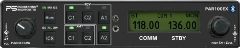
PS Engineering PAR100EX - 5 Watts
Image

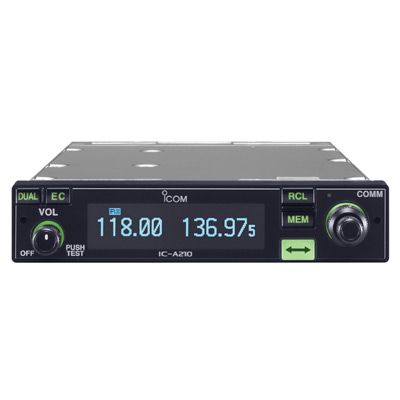
Icom IC-A210 - 8 watts
Image

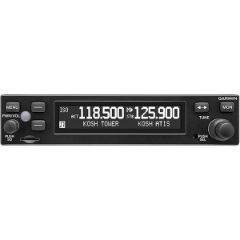
Garmin GTR200 - 10 watts
Image

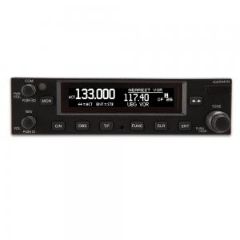
Garmin GNC255 - 16 watts
Image
Denali offline
User avatar
Posts: 809
Joined: Sun Sep 16, 2012 1:30 am
Location: East Coast USA

Re: Com Radio: 5-10-16 Watts? How Much, Why, When, & Where

Just get the lowest power one...I don't need to hear you making radio calls here on the west coast :mrgreen:
bart offline
User avatar
Posts: 545
Joined: Fri Aug 21, 2009 7:54 pm
Location: Fresno, CA
FindMeSpot URL: http://share.findmespot.com/shared/face ... 1ZTy9zAEWv
Aircraft: Cessna 180

Re: Com Radio: 5-10-16 Watts? How Much, Why, When, & Where

I do not know what the power output is in my radios but I would like enough power to reach ATC when out over the northern central Nevada. There have been several times when Salt Lake would either not hear me or just ignored me but a couple of times a high flying commercial relayed my needs. Usually checking if MOAs were active and the chart said to call Cowboy on xxx,xx. Maybe a little more power would have helped, not sure. I know I used to have 600 watts available on my old IH Scout and it helped save a couple of lives when the for or five watt limit could not get beyond my front bumper. Like horsepower, it is hard to have too much.

If it is a new purchase, why leave the option behind on the avionics shop shelf.

I have also flown the Alcan in an old 39 J5 with a small hand held - often I could hear them but they could not hear me so the just told me to expect the light signals.

Chris C
wannabe offline
User avatar
Posts: 782
Joined: Mon Aug 06, 2007 10:12 am
Location: Palo Alto, Calif.
53 C-170-B+

It is better to be late in this world, than early in the next.

Re: Com Radio: 5-10-16 Watts? How Much, Why, When, & Where

As a ham I would say the antenna and tuning is more important than the wattage. I'd rather have a 5 watt radio with a great antenna than a 100 watt radio with a poor antenna. You can do some amazing distances with 5 watts.
scottf offline
User avatar
Posts: 650
Joined: Fri Mar 23, 2012 9:56 am
Location: Meridian, ID
FindMeSpot URL: http://share.findmespot.com/shared/face ... cbQCpIqefS

Re: Com Radio: 5-10-16 Watts? How Much, Why, When, & Where

@scottF :

Agreed. As a ham radio operator myself I will even go so far as to cut the right length of coax and make sure it resonates with the frequencies used and the Q characteristic of the antenna, But still, it begs the question, what levels of power are perhaps too low or marginal, vs too much power.

For aviation, I am thinking, at least for me, the sweet spot is 10 watts. Garmin has a nice 10 watt unit that's affordable, easy to read, and small in size. 5 watts might be marginal, and 16 watts costs a lot more, and may be overkill. I'll keep a 5 watt handheld for back up. Incidentally, the CEO/Founder of PS Engineering in Tennessee is also a ham, Mark S. is W9MV.

The idea of using more than one antenna is something I am examining as well. Finally, on another website one of the discussions focused on proper mic distance and intelligibility. Bottom line, don't forget proper use of the mic.
Denali offline
User avatar
Posts: 809
Joined: Sun Sep 16, 2012 1:30 am
Location: East Coast USA

Re: Com Radio: 5-10-16 Watts? How Much, Why, When, & Where

I don't have much radio knowledge but I'll add my experience. In my Luscombe I have a handheld com radio (5 watt) wired to a standard external antenna mounted on top of the cabin. At altitude I have spoken with planes that were over 100sm away. I've never had trouble communicating with anyone because my radio was weak. My takeaway is that 5 watts is plenty when set up properly.
whee offline
User avatar
Posts: 3386
Joined: Fri Jan 20, 2006 1:59 pm
Location: SE Idaho

Re: Com Radio: 5-10-16 Watts? How Much, Why, When, & Where

At VHF frequencies, power is not much of an issue, range depends mostly on your altitude and the terrain. a poor antenna installation will subtract a LOT of range, but anything over the standard 18" or so antenna will not add anything to it. I have talked 225 miles on a 5 watt radio from 10,000 feet over north Dakota, and well over 100 miles on a 1 watt handheld on more than 1 occasion.
Dale Moul offline
User avatar
Posts: 523
Joined: Fri Dec 21, 2007 12:37 pm
Location: Boise Idaho
Dale
Gravity Strikes Again.

Re: Com Radio: 5-10-16 Watts? How Much, Why, When, & Where

Whee, virtually ALL of the handhelds are 1.5 watt transmitter CARRIER power (the most meaningful rating for comm radios), with ~5 watt Peak Envelope Power (P.E.P.); most of the stated transmitter power of panel mounts is carrier. And all of the current crop of handheld brands are actually very good. Think of your handheld as a 1.5 watt unit.

Around my home aerodrome, there are three Luscombes with very good antenna installations (broadband, mounted in middle of turtledeck): a panel-mount KY-97A, an ICOM 200A (both nominal 5 watt carrier), and one with a handheld. From my office on the ground ~25 miles away, with a handheld/rubber duck antenna in the window, the two panel mounts sound as good as the 25 watt Kingairs and such at pattern altitude, and the handheld sounds better than 85% of the panel mounts of the single-engine fleet. Having a good mike, with mike gain matched to the radio makes quite a bit of difference too.

I would amend your comment to say that "1.5 watts of transmitter power with a good antenna is adequate for most purposes." Ummm soyAnarchisto, did you ever get your antenna stuff sorted out?

To the original post, it's probably better to figure out which features you want, and to select a brand and installer with a solid track record than to worry about the difference between 5 watts or 10 watts of power.

Thanks. cubscout
cubscout offline
Posts: 151
Joined: Thu May 19, 2005 1:34 pm

Re: Com Radio: 5-10-16 Watts? How Much, Why, When, & Where

I'll agree with all of the above, and make one additional comment. In clear weather, VHF line of site doesn't require much power at all, but precipitation, especially rain, will attenuate VHF signals. So if you anticipate flying in wet weather a lot, the higher power may be worth it.

The only time I've ever had a problem with my 1.5W hand held and remote antenna is talking to the tower while on the ground. I operate out of a satellite airport, and need to talk to a tower nearly 3 miles away. On the ground I can hear them just fine, but they can't hear me. Other aircraft in the area can though. And with the KX170B in my previous aircraft (5W?), it was about 50/50 whether or not they could hear me on the ground or not. As soon as I clear the trees they can hear me just fine though. So maybe a 10 watt system would help me get my signal through the trees a little better?
Bear_Builder offline
User avatar
Posts: 344
Joined: Thu Aug 23, 2007 10:14 am
Location: North Pole
FindMeSpot URL: http://share.findmespot.com/shared/face ... sYc5J8KHOS

Re: Com Radio: 5-10-16 Watts? How Much, Why, When, & Where

cubscout wrote:Whee, virtually ALL of the handhelds are 1.5 watt transmitter CARRIER power (the most meaningful rating for comm radios), with ~5 watt Peak Envelope Power (P.E.P.); most of the stated transmitter power of panel mounts is carrier. And all of the current crop of handheld brands are actually very good. Think of your handheld as a 1.5 watt unit.

Around my home aerodrome, there are three Luscombes with very good antenna installations (broadband, mounted in middle of turtledeck): a panel-mount KY-97A, an ICOM 200A (both nominal 5 watt carrier), and one with a handheld. From my office on the ground ~25 miles away, with a handheld/rubber duck antenna in the window, the two panel mounts sound as good as the 25 watt Kingairs and such at pattern altitude, and the handheld sounds better than 85% of the panel mounts of the single-engine fleet. Having a good mike, with mike gain matched to the radio makes quite a bit of difference too.

I would amend your comment to say that "1.5 watts of transmitter power with a good antenna is adequate for most purposes." Ummm soyAnarchisto, did you ever get your antenna stuff sorted out?

To the original post, it's probably better to figure out which features you want, and to select a brand and installer with a solid track record than to worry about the difference between 5 watts or 10 watts of power.

Thanks. cubscout


I told you I didn't know anything about radios. :D Thanks for the lesson cubscout. I looked up the specs and cub is right 1.5watts, at least for my current handheld. So I guess the point is, as cubscout already stated, figure out which features you want in a radio and don't worry so much about the carrier power.
whee offline
User avatar
Posts: 3386
Joined: Fri Jan 20, 2006 1:59 pm
Location: SE Idaho

Re: Com Radio: 5-10-16 Watts? How Much, Why, When, & Where

I know little about radios, either, so I rely on the experts. Good antenna and good connections trumps high power, every time, according to a client who is a radio expert and also according to my avionics installer. My avionics guy said 10 was plenty, when I had the 430W installed. I had the choice between 10 and 16 watts, and he said that unless I needed to communicate 200 miles away, I'd never notice the additional power--and it cost a few hundred more for the 16. All FWIW.

Cary
Cary offline
User avatar
Posts: 3801
Joined: Sun Jan 10, 2010 6:49 pm
Location: Fort Collins, CO
"I have slipped the surly bonds of earth..., put out my hand and touched the face of God." J.G. Magee

Re: Com Radio: 5-10-16 Watts? How Much, Why, When, & Where

Another ham here. Sometimes, when the antenna connections are less than optimal, or your antenna is cut for the middle of the voice portion of the air band and you are transmitting at the edge, power can help you get through. But more importantly; the comment about precipitation, possible contact via reflection off terrain, or other attenuating circumstances will require more power.

One of the curious facts about our radios is that they operate in AM mode instead of FM. There is a reason for that. With an FM signal, the receiver has to provide the audio by interpreting modulations or changes in frequency. When something attenuates an FM signal big chunks drop out. It has a distinctive chop to it and becomes quickly unintelligible. An AM signal, as has been mentioned, has a carrier with a couple of sidebands that are modulated according to the width of the audio signal in a sum and difference offset on each side of the carrier frequency.

Ok, enough of that. What this means in a practical way is that when an AM signal is weak, something comes through. Power helps that. The FAA and FCC in their infinite wisdom could have changed the system to FM years ago. They didn't. For absolutely essential communication, in it's simplest form, AM works better.

Give me an old Com 120.
Mister701 offline
User avatar
Posts: 2134
Joined: Thu Dec 05, 2013 11:13 pm
Location: Sparks
Aircraft: Rans S7LS

DISPLAY OPTIONS

12 postsPage 1 of 1

Who is online

Users browsing this forum: No registered users and 0 guests

Latest Features

Latest Knowledge Base