×

Message

Please login first

Backcountry Pilot • Covering a Plane; What's Easy, What's Hard?

Covering a Plane; What's Easy, What's Hard?

Aircraft building and project-level overhaul forum -- Kitplanes, experimental amateur-built, homebuilding, or even restoration of certified aircraft.
12 postsPage 1 of 1

Covering a Plane; What's Easy, What's Hard?

Image

Image


I am thinking of taking an EAA course in wing covering, although I find such a task daunting. I am wondering if certain areas of a plane are far more difficult than others. I’d be buying a high wing, quickbuild kit, and probably go with Oratex 6000.

My thinking is, maybe I can tackle covering some of the easier areas of the plane, and leave the critical and/or more difficult parts to someone with more experience. Watching a plane delaminate at 2500 feet I suppose is a thrill I can gladly do without.

I know it may vary from plane to plane, low vs high wing, and that some planes like the Bearhawk come with wings already mostly covered (in metal) with the quickbuild option. I’d like to hear some builder’s experiences re covering different areas of a high wing plane.
Denali offline
User avatar
Posts: 809
Joined: Sun Sep 16, 2012 1:30 am
Location: East Coast USA

Re: Covering a Plane; What's Easy, What's Hard?

I did an ugly recover job on a Tri-Pacer fuselage. Used an envelope and had wiggly seams. Wings and tail feathers were beautiful because I had my Aerospace Education class at Tohatchi High do them. Navajos, even without prior experience, are excellent fabric workers. I think it comes from watching Shi ma san, eldest lady in an extended family, weave rugs and make jewelry.
contactflying offline
Posts: 4972
Joined: Wed Apr 03, 2013 7:36 pm
Location: Aurora, Missouri 2H2
Download my free "https://tinyurl.com/Safe-Maneuvering" e-book.

Re: Covering a Plane; What's Easy, What's Hard?

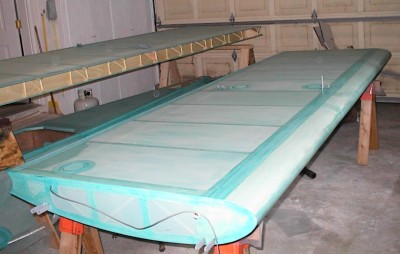
It is a lot easier than you think. Compound curve surfaces on the cover were the most difficult for me but I managed. I had never covered an airplane and the only thing I had ever painted was my house. Like a lot of first time builders I was dreading the covering job. I attended a short...about one hour ...seminar put on by the Polyfiber factory at an aviation trade show. During his talk he stressed that mistakes are easy to fix and to not fear making mistakes. That removed all my fears.

I just read the polyfiber manual first, gathered up the supplies and tools needed, built the tic tack toe frame for the fuselage and saw horses to lay the wings on, then opened the manual and started working. It took longer than I thought it would. I spent 295 hours to get everything through the brush coat of polybrush and another 82 hours spraying all the spray coats.

The hardest part on this airplane was the compound curve surface area where the vertical fin meets the top of the fuselage. The easiest part was the wings believe it or not. For me covering was the most fun and rewarding phase of building the airplane.

I used a cheep harbor freight spray gun and made a paint booth out of visqueen hung from ropes by clothes pins in my shop.

Contact, I wanted to use the evelope system because I thought it would be easier and look better. I talked to the kitfox factory about it and he persuaded me that the Blanket system is not only less expensive, it is easier and you can do a much better job.

Fresh out of the paint booth, Oct. 2001.
Image
Last edited by tcj on Tue Sep 29, 2015 6:46 am, edited 1 time in total.
tcj offline
User avatar
Posts: 1278
Joined: Thu May 29, 2008 12:52 pm
Location: Ellensburg, WA
tcj

Re: Covering a Plane; What's Easy, What's Hard?

Take the EAA class, I did and got good results.
Image
Image

Jake
C130jake offline
Supporter
User avatar
Posts: 127
Joined: Tue Oct 16, 2012 5:53 pm
Location: Minneapolis

Re: Covering a Plane; What's Easy, What's Hard?

C130: As Ben Carson would say, "it's not brain surgery." Wings are easy, and if you can walk and chew gum at the same time, I find it hard to imagine a scenario that allow the fabric to unpeel in flight! That damn dorsal fin IS the hardest, after that any other compound curves. Start with your easy stuff/wings, and after that you'll have the confidence and experience for the harder parts. For sure, if you have some experienced help, have them start you out.

I've done 5 planes, totally unschooled but with the help of the great Ray Stits, now the Poly Fiber, manual. Getting an airworthy cover is real easy, winning Grand Champion at Oshkosh is crazy hard, which you won't be trying to do. The process is wonderfully forgiving, most if not all screw ups can be fixed as you go, depending on how anal you want to be. Using the excuse of "keeping it light" also means you are not trying for a super slick heavily hidden finish tapes type finish, I can see my tape edges but they are STRAIGHT. Your best friend is several good scraps of lexan, as a straight edge for making light pencil (LIGHT) pencil marks for the finish tapes to follow, a straightedge you can see through. Good pinking shears, the rotary style, the right digital temp controlled iron along with a small hobby type mini iron, a very small pair of scissors bought from a fly tying shop, and some single edge razor blades come in handy. The entire process is not so much difficult, as it is time consuming, but the learning curve is pretty steep and soon you'll be "flying" through it.
courierguy offline
User avatar
Posts: 4197
Joined: Thu Mar 31, 2005 6:52 pm
Location: Idaho
"Its easier to apologize then ask permission"
Tex McClatchy

Covering a Plane; What's Easy, What's Hard?

Yup very easy. Can be done by just reading the super easy to follow poly fiber manual in one hand and a brush in the other.

The hard part.
It's mega stinky. Lost of fumes. It takes a place where you can make a mess like that. Especially if you are doing a polyurethane top coat.
Always doing fabric in the winter with inappropriate facility. Either not enough heat, not enough light, poor ventilation...

I would love to try the water based system. Maybe oratex.
PAMR MX offline
User avatar
Posts: 469
Joined: Thu May 08, 2014 10:28 pm
Location: Merrill Field

Re: Covering a Plane; What's Easy, What's Hard?

@ TCJ

@ C130Jake

Wow. Those are some really nice fabric and paint jobs.I am thinking Oratex 6000 for weight, ease of application, and, if possible, reducing or eliminating the need for painting.

I appreciate the heads up on the vertical stab. In terms of fulfilling the 51% build rule, maybe I can farm out a tiny bit of work here and there and still be okay.

I wish they'd hurry up with those low cost home 3D printers that can create large items out of carbon fiber. :D

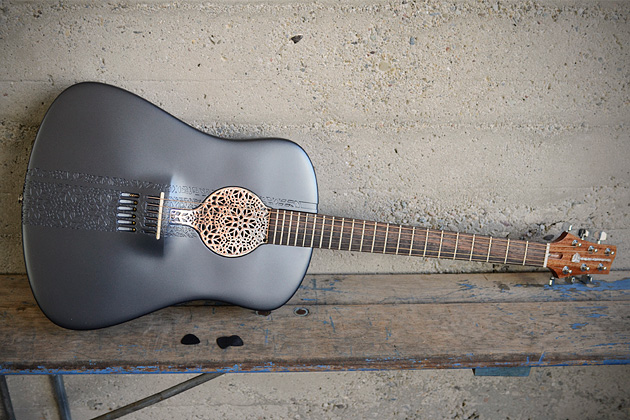
3D Printed carbon fiber guitar

Image
Denali offline
User avatar
Posts: 809
Joined: Sun Sep 16, 2012 1:30 am
Location: East Coast USA

Re: Covering a Plane; What's Easy, What's Hard?

I just now went through my builder notes and added up the time I worked covering. I underestimated in my first post above and have edited it. To get everything through the brush coat of poly brush took me 295 hours. To spray all the rest...poly brush, polly spray and poly tone took another 82 hours...377 hours total. That should give you an idea how long it takes a first time airplane builder.

I'm not familiar with Oratex but suspect it will save you some time.
tcj offline
User avatar
Posts: 1278
Joined: Thu May 29, 2008 12:52 pm
Location: Ellensburg, WA
tcj

Re: Covering a Plane; What's Easy, What's Hard?

PAMR MX wrote:.....It's mega stinky. Lost of fumes. It takes a place where you can make a mess like that. Especially if you are doing a polyurethane top coat......


I've heard good things about Stewart System, even from long-time die-hard Polyfiber users. Water based, minimal fumes, minimal toxicity. Haven't heard as much about the newer Oratex system but it sounds promising, with the finish color built in.
hotrod180 offline
Supporter
User avatar
Posts: 10534
Joined: Wed Jan 26, 2005 11:47 pm
Location: Port Townsend, WA
Cessna Skywagon -- accept no substitute!

Re: Covering a Plane; What's Easy, What's Hard?

Denali,

I am building a Ridgerunner 3s, for quite a few years now :oops:

I had covered my fuse in poly, when I found out about Oracover 6000
I stripped off the poly and proceeded to recover in Oracover.
Having put on both systems. I find the Oracover to be just as easy
as the poly with out the smelly stinky stuff.
when I got fuse covered back to where I had poly(which was 2 coats of polybrush i.e.. no spraying yet)
I was finished .. Oracover needs no paint.... :D
its is expensive as hell, but the time and no fumes to me were worth it.

where in the east coast are you?
i'm in East Tennessee.
hope to get back on it this winter.
the hardest think I have done so far with the oracover is the tape around perimeter of rudder.
just take your time and keep at it.

Bradley
doc_dyer offline
User avatar
Posts: 41
Joined: Tue Nov 26, 2013 7:52 am
Location: Sevierville
Aircraft: 1956 C-180 N6547A

Re: Covering a Plane; What's Easy, What's Hard?

Covering is not hard, it's actually fun for me but I'm an old model airplane builder. The Stewart Systems is gaining popularity as Hotrod mentioned. Our EAA chapter is using the Stewart Systems on an airplane now and it does seem easier and less stinky than the old Stits I learned on.

Oratex will be easier yet, lighter and prettier, but at a higher financial cost.

There are still several old-time die-hard people that insist on Ceconite and Nitrate/Butyrate dope, because it yields a much more drum tight fabric.

For any slower bush type aircraft where the fabric tension is not critical to performance (like it is on a Pitts), the easier and newer systems are probably a good place to start.

Definitely take the EAA class. On your own aircraft start with the control surfaces and tail parts. If you screw those up you can peel off the fabric and start over as many times as necessary.
EZFlap offline
User avatar
Posts: 2226
Joined: Thu Aug 13, 2009 9:21 am
.

Re: Covering a Plane; What's Easy, What's Hard?

.
. EZFlap write:

Covering is not hard, it's actually fun for me but I'm an old model airplane builder.


I've put a top on a Buick convertible, and laid fiberglass across some sailboat hulls. Of course, I also built model airplanes, but they all have copies of my fingerprints on the canopy, fuselage, and lots of other places. Somehow I always got glue on my thumb, and then ended up handling the plastic parts. Then there was always all that glue oozing from the joint where the fuselage halves were joined together.

I'm still waiting for those 3D printed carbon fiber fuse and wing covering panels that I can just glue on. [-o<
Denali offline
User avatar
Posts: 809
Joined: Sun Sep 16, 2012 1:30 am
Location: East Coast USA

DISPLAY OPTIONS

12 postsPage 1 of 1

Who is online

Users browsing this forum: No registered users and 1 guest

Latest Features

Latest Knowledge Base