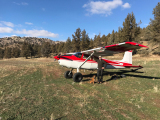
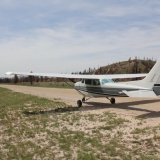
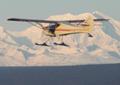
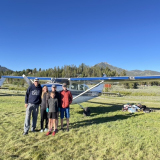
contactflying wrote:Math and POH are only a beginning, and can certainly help make the decision to wait until better conditions. Mistakes will be made, however. If we use the basic low ground effect takeoff on all but ITO, we will have the extra low ground effect energy when things don't go as math and POH say they will. Aircraft fly and accelerate much quicker in low ground effect.
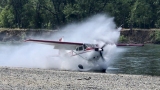
When taking off downhill or spraying downhill, it is hard to stay in low, effective ground effect. This is especially true when there are obstructions at the end of the landing zone or spray run. This, however, may be the very place where we most need the extra energy of low ground effect.
I have used the low ground effect takeoff for all takeoffs, except ITOs, for the last 35 years. Only a few times has it saved my life. I still believe it is worth it.
I have used this method a lot as well. Rotate as soon as it will fly, raise the tail, accelerate and leave ground effect at 75-80 indicated (Cessna 180). At 80 ias full power in the 180, you can usually gain quite a bit of altitude in a hurry, but there is definitely a point where that energy is exhausted and will not do much for you.
In high DA with a heavy plane, you can sometimes accelerate in ground effect, but come up short on thrust to overcome the induced drag necessary to get up and keep climbing. A couple of times flying my old 170 loaded up, I tried this and discovered that it would break ground in under 1000 ft, accelerate a little, but actually wouldn't really climb out of ground effect.
The four guys in the Stinson at Bruce Meadows a few years ago were an excellent example of this. He had all sorts of room to accelerate in low ground effect, but when it came time to climb up over the rising terrain, guess what?
It's true that water flows downhill and you can stay low over the river, unless the canyon is too narrow or bend's more tightly than you can maneuver, which is the case at some spots on Loon Creek downstream from Upper Loon airstrip.
I saw a Mooney M20 come in to Big Creek way too hot, execute a go around and slam in to a pickup truck because he couldn't outclimb the terrain. He had a fair amount of airspeed, but just couldn't get enough altitude.
Zoom climbs are an important point in energy management but only extra margins in your planning can be counted upon when invisible factors stack up against you on takeoff. Your options can really go from two to zero immediately in this scenario.