×

Message

Please login first

Please login first

Please login first

Please login first

Backcountry Pilot • Duck, duck, oops...

Duck, duck, oops...

Debrief, share, and hopefully learn from the mistakes of others.
11 postsPage 1 of 1

Duck, duck, oops...

This was not my incident. I received an email from our flight club last week about a bird strike near KAPA and thought I'd share. I've pasted their narrative and pictures below. I'm not sure which specific aircraft this was, but judging by the pictures probably one of the Skyhawk SP's. Pretty good damage from a flock of alleged ducks, though at 3k AGL in that area the pilot was likely in cruise flight at around 110KIAS with an altitude of 8500-9000ft.

I'll leave it to the academics to determine the airspeed velocity of an unladen duck at 9k, but they tore up the 172 pretty good. One bent up the cowl and probably hit the prop on the way in, but I'm unsure of any damage to prop/engine. Being at night I doubt the pilot knew the full extent of the damage until he landed, but he likely needed some new shorts afterwards. That had to make a pretty terrific amount of noise when it happened.

"On Sunday, November 6th around 8:00pm, a club airplane struck multiple birds at 3000' AGL over the city of Englewood. The pilot did an outstanding job of flying the plane at a safe altitude and airspeed, declaring an emergency, and returning safely to the ground at Centennial Airport.

There are a couple of notable points about the bird strike:

- It was well after dark. Certain birds are active at night during migratory season, which it happens to be right now for many water fowl. Early reports indicate these birds were a type of water fowl, about the size of a duck.
- It was at 3000' AGL. What are they doing up that high? Other club pilots have reported seeing birds as high as 16,000’ MSL, so it's more common than you think.

We are informing you of this incident and sharing photos not to frighten anyone, but to remind us all that bird strikes are possible at any time, day or night. In the past 5 years and 100,000 flight hours this is only our third bird strike, and the first to cause more than minor damage. Statistics show that about 60% of bird strikes occur during the landing phase; 37% occur during takeoff and climb; the remaining 3% occur during cruise; and only about 1 accident per billion flying hours results in a fatality. More info is available here: https://www.faa.gov/airports/airport_sa ... dlife/faq/"


Image
Image
Image
colopilot offline
User avatar
Posts: 491
Joined: Mon Feb 01, 2016 3:01 pm
Location: Denver
Aircraft: 57 182A

Re: Duck, duck, oops...

Wow! That's a bunch of damage!

The only bird strike I've had in almost 44 years of flying was also a duck, which hit the left landing gear strut of a 73 Skylane about 40 years ago. That's the one with tubular gear and an aerodynamic aluminum covering over the strut. It put a big dent in the covering, and sprayed duck ick all along the left empennage, leaving Mallard colored feathers stuck in openings at the tail. When it hit, it made quite a bang, but I'm sure nothing like what happened to the 172 in your pics.

Cary
Cary offline
User avatar
Posts: 3801
Joined: Sun Jan 10, 2010 6:49 pm
Location: Fort Collins, CO
"I have slipped the surly bonds of earth..., put out my hand and touched the face of God." J.G. Magee

Re: Duck, duck, oops...

Damn, wonder what kind of bird? I've repaired old Cessna metal wing tip when they hit a golden eagle.


Sent from my iPhone using Tapatalk
Tom offline
Posts: 791
Joined: Mon Mar 03, 2008 12:17 pm
Location: Loudon NH
Aircraft: PA-18 7EC C-172

Re: Duck, duck, oops...

Tom wrote:Damn, wonder what kind of bird? I've repaired old Cessna metal wing tip when they hit a golden eagle.


I got a chuckle out of the story: "these birds were a type of water fowl, about the size of a duck."

To a layman like me, that sounds like a pretty bang-on description of a duck.
albravo offline
Posts: 713
Joined: Sun Mar 15, 2015 12:11 pm
Location: Squamish

Re: Duck, duck, oops...

albravo wrote:
Tom wrote:Damn, wonder what kind of bird? I've repaired old Cessna metal wing tip when they hit a golden eagle.


I got a chuckle out of the story: "these birds were a type of water fowl, about the size of a duck."

To a layman like me, that sounds like a pretty bang-on description of a duck.


:lol: :lol: :lol:

I haven't had a bird strike while flying yet. I don't know many people who haven't yet hit some kind of non-bug flying creature... a good friend of mine managed to have a bat strike at night once. He described the hit as "gushy, like flying into a large gummy worm."

I'd rather hit a (small) bird than some of those other firm, 50lb, hard-to-see flying objects (I don't want to encounter a bird strike and I do my best to avoid them)
Pragma offline
User avatar
Posts: 19
Joined: Wed Sep 28, 2016 4:43 pm
Location: Tampa
Aircraft: RANS S6ES Coyote II and Super Cub

Re: Duck, duck, oops...

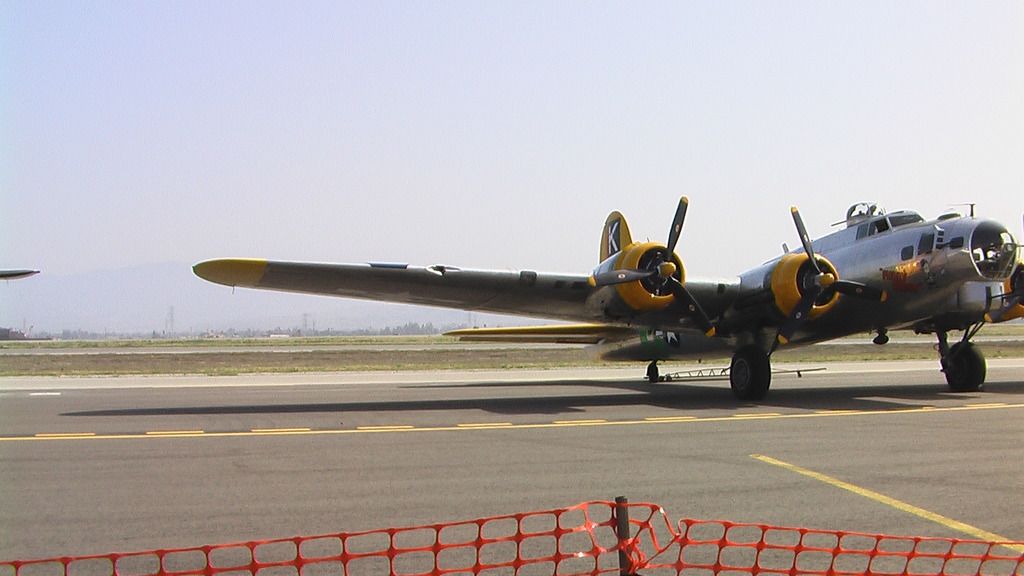
Here is what a Turkey buzzard can do to a B-17. This was at an airshow in Chino, CA

Image

TD
TomD offline
User avatar
Posts: 1113
Joined: Mon Jul 03, 2006 5:17 pm
Location: Seattle
Aircraft: Maule M5-235C

Re: Duck, duck, oops...

I hit a tweedy bird at night once. Took me a week to even notice I hit then thing. It made it past the prop and in to the cowl opening. Ended up behind number 4 cylinder under the oil pressure regulator. There is still feathers under the cowl.
AK_Logan offline
User avatar
Posts: 116
Joined: Mon Aug 18, 2014 6:26 pm
Location: Kenai
FindMeSpot URL: https://share.delorme.com/chrislogan
Aircraft: PA-18-160

Re: Duck, duck, oops...

Some more info tells us the pilot determined it was uncontrollable below about 95kts IAS, and with any flaps extended. That's not far from cruise speed in a Skyhawk, so he basically got to make a near-full speed landing, no flaps, at night. At least the airport was familiar, but that's a pretty great save. Sounds like the airplane is being repaired and will be flying again soon too, so happy endings all around.
colopilot offline
User avatar
Posts: 491
Joined: Mon Feb 01, 2016 3:01 pm
Location: Denver
Aircraft: 57 182A

Re: Duck, duck, oops...

I fly C-130s for the Air Force. We spend a fair amount of time in what we call the "low level environment" which means anywhere from 300' AGL and up. Bird avoidance is a constant topic of discussion for us. We hit a lot of birds but the vast majority do no damage. Some, however, do leading edge damage or engine damage that costs your $$ to fix, hence our emphasis on avoidance.

I've never been too worried about hitting birds in my Cessna, but clearly it can happen. Here are some of the mitigation techniques we use that might be worthy of discussion:

-- We don't usually fly low level between +/- 1 hour of sunrise or sunset
-- We try to minimize overflight of areas where birds congregate, like shore lines, lakes, wetlands, and landfills
-- We use an avoidance model (http://www.usahas.com) to try to predict where birds will be, and then we fly higher if the model predicts moderate or severe activity
-- We are cognizant of migration routes/seasons and tailor our flight paths accordingly

Also, our airfield management guys do things like keep the grass cut to try to deter birds from hanging out around the airfield. I suppose all this helps to some extent. Some of y'all might find this mentality a bit useful. I think we overdo it a bit, but hey it is what it is... and I'm in a 4-engine turboprop that can soak up a few birds, not an F-16 that crashes if one goes down the intake the wrong way.

Final comment is that if I hit a bird in my Cessna and had leading edge damage, I would climb up to 3000 AGL and go through a slow flight drill to try to discover any weird aerodynamic tendencies before I entered the pattern... conditions permitting, of course.
slowmover offline
Supporter
User avatar
Posts: 231
Joined: Mon Jan 21, 2008 5:03 pm
Location: Little Rock
Aircraft: Cessna 180 Skywagon

Re: Duck, duck, oops...

Most birds seem to try to avoid you, if given the chance, with the exception of bald eagles.
We get a lot of them around here, esp prevalent during haying season (lots of hayfields around rural airports), scouting for mice etc in newly-mowed fields. I've had a few close calls with them, & I don't think I've ever seen one try to "see and avoid". They seem to think they're the lords of the sky, and that WE should avoid THEM (which I try to do).
hotrod180 offline
Supporter
User avatar
Posts: 10534
Joined: Wed Jan 26, 2005 11:47 pm
Location: Port Townsend, WA
Cessna Skywagon -- accept no substitute!

Re: Duck, duck, oops...

Just like pulsating lights help other pilots to see and avoid us, the hawkers of such things claim that it helps birds to see and avoid us, too. I tend to leave my Pulselites on whenever I'm at lower altitudes in the vicinity of airports anyway, so maybe that's why I haven't had even a close call, almost bird strike in years, and the only actual one was in a rental 182, which I described earlier.

Incidentally, Pulselites aren't all that expensive to install, and if they do indeed reduce the risk of a mid-air, whether by plane or fowl, they're worth it.

Cary
Cary offline
User avatar
Posts: 3801
Joined: Sun Jan 10, 2010 6:49 pm
Location: Fort Collins, CO
"I have slipped the surly bonds of earth..., put out my hand and touched the face of God." J.G. Magee

DISPLAY OPTIONS

11 postsPage 1 of 1

Who is online

Users browsing this forum: No registered users and 0 guests

Latest Features

Latest Knowledge Base