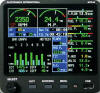
My 170 doesn't have much for engine monitoring instrumentation, just oil pressure and temp. I really think it's critical to see CHT and EGT for each cylinder. This JPI EDM-700 has all that plus a whole lot more, and you can get a version with fuel flow. I think it can even replace my current oil temp gauge, and has a option for carb air temp. Let the upgrades and turd polishing begin.
Thoughts on engine analyzers?
Zane
Engine Analyzers
Sun Nov 27, 2005 3:03 pm


Wed Nov 30, 2005 9:55 am
Zane:
There are two things I like to know EXACTLY:
1) Where am I?
2)How much fuel do I have left?
Knowing these two, I can pretty much figure out the rest. The GPS took care of the first, but I always was a bit skeptical about basing the second one on a wristwatch and a stick with some ballpoint etchings on it. I just about dismiss the gauges except when they point to F or E.
I have a JPI EDM-700 with the fuel flow option. It was factory installed so I didn't have to go thru the nasty bit that jmtgt describes. Whatever one you choose, just know that after a very short time, you will not want to leave home without one of these puppies in your kennel. When I fill up, I always compare the actual amount delivered to what the JPI says I used. It is usually within 1/10 gal. It's a real confidence booster to know that the number showing on the instrument is reasonably accurate. It has an interface to my panel mounted Garmin which allows the GPS to tell me how much fuel I will have in the tanks at any of the waypoints on my flightplan. I would never use this to land at homeplate with a pint of gas remaining because winds could change, or I could do something silly like pump fuel from the aux tanks overboard (yes, I think I have found a way to do that), but it sure helps me plan a fuel stop if I need one.
But the best bit for Geek Squad members is the data logging. The JPI stores about 30 hours of all parameters taken at 6 second intervals. These can be downloaded to a laptop and plotted on the free software available from JPI's website. I have almost every second of my engine's life recorded. The info is great for spotting any major changes to internal operating conditions that might escape detection by sight or sound alone.
Just be careful. It's easy to get hooked and both models should come with a safety pilot so you can spend 10 hours with your head down learning how to use it. I'm already ruined. Now I want to add the MP and RPM sensors so I have a complete record of what the engine was doing at any time.
YB
There are two things I like to know EXACTLY:
1) Where am I?
2)How much fuel do I have left?
Knowing these two, I can pretty much figure out the rest. The GPS took care of the first, but I always was a bit skeptical about basing the second one on a wristwatch and a stick with some ballpoint etchings on it. I just about dismiss the gauges except when they point to F or E.
I have a JPI EDM-700 with the fuel flow option. It was factory installed so I didn't have to go thru the nasty bit that jmtgt describes. Whatever one you choose, just know that after a very short time, you will not want to leave home without one of these puppies in your kennel. When I fill up, I always compare the actual amount delivered to what the JPI says I used. It is usually within 1/10 gal. It's a real confidence booster to know that the number showing on the instrument is reasonably accurate. It has an interface to my panel mounted Garmin which allows the GPS to tell me how much fuel I will have in the tanks at any of the waypoints on my flightplan. I would never use this to land at homeplate with a pint of gas remaining because winds could change, or I could do something silly like pump fuel from the aux tanks overboard (yes, I think I have found a way to do that), but it sure helps me plan a fuel stop if I need one.
But the best bit for Geek Squad members is the data logging. The JPI stores about 30 hours of all parameters taken at 6 second intervals. These can be downloaded to a laptop and plotted on the free software available from JPI's website. I have almost every second of my engine's life recorded. The info is great for spotting any major changes to internal operating conditions that might escape detection by sight or sound alone.
Just be careful. It's easy to get hooked and both models should come with a safety pilot so you can spend 10 hours with your head down learning how to use it. I'm already ruined. Now I want to add the MP and RPM sensors so I have a complete record of what the engine was doing at any time.
YB
- Yellowbelly offline

- Posts: 355
- Joined: Wed Apr 27, 2005 9:03 pm
- Location: Beautiful southern Utah
Maule M-7-235C
I'm lost
but I'm not afraid
I'm lost
but I'm not afraid
Wed Nov 30, 2005 12:00 pm
Re: Engine Analyzers
zane wrote:.......... My 170 doesn't have much for engine monitoring instrumentation, just oil pressure and temp. I really think it's critical to see CHT and EGT for each cylinder. .....................
Zane
Why? It's maybe nice information to have, but I think I wouldn't worry too much about it. In fact, I don't. My 170 has oil temp oil pressure and ampmeter, period. Voltmeter in the hardwired GPS.
My first airplane (a mighty C150) had an EI singlepoint CHT/EGT gauge. After the novelty of it wore off, I found I ddn't use it much, just left it set on CHT. Leaning by ear seemed to work better than by the flickering up-and-down EGT readout.
Zane,from your previous posts, I assume that money IS an object in your aviating, like most of us. Have you priced this stuff? If you have plenty of money and are looking for a place to spend it, go for the monitor. If your aviation funding is limited, think long and hard about where it should go. If it was me I would at most install an EI (multipoint?) CHT/EGT gauge. The full-meal-deal engine monitor is nice but not critical to have, IMHO. Spend the money you save (by not buying a monitor) on fuel and become as proficient as you can, & have as much fun as you can.
The monitors are helpful monitoring engine health, I suppose, but a hell of a lot of engines have made TBO no problem without them.
My two cents worth. Just give me a minute to put on my nomex suit.....OK, flame away.(peace, brother
 )
)
Eric

Thu Dec 01, 2005 4:34 am
Eric:
Touche, very good advice. You can do a lot of spot landing practice for the price of an analyzer.
I was lucky to get a really good price on my analyzer installed at the factory. I have an additional pay back that probably won't apply to Zane: I have a Lyc IO 540 and the analyzer lets me run LOP on a regular basis. It saves me anywhere from 3-4 GPH and has probably paid for itself already. Apparently, it doesn't work so well with carbs as they get rough LOP. Before I figured out how to work the analyzer, I tried leaning the regular way: lean to roughness and back off a bit... I twisted the red knob out more and more, waiting for a stumble. It never happened. She just died, still smooth as a babies butt. I ran ROP for a couple of months while I waded through the stack of manuals in the back seat. Now, especially on long x/c, I readily give up a few knots to save a ten spot every hour.
YB
Touche, very good advice. You can do a lot of spot landing practice for the price of an analyzer.
I was lucky to get a really good price on my analyzer installed at the factory. I have an additional pay back that probably won't apply to Zane: I have a Lyc IO 540 and the analyzer lets me run LOP on a regular basis. It saves me anywhere from 3-4 GPH and has probably paid for itself already. Apparently, it doesn't work so well with carbs as they get rough LOP. Before I figured out how to work the analyzer, I tried leaning the regular way: lean to roughness and back off a bit... I twisted the red knob out more and more, waiting for a stumble. It never happened. She just died, still smooth as a babies butt. I ran ROP for a couple of months while I waded through the stack of manuals in the back seat. Now, especially on long x/c, I readily give up a few knots to save a ten spot every hour.
YB
- Yellowbelly offline
- Posts: 355
- Joined: Wed Apr 27, 2005 9:03 pm
- Location: Beautiful southern Utah
Maule M-7-235C
I'm lost
but I'm not afraid
I'm lost
but I'm not afraid
Thu Dec 01, 2005 4:56 am
engine monitor
I have a JPI 700 without the frills in my 185. I cannot promote it over any other brand but it does do a good job for what I wanted it for. This summer, shortly after taking off the engine started running rough. I looked at the monitor and #5 was not on the chart. I turned around and landed without incident. Did the monitor save my life or the enine? No, but after the intial first few seconds of panic, and being abe to see where the problem was, it gave me piece of mind. I knew it was only one cylinder and I could probably get back to land. Ended up cleaning #5 fuel injector and the world was a better place. If it was a matter of flying time or buying a monitor, the flying time would win out every time. But at least for me, it is nice to see what those cylinders are doing, and if something does seem out of whack maybe you can get it to the shop before a major problem occurs.

Mon Dec 12, 2005 12:07 pm
As you can probably tell by my earlier post, I'm not very impressed by or desirous of any this modern billy whizbang electronic stuff. But I did see an ad recently for a couple items that looked pretty nice. Unfortunately I think that they're both for experimental use only-no STCs.
Dynon Avionics makes the EFIS-D10A (electronic flight info system) and the EMS-D10 (engine monitor system). Very nice-looking, easy to read, color displays, and relatively effordable: $2200 for the EFIS,$2300/$2450 for the 4 cyl/6 cyl EMS.
The EMS has all powerplant data:rpm,mp,;oil temp/pressure;volts/amps;CHT's,EGT's;fuel quantity,pressure, and GPH;and carb temp. Probably programable for other stuff too. The EFIS is similarly versatile:"10 instruments in one".
Neither one is my cup of tea-- I'm kind of an old steam-pressure/minimal instrumentation kind of guy-- but they do look nice and would work great for a pilot that needed (or wanted) all that stuff. Each instrument has a 4 X 3-3/8 inch face, and I believe that they're designed to fit into a standard 3-1/8 instrument hole.
Eric (needle-ball-airspeed!)
Dynon Avionics makes the EFIS-D10A (electronic flight info system) and the EMS-D10 (engine monitor system). Very nice-looking, easy to read, color displays, and relatively effordable: $2200 for the EFIS,$2300/$2450 for the 4 cyl/6 cyl EMS.
The EMS has all powerplant data:rpm,mp,;oil temp/pressure;volts/amps;CHT's,EGT's;fuel quantity,pressure, and GPH;and carb temp. Probably programable for other stuff too. The EFIS is similarly versatile:"10 instruments in one".
Neither one is my cup of tea-- I'm kind of an old steam-pressure/minimal instrumentation kind of guy-- but they do look nice and would work great for a pilot that needed (or wanted) all that stuff. Each instrument has a 4 X 3-3/8 inch face, and I believe that they're designed to fit into a standard 3-1/8 instrument hole.
Eric (needle-ball-airspeed!)
Mon Dec 12, 2005 1:06 pm

Mon Dec 12, 2005 11:35 pm
Fri Jan 20, 2006 2:56 pm
Yellowbelly,
I think you have Gami injectors if she runs that smooth LOP. In a C-210 ROP I get 10 mpg "GPS derived". I lose 10 knots LOP, but I get 14 mpg. Don't have my Maule back yet, but after break in I intend to try LOP in it as well. Intersting thing to me is that the C-210 and my M-6 get the same mpg when ROP.
The big deal to me about LOP is what happens to range. The 210 has a theoretical range of 1600 miles LOP and 1200 ROP
I think you have Gami injectors if she runs that smooth LOP.
In a C-210 ROP I get 10 mpg "GPS derived". I lose 10 knots LOP, but I get 14 mpg. Don't have my Maule back yet, but after break in I intend to try LOP in it as well. Intersting thing to me is that the C-210 and my M-6 get the same mpg when ROP.
The big deal to me about LOP is what happens to range. The 210 has a theoretical range of 1600 miles LOP and 1200 ROP
Sun Jan 22, 2006 8:37 am
a64pilot:
The laws of statistics will not be denied. Even Lycoming, however inadvertantly, MUST produce a balanced engine every once in a while. I guess I was lucky enough to get a Tuesday/Wednesday engine instead of a Monday/Friday engine. I get the GAMI spread of somewhere between .3 and .6 gph. I get the same results whether I have the JPI figure it out or I take a long set of manual data, so it seems to be consistent.
Hey, you'll have to go some to beat that C-210. I flew one in Namibia and loved every minute. Very solid, lovely sound and it didn't mind that none of the runways were paved either.
I'm sold on the LOP issue, more for the fact that it is kinder to the engine than all the economic reasons. Speed is a secondary consideration too; I'm up there flying because I like it. The sooner it's over, the sooner I have to do something I like LESS, so why hurry? One thing I tried once, but got scared, is WOT at low(er) levels. You can operate the engine with the throttle firewalled on any flight, IF (and this is a biggie) you can get the engine to run smoothly as deep as 100 degF LOP. (That would be a safe setting at sea level). In effect, the mixture control becomes your power lever and the throttle is just an air pump switch. I tried it at about 2000 ft and everything was as advertised with low CHT's across the board,etc, but... it just went against a lot of ingrained feelings, seeing those really high MP numbers and low RPM... after half an hour of so, I chickened out, just in case I had misunderstood something. When I get back up to CA in May, I plan to check it out more carefully. This would be one way for you to get back most of your 10 knots in the C-210 but keep the economic advantages of LOP.
YB
The laws of statistics will not be denied. Even Lycoming, however inadvertantly, MUST produce a balanced engine every once in a while. I guess I was lucky enough to get a Tuesday/Wednesday engine instead of a Monday/Friday engine. I get the GAMI spread of somewhere between .3 and .6 gph. I get the same results whether I have the JPI figure it out or I take a long set of manual data, so it seems to be consistent.
Hey, you'll have to go some to beat that C-210. I flew one in Namibia and loved every minute. Very solid, lovely sound and it didn't mind that none of the runways were paved either.
I'm sold on the LOP issue, more for the fact that it is kinder to the engine than all the economic reasons. Speed is a secondary consideration too; I'm up there flying because I like it. The sooner it's over, the sooner I have to do something I like LESS, so why hurry? One thing I tried once, but got scared, is WOT at low(er) levels. You can operate the engine with the throttle firewalled on any flight, IF (and this is a biggie) you can get the engine to run smoothly as deep as 100 degF LOP. (That would be a safe setting at sea level). In effect, the mixture control becomes your power lever and the throttle is just an air pump switch. I tried it at about 2000 ft and everything was as advertised with low CHT's across the board,etc, but... it just went against a lot of ingrained feelings, seeing those really high MP numbers and low RPM... after half an hour of so, I chickened out, just in case I had misunderstood something. When I get back up to CA in May, I plan to check it out more carefully. This would be one way for you to get back most of your 10 knots in the C-210 but keep the economic advantages of LOP.
YB
- Yellowbelly offline
- Posts: 355
- Joined: Wed Apr 27, 2005 9:03 pm
- Location: Beautiful southern Utah
Maule M-7-235C
I'm lost
but I'm not afraid
I'm lost
but I'm not afraid
Sun Jan 22, 2006 9:41 am
We have the JPI EDM-700 and the FS-450 in our 170. I like the EDM because we can safely lean the engine (Franklin 220) to peak and leave it there at 10000'. We burn 7.8 gph and go 120+ ktas. I really wouldn't have felt as good about leaning to peak (if I could actually find it!) without the EDM. Because of this unit and my confidence in knowing what is going on under the cowl, endurance is the same as with the O-300 and our range is greater (15+ more ktas with same fuel burn). I am sure the EDM has already paid for itself in just over 150 hours of operation - especially with "new and improved" avgas prices!
The FS-450 is a nice-to-have item... a nice backup when trying to quickly determine where to stop for gas on a long cross country... I can swallow $450 for this convenience. It talks to the hardwired GPS-Comm as well. That and a transponder are my only other avionics.
One other note: I have heard from several people that JPI's demeanor with customers is s little lacking. However, I called them once with a problem during install (can't remember what it was now) of the FS-450 and was treated well.
M
The FS-450 is a nice-to-have item... a nice backup when trying to quickly determine where to stop for gas on a long cross country... I can swallow $450 for this convenience. It talks to the hardwired GPS-Comm as well. That and a transponder are my only other avionics.
One other note: I have heard from several people that JPI's demeanor with customers is s little lacking. However, I called them once with a problem during install (can't remember what it was now) of the FS-450 and was treated well.
M
- punkin170b offline

- Posts: 210
- Joined: Fri Feb 04, 2005 4:48 pm
- Location: Northern UT
"Rule books are paper, they will not cushion a sudden meeting of stone and metal." E.K. Gann
Mon Oct 29, 2007 9:34 pm
I was on the E.I. web site the other day an noticed that their eng. monitor had a $300 rebate on it good till after the first of the year I think, worth looking into. I too like their products and am planning to get their amp/volt unit and an eng. monitor.
- idahoplanenut offline
- Posts: 17
- Joined: Sun Jul 08, 2007 6:12 pm
- Location: McCall ID.
Tue Oct 30, 2007 4:29 am
Yellowbelly,
Six cylinder fuel injected Lycoming engines have a different injection system than do the Continentals, and the Lyc system is inherently very well balanced, fuel distribution wise.
Note that Lycoming specifically prohibits running their engines LOP, however. I suspect that may be a liability issue, however, though they claim that LOP ops can drive an engine to detonation. They built it so???
Lycoming also says you can run these engines up to 9 inches OVER square, though I've never even been able to get close. Over square power settings can offer some surprising benefits.
On some airplanes, running a very low rpm (on Lycs, try 1900 rpm or so) can result in much greater prop efficiency, greater gas economy with similar and sometimes greater speed.
MTV
Six cylinder fuel injected Lycoming engines have a different injection system than do the Continentals, and the Lyc system is inherently very well balanced, fuel distribution wise.
Note that Lycoming specifically prohibits running their engines LOP, however. I suspect that may be a liability issue, however, though they claim that LOP ops can drive an engine to detonation. They built it so???
Lycoming also says you can run these engines up to 9 inches OVER square, though I've never even been able to get close. Over square power settings can offer some surprising benefits.
On some airplanes, running a very low rpm (on Lycs, try 1900 rpm or so) can result in much greater prop efficiency, greater gas economy with similar and sometimes greater speed.
MTV


Tue Oct 30, 2007 10:07 am
Lycoming power economy
Per MTV's comments. I got this from Lycoming. Thought it might be informative. If it is too small let me know and I will re-scan it.


Tue Oct 30, 2007 10:10 am
Tue Oct 30, 2007 10:16 am
That one was a bit small

I give up. This image is in my gallery if you want to look at it.
TD
Tue Oct 30, 2007 12:24 pm
JPI or EI well worth money spent. With my IO550 have been able to run lean of peak and monitor cyl temps. LOP down to 13.5 ROP 18.5 Temps well below 400 around 340 except for #5 at 395 checked baffeling ok may be it's jammed in pretty tight behind the oil cooler. Greatest thing is knowing exactley what the cyl temps are much less expensive than a TOP. Just my thoughts.
Bruce
Bruce

Fri Nov 02, 2007 3:24 pm
I promise to keep my salesman's hat "on the rack" as it should be here on an informational forum but I do want to make a few critical points in regards to the engine monitor arena for this reason. I will present some often-unconsidered UBG-16 characteristics that are not found on other engine monitors.
Much of the following is direct quotes from EI's staff engineer and owner, Ron Robert's publication "The Pilot's Manual for Leaning and Diagnosing engine Problems". http://www.buy-ei.com/The_Pilots_Manual_by_EI.htm
A great engine analyzer can be the most effective tool for avoiding engine problems and adding a significant level of safety to any flight. If an analyzer only displays engine data and requires the pilot to do the majority of the analysis, that pilot may be sadly disappointed in the engine analyzer when an unexpected problem arises. A great engine analyzer should automatically find engine problems for the pilot and assist in proper operation of the engine to avoid engine problems in the first place! The following features are what make any single engine analyzer a great analyzer.
A great analyzer automatically collects and analyzes engine data and displays a warning the second a problem occurs. - An engine analyzer that is only "good" comes from the first level of technology. It has a bar graph, to show current EGT's and CHT's. Also, it collects engine data and provides a method of downloading the data to a computer for later review of graphs, charts, and numbers to detect problems that may be developing.
The second level of technology in engine diagnostics is to let a computer program pour over the engine data in order to automatically find any problems.
The third level of technology is to provide programmed parameters so the computer can be customized for each of the engine's cylinders. This allows for much more accurate analysis.
The fourth level of technology is to put the computer in the aircraft and analyze the data in "real" time as it is collected from the analyzer. Finding problems early can significantly reduce engine damage. The fifth level of technology is to put the entire computer program into the engine analyzer and get rid of the computer.
The UBG-16 is the only engine analyzer that is fifth level technology, with three on-board microprocessors to analyze engine data as it is collected. The UBG-16 quite plainly looks and analyzes engine data in the same manner an engineer does: it looks for trends and deviations from normal operating levels. The UBG-16 has 34 programmable parameters to allow automatic engine analysis to be customized for each cylinder on an engine. The UBG-16 will automatically detect and alert the pilot of any developing engine problems in seconds rather than weeks or even months. The UBG-16 is also the only engine analyzer that allows you, the engine operator, to define the graphical scale in terms of temperatures per segment to match your engine's normal operational envelope.
The part I would say I love the most about the UBG-16 is the graph it provides to display long term trends. An engine analyzer which is merely "good" provides a bar graph display of an engine's CHT's and EGT's. But because the exact height of each of the bars for each cylinder is not easily remembered, it will be difficult to spot trends in the early stages. A "great" engine analyzer can store offset data for each cylinder in long-term memory. This offset data can be then displayed in a "normalized" graph of the engine's current operating temperatures. If all of the engine's cylinders are healthy, the bar graph will display columns that are of the same height. If a cylinder develops a problem, that cylinder's column of bars will be higher or lower than the others. I know of only two engine monitors on the planet that will archive this "normalized" graph once power has been turned off. Consequently, the other analyzers on the market do not have the ability to represent trends beyond their current flight. One is the UBG-16 and one is the MVP-50 system still in the certification process.
Another key feature that is unique to the UBG-16 is its fuel/air mixture profile mode. In this mode the bar graph display shows how close all of the cylinders are to reaching peak at the same mixture setting.
The UBG-16 was designed to be one of the most valuable tools that can be purchased for an aircraft. The UBG-16 has some advanced features every pilot should consider. These features have some real safety and money savings benefits that should be considered prior to the investment of another engine analyzer.
Thanks for listening.
Mathew Sharp
Sales/Technical Support
Electronics International Inc
63296 Powell Butte Hwy
Bend, OR 97701
877-318-6060 ext 190
[email protected][/url]
Much of the following is direct quotes from EI's staff engineer and owner, Ron Robert's publication "The Pilot's Manual for Leaning and Diagnosing engine Problems". http://www.buy-ei.com/The_Pilots_Manual_by_EI.htm
A great engine analyzer can be the most effective tool for avoiding engine problems and adding a significant level of safety to any flight. If an analyzer only displays engine data and requires the pilot to do the majority of the analysis, that pilot may be sadly disappointed in the engine analyzer when an unexpected problem arises. A great engine analyzer should automatically find engine problems for the pilot and assist in proper operation of the engine to avoid engine problems in the first place! The following features are what make any single engine analyzer a great analyzer.
A great analyzer automatically collects and analyzes engine data and displays a warning the second a problem occurs. - An engine analyzer that is only "good" comes from the first level of technology. It has a bar graph, to show current EGT's and CHT's. Also, it collects engine data and provides a method of downloading the data to a computer for later review of graphs, charts, and numbers to detect problems that may be developing.
The second level of technology in engine diagnostics is to let a computer program pour over the engine data in order to automatically find any problems.
The third level of technology is to provide programmed parameters so the computer can be customized for each of the engine's cylinders. This allows for much more accurate analysis.
The fourth level of technology is to put the computer in the aircraft and analyze the data in "real" time as it is collected from the analyzer. Finding problems early can significantly reduce engine damage. The fifth level of technology is to put the entire computer program into the engine analyzer and get rid of the computer.
The UBG-16 is the only engine analyzer that is fifth level technology, with three on-board microprocessors to analyze engine data as it is collected. The UBG-16 quite plainly looks and analyzes engine data in the same manner an engineer does: it looks for trends and deviations from normal operating levels. The UBG-16 has 34 programmable parameters to allow automatic engine analysis to be customized for each cylinder on an engine. The UBG-16 will automatically detect and alert the pilot of any developing engine problems in seconds rather than weeks or even months. The UBG-16 is also the only engine analyzer that allows you, the engine operator, to define the graphical scale in terms of temperatures per segment to match your engine's normal operational envelope.
The part I would say I love the most about the UBG-16 is the graph it provides to display long term trends. An engine analyzer which is merely "good" provides a bar graph display of an engine's CHT's and EGT's. But because the exact height of each of the bars for each cylinder is not easily remembered, it will be difficult to spot trends in the early stages. A "great" engine analyzer can store offset data for each cylinder in long-term memory. This offset data can be then displayed in a "normalized" graph of the engine's current operating temperatures. If all of the engine's cylinders are healthy, the bar graph will display columns that are of the same height. If a cylinder develops a problem, that cylinder's column of bars will be higher or lower than the others. I know of only two engine monitors on the planet that will archive this "normalized" graph once power has been turned off. Consequently, the other analyzers on the market do not have the ability to represent trends beyond their current flight. One is the UBG-16 and one is the MVP-50 system still in the certification process.
Another key feature that is unique to the UBG-16 is its fuel/air mixture profile mode. In this mode the bar graph display shows how close all of the cylinders are to reaching peak at the same mixture setting.
The UBG-16 was designed to be one of the most valuable tools that can be purchased for an aircraft. The UBG-16 has some advanced features every pilot should consider. These features have some real safety and money savings benefits that should be considered prior to the investment of another engine analyzer.
Thanks for listening.
Mathew Sharp
Sales/Technical Support
Electronics International Inc
63296 Powell Butte Hwy
Bend, OR 97701
877-318-6060 ext 190
[email protected][/url]
- Mathew Sharp offline
- Posts: 40
- Joined: Fri Jul 13, 2007 1:51 pm
- Location: Bend, OR
Fri Nov 02, 2007 7:48 pm
UBG-16
After looking over a ton of info I just ordered a UBG 16 for my Franklin 165. After the rebate it will be 1200. I think that this device will make flying safer and add a piece of mind for me when I'm in the backcountry. I don't think that just an oil pressure and temp is sufficient to see problems before they become big problems. I belive with the engine analyzer and a careful competent pilot this allows you to catch problems before they become issue that have you end up ditching somewhere less than suitable for aircraft use. As a pilot who flys in the Adirondacks alot there are large tracts of uninhabited land, with skis and floats i find myself operating out of these areas a lot. I feel this engine analyzer will give me some extra piece of mind operating out in the bush.
Just my 2 cents.
Mike
Just my 2 cents.
Mike
- electricsnail offline

- Posts: 139
- Joined: Fri Sep 21, 2007 10:51 am
- Location: Potsdam, NY
48' Stinson 108-3
Thu Mar 27, 2008 10:50 am
Pleased
I have been very pleased with my UGB-16. It allows very exact leaning and managment of the engine temperature. The folks at EI were very helpful and promptly answered the questions we had about installation and use.
The truth will set you on the path to being free
DISPLAY OPTIONS
Who is online
Users browsing this forum: No registered users and 0 guests
Latest Features
-
Live to Tell
A Minnesota pilot is surprised to learn that the sudden asymmetric drag of an out-of-rig ski can…Read More -
Creators
Working in some of the Yukon's most beautiful and remote environments, photographer Simon Blakesley captures aircraft in…Read More -
Aircraft Ownership and Maintenance
Upgrading to big tires can make a huge difference in backcountry performance, but with those gains come…Read More -
Tales from Yesteryear
In this tale from bush flying yesteryear, Don Cogger signs up to help Atlee Dodge Jr recovery…Read More


Latest Knowledge Base
-
Destinations
A regional guide with ideas for winter camping destinations in California, Nevada, New Mexico, and Arizona.Read More -
Aircraft
Finding an affordable aircraft that can handle the backcountry for $80K or less? A challenge for sure, but with the…Read More -
Aircraft
01.29.2018 - Zane - Updated tire diameter graphic to add 8.50x10 Guide to tires for use in the backcountry and off-airport landing…Read More -
Pilots
12.22.2013 - Initial article format Operating aircraft on skis and negotiating a snow-covered landscape is an entirely unique skillset and environment.…Read More


