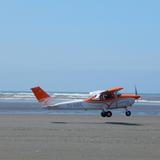
Took off from the beach, temp about 70 f. 39 gallons, tanks on both.
At about 3,000 ft while climbing there was a hicup and I felt a bit of a slow down. This lasted 1 or 2 seconds max.
Then ran fine the rest of the way. Wasnt an illusion, my friend felt it too.
Carb temp was about 20 centigrades, rpms were normal, temp oil temp 200f, cylinders 360f ,oil press normal.
When I checked fuel before departure the left tank had zero and the right 35. The plane was parked on the ramp and it has an incline.
Maybe that created a vapour in the fuel lines?
I took off on both tanks (was that a mistake?)
I knew at least there were 4 gallons on the left wing.
As soon as I passed the threshold I turned left.
No idea what could have been and dont like not having a clue.
After landing did a mag check and was fine.
Loose spark plug? Dirt in fuel?
Any theories or ideas are welcomed.
Engine missed on climbout
Sun Mar 06, 2011 5:30 am
Sun Mar 06, 2011 9:03 am
Re: Engine missed on climbout
water in the gas? sits outside in costa rica? rains there alot .I would bet on water

vail
Sun Mar 06, 2011 9:50 am
Re: Engine missed on climbout
sounds like water in the gas to me. Do you drain the fuel sump before every flight?
Sun Mar 06, 2011 10:43 am
Re: Engine missed on climbout
Water in the gas or maybe just a fouled plug - both easy to check and easy to fix.
Sun Mar 06, 2011 11:01 am
Re: Engine missed on climbout
Possible sticking valve?
Sun Mar 06, 2011 11:14 am
Re: Engine missed on climbout
What would you check on the plane before the next flight?
I always drain the fuel sump before every flight.
I always drain the fuel sump before every flight.
Sun Mar 06, 2011 11:29 am
Re: Engine missed on climbout
motoadve wrote:What would you check on the plane before the next flight?
I always drain the fuel sump before every flight.
And shake the wings a bit before sumping to slosh the gas around. Condensation can accumulate at the top of the tanks. Give the potential water some time to flow to the sumps after sloshing.
- GroundLooper offline

- Posts: 1168
- Joined: Wed Jun 13, 2007 6:52 pm
- Location: Vancouver, WA
BCP Poser.
Life is good. Life is better with wings.
Life is good. Life is better with wings.
Mon Mar 07, 2011 7:10 am
Re: Engine missed on climbout
motoadve wrote:What would you check on the plane before the next flight?
I always drain the fuel sump before every flight.
....Sump or Sumps.....do you drain the wing sumps or just the one coming out the bottom near the engine?
vail
Mon Mar 07, 2011 7:15 am
Re: Engine missed on climbout
Both but before the first flight.
This time I just stopped for lunch and was back in an hr , just checked fuel.
It hadnt rain so didnt see a reason for re do it.
This time I just stopped for lunch and was back in an hr , just checked fuel.
It hadnt rain so didnt see a reason for re do it.
Mon Mar 07, 2011 9:47 am
Re: Engine missed on climbout
Hopefully if it is water in the gas, rain isn't the cause... I would think it would be condensation or contamination at the source?
and yes, should have said sump(s)
and yes, should have said sump(s)
Tue Mar 08, 2011 12:30 pm
Re: Engine missed on climbout
Motodave
I have not flown 182s for a while but I do remember when the items copied below came out.
I went out to the 182 that I had been renting - shooked(sp) the wings up and down about a foot - waited about 15 minutes and got close almost a pint of water and gunck out of the bladders.
Have always done the wing waggle on all planes since then. Gunk Happens.
Hope the Cessna Pilots Assn. does not mind me listing this, but if it saves a life I will risk the flack.
"FUEL BLADDERS AND FUEL CAPS"
"If you fly a 1956 182 thru a 1978 182Q, your airplane uses rubber bladder tanks in each wing. These bladders have a tendency to develop wrinkles along the bottom. The wrinkles act as little dams that can prevent water from moving to the sump drain. You can sump the tanks at pre-flight and see no water, yet water could still be present in your fuel tanks.
To make matters worse, Cessna originally installed flush-style fuel caps on these aircraft. The caps can leak if the aircraft is exposed to moisture. If your fuel caps have a small hinged pull-up handle that fits into a recess in the cap, you have the dangerous fuel caps. At CPA, we call them "killer caps."
There have been a number of engine failures immediately after take-off even though the pilot sumped the tanks thoroughly during pre-flight. Some of these incidents have been fatal. The FAA issued Airworthiness Directive AD 84-10-01 to deal with the problem. It requires inspection of the bladders for wrinkles, and suggests changing the flush-style fuel caps to umbrella-style caps.
If you fly a bladder-equipped 182 that still has flush-style fuel caps, the Cessna Pilots Association strongly urges you to change immediately to either the Cessna umbrella cap (kit SK-182-85 available through any Cessna service center) or the Monarch Development cap sold by Hartwig Aircraft Fuel Cell Repair (phone 800/843-8033 US or 800/665-0236 CAN).
I beg you not to overlook this fuel cap situation on your 182. Accident statistics show that the 182 Skylane has one of the highest rates of accidents caused by fuel contamination and the flush style fuel caps coupled with the bladder fuel tanks are the main cause."
I have not flown 182s for a while but I do remember when the items copied below came out.
I went out to the 182 that I had been renting - shooked(sp) the wings up and down about a foot - waited about 15 minutes and got close almost a pint of water and gunck out of the bladders.
Have always done the wing waggle on all planes since then. Gunk Happens.
Hope the Cessna Pilots Assn. does not mind me listing this, but if it saves a life I will risk the flack.
"FUEL BLADDERS AND FUEL CAPS"
"If you fly a 1956 182 thru a 1978 182Q, your airplane uses rubber bladder tanks in each wing. These bladders have a tendency to develop wrinkles along the bottom. The wrinkles act as little dams that can prevent water from moving to the sump drain. You can sump the tanks at pre-flight and see no water, yet water could still be present in your fuel tanks.
To make matters worse, Cessna originally installed flush-style fuel caps on these aircraft. The caps can leak if the aircraft is exposed to moisture. If your fuel caps have a small hinged pull-up handle that fits into a recess in the cap, you have the dangerous fuel caps. At CPA, we call them "killer caps."
There have been a number of engine failures immediately after take-off even though the pilot sumped the tanks thoroughly during pre-flight. Some of these incidents have been fatal. The FAA issued Airworthiness Directive AD 84-10-01 to deal with the problem. It requires inspection of the bladders for wrinkles, and suggests changing the flush-style fuel caps to umbrella-style caps.
If you fly a bladder-equipped 182 that still has flush-style fuel caps, the Cessna Pilots Association strongly urges you to change immediately to either the Cessna umbrella cap (kit SK-182-85 available through any Cessna service center) or the Monarch Development cap sold by Hartwig Aircraft Fuel Cell Repair (phone 800/843-8033 US or 800/665-0236 CAN).
I beg you not to overlook this fuel cap situation on your 182. Accident statistics show that the 182 Skylane has one of the highest rates of accidents caused by fuel contamination and the flush style fuel caps coupled with the bladder fuel tanks are the main cause."
53 C-170-B+
It is better to be late in this world, than early in the next.
It is better to be late in this world, than early in the next.
Tue Mar 08, 2011 1:25 pm
Re: Engine missed on climbout
I put umbrella Monarch caps before my first flight in my plane.
But one failed , the neck came out while in flight and we lost all the fuel of the right tank (not knowing it because of the unaccurate fuel meassuring system in cessnas) landed with 4 gallons on the left tank and the right wing blue stained with fuel.
My fuel reserve is always 20 gallons, that saved it that day.
But one failed , the neck came out while in flight and we lost all the fuel of the right tank (not knowing it because of the unaccurate fuel meassuring system in cessnas) landed with 4 gallons on the left tank and the right wing blue stained with fuel.
My fuel reserve is always 20 gallons, that saved it that day.
Fri Mar 11, 2011 6:26 pm
Re: Engine missed on climbout
I had the same situation as motoadve, 4 years ago in my 182, with the new caps. I was on a cross country trip, flying on both, landed in Iowa, with what should have been almost half fuel, but ran out on the taxiway going to fuel up. Turns out the cap came apart inside and all the fuel ran out the cap. I felt lucky that day. Steve

Fri Mar 11, 2011 6:44 pm
Re: Engine missed on climbout
WOW, I gotta admit I always fly on "Both" and never could come up with a reason not to till I read the previous 2 threads.
I had water in the tanks on a Bonanza with bladders. It burped twice on an icy runway right after liftoff where I could not stop the takeoff. Tense moments for sure, especially the second time when I turned. I drained the crap out of them when I got back and they looked fine. Took off a few day's later and all was fine. I never did find any water, I figure I must have burned it all off
I had water in the tanks on a Bonanza with bladders. It burped twice on an icy runway right after liftoff where I could not stop the takeoff. Tense moments for sure, especially the second time when I turned. I drained the crap out of them when I got back and they looked fine. Took off a few day's later and all was fine. I never did find any water, I figure I must have burned it all off
DISPLAY OPTIONS
Who is online
Users browsing this forum: No registered users and 1 guest
Latest Features
-
-
Featured Bush Planes
As one of the undisputed legends of bush flying, the Cessna 180 hauls a…Read More -
Aircraft Ownership and Maintenance
9 modification mistakes aircraft owners make when trying to "bush out" their birds—why some…Read More -
Live to Tell
A Minnesota pilot is surprised to learn that the sudden asymmetric drag of an…Read More




Latest Knowledge Base
-
Destinations
Canada offers some of the most spectacular backcountry flying on the continent. Here's what you need to know before you go.Read More -
Safety and Survival
Hope that you never have to use your survival vest but knowing you have it and knowing how to use…Read More -
Destinations
A regional guide with ideas for winter camping destinations in California, Nevada, New Mexico, and Arizona.Read More -
Aircraft
Finding an affordable aircraft that can handle the backcountry for $80K or less? A challenge for sure, but with the…Read More



