I'm thinking I should carry a fire extinguisher. If I live through a crash landing, I don't want to burn up while trying to untangle myself from the wreckage. I figure a small fire extinguisher may buy me just enough time to get out and away. (After that, I can determine if I really chose the right combination of things to carry in my survival vest.)
Do you guys carry a fire extinguisher? What kind? Where do I buy one?
Thanks,
Alex
Fire Extinguisher
Wed Sep 30, 2009 7:18 am

471AM
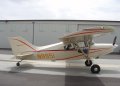
Husky A1-B
Husky A1-B
Wed Sep 30, 2009 8:07 am
Re: Fire Extinguisher
You are required to carry a fire extinguisher on board your aircraft. This is the FAA circular.
http://rgl.faa.gov/REGULATORY_AND_GUIDA ... 20-42C.pdf
http://rgl.faa.gov/REGULATORY_AND_GUIDA ... 20-42C.pdf
Lynn Sanderson (Dirtstrip) passed away from natural causes in May 2013. He was a great contributor and will be missed dearly.
Wed Sep 30, 2009 8:22 am
Re: Fire Extinguisher
Alex,
I carry one of these from Chief Aircraft. http://www.chiefaircraft.com/airsec/Air ... isher.html
I got HLN A344T for about $90.00
I carry one of these from Chief Aircraft. http://www.chiefaircraft.com/airsec/Air ... isher.html
I got HLN A344T for about $90.00
- highroad offline

- Posts: 785
- Joined: Wed Feb 20, 2008 10:28 am
- Location: Southern Oregon Coast
- FindMeSpot URL: http://share.findmespot.com/shared/face ... SBWeUVDhQd
- Aircraft: A Maule we call X-ray
Wed Sep 30, 2009 8:30 am
Re: Fire Extinguisher
Under FAR 91, I see no requirement for a fire extinguisher unless you are under subpart F (large and turbine powered).
Flying clubs at Palo Alto rent multiple planes without extinguishers.
I carry the Sporty's small fire extinguisher.
Flying clubs at Palo Alto rent multiple planes without extinguishers.
I carry the Sporty's small fire extinguisher.
Wed Sep 30, 2009 8:49 am
Re: Fire Extinguisher
There is no requirement to carry a fire extinguisher under FAR 91. The AC in the above post references FAR 91.193 (c) which has nothing to do with fire extinguishers but has to do with category II approaches. The AC says that no specific regulations cover fire extinguishers for use in part 91 aircraft but the AC could be used for guidelines in determining what one to carry assuming that you decide to carry one.
If you fly for hire you do need to carry extinguishers as outlined in FAR's 135 and 121.
Go down to the hardware store and pick up a small kitchen halon 1211 or 1301 extinguisher. It will cost you under $25 and put out fires just as well as the same size and much more expensive ones bought through an aircraft supply house.
If you fly for hire you do need to carry extinguishers as outlined in FAR's 135 and 121.
Go down to the hardware store and pick up a small kitchen halon 1211 or 1301 extinguisher. It will cost you under $25 and put out fires just as well as the same size and much more expensive ones bought through an aircraft supply house.

Wed Sep 30, 2009 9:11 am
Re: Fire Extinguisher
dirtstrip wrote:You are required to carry a fire extinguisher
Required is a pretty strong word.
Alex, I carry a Halon 1301, but I think if I was buying a new one I would get a Halon blend. It should have at least a 2B:C rating. Mine is mounted just in front of the pasenger seat, under where their legs would be, if anyone would fly with me that is. Yours being a tandem would be different I assume. Maybe under the seat?
- Dokmow offline

- Posts: 246
- Joined: Wed Oct 18, 2006 1:17 pm
- Location: Eugene, Oregon
- FindMeSpot URL: http://share.findmespot.com/shared/face ... 738geaMOD6
Rans S7S
Wed Sep 30, 2009 10:13 am
Re: Fire Extinguisher
Halon blend. You can get it at most any aircraft supply house, or as suggested above find one not specifically designed for aircraft and save 50% 
You might also consider Halatron. A bit more expensive but might be easier to source, since it is a more EPA friendly. A bit less effective than Halon but still better than dry chemical
You might also consider Halatron. A bit more expensive but might be easier to source, since it is a more EPA friendly. A bit less effective than Halon but still better than dry chemical
- onceAndFutr_alaskaflyer offline
- Posts: 1319
- Joined: Sun Apr 23, 2006 4:23 pm
- Location: Keweenaw Peninsula, Michigan and Carson Valley, Nevada
Wed Sep 30, 2009 11:23 am
Re: Fire Extinguisher
You people are right. I looked for where I went wrong and the fire extinguisher is not included in my aircraft equipment as required but only as recommended. The reference to the FAR in 91 sec. 513 does not apply to your type aircraft or experimentals for that matter, since 91 does not apply to them.
If I were a politician I could claim I misspoke, I'm not so I was just wrong and the answer to the next question I should be asked is..." No, I'm not in the fire extinguisher business!"
If I were a politician I could claim I misspoke, I'm not so I was just wrong and the answer to the next question I should be asked is..." No, I'm not in the fire extinguisher business!"
Lynn Sanderson (Dirtstrip) passed away from natural causes in May 2013. He was a great contributor and will be missed dearly.
Wed Sep 30, 2009 4:09 pm
Re: Fire Extinguisher
once&futr_alaskaflyer wrote:Halon blend. You can get it at most any aircraft supply house, or as suggested above find one not specifically designed for aircraft and save 50%
You might also consider Halatron. A bit more expensive but might be easier to source, since it is a more EPA friendly. A bit less effective than Halon but still better than dry chemical
Right on point and recommendation. Mine is mounted on the front of the frame of the pilot seat for easy access.....doesn't interfere or impede the new Cessna inertia reel seat safety mechanism either....just lean over, reach down, one snap of the clip and it's out in my hand. Just remember to check the guage for the charge status at annual and service it if needed.

1966 C182J
1960 C172 TD
1960 C172 TD
Wed Sep 30, 2009 4:58 pm
Re: Fire Extinguisher
OK, here is probably a whole lot more info than you ever wanted to know about portable fire extinguishers. The following is long but hopefully not boring. I claim to be an expert on nothing, with the possible exception of efficiently expending all the money I have ever gotten my hands on, but I do have extensive experience utilizing fire extinguishers, putting out fires and generally trying to survive in fire-impacted environments:
I've seen quite a few planes that had portable dry-chem fire extinguishers mounted inside. Here are a few issues that you should take into consideration regarding putting or utilizing a fire extinguisher in your plane:
The most common portable fire extinguisher is a dry-chemical, or dry-chem extinguisher. Dry-chem extinguishers are rated for Class A (common combustibles, wood, paper etc), Class B (flammable liquids like gasoline, oil, grease etc) and Class C (charged electronic equipment) fires. You will most likely find a 2A:10B:C dry-chem extinguisher in most of the businesses you visit, outside your apartment or condo unit if you live in one, or somewhere along the perimeter of your hanger building. There are a number of common extinguishing agents used in dry-chem extinguishers, the most common being mono-ammonium phosphate. These extinguishers are inexpensive, come in a wide range of sizes, and unfortunately, cause almost as much damage as the fire they are generally used to extinguish. Here is a paragraph from a fire extinguisher safety site that succinctly explains this:
When to use (or not use) Dry Chemical Extinguishers?
Dry chemical extinguishers can be quite corrosive to metals such as aluminum and are also potentially abrasive. ABC extinguishers are much more corrosive than BC extinguishers because the ammonium phosphate agent can undergo hydrolysis to form phosphoric acid and because the molten agent flows into minute cracks.
For this reason, dry chemical ABC extinguishers are not recommended for use on aircraft or electronics such as computers, MRI scanners, and scientific instruments. Boeing has stated in a service letter "Dry chemical extinguishers can cause extensive corrosion damage to airplane structure, electrical systems, and electronic equipment...Dry chemical fire extinguishers should only be used for airplane firefighting if there are no other extinguishers available and there is imminent danger to property or personnel."
Another issue with dry-chem extinguishers is the cloud of choking and vision obscuring dust/powder that they produce. Even a small extinguisher would completely fill the cockpit of a fairly large GA plane with a noxious and blinding cloud. A number of years ago I had a 2A:10B:C extinguisher accidentally discharge in the trunk of a car while I was driving down the freeway. The cloud of powder came through into the passenger compartment like a martian dust-storm, completely obscured the windshield and side windows, and was choking and extremely irritating to my eyes. Fortunately for me I had lots of bright flashing lites on top of the car so I was able to brake to a stop blocking two traffic lanes without being creamed from behind. From other experience, I also know that dry-chem powder sticks to plastic materials tenaciously, meaning that even if you were able to use a dry-chem extinguisher to put out a cockpit fire, then get the windows or door opened to air out the cockpit, wash out your eyes with some water and blink through the burning pain from scratched corneas and chemical burns, you probably still wont be able to see where you are going unless you hang your head out the side window looking like my dog on the way to 7-11.
There are alternatives to dry-chem extinguishers. CO2 extinguishers used to be fairly common, although they have largely disappeared because they are not effective on common materials like paper, wood or upholstery, they are very heavy, and it really takes a skilled and trained operator to use them effectively. We have all seen CO2 extinguishers used on TV and in the movies (remember Captain Craine and Kowalski valiantly battling the burning consoles on the Seaview, or Charlton Heston's son dousing himself with CO2 in his burning cockpit in the movie Midway?), but they are not a good choice for mounting in an airplane cockpit
Halon extinguishers are another option. Halon extinguishers really came into being when the need for a safe, non-damaging and non-corrosive extinguisher for computers and other high-value electronics, as well as for shipboard firefighting, came into being. Halon agents extinguish fire at a molecular level, and are quite effective even at very low concentrations, meaning a little halon goes a long way. A very small and compact halon extinguisher will do the job of a much larger dry-chem or CO2 extinguisher, and the extinguishing agent won't destroy all of your electronics, won't cause hopeless corrosion of your airframe, and probably won't blind you. Halon is not particularly toxic, so you probably won't poison yourself if you discharge it inside your cockpit. Halon can cause asphyxiation if it displaces all of the oxygen in the cockpit, although people can tolerate short-term exposure to fairly high levels of halon in the air they breath without adverse or long-term problems. Of course, if you have to use one, you want to get into fresh air ASAP, but if you are in a burning environment I think that goes without saying. Once nice feature of the halon extinguishers is that they do not require periodic service. Halon does not deteriorate or solidify, and as long as the extinguisher is charged (shows full pressure) it should work as intended. All the above is a generalization as there are several different types of halon compounds used in extinguishing systems, but they all generally behave the same way.
The problem with halon extinguisher is that they seem to be expensive. A few years ago Halon extinguishing agents were determined to be very potent at attacking the ozone layer. The Wiki site says such products are 12,500 times as bad as CO2 at causing global warming (12,500 times as bad as nothing? but that is for another thread), so, halon compounds are no longer manufactured. They can be legally recycled and sold, and that is where the Halon extinguishers you can buy come from. Halitron extinguishers work similarly to the halon units, but they are not as effective. Eventually Halon extinguishers will be unavailable and Halitron units may be the only close option.
There are a number of other types of portable extinguishers out there, but they really are not suitable for use in a small airplane ("D" extinguishers for combustible metals, "K" extinguishers for kitchen fires, pressurized water extinguishers for hosing down your friends etc)
I've used halon extinguishers and can tell you that they work, and work very well. I wouldn't have a dry-chem extinguisher in any airplane if I had a choice, especially having experienced the effects of an accidental discharge of one while driving. Yes, you may only intend to use it once you are on the ground any trying to escape from your plane, but shit happens, like an accidental discharge, a passenger panicking and pulling the lever, or your survival bag falling off the back of your seat and onto the extinguisher and triggering it off.
There, as I said, probably more info than you ever wanted to know, but maybe someone out there actually took the time to read all this and found something useful in it. As I said, I would never claim to be an expert on anything, but at least this may point you in the right direction if you want to do some research yourself. And I'll bet that they didn't have a dry-chem extinguisher anywhere in the flying submarine, so I don't think I'll put one in my plane either.
Mark
I've seen quite a few planes that had portable dry-chem fire extinguishers mounted inside. Here are a few issues that you should take into consideration regarding putting or utilizing a fire extinguisher in your plane:
The most common portable fire extinguisher is a dry-chemical, or dry-chem extinguisher. Dry-chem extinguishers are rated for Class A (common combustibles, wood, paper etc), Class B (flammable liquids like gasoline, oil, grease etc) and Class C (charged electronic equipment) fires. You will most likely find a 2A:10B:C dry-chem extinguisher in most of the businesses you visit, outside your apartment or condo unit if you live in one, or somewhere along the perimeter of your hanger building. There are a number of common extinguishing agents used in dry-chem extinguishers, the most common being mono-ammonium phosphate. These extinguishers are inexpensive, come in a wide range of sizes, and unfortunately, cause almost as much damage as the fire they are generally used to extinguish. Here is a paragraph from a fire extinguisher safety site that succinctly explains this:
When to use (or not use) Dry Chemical Extinguishers?
Dry chemical extinguishers can be quite corrosive to metals such as aluminum and are also potentially abrasive. ABC extinguishers are much more corrosive than BC extinguishers because the ammonium phosphate agent can undergo hydrolysis to form phosphoric acid and because the molten agent flows into minute cracks.
For this reason, dry chemical ABC extinguishers are not recommended for use on aircraft or electronics such as computers, MRI scanners, and scientific instruments. Boeing has stated in a service letter "Dry chemical extinguishers can cause extensive corrosion damage to airplane structure, electrical systems, and electronic equipment...Dry chemical fire extinguishers should only be used for airplane firefighting if there are no other extinguishers available and there is imminent danger to property or personnel."
Another issue with dry-chem extinguishers is the cloud of choking and vision obscuring dust/powder that they produce. Even a small extinguisher would completely fill the cockpit of a fairly large GA plane with a noxious and blinding cloud. A number of years ago I had a 2A:10B:C extinguisher accidentally discharge in the trunk of a car while I was driving down the freeway. The cloud of powder came through into the passenger compartment like a martian dust-storm, completely obscured the windshield and side windows, and was choking and extremely irritating to my eyes. Fortunately for me I had lots of bright flashing lites on top of the car so I was able to brake to a stop blocking two traffic lanes without being creamed from behind. From other experience, I also know that dry-chem powder sticks to plastic materials tenaciously, meaning that even if you were able to use a dry-chem extinguisher to put out a cockpit fire, then get the windows or door opened to air out the cockpit, wash out your eyes with some water and blink through the burning pain from scratched corneas and chemical burns, you probably still wont be able to see where you are going unless you hang your head out the side window looking like my dog on the way to 7-11.
There are alternatives to dry-chem extinguishers. CO2 extinguishers used to be fairly common, although they have largely disappeared because they are not effective on common materials like paper, wood or upholstery, they are very heavy, and it really takes a skilled and trained operator to use them effectively. We have all seen CO2 extinguishers used on TV and in the movies (remember Captain Craine and Kowalski valiantly battling the burning consoles on the Seaview, or Charlton Heston's son dousing himself with CO2 in his burning cockpit in the movie Midway?), but they are not a good choice for mounting in an airplane cockpit
Halon extinguishers are another option. Halon extinguishers really came into being when the need for a safe, non-damaging and non-corrosive extinguisher for computers and other high-value electronics, as well as for shipboard firefighting, came into being. Halon agents extinguish fire at a molecular level, and are quite effective even at very low concentrations, meaning a little halon goes a long way. A very small and compact halon extinguisher will do the job of a much larger dry-chem or CO2 extinguisher, and the extinguishing agent won't destroy all of your electronics, won't cause hopeless corrosion of your airframe, and probably won't blind you. Halon is not particularly toxic, so you probably won't poison yourself if you discharge it inside your cockpit. Halon can cause asphyxiation if it displaces all of the oxygen in the cockpit, although people can tolerate short-term exposure to fairly high levels of halon in the air they breath without adverse or long-term problems. Of course, if you have to use one, you want to get into fresh air ASAP, but if you are in a burning environment I think that goes without saying. Once nice feature of the halon extinguishers is that they do not require periodic service. Halon does not deteriorate or solidify, and as long as the extinguisher is charged (shows full pressure) it should work as intended. All the above is a generalization as there are several different types of halon compounds used in extinguishing systems, but they all generally behave the same way.
The problem with halon extinguisher is that they seem to be expensive. A few years ago Halon extinguishing agents were determined to be very potent at attacking the ozone layer. The Wiki site says such products are 12,500 times as bad as CO2 at causing global warming (12,500 times as bad as nothing? but that is for another thread), so, halon compounds are no longer manufactured. They can be legally recycled and sold, and that is where the Halon extinguishers you can buy come from. Halitron extinguishers work similarly to the halon units, but they are not as effective. Eventually Halon extinguishers will be unavailable and Halitron units may be the only close option.
There are a number of other types of portable extinguishers out there, but they really are not suitable for use in a small airplane ("D" extinguishers for combustible metals, "K" extinguishers for kitchen fires, pressurized water extinguishers for hosing down your friends etc)
I've used halon extinguishers and can tell you that they work, and work very well. I wouldn't have a dry-chem extinguisher in any airplane if I had a choice, especially having experienced the effects of an accidental discharge of one while driving. Yes, you may only intend to use it once you are on the ground any trying to escape from your plane, but shit happens, like an accidental discharge, a passenger panicking and pulling the lever, or your survival bag falling off the back of your seat and onto the extinguisher and triggering it off.
There, as I said, probably more info than you ever wanted to know, but maybe someone out there actually took the time to read all this and found something useful in it. As I said, I would never claim to be an expert on anything, but at least this may point you in the right direction if you want to do some research yourself. And I'll bet that they didn't have a dry-chem extinguisher anywhere in the flying submarine, so I don't think I'll put one in my plane either.
Mark
"I predict future happiness for Americans if they can prevent the government from wasting the labors of the people under the pretense of taking care of them"
Thomas Jefferson
RANS S7S Courier
http://www.mykitlog.com/taildown/
Thomas Jefferson
RANS S7S Courier
http://www.mykitlog.com/taildown/
Fri Oct 02, 2009 10:15 am
Re: Fire Extinguisher
I don't have one in the plane but almost buy one about twice a year when this comes up on a forum. This will be one of those times. I may just buy a small halon and mount it to the pilots seat.
Have any of you had to use one while in the air?
How many planes don't have one?
Bill
Have any of you had to use one while in the air?
How many planes don't have one?
Bill
- Flat Country Pilot offline
- Posts: 191
- Joined: Tue Apr 25, 2006 4:40 am
- Location: North Dakota
Flat Country Pilot
Farm Field PVT
54 170B
Farm Field PVT
54 170B
Fri Oct 02, 2009 11:32 am
Re: Fire Extinguisher
Flat Country Pilot wrote:I don't have one in the plane but almost buy one about twice a year when this comes up on a forum. This will be one of those times. I may just buy a small halon and mount it to the pilots seat.
Have any of you had to use one while in the air?
How many planes don't have one?
Bill
I had to use one on the ground, in Canada, and if it hadn't been in the plane (handy in other words) and had I instead been forced to run to the terminal from the tie downs I think it would have been too late. Dry chemical. Bleah. Took forever to clean up afterwards.
I hope like heck never to have to use it in the air. I want it in the plane so if I need it on the ground (fueling, whatever) it is right there. And I don't want to have to be cleaning up purple K from a cabin or cowling again which is why I bought Halon.
Last edited by onceAndFutr_alaskaflyer on Fri Oct 02, 2009 4:05 pm, edited 1 time in total.
- onceAndFutr_alaskaflyer offline
- Posts: 1319
- Joined: Sun Apr 23, 2006 4:23 pm
- Location: Keweenaw Peninsula, Michigan and Carson Valley, Nevada
Fri Oct 02, 2009 1:06 pm
Re: Fire Extinguisher
I've got the H3R 1.3lb HLN 1211 (HLN A344T) secured under my pax seat, easy access from the pilot's seat. It comes with a nice mounting bracket/retainer that can be operated blind pretty easily. I've got that attached to the pax seat frame using 4 Adel clamps and a thin piece of aluminum. The only thing is that a passenger, if not briefed about it, would prob not be aware that it's there.

Fri Oct 02, 2009 5:20 pm
Re: Fire Extinguisher
I recently bought my Husky an H3R Model RT A400 - Halon 1211-1301 Blend 1.2 lb. extinguisher. It is mounted to the front seat top forward tube with tie wraps. It's out of the way but easily accessed.
Mon Feb 23, 2026 9:53 am
Re: Fire Extinguisher
These are a fairly recent addition to the fire extinguishing market. They generate a gas cloud that interrupts the combustion process and yet is safe to breathe. They are light, and they don't have an expiration date.
https://elementfire.com/?sca_ref=4424322.dzEO44rwYl&sca_source=google&gad_source=1&gad_campaignid=20355663755&gbraid=0AAAAAp3ZMCdLA1OGC4CeeYNwqZlBDkOGy&gclid=CjwKCAiAkvDMBhBMEiwAnUA9BdzizY8zkBWA7TzhmWxm1CChEOyfv97G4cz3G6Z8-wW21MborEQW8xoCeGUQAvD_BwE
They work really well on gas, oil, grease and other liquid fuel fires, and they have a much longer "spray" time than the compressed gas fire extinguishers. Here's an example:
They do NOT work well on any burning material that "smolders" like a wood fire. They don't remove the source of heat, so a smoldering fire will reignite as soon as the gas cloud is removed.
I have one of these in my plane for peace of mind because I believe that an avgas, or oil fire are my biggest concerns. If I wind up in a forest tire, I'm screwed no matter what portable fire extinguisher I'm carrying.
https://elementfire.com/?sca_ref=4424322.dzEO44rwYl&sca_source=google&gad_source=1&gad_campaignid=20355663755&gbraid=0AAAAAp3ZMCdLA1OGC4CeeYNwqZlBDkOGy&gclid=CjwKCAiAkvDMBhBMEiwAnUA9BdzizY8zkBWA7TzhmWxm1CChEOyfv97G4cz3G6Z8-wW21MborEQW8xoCeGUQAvD_BwE
They work really well on gas, oil, grease and other liquid fuel fires, and they have a much longer "spray" time than the compressed gas fire extinguishers. Here's an example:
They do NOT work well on any burning material that "smolders" like a wood fire. They don't remove the source of heat, so a smoldering fire will reignite as soon as the gas cloud is removed.
I have one of these in my plane for peace of mind because I believe that an avgas, or oil fire are my biggest concerns. If I wind up in a forest tire, I'm screwed no matter what portable fire extinguisher I'm carrying.

Mon Feb 23, 2026 3:04 pm
Re: Fire Extinguisher
Very interesting video of the test. As he says, maybe not really representative of an aircraft fire, but not encouraging that these things would really do the job. I have an older Halon extinguisher in my plane, mounted on the tunnel, between seats, and I've been carrying a couple of these devices as well.....


Fri May 01, 2026 4:52 pm
Re: Fire Extinguisher
Thread bump... I need a new fire extinguisher for the Cessna, and maybe another one to keep in the hangar. I'm thinking a small Halon extinguisher for the airplane like an RT A400 and a 5-lb CO2 extinguisher for the hangar.
Here's the $280 Halon extinguisher: https://www.aircraftspruce.com/catalog/pspages/rta400.php
Here's a $298 5-lb CO2 extinguisher: https://fireextinguisherdepot.com/5-lb-carbon-dioxide.
Good info below... and I may add one of those sticks for good measure. Any other thoughts?
Here's the $280 Halon extinguisher: https://www.aircraftspruce.com/catalog/pspages/rta400.php
Here's a $298 5-lb CO2 extinguisher: https://fireextinguisherdepot.com/5-lb-carbon-dioxide.
Good info below... and I may add one of those sticks for good measure. Any other thoughts?

DISPLAY OPTIONS
Who is online
Users browsing this forum: No registered users and 4 guests
Latest Features
-
-
Featured Bush Planes
As one of the undisputed legends of bush flying, the Cessna 180 hauls a…Read More -
Aircraft Ownership and Maintenance
9 modification mistakes aircraft owners make when trying to "bush out" their birds—why some…Read More -
Live to Tell
A Minnesota pilot is surprised to learn that the sudden asymmetric drag of an…Read More




Latest Knowledge Base
-
Destinations
Canada offers some of the most spectacular backcountry flying on the continent. Here's what you need to know before you go.Read More -
Safety and Survival
Hope that you never have to use your survival vest but knowing you have it and knowing how to use…Read More -
Destinations
A regional guide with ideas for winter camping destinations in California, Nevada, New Mexico, and Arizona.Read More -
Aircraft
Finding an affordable aircraft that can handle the backcountry for $80K or less? A challenge for sure, but with the…Read More



