Zane's post on interest in flying of young kids kind of inspired this post. My 15 1/2 year old grandson is hooked. He has about 6 hrs in the right seat of my 182 and in the last 2 coming from there to here he did a good job tracking the Sod House VOR radial. He lives near Morgan County Apt in Utah. From what I gather there are a few guys that will give some primary instruction there. I have heard but have not confirmed that these are some planes that are local and could be used.
Participate in the pole and that will help me determine where to look for his instruction.
Tim
First Five Hours for Grandson
Mon Aug 10, 2015 4:37 pm
- qmdv offline
- Posts: 3633
- Joined: Wed Feb 15, 2006 10:22 pm
- Location: Payette
- FindMeSpot URL: http://share.findmespot.com/shared/face ... I5tqEOk0rc
- Aircraft: Cessna 182
Mon Aug 10, 2015 4:42 pm
Re: First Five Hours for Grandson
PS I will not vote as I only have 2 hrs tail wheel time so naturally I feel the land-o-matic is by far superior.  Oh some good reasons for the vote should be fun.
Tim
Oh some good reasons for the vote should be fun.Tim
Last edited by qmdv on Mon Aug 10, 2015 4:43 pm, edited 1 time in total.
- qmdv offline
- Posts: 3633
- Joined: Wed Feb 15, 2006 10:22 pm
- Location: Payette
- FindMeSpot URL: http://share.findmespot.com/shared/face ... I5tqEOk0rc
- Aircraft: Cessna 182
Mon Aug 10, 2015 4:43 pm
Re: First Five Hours for Grandson
I vote for the J-3 because it's what I learned in when I was 16 
Mon Aug 10, 2015 4:51 pm
Re: First Five Hours for Grandson
If you think Cessna flying is fun, Cub flying is pure black tar heroin and will build the best core skillset. Find someone nearby with a Cub of some sort, or even a Champ variant.
- Zzz offline

- Posts: 2857
- Joined: Fri Oct 08, 2004 11:09 pm
- Location: northern
- Aircraft: Swiveling desk chair
Half a century spent proving “it is better to be thought a fool than to open your mouth and remove all doubt.”
Mon Aug 10, 2015 4:54 pm
Re: First Five Hours for Grandson
I flew my Cub for about 3/4 of my flight training, after flying it I was truly bored flying a 172, which speaks to the gentleness of a 172 as much as it says about the joy(anger, confusion, etc) of flying a Cub. Nothing's better than a Cub!
- CenterHillAg offline

- Posts: 204
- Joined: Sun Nov 09, 2014 3:13 pm
- Location: Texas Coast
- Aircraft: J3 Cub
'56 182
Mon Aug 10, 2015 5:03 pm
Re: First Five Hours for Grandson
Is the advantage of a Champ that you can fly solo from the front. Not looking good the the Land-o Matic
Tim
Tim
- qmdv offline
- Posts: 3633
- Joined: Wed Feb 15, 2006 10:22 pm
- Location: Payette
- FindMeSpot URL: http://share.findmespot.com/shared/face ... I5tqEOk0rc
- Aircraft: Cessna 182
Mon Aug 10, 2015 5:20 pm
Re: First Five Hours for Grandson
I voted for the J-3. Never flown one but learned in a PA-12, they solo from the front seat as well.
Mon Aug 10, 2015 5:22 pm
Re: First Five Hours for Grandson
I'm voting J-3, but then I'm completely biased! I have nearly all of my flying time in a Cub and can't make comparisons with the other options you have available. However, I really Damian DelGaizo's back-handed Cub compliment (as quoted by Stephen Pope in a 2012 Flying Magazine article): "Really, the J-3 has no redeeming qualities,” he said. “It rides like an ox cart. It doesn’t hide a pilot’s mistakes. It takes finesse to land well. It’s miserable in the cold weather. You have to hand-prop it. You can’t see out of it while landing.” And yet, “whether by design or luck, somehow it all comes together. It has excellent harmonization in flight. It flies wonderfully. If you do something wrong and it flies ugly, it’s your fault and you’ll know about it immediately. That’s what makes the Cub such a great trainer — and a great airplane.”

Mon Aug 10, 2015 5:31 pm
Re: First Five Hours for Grandson
I soloed at 6 hrs when I was 16, in the 108 HP PA-18 I bought as a basket case and rebuilt. I went on to get my private in that airplane in fairly short order, and made my very first AK trip in it to sell it to a buddy in order to finance my first C-180.
The lessons learned in that airplane have served me well over the past 45 years and all the hours flown. I am so fortunate, grateful, and alive because of that little airplane.
Gump
The lessons learned in that airplane have served me well over the past 45 years and all the hours flown. I am so fortunate, grateful, and alive because of that little airplane.
Gump
Mon Aug 10, 2015 6:42 pm
Re: First Five Hours for Grandson
I have taught in most all Cub models with original engines, 7AC Champ, the tandem Taylorcrafts, Luscombe, and Cessna 140. All are good honest teachers. Having spent a lot of time teaching in the back of Cubs, I hate to start a student out there in the J-3. It's good education on finding an approximate middle of the road you cannot see, but it is much harder to pick up the apparent rate of closure from back there. The apparent rate of closure at the angle out the side is much faster and scarier. Gets you plenty slow, but worries you a bit. The tandem Taylorcrafts fly exactly like the Cubs. The C-140 will bounce the worst on the springy gear. All will bounce if not slowed down enough. All work best with a slow power/pitch approach. Stromberg carbarators flood and give you a scare if the throttle is put in too fast. In gusts we have to work the throttle quite a bit or land way too fast.
All of these tail wheel airplanes will destroy themselves if ground looped while going fast. Any of these airplanes can safely be landed so slow that they can be ground looped without damage after a very short ground roll.
Dynamic, proactive rudder control is the key to maintaining longitudinal alignment at all times from beginning of movement until shutdown. Dynamic, proactive rudder takes care of taxi, of gyroscopic precession when the tail is brought up, of p-factor which starts when the nose is pitched up just before the mains come off, of the center line while travelling a long way down the runway in low ground effect, of cruising toward a distant target, of keeping the center line lined up on approach to landing, and of maintaining that center line on touchdown and roll out.
All of these tail wheel airplanes will destroy themselves if ground looped while going fast. Any of these airplanes can safely be landed so slow that they can be ground looped without damage after a very short ground roll.
Dynamic, proactive rudder control is the key to maintaining longitudinal alignment at all times from beginning of movement until shutdown. Dynamic, proactive rudder takes care of taxi, of gyroscopic precession when the tail is brought up, of p-factor which starts when the nose is pitched up just before the mains come off, of the center line while travelling a long way down the runway in low ground effect, of cruising toward a distant target, of keeping the center line lined up on approach to landing, and of maintaining that center line on touchdown and roll out.
- contactflying offline
- Posts: 4972
- Joined: Wed Apr 03, 2013 7:36 pm
- Location: Aurora, Missouri 2H2
Download my free "https://tinyurl.com/Safe-Maneuvering" e-book.
Mon Aug 10, 2015 6:59 pm
Re: First Five Hours for Grandson
I think that the quality of the instructor and his or her ability to connect with your grandson is far more important than the type of airplane. That being said I started in a 150 and with 12 hours bought a 170B. The aircraft control skills I learned with that plane served me well through out my career. Taught me that the peddles were more than foot rest.
Tim
I did vote for the J-3 just because it makes for a better story for someone of his generation when telling his copilots as a senior captain of soloing in a cub..
Tim
I did vote for the J-3 just because it makes for a better story for someone of his generation when telling his copilots as a senior captain of soloing in a cub..

Mon Aug 10, 2015 7:04 pm
Re: First Five Hours for Grandson
bat443 wrote:
I did vote for the J-3 just because it makes for a better story for someone of his generation when telling his copilots as a senior captain of soloing in a cub..
Was thinking the same thing.
Tim
- qmdv offline
- Posts: 3633
- Joined: Wed Feb 15, 2006 10:22 pm
- Location: Payette
- FindMeSpot URL: http://share.findmespot.com/shared/face ... I5tqEOk0rc
- Aircraft: Cessna 182
Mon Aug 10, 2015 7:43 pm
Re: First Five Hours for Grandson
qmdv wrote:Is the advantage of a Champ that you can fly solo from the front. Not looking good the the Land-o Matic
Tim
That's one preference of mine, flying from the front. Not all Cubs are J-3s though. I think from J-5 and PA-11 and newer you can solo from the front seat (correct me if that's not right.) Champs fly fantastically.
- Zzz offline
- Posts: 2857
- Joined: Fri Oct 08, 2004 11:09 pm
- Location: northern
- Aircraft: Swiveling desk chair
Half a century spent proving “it is better to be thought a fool than to open your mouth and remove all doubt.”
Mon Aug 10, 2015 7:47 pm
Re: First Five Hours for Grandson
Correct on both statements.
- contactflying offline
- Posts: 4972
- Joined: Wed Apr 03, 2013 7:36 pm
- Location: Aurora, Missouri 2H2
Download my free "https://tinyurl.com/Safe-Maneuvering" e-book.
Mon Aug 10, 2015 7:56 pm
Re: First Five Hours for Grandson
I voted champ for the front seat solo.
I've never flown a J-3 (would love to!), though.... So it's purely speculation on my part!
I've never flown a J-3 (would love to!), though.... So it's purely speculation on my part!
- CamTom12 offline

- Posts: 3705
- Joined: Sun Jul 08, 2012 1:08 pm
- Location: Huntsville
- FindMeSpot URL: https://share.delorme.com/camtom12
- Aircraft: Ruppe Racer
Experimental Pacer
home hand jam "wizard"
Mon Aug 10, 2015 9:10 pm
Re: First Five Hours for Grandson
From the back seat with big 450hp P&W and 4" metal lip on the hopper up front was how I flew the Stearman. I asked the old crop dustersdusters, "how do you see going into the field?" "Well you look in the turn," they said.
- contactflying offline
- Posts: 4972
- Joined: Wed Apr 03, 2013 7:36 pm
- Location: Aurora, Missouri 2H2
Download my free "https://tinyurl.com/Safe-Maneuvering" e-book.
Tue Aug 11, 2015 9:43 am
Re: First Five Hours for Grandson
A friend of mine put it this way: "I got my license in a 150, then I learned to fly in a Cub". I learned in a 152, then put a few hundred hours on a 150 before buying my 170 and never looking back. . I used to go along with the "learn in a taildragger" school of thought, but now think that it's simpler to train for the private in a nosedragger, so I'll be the odd man out & vote for the 152. It's tough enough doing all the BS to get your license without the added complication of doing everything in a taildragger. He's gonna need to fly something with radios, VOR, etc for his checkride anyway.

Cessna Skywagon -- accept no substitute!
Tue Aug 11, 2015 12:56 pm
Re: First Five Hours for Grandson
hotrod180 wrote:A friend of mine put it this way: "I got my license in a 150, then I learned to fly in a Cub". I learned in a 152, then put a few hundred hours on a 150 before buying my 170 and never looking back. . I used to go along with the "learn in a taildragger" school of thought, but now think that it's simpler to train for the private in a nosedragger, so I'll be the odd man out & vote for the 152. It's tough enough doing all the BS to get your license without the added complication of doing everything in a taildragger. He's gonna need to fly something with radios, VOR, etc for his checkride anyway.
A lot has to do with what the plane has to offer. I think a no electric no radio plane is out.
Tim
- qmdv offline
- Posts: 3633
- Joined: Wed Feb 15, 2006 10:22 pm
- Location: Payette
- FindMeSpot URL: http://share.findmespot.com/shared/face ... I5tqEOk0rc
- Aircraft: Cessna 182
Tue Aug 11, 2015 1:55 pm
Re: First Five Hours for Grandson
qmdv wrote:hotrod180 wrote:A friend of mine put it this way: "I got my license in a 150, then I learned to fly in a Cub". I learned in a 152, then put a few hundred hours on a 150 before buying my 170 and never looking back. . I used to go along with the "learn in a taildragger" school of thought, but now think that it's simpler to train for the private in a nosedragger, so I'll be the odd man out & vote for the 152. It's tough enough doing all the BS to get your license without the added complication of doing everything in a taildragger. He's gonna need to fly something with radios, VOR, etc for his checkride anyway.
A lot has to do with what the plane has to offer. I think a no electric no radio plane is out.
Tim
How about your 182? Or a P51?

Tue Aug 11, 2015 7:21 pm
Re: First Five Hours for Grandson
My first lesson was in a J3, so I'm a little biased.
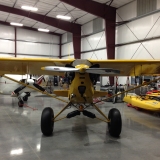
1940 BC-65 with some mods.
1946 J3C-85
1946 J3C-85
DISPLAY OPTIONS
Who is online
Users browsing this forum: No registered users and 26 guests
Latest Features
-
Live to Tell
A Minnesota pilot is surprised to learn that the sudden asymmetric drag of an out-of-rig ski can…Read More -
Creators
Working in some of the Yukon's most beautiful and remote environments, photographer Simon Blakesley captures aircraft in…Read More -
Aircraft Ownership and Maintenance
Upgrading to big tires can make a huge difference in backcountry performance, but with those gains come…Read More -
Tales from Yesteryear
In this tale from bush flying yesteryear, Don Cogger signs up to help Atlee Dodge Jr recovery…Read More


Latest Knowledge Base
-
Destinations
A regional guide with ideas for winter camping destinations in California, Nevada, New Mexico, and Arizona.Read More -
Aircraft
Finding an affordable aircraft that can handle the backcountry for $80K or less? A challenge for sure, but with the…Read More -
Aircraft
01.29.2018 - Zane - Updated tire diameter graphic to add 8.50x10 Guide to tires for use in the backcountry and off-airport landing…Read More -
Pilots
12.22.2013 - Initial article format Operating aircraft on skis and negotiating a snow-covered landscape is an entirely unique skillset and environment.…Read More


