Ok, so we're in the Portland area heading to Idaho tomorrow morning. Instead of heading to the Boise area, McCall looks like the better place to go. I'm now looking at Pendelton, Or, LaGrande, Baker City, McCall and stopping there for some advice.
I'd like to find a secure storage to dump as much weight as possible before heading to Johnson Creek. Does anyone know if that is available in McCall? It looks like there is a power line that goes from the south end of Cascade Reservoir right to Johnson Creek that looks like a reasonable route.
Any help is greatly appreciated. I'm flying an O-300 C-172.
Thanks.
Frank
First Time to Johnson Creek
Tue Jul 11, 2017 9:11 pm
Tue Jul 11, 2017 10:45 pm
Re: First Time to Johnson Creek
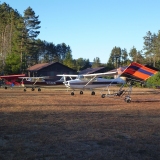
Where are you? I'll be at twin oaks around 6:30am Wednesday. I can give you some intel.

Wed Jul 12, 2017 5:28 am
Re: First Time to Johnson Creek
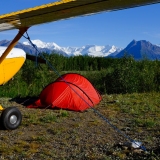
Tent under the wing of the straight tail 172. Be looking for you.
Frank
Frank
Wed Jul 12, 2017 9:33 am
Re: First Time to Johnson Creek
I don't have any specific route advice...just pick out the drainages that allow a gradual climb out of McCall, and then a gradual descent into Johnson Creek. I know you're worried about climb performance, but give a lot of thought to your descent profile as well.
The close quarters of landing in a canyon doesn't mesh well with coming in too high. You really don't want to be 3000 feet AGL when you first see the field. There's plenty of room to land without having to do a turn over Yellow Pine providing you come in low enough to begin with.
When it comes to fuel, don't calculate straight-line distances and times...it doesn't work like that in Idaho. It takes more fuel to fly the big climbs and circuitous routs required. Lean for density altitude, which this time of year usually means leaning once you've climbed into the airplane. Being light is good, but Johnson Creek is PLENTY long...don't land there with 1/4 tanks thinking you need to be ultra-light, 'cause you're going to need some fuel to get out. Remember that McCall and Cascade frequently get fogged in, and you probably won't know that until you're airborn. Have enough fuel to go to plan B or C.
Probably the most important thing is to leave early. You can land at Johnson Creek any hour of the day, but the air is only stable and smooth BEFORE about 10 AM. You'll enjoy flying close to the rocks and trees a whole lot more in smooth air, especially your first time in.
Upon departure you'll enjoy climbing away from the rocks and trees in cool air a whole lot more than in warm air. If you don't have a combustion engine heater that might mean lighting your engine before it's as warm as you'd like it to be...do it anyway. The extra wear and tear of starting a cold engine is nothing compared to the wear and tear of hitting trees on take off.
Make sure your wind screen is as clean as it can be, inside and out. Early flying in canyons means low angle sun on the glass, which will be blinding if it's not uber-clean. Even with clean glass, there are places you don't want to be, like turing into the sun with a dark canyon wall in front of you...as soon as you do you'll be on instruments only, which sucks while down deep in a canyon. Better to avoid it by recognizing when it will happen and then flying a different approach or departure.
Keep your lights on all the time while flying, fly the correct side of the canyon, and practice good radio discipline...something sorely lacking in the Idaho backcountry. Position reports are good at recognizable bottle necks where airplanes are close to the ground and in tight quarters, but useless noise the rest of the time. If you can't say exactly where you are in a manner that other pilots will instantly recognize, don't say anything at all. Nobody cares what your tail number is..."Brown Cessna five miles downstream Johnson Creek, Landing" tells people all they need to know and doesn't waste airtime. If people are talking breakfast plans on 122.9, don't be afraid to tell them to go one off, regardless of who they are.
Just keep your brain engaged and you'll do fine. Have fun!
The close quarters of landing in a canyon doesn't mesh well with coming in too high. You really don't want to be 3000 feet AGL when you first see the field. There's plenty of room to land without having to do a turn over Yellow Pine providing you come in low enough to begin with.
When it comes to fuel, don't calculate straight-line distances and times...it doesn't work like that in Idaho. It takes more fuel to fly the big climbs and circuitous routs required. Lean for density altitude, which this time of year usually means leaning once you've climbed into the airplane. Being light is good, but Johnson Creek is PLENTY long...don't land there with 1/4 tanks thinking you need to be ultra-light, 'cause you're going to need some fuel to get out. Remember that McCall and Cascade frequently get fogged in, and you probably won't know that until you're airborn. Have enough fuel to go to plan B or C.
Probably the most important thing is to leave early. You can land at Johnson Creek any hour of the day, but the air is only stable and smooth BEFORE about 10 AM. You'll enjoy flying close to the rocks and trees a whole lot more in smooth air, especially your first time in.
Upon departure you'll enjoy climbing away from the rocks and trees in cool air a whole lot more than in warm air. If you don't have a combustion engine heater that might mean lighting your engine before it's as warm as you'd like it to be...do it anyway. The extra wear and tear of starting a cold engine is nothing compared to the wear and tear of hitting trees on take off.
Make sure your wind screen is as clean as it can be, inside and out. Early flying in canyons means low angle sun on the glass, which will be blinding if it's not uber-clean. Even with clean glass, there are places you don't want to be, like turing into the sun with a dark canyon wall in front of you...as soon as you do you'll be on instruments only, which sucks while down deep in a canyon. Better to avoid it by recognizing when it will happen and then flying a different approach or departure.
Keep your lights on all the time while flying, fly the correct side of the canyon, and practice good radio discipline...something sorely lacking in the Idaho backcountry. Position reports are good at recognizable bottle necks where airplanes are close to the ground and in tight quarters, but useless noise the rest of the time. If you can't say exactly where you are in a manner that other pilots will instantly recognize, don't say anything at all. Nobody cares what your tail number is..."Brown Cessna five miles downstream Johnson Creek, Landing" tells people all they need to know and doesn't waste airtime. If people are talking breakfast plans on 122.9, don't be afraid to tell them to go one off, regardless of who they are.
Just keep your brain engaged and you'll do fine. Have fun!


Wed Jul 12, 2017 6:50 pm
Re: First Time to Johnson Creek
Good advice Hammer. I will use it myself.
471AM
Husky A1-B
Husky A1-B
Wed Jul 12, 2017 7:35 pm
Re: First Time to Johnson Creek
Alex wrote:Good advice Hammer. I will use it myself.
Agree. DA has been pretty high and is forecast to stay there thru the weekend. The C182 I'm flying out of KGIC this week has anemic climb performance with just 2 plus minimal gear after the sun heats things up. A stock C172 might be a bit under powered for afternoon ops.
- PapernScissors offline
- Posts: 419
- Joined: Sun Mar 06, 2016 8:49 pm
- Location: Spokane
- Aircraft: Cessna 172
Thu Jul 13, 2017 12:31 pm
Re: First Time to Johnson Creek
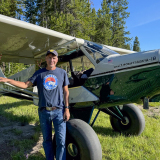
Thanks to all for the advice, especially Hammer, been using your tie downs on the entire trip. We were in McCall last night and dropped all the weight we could. Took the long way around, flew down cascade reservoir and picked up the power line northeast of Cascade and flew that in (thanks TomD). Only a few planes here, beautiful place. Great to meet you Zane, cool to see you fly.
Having a great trip so far, will turn it into a trip report eventually.
Thanks again for the help. My first true backcountry landing, will not be my last.
Frank
Having a great trip so far, will turn it into a trip report eventually.
Thanks again for the help. My first true backcountry landing, will not be my last.
Frank
Thu Jul 13, 2017 12:53 pm
Re: First Time to Johnson Creek
Great advice from Hammer. Just remember to lean properly for max power for take off, if you're not used to high DA ops. Most of us have seen one too many sketchy departures from JC where an earlier departure with a properly leaned engine would have made a big difference.
Have fun!
Have fun!
Thu Jul 13, 2017 8:39 pm
Re: First Time to Johnson Creek
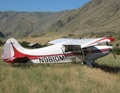
am headed to J C on sunday for my annual 2 weeks... been going there for almost 15 years now... there isn't a gradual climb route to JC from McCall unless you head down to cascade. over to landmark and left for a decent into JC... the mts will probably be too high for a 0300 170 to follow the road from Mc call.... all of what Hammer said is gospel... if you're still there no Sunday I'll share a beer or two... Maule M4 ...9810M... enjoy....
Mon Jul 17, 2017 4:10 am
Re: First Time to Johnson Creek
Sorry that we missed you. We camped two nights and headed out early Sat. morning to take advantage of the cooler air. Great place and met some very nice folks. Spent last night at Three Forks, Montana, heading east this morning. Thanks to all for the great advice. We did go in and out by way of Cascade to be cautious. Fueled up there Sat. morning, nice people.
Tue Jul 18, 2017 3:10 pm
Re: First Time to Johnson Creek
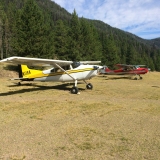
Looks like iceman is parked right up front at JC, hopefully having fun!
- propeller26 offline
- Posts: 174
- Joined: Mon Mar 12, 2007 9:30 pm
- Location: Redding, CA
- Aircraft: Cessna 185 Skywagon
DISPLAY OPTIONS
Who is online
Users browsing this forum: Josef and 5 guests
Latest Features
-
-
Featured Bush Planes
As one of the undisputed legends of bush flying, the Cessna 180 hauls a…Read More -
Aircraft Ownership and Maintenance
9 modification mistakes aircraft owners make when trying to "bush out" their birds—why some…Read More -
Live to Tell
A Minnesota pilot is surprised to learn that the sudden asymmetric drag of an…Read More




Latest Knowledge Base
-
Destinations
Canada offers some of the most spectacular backcountry flying on the continent. Here's what you need to know before you go.Read More -
Safety and Survival
Hope that you never have to use your survival vest but knowing you have it and knowing how to use…Read More -
Destinations
A regional guide with ideas for winter camping destinations in California, Nevada, New Mexico, and Arizona.Read More -
Aircraft
Finding an affordable aircraft that can handle the backcountry for $80K or less? A challenge for sure, but with the…Read More



