Backcountry Pilot • Fuel tank and reserve management

Fuel tank and reserve management

Share tips, techniques, or anything else related to flying.
43 postsPage 1 of 31, 2, 3

Fuel tank and reserve management

This topic was split from thread "Fuel access in the backcountry." -Zzz
------------------------------------------------------------

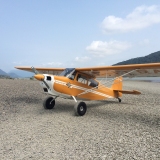
Since I installed a tapered header tank in the S7-S, WITH a sight gauge, it has greatly increased my perceived fuel security situation. It holds 3 gallons, and is always full, being below the mains. But when I am cutting it close, I know from experience that once the fuel disappears from the wing tank sight gauge,(from the side that always drains first, the left on my plane, I run both sides at the same time, keeping it as simple and idiot proof as possible) I have about 45 minutes of flight time left more or less.

After about half an hour, I'll start turning around every few minutes (it amazing how flexible you can get when you have to) and eyeball the header tank gauge. Then, once I see air in the top of the gauge, and I usually am flying at max economy at this point, I STILL have a good 45 minutes to an hour. I can see every last drop, point being. For future reference, I once ran it out totally, while still having more fuel in my ferry tank (plumbed into the mains via a transfer pump as usual). I wanted to see if the Rotax would puke and stumble, or just quit. It just quit, like right now, since I was watching the fuel pressure gauge I had maybe 30 seconds of warning, it went a bit hinky before any audio cues. One thing I learned from doing this is that the tapered design of the header tank means the rate of descent of the remaining fuel level (per inch per minute) increases as you near total exhaustion, that's an important detail for me to keep in mind. :shock: But the really interesting thing I learned, is once I totally ran out the fuel lines to zero and the motor stopped, was that once I turned the valve that connects the transfer pump to the ferry tank and the wing tanks, and hit the panel mounted switch, and then just a second or two later hit the starter, the motor re started INSTANTLY, and ran normal, the transfer pump easily supplying more fuel then it needs, with the excess going up into a wing tank as normal. So, I can "run out" of fuel so to speak, a few times before I am really out of fuel. Twice, coming home from xc's, I pushed it a bit and landed with 1.5 to 2 gallons in that header, but I was over friendly and familiar terrain that would have been no big deal to dead stick into, I would find it hard to go back to not having simple sight gauges and in particular a header tank WITH a sight gauge, and a tapered header at that. Worse comes to worse, it would make the NTSB investigation easier, "NOT A DROP OF FUEL WAS FOUND IN THE AIRCRAFT."
courierguy offline
User avatar
Posts: 4197
Joined: Thu Mar 31, 2005 6:52 pm
Location: Idaho
"Its easier to apologize then ask permission"
Tex McClatchy

Re: Fuel in the back country

Running a Cardinal out of gas on a pipeline patrol, resulted in the only one of my forced landings that was investigated. Because trying the boost pump restarted the engine for five seconds and messed up my approach to the long way on an eighty, "Not a drop of fuel remained." I got an AOPA Legal Services lawyer and beat a suspension.

An energy management turn to the short way on that eighty got me down with only a skin tear on the stabilator from a steel fence post when I flaired after landing short and then jumped the fence. My tactical situation and life in general was always fluid.
contactflying offline
Posts: 4972
Joined: Wed Apr 03, 2013 7:36 pm
Location: Aurora, Missouri 2H2
Download my free "https://tinyurl.com/Safe-Maneuvering" e-book.

Re: Fuel in the back country

Curious guy that I am, how'd you (or spouse, or...) manage to get so low on fuel that you landed with -.3 gallons useable, or less than 3 gallons, or with just a little fuel? What led you to get that close?

I've learned the lucky way (no bent metal) that frequent power changes to deal with strong variable winds really blows my fuel calculations out the tailpipe. I still had 30 minutes before silence, but lucky for me decided to land at KOLY for gas... and was really surprised I was so close to gliding. Next stop was 30 minutes away and northwest of Hurricane Ridge and the Olympic range. And it was night. No foul, no accident, and long, long ago. It made an impression on me. Even with long range tanks I'm partial to tankering a bit of extra fuel.
PapernScissors offline
Posts: 419
Joined: Sun Mar 06, 2016 8:49 pm
Location: Spokane
Aircraft: Cessna 172

Re: Fuel in the back country

For decades (and no I am not exaggerating) every airplane I've owned or worked has been equipped with a fuel flow computer of some flavor. I've had a couple instances where I cut it a little close. And that is scary stuff indeed if you're flying in country that is inhospitable to off airport landings.

"Estimating" fuel burn and tankering fuel offers many opportunities to screw up....headwinds, unexpected diversions for weather or ??. Etc.

After I parked a 185 on a mountain side in 86, our aircraft division was putting together a spec for a replacement airplane. They called me and asked me what I wanted in the panel. My answer was a GPS and a fuel flow computer, period....to me everything else was excess weight.

My current airplane is the only one I've flown recently without a fuel computer (no electrical system) and I really miss it. I find that I fly around with a lot of excess fuel.

Summer before last I headed for OSH, and planned my fuel stops based on AOPAs airport info. One stop in SD I arrived with ~ an hour + fuel remaining, and found no gas available. Took off and pressed on to Mobridge, about 40 minutes further. Landed with about 40 minutes in the tanks......didn't like that at all.

Be careful out there. Even suggesting that an off airport forced landing due to fuel exhaustion is a viable option is a fool's game.

MTV
mtv offline
Knowledge Base Author
User avatar
Posts: 10515
Joined: Sat Feb 25, 2006 1:47 am
Location: Bozeman

Re: Fuel in the back country

"Be careful out there. Even suggesting that an off airport forced landing due to fuel exhaustion is a viable option is a fool's game."

That's a bit harsh, it all depends on the pilot, the plane, and the terrain. And remember, I'm an old ultralight aircraft pilot (and it shows, still, like on this topic) and we used to land deadstick all the time, so I have a totally different take on the technique (not the end of the world) then a gen av pilot. And how many hours that pilot gets in flying deadstick every year, I got 3.5 in last year, similar to most. OF COURSE, for most pilots, and for most planes, it's not a viable option, and I wasn't suggesting it was, sorry if it came off that way. I suppose we should just post here what the safety ideal is, not what what some of us actually do from time to time, but what fun would that be? One of the more interesting things about this forum is the very wide range of pilot experience, you have yours and I have mine, and they are not the same. I post about doing some things others don't, for whatever reason, but I'm pretty sure anyone with any brains can read a comment like mine about planning to land deadstick IF I ran out of fuel, and not need to have it pointed out that it may not be prudent for them.
courierguy offline
User avatar
Posts: 4197
Joined: Thu Mar 31, 2005 6:52 pm
Location: Idaho
"Its easier to apologize then ask permission"
Tex McClatchy

Re: Fuel in the back country

courierguy wrote:"Be careful out there. Even suggesting that an off airport forced landing due to fuel exhaustion is a viable option is a fool's game."

That's a bit harsh, it all depends on the pilot, the plane, and the terrain. And remember, I'm an old ultralight aircraft pilot (and it shows, still, like on this topic) and we used to land deadstick all the time, so I have a totally different take on the technique (not the end of the world) then a gen av pilot. And how many hours that pilot gets in flying deadstick every year, I got 3.5 in last year, similar to most. OF COURSE, for most pilots, and for most planes, it's not a viable option, and I wasn't suggesting it was, sorry if it came off that way. I suppose we should just post here what the safety ideal is, not what what some of us actually do from time to time, but what fun would that be? One of the more interesting things about this forum is the very wide range of pilot experience, you have yours and I have mine, and they are not the same. I post about doing some things others don't, for whatever reason, but I'm pretty sure anyone with any brains can read a comment like mine about planning to land deadstick IF I ran out of fuel, and not need to have it pointed out that it may not be prudent for them.


Actually, I wasn't addressing your post specifically, or even generally. But, I guess if the shoe fits...... :roll: .

I agree that every pilot SHOULD be competent and current in power off landings. That is not what I was discussing. I have over the years had to land an airplane without power (or with power at idle) three times. Twice I was over or near landable surfaces. Once not so much.

And THAT was my point....there are a LOT of parts of the country where a successful off airport landing is very unlikely.....even in an ultralight or sailplane. I'm defining "successful" as not wrecking the plane, and not injuring any participants.

In my opinion, to fly an airplane low on fuel, assuming it's safe because you can always land safely anywhere you fly is indeed a fool's game.

Your mileage may vary.

MTV
mtv offline
Knowledge Base Author
User avatar
Posts: 10515
Joined: Sat Feb 25, 2006 1:47 am
Location: Bozeman

Re: Fuel in the back country

.
Last edited by glacier on Wed Feb 03, 2021 6:16 am, edited 1 time in total.
glacier offline
Posts: 218
Joined: Wed Oct 23, 2013 9:53 am
Location: .

Re: Fuel in the back country

I carry plastic jugs all the time, one or two 5 gal, to avoid the lengthy detours and waste of time to find pump fuel. Also the flexibility to "park" return fuel and do local flying with 1/2 tanks or less. Weaving around mountain valleys and trenches, headwinds, weather is always a wildcard that I need contingency for. I've considered bladders, but pricey and the opinions on this thread don't support the expense.

Bad weather decisions are driven by low fuel. My old chief pilot always told me to refuel at the second last fuel stop available, just in case one or the other was out of fuel.

Like MTV I got spoiled with fuel computers wired through FMS/GPS/loran(gasp) in my commercial flying. Would now like to add one to my plane because I know I tanker extra "just to be sure".

I've flown Texas and Midwest, and the northwest coast is unforgiving to a wheeled airplane engine quitting, though I've successfully deadsticked a few floaters.
Karmutzen offline
User avatar
Posts: 711
Joined: Tue Apr 24, 2012 7:47 pm
Location: Great Bear Rainforest
'74 7GCBC, 26" ABW, Aera 660 feeding G5 and FC-10 FF.

Re: Fuel in the back country

Since I was the only poster on the thread bringing up the deadstick landing fuel exhaustion thing, yeah, I took it as being called a fool, or at least foolish, my bad I guess. But re-read my initial comment, I was, in the event I referred to at altitude over friendly terrain. Both in ease of landing and also owned by rancher friends that I could have got more gas from! I land these fields all the time, winter and summer, and have for 38 years up here. If I couldnt land deadstick there, I'd give up my mancard. Different strokes for different pilot experience and aircraft capabilities, I built my plane, thing I want to bend it? Carry on, good thread. BTW, also in the event I mentioned, my fuel management was right on, landing with 30 min. reserve (or is 45 min. the "official" min. day VFR reserves?), close enough.
courierguy offline
User avatar
Posts: 4197
Joined: Thu Mar 31, 2005 6:52 pm
Location: Idaho
"Its easier to apologize then ask permission"
Tex McClatchy

Re: Fuel in the back country

Not that it's smart to fly through it, but a reserve is a planning tool to ensure you don't run out of gas. It's not illegal to fly into that reserve if it's ultimately required. It's just illegal to knowingly take off with less than 30min day and 45min night reserve (at a normal power setting fuel burn) for VFR flight.


Sent from my iPhone using Tapatalk
CamTom12 offline
User avatar
Posts: 3705
Joined: Sun Jul 08, 2012 1:08 pm
Location: Huntsville
FindMeSpot URL: https://share.delorme.com/camtom12
Aircraft: Ruppe Racer
Experimental Pacer
home hand jam "wizard"

Re: Fuel in the back country

There is a lot of good data from experience here. I would have had far fewer fuel management and engine failure problems had I been as careful as either MTV or Cary. I would have died had I not been as comfortable with forced landings as courierguy.
contactflying offline
Posts: 4972
Joined: Wed Apr 03, 2013 7:36 pm
Location: Aurora, Missouri 2H2
Download my free "https://tinyurl.com/Safe-Maneuvering" e-book.

Re: Fuel in the back country

I had two low fuel experiences in my younger, foolisher years which caught my attention.

The first was in the mid-70s in the Skylane, returning from a vacation to see family in the Midwest. We were over eastern Nebraska with plans to refuel at Lincoln, but a quick conversation with the Lincoln Tower told me that the FBO was closed for the night--ol' Dummy here hadn't thought to call to see when they closed. So we motored on to Grand Island, which is only a half hour farther. We had come from Logansport, IN, but hadn't refueled there, because we'd left Concord Airport, OH with full tanks, and the Skylane had 6 hours of fuel, which meant 5 hours plus an hour reserve--didn't it? Doing some quick calculating, I was sure that there was plenty of fuel. What caught my attention was that when the rampy at GRI finished topping off the tanks, those 78 gallon tanks took 77 gallons--we'd been running on fumes in the dark.

Then some years later in our brand new T210, my teenage son and I were returning from a wedding in Detroit, enroute to Denver to pick up a blind date (my clerk's sister) and her daughter. I'd planned to run one tank dry and arrive at what is now Centennial Airport on the other tank. I warned my son of what I was doing, and as soon as the fuel pressure started dropping, I switched to the fuller tank and turned on the boost pump. But the engine died, and it seemed to take close to forever for it to catch again--long enough that my son asked, "Dad, is the engine going to start running again?" It did start, and it ran fine. I don't recall how much gas it took at APA, but it was more than the required half hour--yet the long delay in the restart had caught my attention.

So never again have I run so low on fuel as the Skylane incident, nor have I ever run one tank dry again as in the T210 incident. And one of the earlier modifications to my current airplane was the installation of an EI FP-5L fuel computer, which is a marvelously accurate instrument that makes a huge difference in comfort. My only complaint with it is that when I had the 430W installed, I had it connected to the FP-5L so that I could see the actual mileage with just a flip of the switch--13 nm/gallon! :shock: But seriously, it allows me to fly around, doing my usual flitting joyrides here and there, without refueling unnecessarily, while giving me good information when I'm doing cross countries--just a flip of the switch tells me how much fuel I've used and how much I have left.

Cary
Cary offline
User avatar
Posts: 3801
Joined: Sun Jan 10, 2010 6:49 pm
Location: Fort Collins, CO
"I have slipped the surly bonds of earth..., put out my hand and touched the face of God." J.G. Magee

Re: Fuel in the back country

glacier wrote:...
Also, aircraft with left-right-off fuel selectors have some advantages when running low. Planning ahead in a low fuel situation should have one tank completely dry, not two tanks almost dry.


I flew my 140 this way, but mostly as a way of verifying the half-fuel point.

I'm at a loss as to why there's any advantage otherwise. I don't see how it will provide any longer duration of flight.

Whatever amount of usable fuel there is in the left or right tank is going to get burnt whether the selector is on L, or R, or Both. The idea that 1 gallon in one tank will run the engine better than half a gallon in both tanks is not born out by engine behavior when I run one tank dry. The engine doesn't sputter and revive as the last half gallon filters through; it just flat out dies, and nothing other than switching to another tank will make it run again.

If you fly on Both tanks and see that one fuel gage isn't moving, that's a pretty good indication that you don't have access to that fuel, maybe because of ice or some other blockage. Discovering that blockage after running the other tank dry is terribly rude to your passengers.

I have no real idea if there's a valid mechanical reason not to let the engine die in flight and then relight, but it's hard for me to believe that it's better than keeping the engine running.

I guess if you drained all the fuel out of one tank and then poured it in the other tank before taking off you might gain a gallon of otherwise unusable fuel, but I'd hope anyone that desperate for five minutes of fuel would have a very practical plan B and C before actually taking off.
Hammer offline
KB and Supporter
User avatar
Posts: 2094
Joined: Mon Jan 08, 2007 9:15 am
Location: 742 Evergreen Terrace

Re: Fuel in the back country

glacier wrote:...
If you fly on Both tanks and see that one fuel gage isn't moving, that's a pretty good indication that you don't have access to that fuel, maybe because of ice or some other blockage.


Or you're just in a Cessna with their magic vents. Due to cross-tank vent placement and wing dihedral, they have a tendency to suck the fuel from one tank to the other as it's consumed for a good while, until you finally get the fuel level low enough in the feeder side to break the suction. You still have all of the fuel available in flight, you just effectively draw most of it from one side as it transfers from the other. Other than alternating tanks or flying cockeyed, there's also not much you can really do about it. The newer models have an updated design that greatly lessens this phenomenon.
colopilot offline
User avatar
Posts: 491
Joined: Mon Feb 01, 2016 3:01 pm
Location: Denver
Aircraft: 57 182A

Re: Fuel in the back country

colopilot wrote:
glacier wrote:...
If you fly on Both tanks and see that one fuel gage isn't moving, that's a pretty good indication that you don't have access to that fuel, maybe because of ice or some other blockage.


Or you're just in a Cessna with their magic vents. Due to cross-tank vent placement and wing dihedral, they have a tendency to suck the fuel from one tank to the other as it's consumed for a good while, until you finally get the fuel level low enough in the feeder side to break the suction. You still have all of the fuel available in flight, you just effectively draw most of it from one side as it transfers from the other. Other than alternating tanks or flying cockeyed, there's also not much you can really do about it. The newer models have an updated design that greatly lessens this phenomenon.


Interesting...I've never flown a Cessna that does that, though I don't doubt some do. Maybe Monarch caps help?
Hammer offline
KB and Supporter
User avatar
Posts: 2094
Joined: Mon Jan 08, 2007 9:15 am
Location: 742 Evergreen Terrace

Re: Fuel in the back country

Hammer wrote:
glacier wrote:...
Also, aircraft with left-right-off fuel selectors have some advantages when running low. Planning ahead in a low fuel situation should have one tank completely dry, not two tanks almost dry.


I flew my 140 this way, but mostly as a way of verifying the half-fuel point.

I'm at a loss as to why there's any advantage otherwise. I don't see how it will provide any longer duration of flight.


I have thought about this a fair bit because I've gone with a L-R-OFF selector valve in my build, due to necessity for the EFII return lines. I agree with what @glacier says, and here's why: Head pressure and fuel tank port coverage. 2 tanks with 1/2" depth of fuel in them are equally sketchy when it comes to unporting a tank in an uncoordinated turn or pitch-down or whatever pattern/approach maneuver may occur. But a single tank with 1" of fuel depth could possibly afford you a little more insurance against unporting.
Zzz offline
Janitorial Staff
User avatar
Posts: 2855
Joined: Fri Oct 08, 2004 11:09 pm
Location: northern
Aircraft: Swiveling desk chair
Half a century spent proving “it is better to be thought a fool than to open your mouth and remove all doubt.”

Re: Fuel in the back country

Zzz wrote:
Hammer wrote:
glacier wrote:...
Also, aircraft with left-right-off fuel selectors have some advantages when running low. Planning ahead in a low fuel situation should have one tank completely dry, not two tanks almost dry.


I flew my 140 this way, but mostly as a way of verifying the half-fuel point.

I'm at a loss as to why there's any advantage otherwise. I don't see how it will provide any longer duration of flight.


I have thought about this a fair bit because I've gone with a L-R-OFF selector valve in my build, due to necessity for the EFII return lines. I agree with what @glacier says, and here's why: Head pressure and fuel tank port coverage. 2 tanks with 1/2" depth of fuel in them are equally sketchy when it comes to unporting a tank in an uncoordinated turn or pitch-down or whatever pattern/approach maneuver may occur. But a single tank with 1" of fuel depth could possibly afford you a little more insurance against unporting.


Well, maybe. But aren't you actually doubling the chance of unporting? After all, if you slosh all the fuel to the left and you only have fuel in the left tank, you've got zero. If you have half your fuel in the right tank, you're golden.

Besides, it's not a direct shot from the tank to the jugs. There's a reasonable amount of fuel between the tank and the cylinders. You'd have to unport the tank for more than just a few moments to go sputter, as evidenced by the number of people who taxi and take off with the fuel selector set to Off.
Hammer offline
KB and Supporter
User avatar
Posts: 2094
Joined: Mon Jan 08, 2007 9:15 am
Location: 742 Evergreen Terrace

Re: Fuel in the back country

Hammer wrote:Besides, it's not a direct shot from the tank to the jugs. There's a reasonable amount of fuel between the tank and the cylinders. You'd have to unport the tank for more than just a few moments to go sputter, as evidenced by the number of people who taxi and take off with the fuel selector set to Off.


That all depends on how hard you're sucking fuel. In a high pressure fuel system, you can suck a lot of air fast, and reprime could take...I dunno how long. It's easier with a vented carb bowl to weather that air.

Anyway, this is quite far corner of a heavily drifted thread it seems.
Zzz offline
Janitorial Staff
User avatar
Posts: 2855
Joined: Fri Oct 08, 2004 11:09 pm
Location: northern
Aircraft: Swiveling desk chair
Half a century spent proving “it is better to be thought a fool than to open your mouth and remove all doubt.”

Re: Fuel in the back country

.
Last edited by glacier on Wed Feb 03, 2021 6:16 am, edited 1 time in total.
glacier offline
Posts: 218
Joined: Wed Oct 23, 2013 9:53 am
Location: .

Re: Fuel in the back country

The above unporting issues, and how they relate to which tank, both or single, is selected, is why I went with a header tank on my experimental. Any "drama" up at the mains is settled down by the time the fuel flows out the bottom of the 3 gallon header tank.

On this whole fuel issue, since I have not been to Oshkosh since 1988 (lots of reasons why, didn't miss it for one) and I have relatives back east, I am starting to ponder going this year. IF I do, I will make the entire flight there and back on mo gas. Now that's no big deal, as the suitability of mo gas, even E-10 mo gas, and the Rotax is a no brainer, everyone I know that flies with a Rotax uses mogas, though many draw the line at E-10. But when they go XC, they revert to buying av gas, but I have the means to get my own mo gas, using my electric bike, trailer, and fuel bladders. Anyone know of others making the trip all on mo gas? Sure, it can be a PITA, if you're in a hurry, I won't be, or I won't go. It will for sure add to the challenge, and in fact that challenge is the main reason I would make the trip. There, I said it, now the pressure is on to do it! On the other hand, I have not worn out Wyoming, Utah, Montana, or my home state of Idaho yet, I still am not bored flying "local," so it's hard to go elsewhere.
courierguy offline
User avatar
Posts: 4197
Joined: Thu Mar 31, 2005 6:52 pm
Location: Idaho
"Its easier to apologize then ask permission"
Tex McClatchy

DISPLAY OPTIONS

Next
43 postsPage 1 of 31, 2, 3

Who is online

Users browsing this forum: No registered users and 3 guests

Latest Features

Latest Knowledge Base