please don't get all sideways on me and hide in a cave somewhere if I post my opinion
I have been biting my tongue on this one because it seems like every time I share my opinion, one of the Nevada crew they get their panties in a bunch and signs off for good
 But what they hey... I'm sorry if I gotta call foul when I see it...
mr scout wrote:I wonder if any of you guys ever do any of this crap more than once.
All the whining about power on and the engine quiting.
Whining? It's called conversation, and interaction. It's a lot more stimulating than having someone who doesn't know you from Moses bark at you because they think you are clueless... Interestingly enough all the internet 'know it alls' I have met have been dismal sticks at best, but some of the humble guys have been truly amazing

mr scout wrote:I flew with a guy this week that spent two hours telling me how when the engine quits, your gonna be in the weeds, so on a hang it on the prop power on approach guess what I shut it off.........oh were gonna die!!!! guess what jr, push the nose down hard and ill be damn we made the runway.
I use power on approaches in all and every landing... undoubtedly the vast majority could have been made glider style. Unlike my Mr Scout though, I will fess up and say it's because I am just too damn lazy to fly a stabilized approach. This is no different than the 3pt / wheelie argument, lets face it absolutely every landing is going to end with the engine OFF This is not rocket science. Take a look at your stall speed with the power off, and then look at the stall speed with just a touch of power. It's very fashionable to claim you carry a ton of power on approach, but the truth is in most birds, that will put your tail down way before your mains. If the field is that short it is likely to be rough, and I myself do not want my t/w down first in the rocks. The stall speed difference with *just a touch of power* is going to be one or two mph different, most of the 'backcountry wonders' I've witnessed could make up for that difference by simply learning how to hit the intended touchdown point....
Mr Scout, you pax was clearly over doing it... but you just made his point for him. By chopping the throttle and making the field you proved that the "chop and drop" was not necessary
 But guess what, go back and watch someone flying behind the curve into somewhere that it is necessary, and I bet you dollars to doughnuts fine sir, that not only will they not make the field if they chop the power, they won't make the field if they simply retard the power...The whole point of that technique is for the wing to quit flying when you chop....
  If you are still flying when you chop, perhaps you could use a little dual?
mr scout wrote:High flat approach, where you gonna do those? you guys are just full of bad info for the rookie thinking you guys are real pilots.
I might ask where is the average joe going to take any airplane that couldn't be landed without power?
While learning to soar I noticed all glider pilots are snobs to powered pilots... now I understand... A bronze badge (read:rookie) the applicant will perform an accuracy landing to be no more than 500' total from intended touch down to stop. However most will accept no more than 400' max in a Schweitzer 2-33. I will have to dig a little, But as I recall on my commercial check ride I got +/- 100' for accuracy and 200' room to land. All that with no engine, and one dismal brake on a single wheel (not a bushwheel BTW...) I am not a good stick, but I got her done...
If more powered pilots learned energy management, to compliment the engine management there would be less Nevada guys signing on with aliases to defend CFIs that land in playgrounds
Mr Scout, I say again, I land with power all the time, and agree with your intention, just not your method of delivery
I hope you don't get all busted up over this because I enjoy your posts and would love to look you up next time I'm in your neck of the woods to wring out the wings together... oh and one last note:
mr scout wrote:Maybe those of you that ended up in the weeds for being stupid should have that in your signature so the new guys know.
Take care,
Rob, aka:been in the trees, weeds and wires....


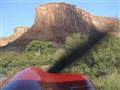
 I typically fly my approaches at 67mph with a little power...yeah, those 3mph make a difference when it comes to how much she'll float. I plan to decrease my speed by increasing my angle of attack and thus flying a steeper approach. I'll do this in steps and hopefully be able to slow my approaches to the 60mph range. I practiced 60mph approaches but they were done very flat and most of my speed was in the horizontal direction so the ground roll wasn't much shorter than a standard approach. I'm hoping to get my ground roll down under 500ft. My current best is 700ft but 900ft is what I expect to use on most of my landings. With Big Bar being only 1100ft long it makes me nervous to give it a try with only 300ft of extra runway.