Backcountry Pilot • Hand held radio...which one? Part II

Hand held radio...which one? Part II

Avionics, airplane covers, tires, handheld radios, GPS receivers, wireless Wx uplink...any product related to backcountry aircraft and flying.
33 postsPage 2 of 21, 2

Re: Hand held radio...which one? Part II

WWhunter wrote:I think a hand held radio should be easy to use, ergonomic, intuitive, have good power, easy to get battery power, have standard antenna connectors (Yaesu does not)

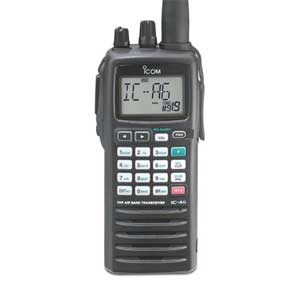
Yaesu FTA-550 has standard BNC antenna connector.
n144sh offline
Posts: 21
Joined: Tue Jul 19, 2011 8:24 pm
Location: Sisters, OR

Re: Hand held radio...which one? Part II

I have a 12 year old Yaesu (actually a Vertex Standard VXA 210, before Yaesu bought them or otherwise started marketing them under the Yaesu brand). It is built like a tank, and although I'm not likely to do this, I think I could drive over it without damaging it. I have looked at the newer versions, and they seem similarly stout. However, my radio, and I believe the newer versions, are about as user unfriendly as any handheld could be, to the point where I have downloaded into my iPad the operating instructions. If I don't use it for any length of time, I can remember how to turn it on and change frequencies, but that's about it--and yet it's capable of much more.

I'd also have to say that unless things have changed at Yaesu in the last couple of years, their customer service is lousy. I sent several emails to their "customer service" email address, asking about getting a new rechargeable battery pack, and they were never answered. Fortunately I found a new rechargeable battery pack at the battery vendor at OSH a couple of years ago.

Before I found that the battery vendor could provide a new rechargeable pack, I looked at all of the handhelds being hawked at OSH. The simplest to operate were the lower end Icoms, with almost no bells or whistles. But they don't appear to be built nearly as sturdily as the Yaesus.

One last thing: older Yaesus and Vertex Standards had a screw in antenna connector. I was able to find an adapter for the more common BNC connector at a marine Yaesu dealer in BC. Now they have a BNC antenna connector. This is pretty important, because the only company that seems to make an adapter kit to allow the radio to be connected to the airplane's antennas is made by Icom, which also uses BNC connectors. Without connecting the handheld to the airplane's exterior antennas, almost any brand will be close to useless. My transmitting range with only the rubber ducky antenna while inside my airplane is about 5 miles. Connected to the exterior antennas, it exceeds 35 miles.

Cary
Cary offline
User avatar
Posts: 3801
Joined: Sun Jan 10, 2010 6:49 pm
Location: Fort Collins, CO
"I have slipped the surly bonds of earth..., put out my hand and touched the face of God." J.G. Magee

Re: Hand held radio...which one? Part II

Wow. A lot of good information has been put up. I've added a few images down below.

I am beginning to lean towards the Yaesu FTA550A which uses a regular NiMH or Alkaline AA cell (x6) battery back, although you can retrofit a lithium battery later as well if that floats your boat.

* Yaesu FTA550A has a larger screen ( 1.7” x 1.7”) than either the Sporty’s SP400 (1.63” x 1.63”) or the Icom A6 (?” x ?”; it looks smaller when compared side by side)

* The Yaesu has a removable BNC connector rubber ducky antenna that can be removed to run coax to a dash or window mount antenna. Same for Sporty’s SP400 and Icom A6.

* Yaesu FTA 550A buttons are large and comparable to those on the Icom A6. Sporty’s SP400 are maybe a bit better.

* Yaesu FTA550A offers a speaker mic option, either a Yaesu OEM unit ( for about $60) or a cheaper compatible speaker mic by Pryme (< 30 dollars). Sporty’s SP400 lacks a speaker option. Icom A6 also offers a speaker mic.

* Yaesu FTA550A offer use of the battery cell pack or one can later buy the lithium pack, but that’s not my choice; I prefer using simple always available AA Cells.

* Price: The Yaesu FTA550A can be had for $ 189 brand new from some of the internet pilot supply sources. The Icom and Sporty's units are a wee bit more..


Yaesu FTA550 ( and FTA750) showing large screen
Image

Icom A6 for comparison. Smaller screen
Image

Sporty's SP400 for comparison. Similar screen and perhaps the best button size/spacing ergonomics.
Image

Optional Yaesu speaker mic
Image

Pryme SPM 100A Speaker Mic compatible with Yaesu FTA550A for <$30.
Image
Denali offline
User avatar
Posts: 809
Joined: Sun Sep 16, 2012 1:30 am
Location: East Coast USA

Re: Hand held radio...which one? Part II

I posted here a few days ago and would like to add a couple of comments.
The problem with Icom and Yeasu and the others is that they have no idea what is really needed in a aviation handheld. They are all versions of their Ham/commercial radios and are not at all tailored to aviation use. Can I say here that it really pisses me off. The Icom A6 I have is so unfriendly.....the battery icon only comes into view and flashes when the battery is about dead. What good is that?
I readily admit I am not the sharpest card in the deck but I have flown everything from the J3 to a 747-400 and trying to remember how to select the freq on one of these radios is the worst.

Sorry for the rant but its one of my biggest gripes. The biggest is when you turn the key off in your car with your lights on and it either beeps at you or does nothing and leaves the headlights on. Why doesn't it, like in my 96 Saab, just turn the lights off with the key?

OK I'am done; ya all have a safe day flyin
a3holerman offline
User avatar
Posts: 278
Joined: Mon Oct 05, 2015 7:29 am
Location: Cape Cod
Aircraft: Cessna 185

Re: Hand held radio...which one? Part II

Good information and a nice recap. I'm glad to see Yaesu has changed the antenna connector.

You need to focus on how you will use the radio.

Is this an emergency radio, one you will use when your regular radio is out, maybe even when your plane electric is out? If so, you may be in bad weather or otherwise in a tense situation. You need a radio that you can easily and intuitively operate, preferably with one hand, or hand to a passenger who can operate it while you aviate and navigate. You need as a minimum to tune 121.5 with one button push, change frequencies without remembering a lot of button pushing and it's best if it takes batteries you can replace from some spares on hand or it can run off ship's power if you have it. It's very unlikely you will reprogram in use.

Are you going to use this a primary radio in your J3 or Champ, as I did? You can program it ahead of time, but if you get outside the area you usually fly, you still need to be able to change frequencies and replace power. You can print and carry your little cheat sheet and that can help, especially if you can land and reprogram.

With both uses, it's essential you have the ability to plug in an external antenna and to plug it into your headset. A push button you can velcro to the control stick/yoke is very nice, although this can get to be a bit of bother if you are in trouble. But, if you can't hear and talk, the radio is a distraction - worse than not having one at all.

BTW, at our ham radio meeting last night a bunch of us tested our radios for spurious emissions per the QST article. My Icom and Yaesu hand held aviation radios passed the test. The Bao Feng 2m hand held did not - it was way out.
jnmeade offline
Posts: 25
Joined: Mon Sep 28, 2015 4:19 pm
Location: Iowa City
Aircraft: FD CTSW
Laister LP-49

Re: Hand held radio...which one? Part II

.
.
a3holerman wrote:

The problem with Icom and Yeasu and the others is that they have no idea what is really needed in a aviation handheld. They are all versions of their Ham/commercial radios and are not at all tailored to aviation use. Can I say here that it really pisses me off.

Boy, am I really totally on board with these comments. I think one of the problems is that in order to drive sales they really over stuff too many features into a unit at the expense of easy function and ergonomics. The idea of making things smaller is a good idea, but in my opinion it is now being carried too far. It's actually a problem with a lot of ham radio gear as well. For economics of scale, I can see why the manufacturers crank out aviation hand held units that are often just slightly modified ham gear. Personally, I don't really need 500 memories, be it a ham radio or an aviation band unit. When my thumb can mash 6 buttons at one time, something is wrong.

The Japanese engineering philosophy also seems to not mind lots of tiny buttons with multi level embedded functions. The idea of being able to use a unit with one hand with thick gloves on is not a high concern. I almost wish that the Russians, given how they build many of their aircraft, AK47s, and radial engines, offered an aviation band Hand Held... I bet you could use it to chock your plane in a blizzard, then accidentally run over it, and then grab it with thick gloves, scrape off the ice, and still use it by pushing a single button or twisting a big rubber knob.

In looking at all the Hand Helds right now, I agree with 3holerman, the ergonomics are dreadful. How about having:

Larger buttons with distinct groupings, shapes, and/or colors with big labels that are easily identifiable.

Ability to easily increase font size of the display readout information using a one touch button.

Tougher, more rugged design including displays that will not easily crack or scratch.

Somewhat more weather proof and water resistant (not necessarily water proof) design

A big button to allow easy release and swap out for a fresh battery back. No tiny plastic hard to fiddle with release slides that can break in the cold.

Fewer features to provide improved usability and easier menus.

The unit does NOT HAVE TO BE OH SO MINIATURE AND TINY.. I 'd like to see a little heft.

I need a simple RAMBO style hand held basically.


My .02 cents worth.
Denali offline
User avatar
Posts: 809
Joined: Sun Sep 16, 2012 1:30 am
Location: East Coast USA

Re: Hand held radio...which one? Part II

I dunno guys. With both the radios I have I just punched in the frequency I wanted and used the flip-flop feature that they both have...easy peasy. I remembered the reason I liked the RHP better is because the flip-flop feature is just like a panel mount radio where the A6 flip-flop actually remembers the last few frequencies so it's a bit different. Honestly I liked using either of them way better that the king panel mount that was in the Bearhawk; I missed breaking able to just punch in the numbers.
whee offline
User avatar
Posts: 3386
Joined: Fri Jan 20, 2006 1:59 pm
Location: SE Idaho

Re: Hand held radio...which one? Part II

Re: Hand held radio...which one? Part II

Wow. A lot of good information has been put up. I've added a few images down below.

I am beginning to lean towards the Yaesu FTA550A which uses a regular NiMH or Alkaline AA cell (x6) battery back, although you can retrofit a lithium battery later as well if that floats your boat.

* Yaesu FTA550A has a larger screen ( 1.7” x 1.7”) than either the Sporty’s SP400 (1.63” x 1.63”) or the Icom A6 (?” x ?”; it looks smaller when compared side by side)

* The Yaesu has a removable BNC connector rubber ducky antenna that can be removed to run coax to a dash or window mount antenna. Same for Sporty’s SP400 and Icom A6.

* Yaesu FTA 550A buttons are large and comparable to those on the Icom A6. Sporty’s SP400 are maybe a bit better.

* Yaesu FTA550A offers a speaker mic option, either a Yaesu OEM unit ( for about $60) or a cheaper compatible speaker mic by Pryme (< 30 dollars). Sporty’s SP400 lacks a speaker option. Icom A6 also offers a speaker mic.

* Yaesu FTA550A offer use of the battery cell pack or one can later buy the lithium pack, but that’s not my choice; I prefer using simple always available AA Cells.

* Price: The Yaesu FTA550A can be had for $ 189 brand new from some of the internet pilot supply sources. The Icom and Sporty's units are a wee bit more..


Really good compilation, thanks. One thing, I just stopped by AS and their Yaesu FT550A is $199, but, it is with the AA case. Add another $100 for Li Ion

Something that some may be interested in, in one of my planes I wanted a handheld only, due to the panel, and it was to be mounted beside me. I purchased a linear amp and it boosted the output to 10 watts, which is the same I believe as a panel mount radio. Worked great.
Zenithguy offline
Supporter
User avatar
Posts: 215
Joined: Sun Aug 25, 2013 9:15 pm
Location: Newport Beach

Re: Hand held radio...which one? Part II

Great discussions here….

.
. Zenithguy wrote:
I purchased a linear amp and it boosted the output to 10 watts, which is the same I believe as a panel mount radio. Worked great.
Years ago I wrote to PS Engineering about this, and the president/owner of the company I believe is also a ham radio operator. Anyway, I am a tad fuzzy on the exact details, but I am not sure whether an amplifier, home-brewed or otherwise, in this frequency range is permitted unless it is FCC approved. Issues with spurious radiation, birdies on certain harmonics, bleed over, signal bandwidth, etc . can be a concern. Being an AM signal with a central carrier, there are lots of issues to look out for.

Here is an interesting link titled " Linear amp for aviation handheld " .
http://www.redwaveradio.com/2_82d8c5251b247e0b_1.htm

Here is an amp that is commercially made that seems AOK for aviation, but the company is in South Africa. It may not have FCC approval, and may not be able to be legally sold in the USA ??

http://www.pjaviation.co.za/radio/vhf-power-amplifier/
PA 25 LINEAR AMPLIFIER
This unique RF power amplifier is designed to be connected between the output of a typical 5W transceiver and the antenna. It has been designed to produce a flat power gain across the entire aeronautical band, with extremely low distortion, spurious emissions and adjacent channel interference.
Image
So Zenithguy. I am curious about your amplifier, and whether it is commercially manufactured for the aviation market. Also is it an FCC-approved amp and legal to use in the US on a transmitting device (exciter) in the aircraft band. If so, I'd love to buy one myself. I have some AM capable 2 meter (144 Mhz) broad band amps that would readily cover the VHF aircraft Band ( 118.00 – 136.975 Mhz ), but I’m not sure it’s quite kosher to use such an amp. I'm curious about all this. I don’t know for sure about what's allowed, and maybe others can chime in. I am pretty certain my ham amps are not permitted. Maybe commercial FCC-approved AM linear amps indeed are available for aircraft band hand helds like the Yaesu FTA550A.

Several other people have pointed out how important antenna type and placement can be, and things like SWR or standing wave ratios, resonant coax lengths, and more can affect signal input/output. If you can borrow one of these “antenna analyzers “ from a ham radio operator, you can actually more effectively judge/estimate a resonant cable length for connect a remote window or dash antenna to your hand held transceiver.

MFJ Antenna Analyzer using old fashioned analogue needle and meter output display (sort of steam gauge)
Image

MFJ Graphic Antenna Analyzer up to 180 Mhz with digital display.
Image

Antenna orientation and polarization of signal are other concerns. Here are 2 good links that explain things using diagrams.

http://www.astronwireless.com/topic-archives-antennas-polarization.asp
https://www.cumulus-soaring.com/xcom/XCOM%20Aerial%20Dummies%20Guide.pdf

I know if I ever build an Experimental, I’ll probably have a second auxiliary antenna somewhere that I can connect a handheld into. This has been an interesting discussion. I have not transmitted a ham radio signal in ages, and am entirely inactive. I did just buy an old Radio Shack HTX 202 2 meter transceiver (another brick with big buttons) so I may be on the air with that soon. It will make a nice back up back up back up device for flying, although it obviously transmits only in the 2 meter ham band.

I am not an electrical engineer or electronics expert by any means. My degree is in Geology, so all you lurking EE Degree guys, I hope you will chime in. :D

Finally, if after reading all this you find yourself interested in getting a ham radio license, I'd like to make a shameless plug for the American Radio Relay League. http://www.arrl.org/ . The ARRL is for hams what AOPA is for pilots. If you are totally anal ( and lucky [-o< ) , you can even try to match your FCC assigned ham radio call letters to your FAA assigned aircraft tail number. You have to first earn the highest level Extra Class ham radio license to qualify to apply for a short four digit call sign such as N-(#)-(Letter)-(Letter). Then you have to be lucky and reserve a short matching tail number N-(#)-(Letter) -(Letter). Not all ham radio calls start with an N by the way. Other starting letters include K, W, and A. You can also talk on a ham radio on lots of other non VHF frequencies and operate what they call aeronautical mobile. Here is a picture that is so beyond cool it makes me cry. 8) The Icom ham radio transceiver is at the bottom of the stack just above the throttle prop mixture panel... and it is in a Bearhawk no less. /rant :D

Image
Denali offline
User avatar
Posts: 809
Joined: Sun Sep 16, 2012 1:30 am
Location: East Coast USA

Re: Hand held radio...which one? Part II

Image

Image

Image

I don't know if they are still in business or not, I haven't seen any of their ads for quite some time. I did purchase it through an aviation company.
Zenithguy offline
Supporter
User avatar
Posts: 215
Joined: Sun Aug 25, 2013 9:15 pm
Location: Newport Beach

Re: Hand held radio...which one? Part II

@ Zenithguy

Wow. That is really neat. I am going to patiently wait for one to pop up. Very neat indeed and thanks for posting the info.
Denali offline
User avatar
Posts: 809
Joined: Sun Sep 16, 2012 1:30 am
Location: East Coast USA

Re: Hand held radio...which one? Part II

For seaplane and marine ops... I love my Cobra MR HH350 FLT! Price is unreal too.

Image
8GCBC offline
User avatar
Posts: 4623
Joined: Thu Aug 05, 2010 11:55 pm
Location: Honolulu
Aircraft: 2018 R44
CFII, MEI, CFISES, ATPME, IA/AP, RPPL, Ski&Amphib ops, RHC mechanic cert, RHC SC— 3000TT

Re: Hand held radio...which one? Part II

This August I spent 2 weeks in the Idaho backcountry. On my return to the Puget Sound the weather was foul. I planned to cross the Cascades at the gorge. While talking to Flight Watch I had a complete radio/navigation failure. I was 65 NM E of the Dalles. I have an Icom A6 in my emergency vest. Though I haven't used it in months and it is a little complex it only took a few seconds to figure out how to power it up and dial in Dalles CTAF. Every one I spoke to heard me loud and clear. I heard them clear but not loud because of cockpit noise (talking without a headset) After landing and working on the plane I found my radio/nav breaker failed. No big deal....easy fix. The A6 comes with a headset jack adapter which I didn't have with me. Lesson learned: keep that adapter in my emergency vest. Running the A6 through my head set now is a great set up. I transmit and receive with great clarity. I'm happy with it.
SkylaneSam offline
User avatar
Posts: 143
Joined: Thu Oct 06, 2011 7:38 pm
Location: Puget Sound & Idaho

DISPLAY OPTIONS

Previous
33 postsPage 2 of 21, 2

Who is online

Users browsing this forum: No registered users and 2 guests
Latest Features

Latest Knowledge Base