Backcountry Pilot • Horizontal Stabilizer Shape: Air foil vs Flat - Pros/Cons

Horizontal Stabilizer Shape: Air foil vs Flat - Pros/Cons

Aircraft building and project-level overhaul forum -- Kitplanes, experimental amateur-built, homebuilding, or even restoration of certified aircraft.
16 postsPage 1 of 1

Horizontal Stabilizer Shape: Air foil vs Flat - Pros/Cons

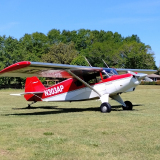
I have never built a plane and I am definitely not an aeronautical engineer. So I was wondering why some back country designs offer, when viewed in cross section, a flat and others an air foil shaped rear horizontal stabilizer. In the certified world for example the ACA Scout has a flat design and the Denali Scout offers an airfoil shape. In the experimental community the BearHawk 4 place has a rear horizontal stab with a flat design, and the Patrol has an airfoil shape.

Bearhawk 4 Place – Rear Stabilizer Flat shape
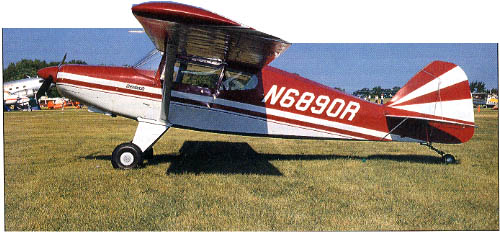
Image

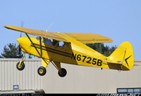
BearHawk Patrol – Rear Stabilizer Airfoil shape
Image

ACA Scout - Rear Stabilizer Flat shape
Image

ACA Denali Scout - Rear Stabilizer Airfoil shape
Image

I am guessing:

Flat shape is easier to construct, cheaper, and lighter.

Airfoil design I suppose can maybe offer smoother air flow, less turbulence, improved structural strength, can offer smoother lift forces if needed, without need for draggy trim surfaces, etc. Some Zenith designs use an inverted airfoil rear horizontal stabilizer set up to I suppose? provide desired downward force on the rear of the fuselage.

Zenith inverted airfoil design for rear horizontal stabilizer
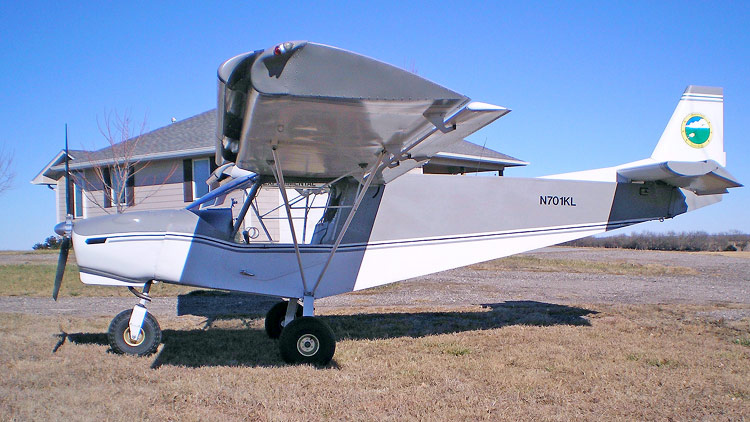
Image

I really don’t know the pros and cons, but I’ve always been curious.
Denali offline
User avatar
Posts: 809
Joined: Sun Sep 16, 2012 1:30 am
Location: East Coast USA

Re: Horizontal Stabilizer Shape: Air foil vs Flat - Pros/Con

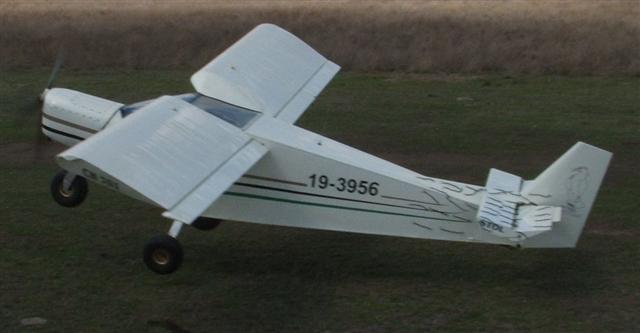
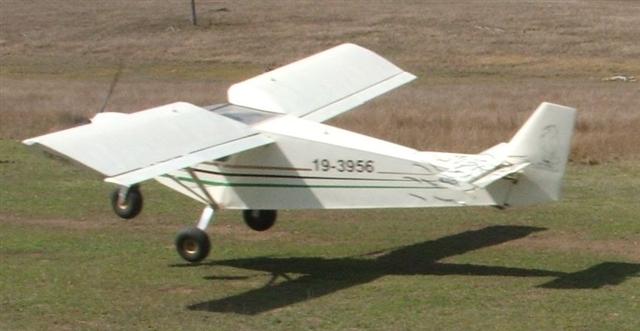
relly good comparison here of the CH701 and Savannah Horizontal stabs, using tuft testing..
http://www.stolspeed.com/tail-feathers

Image
With power, good airflow over top of elevator.

Image
without power, same elevator deflection, lower AOA, and disturbed air over elevator.

Image

Image

as for flat elevators, i am only assuming that they might have similar issues to the flat top 701 stabiliser at high AOA.
Ultralights offline
User avatar
Posts: 52
Joined: Fri Dec 24, 2010 4:04 am
Location: Sydney Australia

Re: Horizontal Stabilizer Shape: Air foil vs Flat - Pros/Con

Interesting question.

The Maule uses a flat elevator.
Mountain Doctor offline
User avatar
Posts: 641
Joined: Fri May 01, 2015 3:33 pm
Location: Richland
Aircraft: Maule MXT-7 180A

Horizontal Stabilizer Shape: Air foil vs Flat - Pros/Cons

The 4-place Bearhawk originally had a flat H-stab which is set at -4* angle of incidence. You can profile the H-stab with makes it more effective so it only needs to be set to -3*. The builders that have done this mod say it is good for about a 5mph speed increase. I plan to profile my H-stab just for the speed increase.
Last edited by whee on Mon Oct 26, 2015 12:11 pm, edited 1 time in total.
whee offline
User avatar
Posts: 3386
Joined: Fri Jan 20, 2006 1:59 pm
Location: SE Idaho

Re: Horizontal Stabilizer Shape: Air foil vs Flat - Pros/Con

Year 2009...

I was at the factory when the Denali Scout was being certified. The prototype was sitting there and I asked a few questions. Interesting note: it's the first IO390 to be certified by the FAA in any aircraft. Big step for Lycoming and ACA.

Jerry (co-owner ACA) mentioned the FAA wanted a "better/bigger" airfoil for the (IO390 Scout) horizontal stabilizers. 230HP and more weight made it the better decision to go with a conventional foil.

On my little 180HP Scout I wouldn't change anything. It flys fine with flat stabilizers. But, I have not flown the Denali Scout.

Good thread.
8GCBC offline
User avatar
Posts: 4623
Joined: Thu Aug 05, 2010 11:55 pm
Location: Honolulu
Aircraft: 2018 R44
CFII, MEI, CFISES, ATPME, IA/AP, RPPL, Ski&Amphib ops, RHC mechanic cert, RHC SC— 3000TT

Re: Horizontal Stabilizer Shape: Air foil vs Flat - Pros/Con

Airfoiled stabilizer (and fin for that matter) is a little better in all areas, except for ease of construction. Flat tail surfaces were an obvious time saver for factories building tube and fabric airframes, because it was quick easy and cheap to use the same tubes and covering laid out on a flat bench, using only one layer of tube.

This was short-sighted in some ways, because the "flat" tube and fabric stabilizers still needed wire bracing, which was extra hardware, fabrication, and assembly time.
EZFlap offline
User avatar
Posts: 2226
Joined: Thu Aug 13, 2009 9:21 am
.

Re: Horizontal Stabilizer Shape: Air foil vs Flat - Pros/Con

Listening to the hardcore bush guys, I understand why some (including myself) prefer flat airfoils in certain types of off-airport flying. Conventional airfoils are made from aluminum and can be easily damaged by airborne debris (rocks, wood, etc) during takeoff and landings. I was told chromoly 4130 is harder to damage, which makes sense to me.

At the risk of sounding redundant, I would not change mine to the Denali stab. But, I know nothing about the empirical differences.
8GCBC offline
User avatar
Posts: 4623
Joined: Thu Aug 05, 2010 11:55 pm
Location: Honolulu
Aircraft: 2018 R44
CFII, MEI, CFISES, ATPME, IA/AP, RPPL, Ski&Amphib ops, RHC mechanic cert, RHC SC— 3000TT

Re: Horizontal Stabilizer Shape: Air foil vs Flat - Pros/Con

Flat control surfaces seem to work fine with small aircraft with light control forces. For a small spray plane, the Pawnee with flat control surfaces is a real pig with more than half full hopper. The elevator is heavy. If you ever forget to set the big spring elevator trim before takeoff with a full load, you will never forget again.

The difference with the ribbed control surfaces in the Callair A-9, A or B model, is tremendous. It flies like it has hydraulic controls.

I would think there would be little difference for young pilots with good disk cushions in their back. For old guys with beat up backs, pulling back on a heavy stick is painful. Doing it several hundred times a day can get very painful.
contactflying offline
Posts: 4972
Joined: Wed Apr 03, 2013 7:36 pm
Location: Aurora, Missouri 2H2
Download my free "https://tinyurl.com/Safe-Maneuvering" e-book.

Re: Horizontal Stabilizer Shape: Air foil vs Flat - Pros/Con

Airfoil design I suppose can maybe offer smoother air flow, less turbulence, improved structural strength, can offer smoother lift forces if needed, without need for draggy trim surfaces, etc. Some Zenith designs use an inverted airfoil rear horizontal stabilizer set up to I suppose? provide desired downward force on the rear of the fuselage.


I can't speak for the others, but one reason Zenith choose the inverted airfoil because the additional effectiveness of the inverted airfoil allowed them to decrease the size of the stab, which additionally resulted in a weight savings, a big factor in lighter aircraft. Below is a picture of the airfoil on my Zenith 750.

Years ago there was quite a debate on the effectiveness of the airfoil vs a flat stab with VGs, on the smaller 701, but subsequent testing by those without a vested interest in the VGs that were marketed quieted that theory, and the new 750s also have the inverted airfoil, with VGs, The New Zealand STOL contest winners of 2014 and 2015, both 701s with the inverted airfoil, make a good argument of the effectiveness at high angle of attack of the inverted airfoil stab on the 701's. As for other aircraft, I have no idea, but the theory of achieving more downforce with a smaller surface area, hence less weight, makes sense. The additional drag, if any, I can't say, but f I wanted more cruise, I would have built a low wing Vans.

Image
Zenithguy offline
Supporter
User avatar
Posts: 215
Joined: Sun Aug 25, 2013 9:15 pm
Location: Newport Beach

Re: Horizontal Stabilizer Shape: Air foil vs Flat - Pros/Con

I'm no aerodynamicist, but it makes sense that an inverted airfoil would allow the stabilizer to be smaller and still provide the same downforce. A flat wing will fly, but it takes an increased angle of attack to accomplish the same amount of lift. That results in more drag, which either slows the airplane moreso than an airfoil wing or requires more power to achieve the same speed.

There was an interesting TV show several months back about early attempts at minimizing airfoil to attempt more speed out of the low powered engines of early aviation. The results were horrible stall effects at relatively high airspeeds, shakey controls, and many accidents. The conclusion: Except with a huge amount of power resulting in very high speeds, a fat airfoil works much better than a flat sharp wing. It requires less power, is more stable, and more controllable.

Cary
Cary offline
User avatar
Posts: 3801
Joined: Sun Jan 10, 2010 6:49 pm
Location: Fort Collins, CO
"I have slipped the surly bonds of earth..., put out my hand and touched the face of God." J.G. Magee

Re: Horizontal Stabilizer Shape: Air foil vs Flat - Pros/Con

Bellanca Crusairs had an airfoil shaped horizontal...steel tube leading and trailing and built up steel tube truss ribs. The original 14-13s also had the "elephant ears" (vertical stabs on the ends of the horizontal stabs) airfoil shaped in the same manner. When they went to the 14-13-2, they started using just a flat sheet for the vertical stabs.
John
hardtailjohn offline
User avatar
Posts: 924
Joined: Thu Mar 16, 2006 7:06 pm
Location: Marion, Montana
God put me here to accomplish a certain amount of things...right now I'm so far behind, I'll never die!!

Re: Horizontal Stabilizer Shape: Air foil vs Flat - Pros/Con

8GCBC wrote:Conventional airfoils are made from aluminum

The Bearhawk Patrol and LSA are designed with the airfoil shape with an all steel frame that is fabric covered.
jaredyates offline
Knowledge Base Author
User avatar
Posts: 38
Joined: Wed Jun 04, 2014 7:40 am
Location: Hickory, NC
Aircraft: Bearhawk 4-Place

Re: Horizontal Stabilizer Shape: Air foil vs Flat - Pros/Con

jaredyates wrote:
8GCBC wrote:Conventional airfoils are made from aluminum

The Bearhawk Patrol and LSA are designed with the airfoil shape with an all steel frame that is fabric covered.


Thank you for the information. I was not aware of that. Designed for off airport!

("Conventional = Cessna" )
8GCBC offline
User avatar
Posts: 4623
Joined: Thu Aug 05, 2010 11:55 pm
Location: Honolulu
Aircraft: 2018 R44
CFII, MEI, CFISES, ATPME, IA/AP, RPPL, Ski&Amphib ops, RHC mechanic cert, RHC SC— 3000TT

Re: Horizontal Stabilizer Shape: Air foil vs Flat - Pros/Con

No I'm not an expert in fluid dynamics, (but I did stay at a Holiday inn express last night).

First I'm most familiar with cub and tripacer tails so. The leading edge is not perpendicular to the airflow. This creates an aerodynamic shape (cut a wood dowl at an angle and look at the face of the cut and you'll see an oval shape.)

The leading edge of the elevator is a 1" tube but the elevator is tapers to a smaller tube in the trailing edge so the H stabilizer is an "aero foil". That said I believe the flat surface area that is created behind the leading edge does not hold the boundary layer as well as one where the shape extends the length of the stabilizer.

Inverted airfoils are designed for a reason. For example, when cub drivers experimented with slotted flaps the pitch and flutter they cause was remedied with an inverted tail airfoil.

Bottom line an aerodynamic shape will always have less drag than a non aerodynamic shape. The question become that old compromise of cost vs performance. As an example look at what Younkin did with his mystery Pacer, he achieved 155 mph at altitude with a pacer with a 320-160.
dplunkt offline
User avatar
Posts: 72
Joined: Sun Sep 25, 2011 4:39 pm
Location: pennsylvania

Re: Horizontal Stabilizer Shape: Air foil vs Flat - Pros/Con

While we're on the subject....does anyone know of a 337 for adding 006 or 009 NACA foil to the ribs on the PA18 or PA20/22 horizontal stabilizer?
m_moyle offline
Supporter
User avatar
Posts: 325
Joined: Tue Jul 08, 2014 1:42 pm
Location: Platinum
Aircraft: Piper PA 20

Re: Horizontal Stabilizer Shape: Air foil vs Flat - Pros/Con

I'm not an engineer. I was told by Bob Barrows that using an airfoil shaped horz. stab. the span could be slightly reduced. I know as a Patrol builder making the forms and hammering out all those dam tail ribs took some time. If you are a scratch builder and Mark will sell them to you, buy 'em.
Kevin offline
Posts: 170
Joined: Wed Oct 12, 2005 9:14 am
Location: Indiana

DISPLAY OPTIONS

16 postsPage 1 of 1

Who is online

Users browsing this forum: No registered users and 0 guests

Latest Features

Latest Knowledge Base