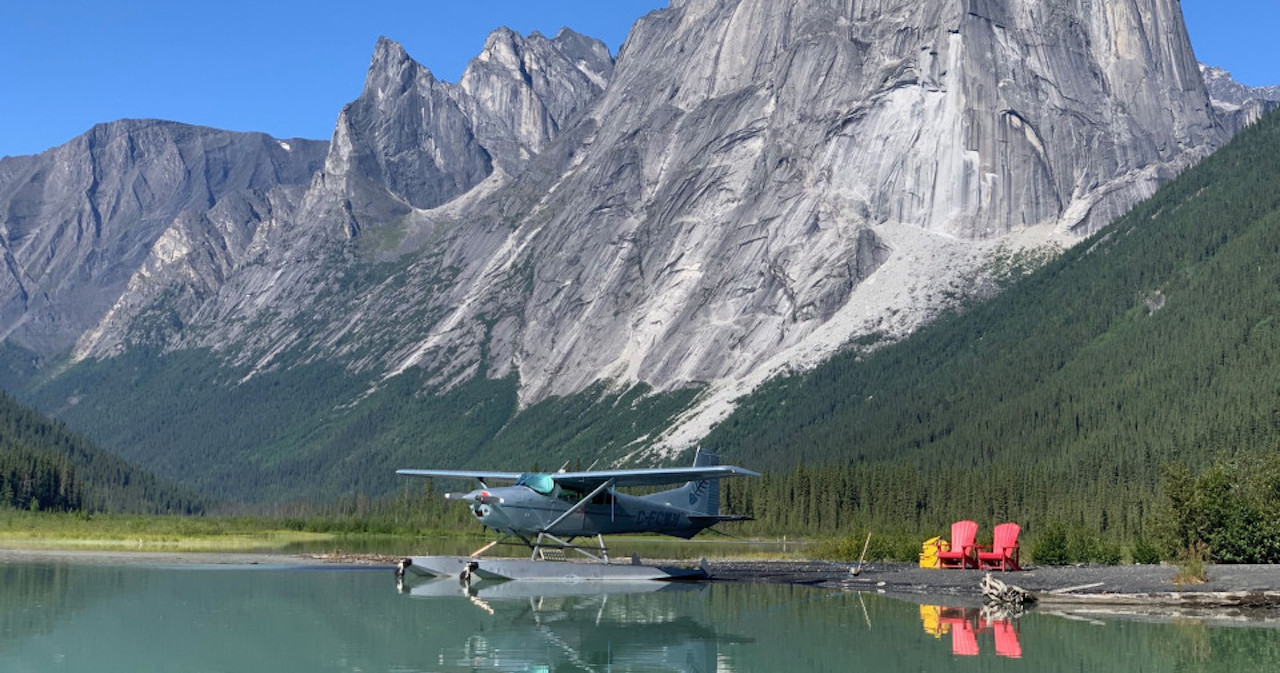
Finishing my PPL, buying a plane, modifying a plane and flying a bit then putting it on floats and learning to fly again all in a fairly short period of time pretty much maxed my ability to take on new information. I learned things that had to be learned and didn't dig much deeper.
One of the things I 'learned' was to always ensure the engine was full rich on final. I assumed it was so I would make full power on a go-round. My engine runs too rich when I pull carb heat with the mixture full rich so I got in the habit of pulling carb heat on downwind with the mixture still lean, then pushing in carb heat just before richness on final.
Over the winter I've been trying to read and learn and have read quite a bit about leaning. Turns out, lots of engines make better power when they are leaned and the reason for full rich on final is more about engine cooling than making full power. I wish I had learned that before I was struggling to take off a small-ish lake at 6000' DA last fall.
I've taken the first free chapter on the engine monitor class from Advanced Pilots Seminar that JP256 recommended and they are huge proponents of the benefits of leaning. I'm curious about the habits of other P-Ponk drivers.
- Anybody run LOP?
- Anybody do their runup with engine leaned?
- What situations merit taking off with the engine leaned?
- Is it safer to land lean with carb heat on, or with a carb heat check on downwind and a full rich, no carb heat landing?
Last, for anybody with an EDM-900 monitor, is the LeanFind function significantly different than my current method of leaning until EGT hits 1500?
I've never had carb ice and have never seen cylinder head temps too hot. I use methods recommended in the P-Ponk operating thread: full throttle, full rpm for takeoff, rpm back to 2500 for climb, then throttle and rpm back for cruise with engine leaned until EGT is around 1500.
Any advice appreciated. Allan
Leaning a P-Ponk
Fri Mar 01, 2019 11:38 am
Fri Mar 01, 2019 12:10 pm
Re: Leaning a P-Ponk
Different scenarios call for different operating procedures, though typically:
Cessna 180 — O-470R
I bring in full carb heat while the engine is still making cruise power so that its actually effective. Carb heat after power reduction doesn't compute for me.
I leave my mixture wherever it was set for cruise
Short (about to touchdown) final I close carb heat
If I go around, I want to make full power. Full rich typically doesn't accomplish this. This will obviously vary from every aircraft and every density altitude scenario.
On go around, a few turns of mixture as required to help with cooling, almost never full rich, even at sea level in the winter. My plane came from Fairbanks and she's jetted quite rich.
After seeing lead caked plugs, valves and pistons out of many planes that guys operate full rich below "????" feet, I could never be convinced to follow that procedure
In conclusion, I lean for power and enrichen to maintain good CHT as required
Can of worms opened...
Sent from my Pixel XL using Tapatalk to specifically annoy:
Zane
Hammer
Cessna 180 — O-470R
I bring in full carb heat while the engine is still making cruise power so that its actually effective. Carb heat after power reduction doesn't compute for me.
I leave my mixture wherever it was set for cruise
Short (about to touchdown) final I close carb heat
If I go around, I want to make full power. Full rich typically doesn't accomplish this. This will obviously vary from every aircraft and every density altitude scenario.
On go around, a few turns of mixture as required to help with cooling, almost never full rich, even at sea level in the winter. My plane came from Fairbanks and she's jetted quite rich.
After seeing lead caked plugs, valves and pistons out of many planes that guys operate full rich below "????" feet, I could never be convinced to follow that procedure
In conclusion, I lean for power and enrichen to maintain good CHT as required
Can of worms opened...
Sent from my Pixel XL using Tapatalk to specifically annoy:
Zane
Hammer
- TradeCraft offline

- Posts: 364
- Joined: Mon Feb 03, 2014 9:23 pm
- Location: Anchorage
Fri Mar 01, 2019 12:23 pm
Re: Leaning a P-Ponk
- Anybody run LOP?
- Anybody do their runup with engine leaned?
- What situations merit taking off with the engine leaned?
- Is it safer to land lean with carb heat on, or with a carb heat check on downwind and a full rich, no carb heat landing?
Last, for anybody with an EDM-900 monitor, is the LeanFind function significantly different than my current method of leaning until EGT hits 1500?
My 2 cents, probably worth less. I operate a Pponk 180 regurlaly and quite a few other piston singles.
I don’t run the Pponk LOP at all, fuel distribution just isn’t that even on these O-470 based motors.
I don’t do my run ups leaned but that’s merely because my run ups are at low elevations.
I lean appropriately for takeoffs at higher D.A.s. This is a bit of an imperfect science for me but generally I will take off just a little rich of where I was when I landed when at altitudes above about 3000’.
My practice for landings above 3000’ is to enrich just a bit from cruise setting on downwind, and apply carb heat. On short final carb heat is shut off and I land. I like to shut off carb heat just before landing so if I need to go around I’ve got the ability to make full power with the fewest steps possible.
As for the lean find function I believe there is potential for a difference. The lean find function should find the cylinder that peaks first and you lean from there. At different throttle settings with different rpm settings and different atmospheric conditions the peak cylinder and peak temperature can change. In reality I’ve not seen it change significantly but I generally lean the Pponk more conservatively than many of the other engines I fly behind.
I’m sure more will chime in and you’ll end up with as many opinions as pilots plus one!
- Anybody do their runup with engine leaned?
- What situations merit taking off with the engine leaned?
- Is it safer to land lean with carb heat on, or with a carb heat check on downwind and a full rich, no carb heat landing?
Last, for anybody with an EDM-900 monitor, is the LeanFind function significantly different than my current method of leaning until EGT hits 1500?
My 2 cents, probably worth less. I operate a Pponk 180 regurlaly and quite a few other piston singles.
I don’t run the Pponk LOP at all, fuel distribution just isn’t that even on these O-470 based motors.
I don’t do my run ups leaned but that’s merely because my run ups are at low elevations.
I lean appropriately for takeoffs at higher D.A.s. This is a bit of an imperfect science for me but generally I will take off just a little rich of where I was when I landed when at altitudes above about 3000’.
My practice for landings above 3000’ is to enrich just a bit from cruise setting on downwind, and apply carb heat. On short final carb heat is shut off and I land. I like to shut off carb heat just before landing so if I need to go around I’ve got the ability to make full power with the fewest steps possible.
As for the lean find function I believe there is potential for a difference. The lean find function should find the cylinder that peaks first and you lean from there. At different throttle settings with different rpm settings and different atmospheric conditions the peak cylinder and peak temperature can change. In reality I’ve not seen it change significantly but I generally lean the Pponk more conservatively than many of the other engines I fly behind.
I’m sure more will chime in and you’ll end up with as many opinions as pilots plus one!
Fri Mar 01, 2019 1:33 pm
Re: Leaning a P-Ponk
I do not operate an O-470 or a Pponk, but here's some more information for your learning-about-leaning that can be applied to all engines:
Actual EGTs (in a non-turbocharged engine) don't mean anything. They can vary even between two similar engines due to variations in the thermocouple locations and other small differences, and can vary in the same engine due to atmospheric conditions. Leaning to find a specific EGT in all conditions doesn't mean that you're leaning to the same parameters.
The only values that really matter with regard to EGT are in reference to the peak EGT. I wouldn't try finding this at wide open throttle, but when you back down to cruise power (especially around 70% power and below) it's fairly safe to find peak EGT from the lean side.
To do this I pull the red knob fairly quickly (a similar rate that would go from full rich to cut-off in 3-4 seconds) until the engine gets rough, then I start richening slowly. If EGT goes up as I richen, I'll find the peak. If it doesn't, I note the highest I've seen and use that as my peak value.
At cruise, I then fly as lean as I can and make sure to avoid staying out of the "red fin" (Page 4 of this: https://www.savvyaviation.com/wp-conten ... ed-fin.pdf). I try to stay out of the orange part too, but if it's running smoothly and CHTs are all under 400* I'll cruise in the outer edges of that as well.
Now, there's some model-specific constraints. I've heard a lot of people say the carburated 470s don't have even enough mixture distribution to lean well, and should always be run rich of peak. Personally, I'd try mine and see how it does. But even if you run rich of peak, you should run as lean as you can. Excess fuel (above that which is required for engine cooling and detonation avoidance at high power settings) is not good for your engine and robs you of power available like you noticed on that small lake. I've heard other pilots say that fuel is cheap and engines are expensive, that leaning an engine is like tripping over $5 to save a nickel, and to leave the red knob alone. That's a pretty extreme version, but that viewpoint exists in variations across the pilot pool.
I'm actually really interested to see how folks that fly larger engines lean for takeoff at high DAs. I have used a similar method to what I mentioned above (lean to slightly rough, push in an inch or so) successfully, but don't have a ton of experience there, especially with a larger reciprocating engine.
Actual EGTs (in a non-turbocharged engine) don't mean anything. They can vary even between two similar engines due to variations in the thermocouple locations and other small differences, and can vary in the same engine due to atmospheric conditions. Leaning to find a specific EGT in all conditions doesn't mean that you're leaning to the same parameters.
The only values that really matter with regard to EGT are in reference to the peak EGT. I wouldn't try finding this at wide open throttle, but when you back down to cruise power (especially around 70% power and below) it's fairly safe to find peak EGT from the lean side.
To do this I pull the red knob fairly quickly (a similar rate that would go from full rich to cut-off in 3-4 seconds) until the engine gets rough, then I start richening slowly. If EGT goes up as I richen, I'll find the peak. If it doesn't, I note the highest I've seen and use that as my peak value.
At cruise, I then fly as lean as I can and make sure to avoid staying out of the "red fin" (Page 4 of this: https://www.savvyaviation.com/wp-conten ... ed-fin.pdf). I try to stay out of the orange part too, but if it's running smoothly and CHTs are all under 400* I'll cruise in the outer edges of that as well.
Now, there's some model-specific constraints. I've heard a lot of people say the carburated 470s don't have even enough mixture distribution to lean well, and should always be run rich of peak. Personally, I'd try mine and see how it does. But even if you run rich of peak, you should run as lean as you can. Excess fuel (above that which is required for engine cooling and detonation avoidance at high power settings) is not good for your engine and robs you of power available like you noticed on that small lake. I've heard other pilots say that fuel is cheap and engines are expensive, that leaning an engine is like tripping over $5 to save a nickel, and to leave the red knob alone. That's a pretty extreme version, but that viewpoint exists in variations across the pilot pool.
I'm actually really interested to see how folks that fly larger engines lean for takeoff at high DAs. I have used a similar method to what I mentioned above (lean to slightly rough, push in an inch or so) successfully, but don't have a ton of experience there, especially with a larger reciprocating engine.
- CamTom12 offline

- Posts: 3705
- Joined: Sun Jul 08, 2012 1:08 pm
- Location: Huntsville
- FindMeSpot URL: https://share.delorme.com/camtom12
- Aircraft: Ruppe Racer
Experimental Pacer
home hand jam "wizard"
Fri Mar 01, 2019 5:43 pm
Re: Leaning a P-Ponk
About the only way a carbureted six cylinder Continental will run LOP is if you apply some carburetor heat.
Of course, that implies that you're running essentially unfiltered air. That's not a big deal at altitude, generally.
So, if you want to try LOP, apply about 2/3 or more carb heat, then lean.
But, frankly, trying to run LOP on one of these engines just doesn't make a lot of sense to me.
What Cam said re: EGTs.....they are meaningless, EXCEPT with relation to each other. The actual temperature....who cares?
When to lean? Any time you are a density altitude that demands it, AND that you are an appropriate power setting. It's important to note that some manufacturers specifically state that you should NOT lean when you are running more than XX % rated power. And, sometimes, they get sneaky about that ......take the Lycoming O-320, for example. Lyc doesn't recommend leaning below ~ 5000 feet msl. Guess what? In standard conditions, 5000 feet equals about 75% power on those engines.....which is what they actually mean.....don't lean at greater than 75%.
But, if you're taking off from an airport where the Density Altitude is 6000 feet, you need to lean for takeoff.
Sometimes, when I'm making a quick stop for fuel, pax, or a pee break, I leave the engine leaned during approach, then shut down with mags. Come back in ten minutes, mixture is set for takeoff, except MAYBE richen it just a touch.
MTV
Of course, that implies that you're running essentially unfiltered air. That's not a big deal at altitude, generally.
So, if you want to try LOP, apply about 2/3 or more carb heat, then lean.
But, frankly, trying to run LOP on one of these engines just doesn't make a lot of sense to me.
What Cam said re: EGTs.....they are meaningless, EXCEPT with relation to each other. The actual temperature....who cares?
When to lean? Any time you are a density altitude that demands it, AND that you are an appropriate power setting. It's important to note that some manufacturers specifically state that you should NOT lean when you are running more than XX % rated power. And, sometimes, they get sneaky about that ......take the Lycoming O-320, for example. Lyc doesn't recommend leaning below ~ 5000 feet msl. Guess what? In standard conditions, 5000 feet equals about 75% power on those engines.....which is what they actually mean.....don't lean at greater than 75%.
But, if you're taking off from an airport where the Density Altitude is 6000 feet, you need to lean for takeoff.
Sometimes, when I'm making a quick stop for fuel, pax, or a pee break, I leave the engine leaned during approach, then shut down with mags. Come back in ten minutes, mixture is set for takeoff, except MAYBE richen it just a touch.
MTV


Fri Mar 01, 2019 5:46 pm
Re: Leaning a P-Ponk
I run a 520 Pponk engine on a Cessna 180. I can't get to LOP on my engine, even using carb heat to sort of even out the variation in EGT between cylinders. I usually cruise at 50-55% power and lean so the leanest cylinder is about 50 degrees rich of peak. The actual EGT number is not of much relevance. I also run partial carb heat in cruise with a carb temp gauge. My CHTs run 310 to 370, depending on OAT.
My practice is to start full rich, lean after start during warmup, keep lean for runup, lean during taxi, then full rich for takeoff. I'm generally not taking off at high DAs, but have leaned a little at 5-6 thousand DA takeoffs. I'd like to hear more about that leaning for takeoff technique with a constant speed prop. With these engines, you're risking carb ice without heat on landing approach - I always pull heat and leave it on, though I can see the logic in pushing it in right before touchdown. I always go to full rich on final, with carb heat on and have had no problems, probably because I'm usually near sea level.
My practice is to start full rich, lean after start during warmup, keep lean for runup, lean during taxi, then full rich for takeoff. I'm generally not taking off at high DAs, but have leaned a little at 5-6 thousand DA takeoffs. I'd like to hear more about that leaning for takeoff technique with a constant speed prop. With these engines, you're risking carb ice without heat on landing approach - I always pull heat and leave it on, though I can see the logic in pushing it in right before touchdown. I always go to full rich on final, with carb heat on and have had no problems, probably because I'm usually near sea level.

Keep it light.
Fri Mar 01, 2019 9:38 pm
Re: Leaning a P-Ponk
I run a pponk in my 182 with the higher compression pistons as originally installed in the injected 520. We occasionally lean for take off at higher density altitudes and always lean aggressively in cruise.
We’ve experimented quite a bit with both a cold and a hot leans, both seam to yield about the same fuel flow and airspeed, but the hot lean does show much more even cht and egt on the engine analyzer.
It’s very difficult to get a consistent partial carb heat value with a Cessna carb air box. Carb heat valves in these boxes are actuated with a little wimpy go cart cable so consequently we have best luck with with either full cold or full hot.
Too bad Cessna didn’t India proper carb heat blending valve like on the beaver, much better setup, oh well.
We’ve experimented quite a bit with both a cold and a hot leans, both seam to yield about the same fuel flow and airspeed, but the hot lean does show much more even cht and egt on the engine analyzer.
It’s very difficult to get a consistent partial carb heat value with a Cessna carb air box. Carb heat valves in these boxes are actuated with a little wimpy go cart cable so consequently we have best luck with with either full cold or full hot.
Too bad Cessna didn’t India proper carb heat blending valve like on the beaver, much better setup, oh well.
Sat Mar 02, 2019 10:46 am
Re: Leaning a P-Ponk
albravo wrote:I'm curious about the habits of other P-Ponk drivers.
...
Any advice appreciated. Allan
Here's my KISS method:
1. Lean aggressively during ground ops. It's all-or-nothing here. Once the engine is stable at 1000-1500 RPM, lean until it almost quits. you'll have to enrichen a bit for your run-up.
2. Full rich for takeoff (or as required for high density altitude). Because step 1 above has you leaning aggressively on the ground, you can't forget to go full rich for takeoff - the engine will stumble as you advance the throttle if you do forget.
3. For economy cruise, pull the power back to less than 65% (ideally use Continental TSIO-520-C power setting charts) and lean until the engine just gets rough, then enrichen a bit to smooth it out.
4. For descents, leave the mixture as it was set in cruise and simply enrichen as required if the engine starts to feel rough on the way down.
5. For climbs, you should be full rich. If you are at high altitudes, refer to the power setting charts to see what mixture and power settings are applicable for climbing. After the climb, go back to step 3.
6. On final, go back to full rich. If you don't do this, and had to go around with a mixture setting left over from step 3 & 4, the engine would stumble as soon as you fire-walled the throttle.
You'll notice that none of the above requires looking at an engine analyzer, although you should always be monitoring CHT. Using these settings you will be outside of the 'redbox/fin' and fully within Continental's allowed operating parameters.
Chris

Sun Mar 03, 2019 10:30 am
Re: Leaning a P-Ponk
Thanks all, I'm definitely learning something new. I've never had a cylinder head temp get too high so I feel like I have some room to play.
With respect to the 'right' amount of lean for takeoff at higher DA, how to calculate? Just by felt thrust or is there a more calculated way?
I have a %power indicator on my engine monitor, would it work to start at full rich, then lean until the %power peaks? Obviously, I'll play around with it when weather and time permit flying again, but I'm curious if somebody has been down this path already.
With respect to the 'right' amount of lean for takeoff at higher DA, how to calculate? Just by felt thrust or is there a more calculated way?
I have a %power indicator on my engine monitor, would it work to start at full rich, then lean until the %power peaks? Obviously, I'll play around with it when weather and time permit flying again, but I'm curious if somebody has been down this path already.
Sun Mar 03, 2019 11:06 am
Re: Leaning a P-Ponk
To lean for high density t/o, match your cylinder egt to temp you normally observe at sea level MTO power full rich. (30”-2700rpm) This is usually around 1250-1300 egt . (This is what GAMI recommends)
- RockHopper offline
- Posts: 213
- Joined: Sun May 27, 2007 1:11 pm
- Location: North Idaho-Next best thing to AK
Sun Mar 03, 2019 11:24 am
Re: Leaning a P-Ponk
RockHopper wrote:To lean for high density t/o, match your cylinder egt to temp you normally observe at sea level MTO power full rich. (30”-2700rpm) This is usually around 1250-1300 egt . (This is what GAMI recommends)
Sounds like a good starting point, even for a FP guy. I’ll keep it in mind next time I’m at high DA.
- CamTom12 offline
- Posts: 3705
- Joined: Sun Jul 08, 2012 1:08 pm
- Location: Huntsville
- FindMeSpot URL: https://share.delorme.com/camtom12
- Aircraft: Ruppe Racer
Experimental Pacer
home hand jam "wizard"
DISPLAY OPTIONS
Who is online
Users browsing this forum: No registered users and 0 guests
Latest Features
-
-
Featured Bush Planes
As one of the undisputed legends of bush flying, the Cessna 180 hauls a…Read More -
Aircraft Ownership and Maintenance
9 modification mistakes aircraft owners make when trying to "bush out" their birds—why some…Read More -
Live to Tell
A Minnesota pilot is surprised to learn that the sudden asymmetric drag of an…Read More


Latest Knowledge Base
-
Destinations
Canada offers some of the most spectacular backcountry flying on the continent. Here's what you need to know before you go.Read More -
Safety and Survival
Hope that you never have to use your survival vest but knowing you have it and knowing how to use…Read More -
Destinations
A regional guide with ideas for winter camping destinations in California, Nevada, New Mexico, and Arizona.Read More -
Aircraft
Finding an affordable aircraft that can handle the backcountry for $80K or less? A challenge for sure, but with the…Read More