Maybe aviation will wise up!
Tue Aug 13, 2019 1:18 pm
Tue Aug 13, 2019 2:39 pm
Re: Maybe aviation will wise up!
I'm not a fan of touch screens, although I have no choice for my iPad Mini 4. But that's why I opted for a 430W instead of a 650. Yet many who have various touchscreens on their panels like them. I can't imagine using a touchscreen to actually fly the airplane, but with a decent autopilot, I suppose it's possible. It's hard for me to imagine, because in 47 years and approaching 3000 hours, I'll bet I have less than 100 hours behind an autopilot that is actually doing the flying.
Cary
Cary
"I have slipped the surly bonds of earth..., put out my hand and touched the face of God." J.G. Magee
Tue Aug 13, 2019 3:25 pm
Re: Maybe aviation will wise up!
Looking inside the cockpit is dangerous down low and touchscreen gives up muscle memory. In Cobra gunships, I only used preset radio frequencies for FM to ground troops, VHF to FAC, and UHF to my loach. If we need lots of options, we need to go up to the world of cockpit resource management.
- contactflying offline
- Posts: 4972
- Joined: Wed Apr 03, 2013 7:36 pm
- Location: Aurora, Missouri 2H2
Download my free "https://tinyurl.com/Safe-Maneuvering" e-book.
Fri Aug 16, 2019 8:35 am
Re: Maybe aviation will wise up!
Upgraded my AFS5800 to touch screen. I don’t really like the system as it’s overly complicated and feature heavy for a VFR guy but the touch screen does make it a little better. It’s 10 or 12 inches, I can’t remember which, so the soft keys are nice and big.
Fri Aug 16, 2019 1:42 pm
Re: Maybe aviation will wise up!
Cary wrote:I can't imagine using a touchscreen to actually fly the airplane, but with a decent autopilot, I suppose it's possible...
Cary
Sure, an autopilot can do the muscle memory tasks very, very well... until it breaks or operator buttonology fail/lack of familiarity errors take us into “What’s it doing NOW???” territory. I doubt many non-pro pilots flying behind an autopilot are really ready to assume control in other than good day VMC weather in a non-emergency situation.
- PapernScissors offline
- Posts: 419
- Joined: Sun Mar 06, 2016 8:49 pm
- Location: Spokane
- Aircraft: Cessna 172
Fri Aug 16, 2019 5:56 pm
Re: Maybe aviation will wise up!
Yes, aviation needs to wise up and get rid of the touchscreen throttle/mixture/prop controls on GA aircraft! Those touchscreen yokes are killing people left and right. Don't even get me started on the touchscreen johnson bar on the 2019 Cessna 185, the only thing worse is the capactive touch rudder controls!!!

Sat Aug 17, 2019 7:29 am
Re: Maybe aviation will wise up!
I won’t even drive the wife’s car due to nothing but a glass panel. Can’t even figure how to change the radio station.
Was sitting in a parking lot one day and this gentleman drove up and parked beside me in one of the brand new high dollar Cadillacs, Noticed he seem to be slightly agitated and mouthing words looking down at the center console and over the next 30 to 40 seconds proceeded to get very animated when he then started pounding on the panel with his fists. He finally threw his arms up into the air hit the button to turn off the car got out and went inside, I happen to be still waiting in my vehicle when he came back out, I rolled my passenger window down and asked him did he like the new screens. Not knowing me from Adam, he burst into a profanity laced rant about the blanky blank radio was stuck on a rap station and he could not turn that sh*t off.
Said he was going to trade it and was not going to relearn everything needed to use the car he had just bought.
Don’t know if he did but I can relate to the frustration of the direction new technology has taken us With noth’n but touchscreens.
I have talked with several new Cirrus owners, they said the biggest problem with their transition is learning the new panel and how to fly with it!
I can relate to the old dog new tricks mantra, kind of feel that way myself. But it is obvious there is a safety factor involved here also or the Navy wouldn’t be considering changes.
Was sitting in a parking lot one day and this gentleman drove up and parked beside me in one of the brand new high dollar Cadillacs, Noticed he seem to be slightly agitated and mouthing words looking down at the center console and over the next 30 to 40 seconds proceeded to get very animated when he then started pounding on the panel with his fists. He finally threw his arms up into the air hit the button to turn off the car got out and went inside, I happen to be still waiting in my vehicle when he came back out, I rolled my passenger window down and asked him did he like the new screens. Not knowing me from Adam, he burst into a profanity laced rant about the blanky blank radio was stuck on a rap station and he could not turn that sh*t off.
Said he was going to trade it and was not going to relearn everything needed to use the car he had just bought.
Don’t know if he did but I can relate to the frustration of the direction new technology has taken us With noth’n but touchscreens.
I have talked with several new Cirrus owners, they said the biggest problem with their transition is learning the new panel and how to fly with it!
I can relate to the old dog new tricks mantra, kind of feel that way myself. But it is obvious there is a safety factor involved here also or the Navy wouldn’t be considering changes.
Sat Aug 17, 2019 7:39 am
Re: Maybe aviation will wise up!
I personally like my touch screen garmin. Very responsive and easy for me to hit the buttons and navigate. I have a very hard time navigating on the old button units actually. But I've never learned them. That said, even the big fancy G1000s have button functions as well as the touch screen, so you have multi functionality which is nice for those of us that prefer one or the other...
Sat Aug 17, 2019 9:16 am
Re: Maybe aviation will wise up!
The problem arises when developers simply replicate buttons and dials on touchscreens. This becomes cluttered and complicated. With no tactile feedback (being able to feel for buttons) the interface becomes visually intensive (need to stare at it) as well as motor intensive (finger control on the fake button) - Two things a pilot doesn't need.
It's a new method of interface that needs a new method of interaction (User Experience) not buttons and slides on a screen that emulate legacy technology.
I don't know of anyone putting serious thought into Pilot-Electronic UX development.
It's a new method of interface that needs a new method of interaction (User Experience) not buttons and slides on a screen that emulate legacy technology.
I don't know of anyone putting serious thought into Pilot-Electronic UX development.
Sat Aug 17, 2019 11:34 am
Re: Maybe aviation will wise up!
Unlike the simple transition to a ‘new to the pilot’ aircraft when technology that looked and responded to pilots in much the same way usually went without big surprises, now each avionics manufacturer has their own buttonology and screen presentation. To complicate things further, generational shifts in avionics glass packages may retain the “feel” of older versions, but differ in less-than-obvious ways.
Then there’s the failure mode problem. Who among us recall the uncommanded acceleration and loss of operator (driver) control in some of the earlier models of drive-by-wire cars? Faults were difficult to replicate so several fatal accidents occurred before the problem was acknowledged as both a software and hardware problem. https://www.autosafety.org/wp-content/uploads/import/Belt%20An%20Electronic%20Cause%20for%20Sudden%20Unintended%20Acceleration.pdf
We are unlikely to return to cables, pushrods, hydrolics & analogue instruments so the ‘fix’ to complex presentation of flight information and virtual controls may be more helper AI and autonomous aircraft. Perhaps those fixes will also include (I hope!) lots of redundancy and checksums to push bad outcomes from software or hardware errors close to that Holy Grail of zero faults.
https://www.autosafety.org/wp-content/u ... ration.pdf
While I’m not quite ready, I expect my grandson won’t give much thought to hopping in a fully autonomous machine on the ground, on water, or in the air.
Then there’s the failure mode problem. Who among us recall the uncommanded acceleration and loss of operator (driver) control in some of the earlier models of drive-by-wire cars? Faults were difficult to replicate so several fatal accidents occurred before the problem was acknowledged as both a software and hardware problem. https://www.autosafety.org/wp-content/uploads/import/Belt%20An%20Electronic%20Cause%20for%20Sudden%20Unintended%20Acceleration.pdf
We are unlikely to return to cables, pushrods, hydrolics & analogue instruments so the ‘fix’ to complex presentation of flight information and virtual controls may be more helper AI and autonomous aircraft. Perhaps those fixes will also include (I hope!) lots of redundancy and checksums to push bad outcomes from software or hardware errors close to that Holy Grail of zero faults.
https://www.autosafety.org/wp-content/u ... ration.pdf
While I’m not quite ready, I expect my grandson won’t give much thought to hopping in a fully autonomous machine on the ground, on water, or in the air.
- PapernScissors offline
- Posts: 419
- Joined: Sun Mar 06, 2016 8:49 pm
- Location: Spokane
- Aircraft: Cessna 172
Sun Aug 18, 2019 2:19 pm
Re: Maybe aviation will wise up!
Now don't get me riled up about these new fangled automobile thingamajigs!
Back in my day son, all we needed was a horse and buggy, now I'm not too sure my muscle memory can transition from tugging on reins to turning a steering wheel..
Like anything, you have to invest the time and effort in to learning the equipment until it's second nature. Unfortunately everything is a compromise between available panel space, features and cost. I'm not sure how the incredible features and capability could result in anything other than touchscreens?
Back in my day son, all we needed was a horse and buggy, now I'm not too sure my muscle memory can transition from tugging on reins to turning a steering wheel..
Like anything, you have to invest the time and effort in to learning the equipment until it's second nature. Unfortunately everything is a compromise between available panel space, features and cost. I'm not sure how the incredible features and capability could result in anything other than touchscreens?
Sun Aug 18, 2019 3:05 pm
Re: Maybe aviation will wise up!
I'm looking forward to when you can just wave your arms & bat around 3D projected images, like Tony Stark does in the Iron Man movies!
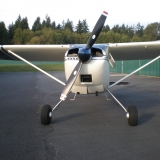
Cessna Skywagon -- accept no substitute!
Mon Aug 19, 2019 5:34 am
Re: Maybe aviation will wise up!
Change is scary...
Mon Aug 19, 2019 11:10 am
Re: Maybe aviation will wise up!
Now Now Fellers, All Yo’s Younghans don’t know noth’n bout us old people and our problem kecht’n up’t yer new fangled nowlogy. Yaw is scare’n me to death. Thanks be to Jesus them there Navy Fellers is got som heart for us bumpkins ! 
DISPLAY OPTIONS
Who is online
Users browsing this forum: No registered users and 3 guests
Latest Features
-
Live to Tell
A Minnesota pilot is surprised to learn that the sudden asymmetric drag of an out-of-rig ski can…Read More -
Creators
Working in some of the Yukon's most beautiful and remote environments, photographer Simon Blakesley captures aircraft in…Read More -
Aircraft Ownership and Maintenance
Upgrading to big tires can make a huge difference in backcountry performance, but with those gains come…Read More -
Tales from Yesteryear
In this tale from bush flying yesteryear, Don Cogger signs up to help Atlee Dodge Jr recovery…Read More


Latest Knowledge Base
-
Destinations
A regional guide with ideas for winter camping destinations in California, Nevada, New Mexico, and Arizona.Read More -
Aircraft
Finding an affordable aircraft that can handle the backcountry for $80K or less? A challenge for sure, but with the…Read More -
Aircraft
01.29.2018 - Zane - Updated tire diameter graphic to add 8.50x10 Guide to tires for use in the backcountry and off-airport landing…Read More -
Pilots
12.22.2013 - Initial article format Operating aircraft on skis and negotiating a snow-covered landscape is an entirely unique skillset and environment.…Read More


