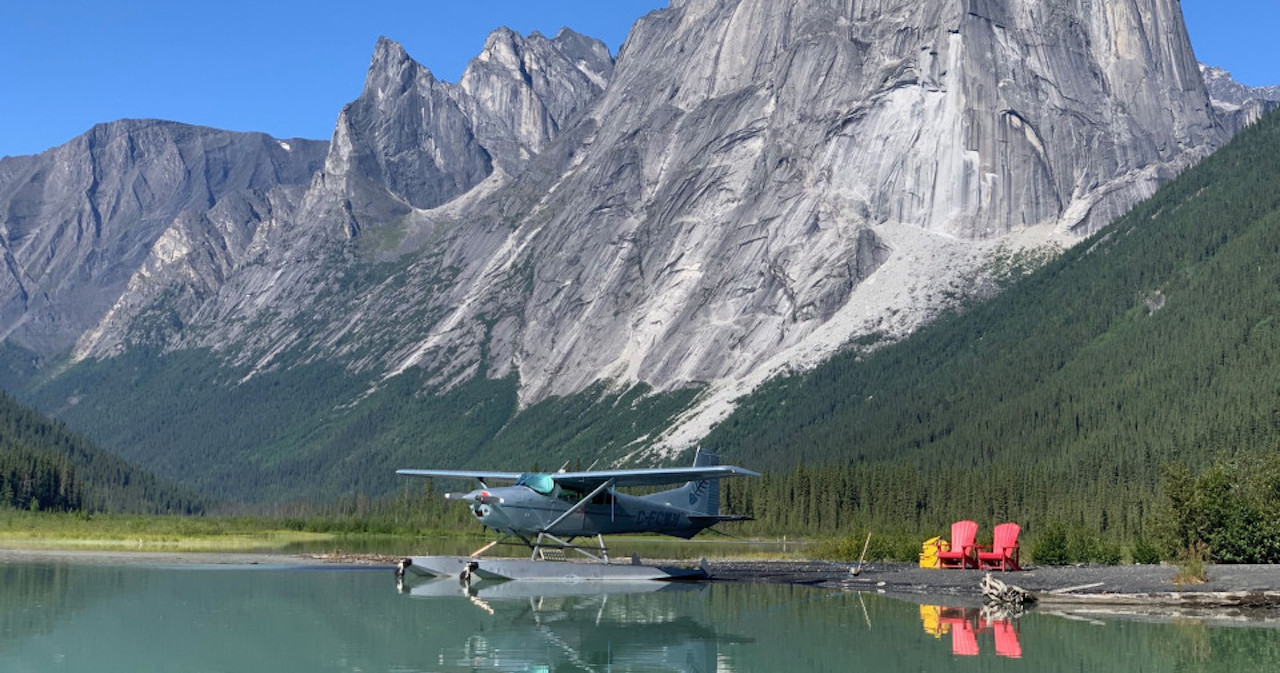
I saw on another forum a while back, this kid asking about flying into an airport in the mountains. I really wanted to link him to this page, but alas it's just not complete.
https://www.backcountrypilot.org/knowledge-base/pilots/mountain-flying
As you can see, I can broken that up into a few major sections. This is really just off the top of my head, but I would love to get some input from you guys about what the most useful organization is this would be. Both Cary and Contactflying have added some good tips in the comments.
Some good mountain flying tips that we can squeeze in wherever would be great. If you're so inclined, maybe even tackle writing a section. We don't need a book like Sparky's but this is free for anyone to read and might save someone's bacon. I'll update this forum post with your suggestions and update the page after a while.
Thanks!
What's the big deal about mountains?
-Explain why it's a concern.
Effects of altitude
Add section
Negotiating terrain
Add section
Mountain weather
Add section
Wind and mechanical turbulence
Add section
Classic accident scenarios
Add section
Mountain Flying page in the Knowledge Base
Wed Mar 04, 2015 8:35 pm

Wed Mar 04, 2015 8:59 pm
Re: Mountain Flying page in the Knowledge Base
One idea is that every mountain area is different. And "their" personalities need evaluating in separate micro, semi-micro and macro climates for safe forecasting/reporting. Most WX products use a one size fits all approach which could hide distinctly dangerous weather from a less experienced pilot.
Example (micro weather):
Green Peter Lake, Cascade Moutains, Oregon has it own weather and personality. Nobody really knows what to expect there (it's not in the Willamette Valley and lies at the base of the mountains), except a few seaplane pilots who operate there ("Little John" and myself). Not necessarily dangerous if people understand to interpret the weather rather than read a forecast.
Also, water inflow and out flow needs occasional monitoring thru the US Army Corps on Emgeineers.
Example (micro weather):
Green Peter Lake, Cascade Moutains, Oregon has it own weather and personality. Nobody really knows what to expect there (it's not in the Willamette Valley and lies at the base of the mountains), except a few seaplane pilots who operate there ("Little John" and myself). Not necessarily dangerous if people understand to interpret the weather rather than read a forecast.
Also, water inflow and out flow needs occasional monitoring thru the US Army Corps on Emgeineers.

CFII, MEI, CFISES, ATPME, IA/AP, RPPL, Ski&Amphib ops, RHC mechanic cert, RHC SC— 3000TT
Thu Mar 05, 2015 9:48 am
Re: Mountain Flying page in the Knowledge Base
Under Classic Accident Scenario,
A significant number of mountain accidents involving fatalities are not discovered until the hunters find them. Few of these went in wings level. Load factor can be a significant factor at high density altitude if we always attempt to maintain altitude in a turn. Load factor can happen only by pulling back on the stick. Load factor need never happen except in pullups, wings level, from dives.
A significant number of mountain accidents involving fatalities are not discovered until the hunters find them. Few of these went in wings level. Load factor can be a significant factor at high density altitude if we always attempt to maintain altitude in a turn. Load factor can happen only by pulling back on the stick. Load factor need never happen except in pullups, wings level, from dives.
- contactflying offline
- Posts: 4972
- Joined: Wed Apr 03, 2013 7:36 pm
- Location: Aurora, Missouri 2H2
Download my free "https://tinyurl.com/Safe-Maneuvering" e-book.
Thu Mar 05, 2015 6:07 pm
Re: Mountain Flying page in the Knowledge Base
2 posts, that's all? Thank you 8GCBC and Contactflying.
Doesn't seem like much interest here though. Is this something I shouldn't waste my time on? Maybe I should go by the old internet trick of "say something that's wrong" in order to get some attention.
Doesn't seem like much interest here though. Is this something I shouldn't waste my time on? Maybe I should go by the old internet trick of "say something that's wrong" in order to get some attention.
Thu Mar 05, 2015 6:17 pm
Re: Mountain Flying page in the Knowledge Base
I'd love to help but all my mountain time is in helos
- CamTom12 offline

- Posts: 3705
- Joined: Sun Jul 08, 2012 1:08 pm
- Location: Huntsville
- FindMeSpot URL: https://share.delorme.com/camtom12
- Aircraft: Ruppe Racer
Experimental Pacer
home hand jam "wizard"
Thu Mar 05, 2015 7:11 pm
Re: Mountain Flying page in the Knowledge Base
Effects of Altitude
Density altitude is a primary concern for operations in the mountains. DA is pressure altitude corrected for non-standard temperatures. As density altitude increases, the difference between indicated airspeed and true airspeed increases and available horsepower decreases. These factors play a huge part in take off and landing distances and the speed that will be required. In addition to TO and landing, density altitude also effects maneuvering. Increased true airspeed will cause an increase in the turn radius which should be considered when negotiating terrain.
Physiological effects to consider when flying in the mountains include oxygen deprivation and ultraviolet radiation. These factors can be mitigated by minimizing the duration of high-altitude operations, allowing time for acclimatization, and participating in the weight loss challenge. Remember supplemental oxygen is required for the pilot when flying over 12,500 feet for greater than 30 minutes and at all times while over 14,000. Keep in mind, the effects of hypoxia are a result of density altitude, while the supplemental oxygen requirements are in terms of absolute altitude.
Density altitude is a primary concern for operations in the mountains. DA is pressure altitude corrected for non-standard temperatures. As density altitude increases, the difference between indicated airspeed and true airspeed increases and available horsepower decreases. These factors play a huge part in take off and landing distances and the speed that will be required. In addition to TO and landing, density altitude also effects maneuvering. Increased true airspeed will cause an increase in the turn radius which should be considered when negotiating terrain.
Physiological effects to consider when flying in the mountains include oxygen deprivation and ultraviolet radiation. These factors can be mitigated by minimizing the duration of high-altitude operations, allowing time for acclimatization, and participating in the weight loss challenge. Remember supplemental oxygen is required for the pilot when flying over 12,500 feet for greater than 30 minutes and at all times while over 14,000. Keep in mind, the effects of hypoxia are a result of density altitude, while the supplemental oxygen requirements are in terms of absolute altitude.
Thu Mar 05, 2015 8:30 pm
Re: Mountain Flying page in the Knowledge Base
Leeward or Windward of the mountain range (it matters in a small aircraft !);
Mountain waves can sometimes been seen many miles downwind of a peak. If the dew point spread is small and there is a lapse rate. The air turbulence will sublimate going up and down leaving rolling stationary clouds.
Wikipedia defines this turbulence as "Lee Waves" (rolling stationary clouds only occurs with tiny dew point spreads) The lenticular clouds generally are so massive that a single cloud happens on the leeward side.
Windward is generally "less" turbulence, more moisture and has up drafts. But, remember that could all change fast. Leeward generally has "more" turbulence, dryer air and *down drafts (*majority not exclusively).
Know your mountain winds! Read these links...
http://en.m.wikipedia.org/wiki/Lee_wave
http://en.m.wikipedia.org/wiki/Katabatic_wind
http://en.m.wikipedia.org/wiki/Anabatic_wind
http://en.m.wikipedia.org/wiki/Valley_exit_jet
http://en.m.wikipedia.org/wiki/Foehn_wind
Mountain waves can sometimes been seen many miles downwind of a peak. If the dew point spread is small and there is a lapse rate. The air turbulence will sublimate going up and down leaving rolling stationary clouds.
Wikipedia defines this turbulence as "Lee Waves" (rolling stationary clouds only occurs with tiny dew point spreads) The lenticular clouds generally are so massive that a single cloud happens on the leeward side.
Windward is generally "less" turbulence, more moisture and has up drafts. But, remember that could all change fast. Leeward generally has "more" turbulence, dryer air and *down drafts (*majority not exclusively).
Know your mountain winds! Read these links...
http://en.m.wikipedia.org/wiki/Lee_wave
http://en.m.wikipedia.org/wiki/Katabatic_wind
http://en.m.wikipedia.org/wiki/Anabatic_wind
http://en.m.wikipedia.org/wiki/Valley_exit_jet
http://en.m.wikipedia.org/wiki/Foehn_wind
CFII, MEI, CFISES, ATPME, IA/AP, RPPL, Ski&Amphib ops, RHC mechanic cert, RHC SC— 3000TT
Thu Mar 05, 2015 8:33 pm
Re: Mountain Flying page in the Knowledge Base
I think one important section needs to be about knowing the local area well.
Certain areas seem to be really bad during certain prevailing winds, however other places might be no problem.
Hard to say too much on that without a particular area in mind, but I think the principal is important. Getting local knowledge from those with real experience.
Certain areas seem to be really bad during certain prevailing winds, however other places might be no problem.
Hard to say too much on that without a particular area in mind, but I think the principal is important. Getting local knowledge from those with real experience.

Thu Mar 05, 2015 9:09 pm
Re: Mountain Flying page in the Knowledge Base
While in the 717th Med Det NMARNG at Santa Fe, the Air Force sent a weather officer out to give us the typical weather briefing quarterly. They covered prevailing conditions for spring, summer, fall, and winter. They were very good briefings. I expect a pilot or group could get a synopsis of such local area briefings.
- contactflying offline
- Posts: 4972
- Joined: Wed Apr 03, 2013 7:36 pm
- Location: Aurora, Missouri 2H2
Download my free "https://tinyurl.com/Safe-Maneuvering" e-book.
Fri Mar 06, 2015 9:51 pm
Re: Mountain Flying page in the Knowledge Base
Prosaria wrote:Effects of Altitude
Density altitude is a primary concern for operations in the mountains. DA is pressure altitude corrected for non-standard temperatures. As density altitude increases, the difference between indicated airspeed and true airspeed increases and available horsepower decreases. These factors play a huge part in take off and landing distances and the speed that will be required. In addition to TO and landing, density altitude also effects maneuvering. Increased true airspeed will cause an increase in the turn radius which should be considered when negotiating terrain.
Physiological effects to consider when flying in the mountains include oxygen deprivation and ultraviolet radiation. These factors can be mitigated by minimizing the duration of high-altitude operations, allowing time for acclimatization, and participating in the weight loss challenge. Remember supplemental oxygen is required for the pilot when flying over 12,500 feet for greater than 30 minutes and at all times while over 14,000. Keep in mind, the effects of hypoxia are a result of density altitude, while the supplemental oxygen requirements are in terms of absolute altitude.
RE: density altitude. There is no effective way to experience it without actually experiencing it (trite, right?
 ). In other words, a low land pilot will not experience it by using partial throttle, the typical training scenario. It's too hard to demo reduced lift caused by DA, although the reduced power is more easily demo'd, and it's impossible to demo the increased true airspeed. Leaning for take off is essential at high DAs--virtually any time the DA exceeds 3000'. At really high DAs, the amount of leaning is surprising. Example: when I took off from Leadville a few years ago, the AWOS said that the DA was 12,100'. The mixture control was so far out that much farther would have killed the engine. I rolled about 4000' before lifting off at an indicated 70 mph, stayed in low ground effect until the end of the runway so that by that time the IAS was about 90-95, then gradually climbed out at about 100 mph indicated. Climb out was at a miserly 150-200 fpm. My 180hp (at sea level) engine was putting out about 115 hp, and the wings had a whole lot less lift. All this was while running light--about 3/4 tanks, just me and dog and survival equipment.
RE: oxygen deprivation/hypoxia. The FAA's requirements aren't necessarily the individual's requirements. Except when I was in the USAF stationed in Illinois and Alaska, I've lived in the high country all of my life. As a younger man, I probably got along pretty well following only the FAA's requirements. But at my ancient age, I now must use supplementary oxygen at a lower altitude--I start using it whenever I go much over 10,000' for any length of time more than a few minutes. By the time I'm at 11,000', I'm on it constantly--and I have to turn it up to get my pulse-ox level near 90%, so that for example if I'm at 12,000', I have it set at 14,000'. Oxygen is cheap! Without sufficient oxygen, nobody functions well--and in case anyone needs to be told this, pilots really do need to function well!
Cary
"I have slipped the surly bonds of earth..., put out my hand and touched the face of God." J.G. Magee
Sun Mar 08, 2015 11:44 am
Re: Mountain Flying page in the Knowledge Base
It might be useful to add a section on navigation by pilotage using topographical maps. Many here have experience with 1:2500 topo maps on the ground, but they are also useful in the air, especially for planning routes. Aviation courses seldom go into identification of hills, depressions, ridges, valleys, saddles, and which way a river or drainage is running. That is, importantly, which way is down hill.
Think of standing on a feature and looking in four directions all 90 degrees from the last. Think of how many of the four are up and how many down.
Hill- 4 down
Depression- 4 up
Ridge- 1 up three down
Valley- 3 up 1 down
Saddle- 2 up 2 down
Wine glass river direction- water cannot get in the stem, it must drain into the wide part of the V, the open end of the glass
Think of standing on a feature and looking in four directions all 90 degrees from the last. Think of how many of the four are up and how many down.
Hill- 4 down
Depression- 4 up
Ridge- 1 up three down
Valley- 3 up 1 down
Saddle- 2 up 2 down
Wine glass river direction- water cannot get in the stem, it must drain into the wide part of the V, the open end of the glass
- contactflying offline
- Posts: 4972
- Joined: Wed Apr 03, 2013 7:36 pm
- Location: Aurora, Missouri 2H2
Download my free "https://tinyurl.com/Safe-Maneuvering" e-book.
Sun Mar 08, 2015 9:30 pm
Re: Mountain Flying page in the Knowledge Base
contactflying wrote:It might be useful to add a section on navigation by pilotage using topographical maps. Many here have experience with 1:2500 topo maps on the ground, but they are also useful in the air, especially for planning routes. Aviation courses seldom go into identification of hills, depressions, ridges, valleys, saddles, and which way a river or drainage is running. That is, importantly, which way is down hill.
Think of standing on a feature and looking in four directions all 90 degrees from the last. Think of how many of the four are up and how many down.
Hill- 4 down
Depression- 4 up
Ridge- 1 up three down
Valley- 3 up 1 down
Saddle- 2 up 2 down
Wine glass river direction- water cannot get in the stem, it must drain into the wide part of the V, the open end of the glass
I think this concept is a great idea-- topography in general and that of navigating a sectional chart's topography by pilotage to follow terrain, but the rest about the 4 down and 4 up really took me a while to digest. I get it now, but how to use it? Do you constantly reassess which direction is up and which is down for terrain egress?
Mon Mar 09, 2015 7:36 am
Re: Mountain Flying page in the Knowledge Base
Air is by definition a fluid. It flows and eddies like any fluid. On a warm sunny day, take some time to find a river/stream that has reasonable velocity and plenty of rocks/obstacles. Grab a beer, and sit and watch how that water flows over and around the various obstacles. Your friends may think you're into some sort of Zen thing, and maybe you are. In any case, you can enjoy a beverage and enjoy some quality down time, and still learn something. Don't just LOOK at the water flowing, SEE what it's doing, SEE how it flows around or over various obstacles.
A simple exercise, but the point is, air moves over and around obstacles just like water does. So that stream can teach you a lot about fluid dynamics, and therefore about how air flows in the mountains.
One of the things you will notice is that the flow of water in gaps in the rocks is more laminar (smoother) than the water that's flowing OVER those rocks. That should tell you something about flying passes versus flying over ridges.
In flyable weather, meaning the wind velocity isn't so great as to be dangerous, you will encounter the worst turbulence at or just above ridge height. And, conversely, the smoothest ride MAY be down in the passes, in that more laminar flow.
I was reminded of this often flying between Fairbanks and Anchorage, through Windy Pass. I'd hear a pirep of moderate to severe turbulence by another pilot in the pass, then ask the pilots altitude......9000 feet. Ridge height. I'd drop down to 2500 feet, and the ride would be light to occasional moderate, and sometimes even smooth as a baby's butt.
A few days ago, I flew my Cub westbound from Columbus, MT to Bozeman. Winds aloft were forecast at 25 to 35 from the surface up to 9000 feet. Bozeman Pass is a bit over 6200 msl. To stay out of the worst turbulence, and maximize my ground speed, I stayed as low as practical, and stayed in the middle of the pass. Fifty knot ground speed all the way, with occasional forays down into the mid forties, but the ride was just light turbulence. After I was through the highest part of the pass I slid over to one side of the pass to look at something and was rewarded by a sound thumping, as that turbulent flow came off the ridge at the side of the pass.
MTV
Of course, there are times when your airplane simply doesn't have the performance to operate in the mountains.
A simple exercise, but the point is, air moves over and around obstacles just like water does. So that stream can teach you a lot about fluid dynamics, and therefore about how air flows in the mountains.
One of the things you will notice is that the flow of water in gaps in the rocks is more laminar (smoother) than the water that's flowing OVER those rocks. That should tell you something about flying passes versus flying over ridges.
In flyable weather, meaning the wind velocity isn't so great as to be dangerous, you will encounter the worst turbulence at or just above ridge height. And, conversely, the smoothest ride MAY be down in the passes, in that more laminar flow.
I was reminded of this often flying between Fairbanks and Anchorage, through Windy Pass. I'd hear a pirep of moderate to severe turbulence by another pilot in the pass, then ask the pilots altitude......9000 feet. Ridge height. I'd drop down to 2500 feet, and the ride would be light to occasional moderate, and sometimes even smooth as a baby's butt.
A few days ago, I flew my Cub westbound from Columbus, MT to Bozeman. Winds aloft were forecast at 25 to 35 from the surface up to 9000 feet. Bozeman Pass is a bit over 6200 msl. To stay out of the worst turbulence, and maximize my ground speed, I stayed as low as practical, and stayed in the middle of the pass. Fifty knot ground speed all the way, with occasional forays down into the mid forties, but the ride was just light turbulence. After I was through the highest part of the pass I slid over to one side of the pass to look at something and was rewarded by a sound thumping, as that turbulent flow came off the ridge at the side of the pass.
MTV
Of course, there are times when your airplane simply doesn't have the performance to operate in the mountains.

Mon Mar 09, 2015 11:51 am
Re: Mountain Flying page in the Knowledge Base
Zane,
No, when deciding which way to turn down a drainage, we may not have time to look at the map. We need to do a thorough map recon and plan a route, including egress in an emergency or when unable to continue up drainage, before we go.
Wind management is a part of that map recon, even though wind direction may change or not be as expected. We want to ride the ridge downwind of the valley or drainage close enough to always have the option of an energy management turn back down the valley. We just want to be sure, by wine glass method in flatter terrain, that we are turning down valley rather than up valley. Also, close spacing of contours will indicate lack of horizontal space between the two ridges that form the sides of a valley as we go higher up the valley. We need to know before we go that, in a turn back, we will have room to turn putting the nose down into the middle of the drainage and have enough vertical space to pull up wings level. This technique becomes more marginal in desert, or small mountains.
The problem with learning "over the mountains" techniques only, using normal navigation, is that conditions my cause unplanned descent down into the mountains. Here, the fore knowledge of which way is down hill is critical.
My experience has been that updrafts equal downdrafts in average strength, duration, and frequency. My experience has also been that strong two and even three bangers exist. Repetitive updrafts can be very helpful, when thermalling over the mountains. Repetitive downdrafts can put us in unplanned "in the mountains" conditions. Generally, when thermalling, we start soon enough before the mountain that by flying slow in ups and fast through downs we are plenty high by the time we get to the mountain. Normal conditions, like ups being followed by downs, do not always exist.
Thermalling works best, with small aircraft, with true courses that have tailwinds. Strong headwinds make getting up early very hard on ground speed. With volcanic mountains and slower aircraft, we may be able to use orographic lift to go straight over or make, away from the mountain, energy management switchbacks in faster airplanes. Ridge lift works best, with small aircraft, with true courses that have, hopefully somewhat cross, headwinds. With straight on headwinds right across the pass and down the valley we are trying to go up, we may not be able to find a useful angle on ridges going up to the pass. Unlike sailing, terrain restricts what tack angle is useful. With straight on winds, we can't reach first for one ridge, defining the valley we are going up, and then turn to reach for the opposite ridge.
Like everything in controlling aircraft, gross control movement, terrain, and wind situations are much easier to learn and visualize than are fine, light, and calm. As instructors, we often ease into these things. This is logical and is the school solution. It is not the easiest way to train, nor the fastest.
Thanks for the questions,
Contact
No, when deciding which way to turn down a drainage, we may not have time to look at the map. We need to do a thorough map recon and plan a route, including egress in an emergency or when unable to continue up drainage, before we go.
Wind management is a part of that map recon, even though wind direction may change or not be as expected. We want to ride the ridge downwind of the valley or drainage close enough to always have the option of an energy management turn back down the valley. We just want to be sure, by wine glass method in flatter terrain, that we are turning down valley rather than up valley. Also, close spacing of contours will indicate lack of horizontal space between the two ridges that form the sides of a valley as we go higher up the valley. We need to know before we go that, in a turn back, we will have room to turn putting the nose down into the middle of the drainage and have enough vertical space to pull up wings level. This technique becomes more marginal in desert, or small mountains.
The problem with learning "over the mountains" techniques only, using normal navigation, is that conditions my cause unplanned descent down into the mountains. Here, the fore knowledge of which way is down hill is critical.
My experience has been that updrafts equal downdrafts in average strength, duration, and frequency. My experience has also been that strong two and even three bangers exist. Repetitive updrafts can be very helpful, when thermalling over the mountains. Repetitive downdrafts can put us in unplanned "in the mountains" conditions. Generally, when thermalling, we start soon enough before the mountain that by flying slow in ups and fast through downs we are plenty high by the time we get to the mountain. Normal conditions, like ups being followed by downs, do not always exist.
Thermalling works best, with small aircraft, with true courses that have tailwinds. Strong headwinds make getting up early very hard on ground speed. With volcanic mountains and slower aircraft, we may be able to use orographic lift to go straight over or make, away from the mountain, energy management switchbacks in faster airplanes. Ridge lift works best, with small aircraft, with true courses that have, hopefully somewhat cross, headwinds. With straight on headwinds right across the pass and down the valley we are trying to go up, we may not be able to find a useful angle on ridges going up to the pass. Unlike sailing, terrain restricts what tack angle is useful. With straight on winds, we can't reach first for one ridge, defining the valley we are going up, and then turn to reach for the opposite ridge.
Like everything in controlling aircraft, gross control movement, terrain, and wind situations are much easier to learn and visualize than are fine, light, and calm. As instructors, we often ease into these things. This is logical and is the school solution. It is not the easiest way to train, nor the fastest.
Thanks for the questions,
Contact
- contactflying offline
- Posts: 4972
- Joined: Wed Apr 03, 2013 7:36 pm
- Location: Aurora, Missouri 2H2
Download my free "https://tinyurl.com/Safe-Maneuvering" e-book.
Tue Mar 10, 2015 8:10 am
Re: Mountain Flying page in the Knowledge Base
Under the Wind section:
Extreme crosswind conditions are often encountered, in the mountains and deserts, even by pilots who have planned to avoid them. They may find themselves at a long, wide, single runway with severe crosswinds and far from other fuel options.
Using the apparent brisk walk rate of closure approach, or any slow approach, we can overcome this problem by practice and application of angling across wide runways. If we make the downwind corner of the wide runway the desired touchdown spot and use a slow power/pitch approach to be sure to put the airplane down on that spot, we will have more than 1,000 feet of runway from there to the upwind big airplane touchdown zone marking. And that 1,000 feet of landing area is oriented into a strong headwind component.
Pilots of slow airplanes have been using this technique since aviation began. Pilots of faster airplanes can make use of this technique if they use flaps and a slow approach.
It is very helpful, using this angle across the runway approach, to make the downwind to base and base to final turns into the crosswind. This allows an easy upwind base to final turn to line the downwind corner up with the upwind big airplane touchdown zone marking. This avoids the much more dangerous, because of higher ground speed and larger radius, downwind turn. Downwind turns, while not dangerous at altitude, are very dangerous in maneuvering flight. Takeoff and landing are maneuvering flight and require the same attention as any maneuvering flight.
Extreme crosswind conditions are often encountered, in the mountains and deserts, even by pilots who have planned to avoid them. They may find themselves at a long, wide, single runway with severe crosswinds and far from other fuel options.
Using the apparent brisk walk rate of closure approach, or any slow approach, we can overcome this problem by practice and application of angling across wide runways. If we make the downwind corner of the wide runway the desired touchdown spot and use a slow power/pitch approach to be sure to put the airplane down on that spot, we will have more than 1,000 feet of runway from there to the upwind big airplane touchdown zone marking. And that 1,000 feet of landing area is oriented into a strong headwind component.
Pilots of slow airplanes have been using this technique since aviation began. Pilots of faster airplanes can make use of this technique if they use flaps and a slow approach.
It is very helpful, using this angle across the runway approach, to make the downwind to base and base to final turns into the crosswind. This allows an easy upwind base to final turn to line the downwind corner up with the upwind big airplane touchdown zone marking. This avoids the much more dangerous, because of higher ground speed and larger radius, downwind turn. Downwind turns, while not dangerous at altitude, are very dangerous in maneuvering flight. Takeoff and landing are maneuvering flight and require the same attention as any maneuvering flight.
- contactflying offline
- Posts: 4972
- Joined: Wed Apr 03, 2013 7:36 pm
- Location: Aurora, Missouri 2H2
Download my free "https://tinyurl.com/Safe-Maneuvering" e-book.
Sat Mar 14, 2015 8:31 am
Re: Mountain Flying page in the Knowledge Base
Under the Wind section:
For those who don't have flying jobs that require them to fly in the mountains in the heat of the day, early morning flying solves some of the density altitude problem.
In desert mountains the diurnal rate, or difference between the before morning nautical twilight temperature and the hottest afternoon temperature, is very high. Especially in summer, when there are few cloudy days, the heat triggered thermal and orographic lift can be far greater than engine thrust.
The lift produced when the desert floor first heats up, and starts the cooler air pooled in the valleys moving up into the mountains, can be utilized. This smooth lift is especially especially useful to slower aircraft. Balloon pilots use it for circuits and save chase crew expenses. They can go toward westward mountains early and come back on prevailing westerly winds later in the morning when the land breeze/sea breeze type thing gets blown out.
With small airplanes we can just head out toward whichever mountains we want to go over and ride the smooth airflow up. Faster airplanes will have to either use the big engine on longer climbs or get up close and switchback up the side of the mountain. If the mountains are close, 65 hp J-3s, Champs, and Taylorcrafts can get a little jump on the big guys.
For those who don't have flying jobs that require them to fly in the mountains in the heat of the day, early morning flying solves some of the density altitude problem.
In desert mountains the diurnal rate, or difference between the before morning nautical twilight temperature and the hottest afternoon temperature, is very high. Especially in summer, when there are few cloudy days, the heat triggered thermal and orographic lift can be far greater than engine thrust.
The lift produced when the desert floor first heats up, and starts the cooler air pooled in the valleys moving up into the mountains, can be utilized. This smooth lift is especially especially useful to slower aircraft. Balloon pilots use it for circuits and save chase crew expenses. They can go toward westward mountains early and come back on prevailing westerly winds later in the morning when the land breeze/sea breeze type thing gets blown out.
With small airplanes we can just head out toward whichever mountains we want to go over and ride the smooth airflow up. Faster airplanes will have to either use the big engine on longer climbs or get up close and switchback up the side of the mountain. If the mountains are close, 65 hp J-3s, Champs, and Taylorcrafts can get a little jump on the big guys.
- contactflying offline
- Posts: 4972
- Joined: Wed Apr 03, 2013 7:36 pm
- Location: Aurora, Missouri 2H2
Download my free "https://tinyurl.com/Safe-Maneuvering" e-book.
Sat Mar 14, 2015 8:46 pm
Re: Mountain Flying page in the Knowledge Base
Thanks Jim.
Sun Mar 15, 2015 9:21 am
- contactflying offline
- Posts: 4972
- Joined: Wed Apr 03, 2013 7:36 pm
- Location: Aurora, Missouri 2H2
Download my free "https://tinyurl.com/Safe-Maneuvering" e-book.
Sun Mar 15, 2015 9:31 am
Re: Mountain Flying page in the Knowledge Base
For those of you who don't hable espaniol, "de nada" is Spanish for "the nada"
- CamTom12 offline
- Posts: 3705
- Joined: Sun Jul 08, 2012 1:08 pm
- Location: Huntsville
- FindMeSpot URL: https://share.delorme.com/camtom12
- Aircraft: Ruppe Racer
Experimental Pacer
home hand jam "wizard"
Sun Mar 15, 2015 10:43 pm
Re: Mountain Flying page in the Knowledge Base
I know you know this - but we have to be very careful. The small airplanes get "jumped on" faster too.
I won't climb up through rotor and risk the downdrafts in the lee. Only with a tailwind or crosswinds will I try and climb with a significant wind. Tailwinds are easy. Crosswinds I will move to the windward side of the ridge and ride orographic lift to gain elevation.
In the face of a significant head wind (25kts plus) I "poke" up and climb well ahead of the terrain. If I don't like what I feel - I turn around and try another day or another pass. Often I can pick a pass that is wider, with less complicated terrain upwind that allows for smoother air.
I won't climb up through rotor and risk the downdrafts in the lee. Only with a tailwind or crosswinds will I try and climb with a significant wind. Tailwinds are easy. Crosswinds I will move to the windward side of the ridge and ride orographic lift to gain elevation.
In the face of a significant head wind (25kts plus) I "poke" up and climb well ahead of the terrain. If I don't like what I feel - I turn around and try another day or another pass. Often I can pick a pass that is wider, with less complicated terrain upwind that allows for smoother air.
contactflying wrote:With small airplanes we can just head out toward whichever mountains we want to go over and ride the smooth airflow up. Faster airplanes will have to either use the big engine on longer climbs or get up close and switchback up the side of the mountain. If the mountains are close, 65 hp J-3s, Champs, and Taylorcrafts can get a little jump on the big guys.
- soyAnarchisto offline

- Posts: 1977
- Joined: Fri Aug 19, 2011 1:23 pm
- Location: Boulder, CO
- Aircraft: 1955 Cessna 180
DISPLAY OPTIONS
Who is online
Users browsing this forum: No registered users and 0 guests
Latest Features
-
-
Featured Bush Planes
As one of the undisputed legends of bush flying, the Cessna 180 hauls a…Read More -
Aircraft Ownership and Maintenance
9 modification mistakes aircraft owners make when trying to "bush out" their birds—why some…Read More -
Live to Tell
A Minnesota pilot is surprised to learn that the sudden asymmetric drag of an…Read More


Latest Knowledge Base
-
Destinations
Canada offers some of the most spectacular backcountry flying on the continent. Here's what you need to know before you go.Read More -
Safety and Survival
Hope that you never have to use your survival vest but knowing you have it and knowing how to use…Read More -
Destinations
A regional guide with ideas for winter camping destinations in California, Nevada, New Mexico, and Arizona.Read More -
Aircraft
Finding an affordable aircraft that can handle the backcountry for $80K or less? A challenge for sure, but with the…Read More