Narrow airstrips are a challenge and require the pilot to be precise, here some examples and techniques I use.
Narrow airstrips and landing zones
Sat Nov 19, 2022 5:56 pm
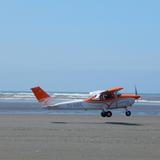
Sat Nov 19, 2022 9:02 pm
Re: Narrow airstrips and landing zones
Excellent flying Larry. I would like, for instructional purposes, to clear up something that might confuse pilots watching the video. You mention using rudder and aileron to line up. Watching from the ground camera point of view, however, I see no wing wagging on short final. The aileron banks the wing. Once on the centerline extended and no longer in a turn to capture the centerline extended, you are using rudder only effectively to either bracket or at least maintain the tracks on the ground centered at what appears to be between your legs. We watching the video have the centered in the cockpit camera point of view as in a tandem airplane. In the side by side Cessnas, to be as precise as you are, you are using a point on the cowl left of the prop or using what appears to be between your legs. Some pilots say they are maintaining a certain angle with the prop, but that is not as precise as you are landing. The evidence with the average pilot at the airport is the many black tire marks left of the centerline and few black tire marks on or to the right of the centerline. They are not as precise as you are in this video because they are using the center of the nose (prop) in side by side seating. Also at the airport I see a lot of wing wagging (turning a bit left and then a bit right) which is not as precise as bracketing the centerline with rudder only. If we mess up and get misaligned, rudder only yaw is far superior to coordinated turning because a certain amount of adverse yaw generally happens and in turns we spend as much time misaligned as aligned. Precision demands constant alignment. Dynamic proactive rudder (walking the rudders a bit) nails the centerline.
Ag work using a levee for a near to work strip requires similar precision. Good job.
Good job and thanks for the video.
Ag work using a levee for a near to work strip requires similar precision. Good job.
Good job and thanks for the video.
- contactflying offline
- Posts: 4972
- Joined: Wed Apr 03, 2013 7:36 pm
- Location: Aurora, Missouri 2H2
Download my free "https://tinyurl.com/Safe-Maneuvering" e-book.
DISPLAY OPTIONS
Who is online
Users browsing this forum: No registered users and 0 guests
Latest Features
-
Live to Tell
A Minnesota pilot is surprised to learn that the sudden asymmetric drag of an out-of-rig ski can…Read More -
Creators
Working in some of the Yukon's most beautiful and remote environments, photographer Simon Blakesley captures aircraft in…Read More -
Aircraft Ownership and Maintenance
Upgrading to big tires can make a huge difference in backcountry performance, but with those gains come…Read More -
Tales from Yesteryear
In this tale from bush flying yesteryear, Don Cogger signs up to help Atlee Dodge Jr recovery…Read More


Latest Knowledge Base
-
Destinations
A regional guide with ideas for winter camping destinations in California, Nevada, New Mexico, and Arizona.Read More -
Aircraft
Finding an affordable aircraft that can handle the backcountry for $80K or less? A challenge for sure, but with the…Read More -
Aircraft
01.29.2018 - Zane - Updated tire diameter graphic to add 8.50x10 Guide to tires for use in the backcountry and off-airport landing…Read More -
Pilots
12.22.2013 - Initial article format Operating aircraft on skis and negotiating a snow-covered landscape is an entirely unique skillset and environment.…Read More


