Good Afternoon gents, hope everyone is well. Currently Im living in Virginia, but I've traveled quite a bit. I was in Civil Air Patrol a while back, used to fly as a kid, I have about a half dozen hours logged or so, maybe even less.
Looking to finish my private pilots license, and get into backcountry flying. I was an Eagle Scout, did scouting, hiking, camping, fishing, hunting, and some revolutionary war reenacting, so I'm a lover of all things outdoors. My grandpa was a pilot, and I'd like to be to.
Looking for all the standard advice for new pilots, bush pilots, best planes to stay away from, ones to go to...I've been looking at a Cessna 150 series to start with. Inexpensive, but reliable from what I've read. I know much of this is preference driven and that will develop as I finish my license.
Otherwise, glad to be here at the camp fire. Pass the coffee and beans.
New to the forums - Advice!
Sat Feb 23, 2019 12:45 pm
- HomewardAngel offline
- Posts: 11
- Joined: Wed Feb 13, 2019 6:51 pm
- Location: Arlington
Sat Feb 23, 2019 12:57 pm
Re: New to the forums - Advice!
Ok, you’re new here- you should know that there are gals here as well as gents. (Thankfully)
- denalipilot offline


- Posts: 2789
- Joined: Mon Oct 15, 2007 4:53 pm
- Location: Denali
- Aircraft: C-170B+
Sat Feb 23, 2019 2:10 pm
Re: New to the forums - Advice!
Welcome. C-150 is a fine airplane. High supply and moderate demand makes the price attractive. Tailwheel demands active rudder usage, which is good. Tailwheel demands active rudder usage, which can be very expensive for moderate greater rough field capibility.
- contactflying offline
- Posts: 4972
- Joined: Wed Apr 03, 2013 7:36 pm
- Location: Aurora, Missouri 2H2
Download my free "https://tinyurl.com/Safe-Maneuvering" e-book.
Sat Feb 23, 2019 4:06 pm
Re: New to the forums - Advice!
contactflying wrote:Welcome. C-150 is a fine airplane. High supply and moderate demand makes the price attractive. Tailwheel demands active rudder usage, which is good. Tailwheel demands active rudder usage, which can be very expensive for moderate greater rough field capibility.
I think you just confused everyone
Sat Feb 23, 2019 5:13 pm
Re: New to the forums - Advice!
Homeward Angle
I think you are spot on for looking at a 150 to get/finish your PPL. Once that is done sell it! Do not fall in love with it. After you are bored with flying around the pattern then look for something else to fit your needs. Not many of us bought a worthwhile backcountry airplane right out of the gate. Like your license, learn from the last airplane or the last flight
I think you are spot on for looking at a 150 to get/finish your PPL. Once that is done sell it! Do not fall in love with it. After you are bored with flying around the pattern then look for something else to fit your needs. Not many of us bought a worthwhile backcountry airplane right out of the gate. Like your license, learn from the last airplane or the last flight
- Big Sky-Wagon offline
- Posts: 29
- Joined: Thu Apr 13, 2017 8:48 pm
- Location: GTF
- Aircraft: 1976 U206
Sun Feb 24, 2019 12:19 am
Re: New to the forums - Advice!
So the way I've always used "gents" is shorthand for gentlemen and gentle ladies, I've never seen it as a term that is specific to one gender.
But I wont turn this into a SJ crusade.
Hello ladies.
Anyhow, to the others- Yes, Cessna 150 will not be my forever plane, just a starter. Piper Super Cub would be something hopeful for later on.
But I wont turn this into a SJ crusade.
Hello ladies.
Anyhow, to the others- Yes, Cessna 150 will not be my forever plane, just a starter. Piper Super Cub would be something hopeful for later on.
- HomewardAngel offline
- Posts: 11
- Joined: Wed Feb 13, 2019 6:51 pm
- Location: Arlington
Sun Feb 24, 2019 12:53 am
Re: New to the forums - Advice!
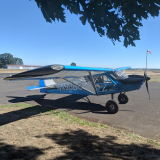
Get a Rans, a kitfox, or a bushcat. Skip the 150 and learn tailwheel. I'm just a lowly sport pilot but the mission you are trying to accomplish can be had for a lot less money. If you outgrow LSA then get your private, but in the meantime you can have performance basically equivalent to a super Cub (with less useful load.) It's so cheap you will rapidly gain time and experience. Get hours and fly to places you didn't know you could. Just my .02 and I'm an idiot! Cheers!
Sun Feb 24, 2019 1:55 am
Re: New to the forums - Advice!
tbag wrote:Get a Rans, a kitfox, or a bushcat. Skip the 150 and learn tailwheel. I'm just a lowly sport pilot but the mission you are trying to accomplish can be had for a lot less money. If you outgrow LSA then get your private, but in the meantime you can have performance basically equivalent to a super Cub (with less useful load.) It's so cheap you will rapidly gain time and experience. Get hours and fly to places you didn't know you could. Just my .02 and I'm an idiot! Cheers!
Im down for the Kitfox, I was looking at those. They looked a lot more pricey than Taylorcrafts (forgot to mention I was looking at those for starters) as well as the 150's. I'm trying to keep my first aircraft under ~$25k.
- HomewardAngel offline
- Posts: 11
- Joined: Wed Feb 13, 2019 6:51 pm
- Location: Arlington
Sun Feb 24, 2019 7:46 am
Re: New to the forums - Advice!
Tbag is right. If you are going to own tailwheel, start in tailwheel. Get an IA to help you find a safely airworthy tw, a flyer not a looker, for under 25. Insure it for 30. Use dynamic proactive rudder movement to stay ahead of the airplane. Don't wait for it to go and then react. Find an instructor who will let you slow down on short final so you don't have to play the float and wait game that is hard on tw airplanes. Learn to fly the airplane first and then concentrate on flight test stuff.
- contactflying offline
- Posts: 4972
- Joined: Wed Apr 03, 2013 7:36 pm
- Location: Aurora, Missouri 2H2
Download my free "https://tinyurl.com/Safe-Maneuvering" e-book.
Sun Feb 24, 2019 9:11 am
Re: New to the forums - Advice!
I will play the devils advocate and suggest that a C150 is a great airplane to get your license in.
A friend of mine likes to tell people "I got my license in a 150, then I learned to fly in a Cub".
Pretty true, and a pretty good way to go.
If you can rent one cheaply, or buy into a partnership or flying club cheaply, all the better.
IMHO it'll be easier to get all the required BS out of the way quickly and easily in a nosedragger.
And renting or partnering/clubbing can save you from distracting first-time-owner issues.
Get your ticket, and maybe some more hours under your belt after that, then think about buying.
What I thought I wanted to own when I first started is NOT what I wanted to own after my first 50 or 100 hours.
A friend of mine likes to tell people "I got my license in a 150, then I learned to fly in a Cub".
Pretty true, and a pretty good way to go.
If you can rent one cheaply, or buy into a partnership or flying club cheaply, all the better.
IMHO it'll be easier to get all the required BS out of the way quickly and easily in a nosedragger.
And renting or partnering/clubbing can save you from distracting first-time-owner issues.
Get your ticket, and maybe some more hours under your belt after that, then think about buying.
What I thought I wanted to own when I first started is NOT what I wanted to own after my first 50 or 100 hours.
Cessna Skywagon -- accept no substitute!
Sun Feb 24, 2019 10:02 am
Re: New to the forums - Advice!
hotrod180 wrote:I will play the devils advocate and suggest that a C150 is a great airplane to get your license in.
A friend of mine likes to tell people "I got my license in a 150, then I learned to fly in a Cub".
Pretty true, and a pretty good way to go.
If you can rent one cheaply, or buy into a partnership or flying club cheaply, all the better.
IMHO it'll be easier to get all the required BS out of the way quickly and easily in a nosedragger.
And renting or partnering/clubbing can save you from distracting first-time-owner issues.
Get your ticket, and maybe some more hours under your belt after that, then think about buying.
What I thought I wanted to own when I first started is NOT what I wanted to own after my first 50 or 100 hours.
Agreed. This is good advice.
- CamTom12 offline

- Posts: 3705
- Joined: Sun Jul 08, 2012 1:08 pm
- Location: Huntsville
- FindMeSpot URL: https://share.delorme.com/camtom12
- Aircraft: Ruppe Racer
Experimental Pacer
home hand jam "wizard"
Sun Feb 24, 2019 11:13 am
Re: New to the forums - Advice!
I agree with Hotrod180's advice as well. There is a little slack in the nose gear. Walk the rudder dynamically and proactively during taxi, takeoff, approach, and landing. On cross country pick a distant target, put your hands in your lap, and keep the target between your legs with rudder. By doing this, the wings will stay level even in gusts. You will find any crosswind without a computer. Simply change to directing your butt to the target with rudder only. The wings will still stay level.
This may drive your instructor crazy but also get you ready for tailwheel. It will also make you a better pilot in any airplane.
This may drive your instructor crazy but also get you ready for tailwheel. It will also make you a better pilot in any airplane.
- contactflying offline
- Posts: 4972
- Joined: Wed Apr 03, 2013 7:36 pm
- Location: Aurora, Missouri 2H2
Download my free "https://tinyurl.com/Safe-Maneuvering" e-book.
Sun Feb 24, 2019 12:42 pm
Re: New to the forums - Advice!
robw56 wrote:contactflying wrote:Welcome. C-150 is a fine airplane. High supply and moderate demand makes the price attractive. Tailwheel demands active rudder usage, which is good. Tailwheel demands active rudder usage, which can be very expensive for moderate greater rough field capibility.
I think you just confused everyone
My advise is to fly the ajrplane the way your instructor teaches you to fly it. You will be not only learning to fly, but maybe more importantly training to pass the checkride. Leave the rudder-only turns & dynamic proactive mumbo-jumbo for after you get your license. My two cents anyway.
You might wanna ask around & find some local new pilots, then ask them who their CFI was, what they thought of him/her, and how many hours it took to get their ticket. All CFI's are not created equal.
Cessna Skywagon -- accept no substitute!
Sun Feb 24, 2019 5:16 pm
Re: New to the forums - Advice!
Welcome aboard and enjoy the journey to becoming an aviator.
Tue Feb 26, 2019 6:12 am
Re: New to the forums - Advice!
Don’t start with a tailwheel unless you have an instructor comfortable with zero-time students in tailwheel airplanes. There are maybe a dozen such instructors in the world today, most of them elderly.
Airplane piloting and airplane ownership are two completely different studies. It’s hard and often discouraging to learn both at the same time. If you buy before you’re licensed, you’re asking for the pain before you get any of the joy. That’s a prescription for “I took flying lessons a while back and never finished.” IMHO, the best training situation is a club-owned 150/152/172. The second best is renting from the local FBO. Build the pilot first; buy an airplane later.
Airplane piloting and airplane ownership are two completely different studies. It’s hard and often discouraging to learn both at the same time. If you buy before you’re licensed, you’re asking for the pain before you get any of the joy. That’s a prescription for “I took flying lessons a while back and never finished.” IMHO, the best training situation is a club-owned 150/152/172. The second best is renting from the local FBO. Build the pilot first; buy an airplane later.
Tue Feb 26, 2019 8:04 am
Re: New to the forums - Advice!
StuBob wrote:Don’t start with a tailwheel unless you have an instructor comfortable with zero-time students in tailwheel airplanes. There are maybe a dozen such instructors in the world today, most of them elderly.
Airplane piloting and airplane ownership are two completely different studies. It’s hard and often discouraging to learn both at the same time. If you buy before you’re licensed, you’re asking for the pain before you get any of the joy. That’s a prescription for “I took flying lessons a while back and never finished.” IMHO, the best training situation is a club-owned 150/152/172. The second best is renting from the local FBO. Build the pilot first; buy an airplane later.
Hate to disagree, but I bought myself a 172 as soon as I started down the road (in the air) of getting my PPL. I would recomend it to most everyone and would do it again. Trying to schedule an instructor and get scheduling for a plane to get instruction, were big blocks to being able to build any time. After a few hours of trying to wrangle this situation, I knew I was going to eventually buy a plane, so I may as well buy and fly in the plane I wanted. I bought a 150 which I quickly traded for a 172 and still have that same plane!! I bought it in 1987, figure the math!!
Granted, this approach isn't for everyone, but it was my method.
As for the TW, I ended up buying other planes over the years to get my TW and SES ratings. Got the ratings, flew the heck out of them and resold them for what I paid, or more. Airplanes are normally a fair investment. Surely much better than most other 'toys' we buy. Boats and motorcycles depreciated by the minute.
Just another opinion, I like the 150/152, but definitely prefer the extra capacity of the 172. Prices are not much more than a 150/152 and once you get your PPL you most likely will want to take friends for a ride or travel someplace. Not saying a 150/152 won't do it, but the 172 will be much more comfortable! Operating costs are not that much more for the 172. I have kept my 172 for 32+ years mostly due to it's versatility.
Tue Feb 26, 2019 10:15 am
Re: New to the forums - Advice!
The pre omni vision O-300 172s can be a great deal, and they have the 40 degree manual flaps. Often overlooked for more "desirable" (read fashionable) planes.
- daedaluscan offline

- Posts: 1269
- Joined: Sat Jan 12, 2013 1:06 pm
- Location: Texada BC
Tue Feb 26, 2019 11:13 am
Re: New to the forums - Advice!
StuBob wrote:…..Airplane piloting and airplane ownership are two completely different studies. It’s hard and often discouraging to learn both at the same time. If you buy before you’re licensed, you’re asking for the pain before you get any of the joy. That’s a prescription for “I took flying lessons a while back and never finished.” IMHO, the best training situation is a club-owned 150/152/172. The second best is renting from the local FBO. Build the pilot first; buy an airplane later.
What he said.
WW had a great experience, but sometimes new-to-you airplanes are a trial.
It can be tough to deal with their various issues AND stay on track for your license.
Another factor with training in your own airplane...
I've seen a number of people do this, they get up to a solo sign-off and then their CFI doesn't see much of them.
They maybe come around every 90 days for another solo signoff, but sometimes not.
Some never do get their ticket, some do but I've seen it take several years.
One student I know of got signed off in his new-to-him PA16 and nobody ever even saw him again until about a year later,
when he totaled it in a bad ground loop 3 states away.

Cessna Skywagon -- accept no substitute!
Tue Feb 26, 2019 11:25 am
Re: New to the forums - Advice!
Thanks for the input guys. Im leaning towards a tailwheel for sure. As far as buying a plane- I dont anticipate buying a plane before I finish my license.
- HomewardAngel offline
- Posts: 11
- Joined: Wed Feb 13, 2019 6:51 pm
- Location: Arlington
Tue Feb 26, 2019 12:55 pm
Re: New to the forums - Advice!
Some thoughts from someone who hasn't instructed for some 32 years, but who was relatively busy as a part-time instructor for the 10 years before that:
Don't think about buying an airplane until you've obtained your certificate and have had the opportunity to fly for awhile afterwards. As was said, both take some learning, so becoming a pilot should be the first priority. Unless you have avgas flowing through your veins, you'll find that learning to fly is hard enough, without the additional work of learning to be an owner.
Learn to fly in an easy-to-fly airplane. There's a whole lot more to learning to fly than learning how to land a tail dragger, which can take extra hours depending on your skill acquisition. My choices would be a 150/152 or a 172. Either is pretty easy to fly, so that you can get your skills and abilities that you'll need to obtain your certificate without the extra work of more difficult airplanes. And actually, either isn't all that bad in the back country, until you get into pretty rough strips or actual off-strip work, where the nose gear is probably too fragile. I don't hesitate to take my P172D into grass or gravel strips, for instance.
Then after you have your certificate, figure out your actual mission. For instance, it may seem romantic to focus on a Super Cub, which is certainly a great back country airplane. But it holds two and baggage. What if by then you have a bambino and you and your wife want to go places in the airplane? Or the reverse, you decide that a Bonanza is your ideal airplane, but your wife doesn't want to fly and neither do any of your kids. Now you're over-airplaned. Or perhaps you've discovered that you really want to obtain your instrument rating and own an airplane that is reasonably capable in IMC. It takes awhile to decide on your actual mission and what airplane fits it. I think every new pilot goes through this, trying to figure out and match actual mission to a reasonable airplane to fit it.
Just using me as an example: after I obtained my private in Alaska back in 1973, I just knew that with my family of 4 and dog, a 172 would work just fine. But then I moved to the high country of Wyoming, and rapidly learned that a 172 was too anemic for that load. But a 182 fit it well, so that turned out to be the first airplane purchase, in partnership. My partner actually drove the next two airplane purchases, as he "had a need for speed" that led us to a TR182 and then a T210--but he also had more financial wherewithal that I couldn't match.
And that's another issue to consider. Some airplanes just cost more to buy and maintain than others, and that's part of the mission.
I've had my P172D for 15 years now, and it has fit my overall mission very well. I don't go into back country areas very often, but I do land at grass and gravel strips, and it works fine for that. I rarely fly with more than one passenger, but sometimes I do, and with a low fuel load, that works. My Molly dog was my most frequent passenger, until I had to put her to sleep this past November, so the back seat was mostly her domain. I suspect another dog will find it just as comfortable, sometime in the future. I have been to many campouts in my airplane, and while packing was often tight, I got it all in while staying within my airplane's weight and balance. It's not very fast, but 115 knots gets me there quick enough most of the time. It's well equipped for instrument flight, and I have flown it many hours on instruments.
And finally, at my age, I really prefer an easy to fly, fairly simple airplane, which my airplane is. It's a good little airplane, for my needs and wants.
So back to the beginning--learn to fly in an easy to fly airplane, get your certificate, fly around for awhile, then decide what airplane is best for you and your circumstances at the time.
Cary
Don't think about buying an airplane until you've obtained your certificate and have had the opportunity to fly for awhile afterwards. As was said, both take some learning, so becoming a pilot should be the first priority. Unless you have avgas flowing through your veins, you'll find that learning to fly is hard enough, without the additional work of learning to be an owner.
Learn to fly in an easy-to-fly airplane. There's a whole lot more to learning to fly than learning how to land a tail dragger, which can take extra hours depending on your skill acquisition. My choices would be a 150/152 or a 172. Either is pretty easy to fly, so that you can get your skills and abilities that you'll need to obtain your certificate without the extra work of more difficult airplanes. And actually, either isn't all that bad in the back country, until you get into pretty rough strips or actual off-strip work, where the nose gear is probably too fragile. I don't hesitate to take my P172D into grass or gravel strips, for instance.
Then after you have your certificate, figure out your actual mission. For instance, it may seem romantic to focus on a Super Cub, which is certainly a great back country airplane. But it holds two and baggage. What if by then you have a bambino and you and your wife want to go places in the airplane? Or the reverse, you decide that a Bonanza is your ideal airplane, but your wife doesn't want to fly and neither do any of your kids. Now you're over-airplaned. Or perhaps you've discovered that you really want to obtain your instrument rating and own an airplane that is reasonably capable in IMC. It takes awhile to decide on your actual mission and what airplane fits it. I think every new pilot goes through this, trying to figure out and match actual mission to a reasonable airplane to fit it.
Just using me as an example: after I obtained my private in Alaska back in 1973, I just knew that with my family of 4 and dog, a 172 would work just fine. But then I moved to the high country of Wyoming, and rapidly learned that a 172 was too anemic for that load. But a 182 fit it well, so that turned out to be the first airplane purchase, in partnership. My partner actually drove the next two airplane purchases, as he "had a need for speed" that led us to a TR182 and then a T210--but he also had more financial wherewithal that I couldn't match.
And that's another issue to consider. Some airplanes just cost more to buy and maintain than others, and that's part of the mission.
I've had my P172D for 15 years now, and it has fit my overall mission very well. I don't go into back country areas very often, but I do land at grass and gravel strips, and it works fine for that. I rarely fly with more than one passenger, but sometimes I do, and with a low fuel load, that works. My Molly dog was my most frequent passenger, until I had to put her to sleep this past November, so the back seat was mostly her domain. I suspect another dog will find it just as comfortable, sometime in the future. I have been to many campouts in my airplane, and while packing was often tight, I got it all in while staying within my airplane's weight and balance. It's not very fast, but 115 knots gets me there quick enough most of the time. It's well equipped for instrument flight, and I have flown it many hours on instruments.
And finally, at my age, I really prefer an easy to fly, fairly simple airplane, which my airplane is. It's a good little airplane, for my needs and wants.
So back to the beginning--learn to fly in an easy to fly airplane, get your certificate, fly around for awhile, then decide what airplane is best for you and your circumstances at the time.
Cary

"I have slipped the surly bonds of earth..., put out my hand and touched the face of God." J.G. Magee
DISPLAY OPTIONS
Who is online
Users browsing this forum: No registered users and 8 guests
Latest Features
-
Live to Tell
A Minnesota pilot is surprised to learn that the sudden asymmetric drag of an out-of-rig ski can…Read More -
Creators
Working in some of the Yukon's most beautiful and remote environments, photographer Simon Blakesley captures aircraft in…Read More -
Aircraft Ownership and Maintenance
Upgrading to big tires can make a huge difference in backcountry performance, but with those gains come…Read More -
Tales from Yesteryear
In this tale from bush flying yesteryear, Don Cogger signs up to help Atlee Dodge Jr recovery…Read More


Latest Knowledge Base
-
Destinations
A regional guide with ideas for winter camping destinations in California, Nevada, New Mexico, and Arizona.Read More -
Aircraft
Finding an affordable aircraft that can handle the backcountry for $80K or less? A challenge for sure, but with the…Read More -
Aircraft
01.29.2018 - Zane - Updated tire diameter graphic to add 8.50x10 Guide to tires for use in the backcountry and off-airport landing…Read More -
Pilots
12.22.2013 - Initial article format Operating aircraft on skis and negotiating a snow-covered landscape is an entirely unique skillset and environment.…Read More


