Single pilot 135 you don't need a chief pilot, director of ops or director of maintenance.
You also don't need a training program or ops manual.
All you need is Commercial rating, required flight hours to meet 135 and an instrument rating.
Peering down the c180/p135 rabbit hole...tips?
Sat Dec 31, 2016 10:14 am
Keep the Greasy side down!
Sun Jan 01, 2017 6:02 pm
Re: Peering down the c180/p135 rabbit hole...tips?
TangoFox wrote:Single pilot 135 you don't need a chief pilot, director of ops or director of maintenance.
You also don't need a training program or ops manual.
All you need is Commercial rating, required flight hours to meet 135 and an instrument rating.
Well, if you're going to run your own, you still need approval under 119, and that includes a designated maintenance facility. It really is a leap off the cliff proposition to do it in competition with existing providers.
Cary
"I have slipped the surly bonds of earth..., put out my hand and touched the face of God." J.G. Magee
Sun Jan 01, 2017 9:45 pm
Re: Peering down the c180/p135 rabbit hole...tips?
Some thoughts from inside the rabbit hole looking out……
First a little background on me. I had the same dream as Dave, though a lot less clearly. Some years ago I just had to scratch that itch of owner/operator single pilot. This was back when the FAA was on standstill for handing out certificates and the process took several years to get. I already had a ratty ‘59 180B so that’s the plane I used to get the certificate. I had no clear market or idea of how to get one, and no operating base.
In the interim I worked as a line pilot for several operators around the state. Loved the work but that single-pilot itch just wouldn’t go away. When I finally received my certificate I put it to work any way I could. While I continued to work for others part time, I would take jobs anywhere in Alaska. I made decent money doing it, but lost almost as much. Not wanting to step on the toes of others, particularly the fine operations I had worked for, I primarily took jobs no one else wanted. This mostly meant low-profit or high-risk jobs, often both simultaneously. Fun and rewarding for a time, but not particularly smart business….
I was highly aware that my livelihood was always one small step away from disaster. I learned that good preventative maintenance was not a luxury but a business necessity. Only twice did I have mechanical breakdowns that kept me on the ground for more than a day, but both cost me big jobs. That really hurts when your broke……
Having only one plane is a mixed blessing. One old time single pilot operator who has flown the same Grumman Widgeon for close to half a century told me ‘your second plane is your first mistake.’ There is a lot of truth in that. One aircraft allows you to focus on operating and maintaining that aircraft properly. It has worked well for a number of good single-pilot operations over the years. On the other hand, if something goes wrong with that plane, you’re out of business. I took the other option, and as soon as I could figure out how to borrow money, lined up another ratty Skywagon to have redundant systems. However that deal fell through when I realized how taxing maintaining two beater Cessnas would be. Then a ratty supercub came my way with a deal I couldn’t refuse. More niche market…..
I learned that having a base of operations and a steady market was necessary if one wanted to be successful in the business. Took me a while to learn this one, sure was more fun bouncing here and there wherever I found work. But being focused at one base on a certain market led to more business. All of a sudden I was busier than I could do by myself and hired a pilot and another plane. Of course it was feast or famine. Only a few months of the year was it necessary to have the extra help. Now more business was necessary. Eventually this cycle led to business partners, a merger with the regional mail carrier, more pilots and aircraft etc…..
To Dave’s original questions:
1. Is it silly to not consider a 185? I'm thinking about startup/operating cost, it seems that a 180 can do most of what a 185 can, for a lot less cash.
A 185 is a better commercial plane without a doubt. It has more power, more seats (than an early 180) and can haul a lot more legally. Remember, even though the max gross weight undoubtedly is exceeded on early 180s in Alaska on a regular basis, once you get into the 135 world that is a losing game. Loads should be weighed and W&B limitations respected. To do otherwise will come back to bite you eventually. The 185 has some better mods for a working plane (Cessna cargo pod, Sorenson fuel pod, Flint extended tip tanks, bigger wheel skis, etc.…) Also, the fuel injected Continentals run a lot better in the cold, and in Nome I think you’ll be doing a bit of that!
On the other hand, 185s cost approximately twice what early 180s cost. If you are going to spend the $$, a 206 will be a better option, as others have already noted. On wheels or floats the big trike is Cessna’s most versatile single-pilot plane for a small Alaskan operator. It will out-work and out-earn a 185 two-to-one for most markets! The only thing a 185 will do better is ramp appeal and wheel-ski work. But unless you plan on doing glacier flights, go for the 206.
So why didn’t I take my own advice? For one I didn’t know any better. Also, I legitimately couldn’t afford a 206 or 185. I knew nothing about borrowing money, had no credit history, and was broke! And the 180 did and continues to work. I built a market around it doing economical transport to off-airport locations that were marginal for a Cessna but not time or cost effective in a cub. Not the best business model as it was quite high risk, but it was fun and got me going!
2. I have heard & read: go for an early 180, they can be had for a relative song, are lightweight, great performers. What IS an "early model" 180? We talking 52 to mid 60's? Only 50's?
Quite a few different opinions here. The earlier 180s certainly feel lighter on the controls. When this switch came about was concurrent with the three window fuselage in my experience, but that’s somewhat subjective. I imagine they did gain weight each production year like most aircraft do. As has been pointed out elsewhere by others, most of the weight gain is due to desirable mods. I imagine just a float kit, a thick windshield, large motor and a stol kit would put even the lightest 180 pretty close to a stock early 185. Not to mention extra radios, nicer seats, reinforced cowling after the old one cracks out, etc…. Most early 180s end up getting modified to be more like later ones, this goes triple for working planes! Passengers need reliability, comfort, safety, and hauling space; not a nice light flying ‘feel’ for the pilot. I admit I am partial to the ‘63 and earlier models myself, but simply as a pilot and airplane lover, not as a business owner. In retrospect, I think my friend AK-HUNT had the right idea with taking a late model 185 and stripping out all of the fat, as opposed to taking an early plane and beefing it up to handle the work of later one. Cessna may have known a thing or two about designing aircraft…..
3. Right off the bat items that seem wise: big tires, lightweight battery on firewall, wing extensions, extended baggage.
Big tires – yes if you are working off-airport. Go as big as you can. Bushwheels have made life so much better for those of us that need them. The big soft tires wear out quick, but they sure take the stress off of the airframe if you are landing in the rough.
Light battery – yes. Back to that legal useful load thing….
Wing extensions – yes yes yes. For an early 180 this is the only way to get a gross weight increase and for a working plane that makes ALL the difference. Wing-x levels the playing field a bit for those of us with two window planes.
Extended baggage – yes. Not as critical as the others, especially if you don’t get the up-gross. Even better is a cargo pod. At the moment the Firman pod is not available to the best of my knowledge. It is the best. The Aerocet one is available, just a bit smaller. I only installed one recently (Firman) and now I’m not sure how I did without it! One of best mods available. Adds A LOT of extra room, keeps the weight forward, and great for all manners of stinky, dirty, dangerous, or otherwise undesirable cargo.
Other good mods are a reliable GPS (I prefer the old Garmin 296 but may try the new 796 soon), skis for your country, and a big tailwheel if you will be off-airport in any soft stuff. Keeps the prop overhauls to a minimum.
4. Tough question: when all's said and done with my commercial, I'll probably have 15 hours in a 182. Just enough to be a stitch comfortable with commercial checkride maneuvers. From my experience with my 152, it'll take a hundred or more hours, in a 180, before I'm comfortable doing any sort of "serious" work in it. How do I get from where I am now, to there? Any suggestions? I'll take any input...business planning, financial, strategic big picture...you name it.
In short – go work for someone else first. Since you won’t have the hours to be eligible to fly 135 for some time, get in the industry by working cargo, front desk, maintenance, dispatch, whatever you can. Don’t look down on these jobs like most line pilots do, because remember, when you become single-pilot, you’ll be doing them all! When you get the required hours, fly for someone, anyone, as many operators as you can. The more you can learn from others, the better you will be able to run your own business.
5. To help get the ball rolling, I figure I'll get started working on a 135 to operate the 152 under. I know there's not much I could do, just sightseeing, basically. But it's something. Any suggestions for that?
I’d skip it. Build hours in the 152 on the cheap. Remember, when you put that plane on the certificate it will need to be up to 135 standards. That means all AD’s, SBs complied with (mags at 250 or 500 hours etc…), all timed components in date, 100 and 50 hour inspections by a mechanic on YOUR drug program ($$$), no car gas, and insurance will go though the roof. I don’t know but would guess you would lose money using a 152 for that. Better to build hours on the cheap. When you get to 500, sell the 152 and use the money for a down payment on your 180. Or swap for a 172, at least with that you could do 2 (maybe 3?) person sightseeing tours. Tourists never want to go alone. Also cut-rate village charters would be economical for locals in such a plane. I know of several 135s using 172s for their lowest fare aircraft.
A few thoughts on weather, location, and market:
I briefly considered moving to Nome at one point early in my single-pilot days. My girlfriend (now wife) and I really loved Nome. I was surprised no one was filling this niche market there. And there are lots of tourists! I’m not sure it would be hugely profitable, but there was one else at the time flying off airport for hunters. (At least that I was aware of.) As C-185 points out, the weather can be pretty lousy. But there are a lot of places in the state that are. You learn wherever you are flying and work with it. I’m sure you would have lots of down days, but you are not trying to keep a schedule! Here in Kodiak we can get a bit of weather too – there are times when Alaska Airlines doesn’t make it in for days, but we work with it.
Finally, if it really is your dream and not a passing fantasy – go for it! Listen to all advice, but don’t let anyone talk you out of it. Maybe you’ll make a living at it, maybe not, but at least you’ll have given it a go. I bet you’ll have fun trying.
First a little background on me. I had the same dream as Dave, though a lot less clearly. Some years ago I just had to scratch that itch of owner/operator single pilot. This was back when the FAA was on standstill for handing out certificates and the process took several years to get. I already had a ratty ‘59 180B so that’s the plane I used to get the certificate. I had no clear market or idea of how to get one, and no operating base.
In the interim I worked as a line pilot for several operators around the state. Loved the work but that single-pilot itch just wouldn’t go away. When I finally received my certificate I put it to work any way I could. While I continued to work for others part time, I would take jobs anywhere in Alaska. I made decent money doing it, but lost almost as much. Not wanting to step on the toes of others, particularly the fine operations I had worked for, I primarily took jobs no one else wanted. This mostly meant low-profit or high-risk jobs, often both simultaneously. Fun and rewarding for a time, but not particularly smart business….
I was highly aware that my livelihood was always one small step away from disaster. I learned that good preventative maintenance was not a luxury but a business necessity. Only twice did I have mechanical breakdowns that kept me on the ground for more than a day, but both cost me big jobs. That really hurts when your broke……
Having only one plane is a mixed blessing. One old time single pilot operator who has flown the same Grumman Widgeon for close to half a century told me ‘your second plane is your first mistake.’ There is a lot of truth in that. One aircraft allows you to focus on operating and maintaining that aircraft properly. It has worked well for a number of good single-pilot operations over the years. On the other hand, if something goes wrong with that plane, you’re out of business. I took the other option, and as soon as I could figure out how to borrow money, lined up another ratty Skywagon to have redundant systems. However that deal fell through when I realized how taxing maintaining two beater Cessnas would be. Then a ratty supercub came my way with a deal I couldn’t refuse. More niche market…..
I learned that having a base of operations and a steady market was necessary if one wanted to be successful in the business. Took me a while to learn this one, sure was more fun bouncing here and there wherever I found work. But being focused at one base on a certain market led to more business. All of a sudden I was busier than I could do by myself and hired a pilot and another plane. Of course it was feast or famine. Only a few months of the year was it necessary to have the extra help. Now more business was necessary. Eventually this cycle led to business partners, a merger with the regional mail carrier, more pilots and aircraft etc…..
To Dave’s original questions:
1. Is it silly to not consider a 185? I'm thinking about startup/operating cost, it seems that a 180 can do most of what a 185 can, for a lot less cash.
A 185 is a better commercial plane without a doubt. It has more power, more seats (than an early 180) and can haul a lot more legally. Remember, even though the max gross weight undoubtedly is exceeded on early 180s in Alaska on a regular basis, once you get into the 135 world that is a losing game. Loads should be weighed and W&B limitations respected. To do otherwise will come back to bite you eventually. The 185 has some better mods for a working plane (Cessna cargo pod, Sorenson fuel pod, Flint extended tip tanks, bigger wheel skis, etc.…) Also, the fuel injected Continentals run a lot better in the cold, and in Nome I think you’ll be doing a bit of that!
On the other hand, 185s cost approximately twice what early 180s cost. If you are going to spend the $$, a 206 will be a better option, as others have already noted. On wheels or floats the big trike is Cessna’s most versatile single-pilot plane for a small Alaskan operator. It will out-work and out-earn a 185 two-to-one for most markets! The only thing a 185 will do better is ramp appeal and wheel-ski work. But unless you plan on doing glacier flights, go for the 206.
So why didn’t I take my own advice? For one I didn’t know any better. Also, I legitimately couldn’t afford a 206 or 185. I knew nothing about borrowing money, had no credit history, and was broke! And the 180 did and continues to work. I built a market around it doing economical transport to off-airport locations that were marginal for a Cessna but not time or cost effective in a cub. Not the best business model as it was quite high risk, but it was fun and got me going!
2. I have heard & read: go for an early 180, they can be had for a relative song, are lightweight, great performers. What IS an "early model" 180? We talking 52 to mid 60's? Only 50's?
Quite a few different opinions here. The earlier 180s certainly feel lighter on the controls. When this switch came about was concurrent with the three window fuselage in my experience, but that’s somewhat subjective. I imagine they did gain weight each production year like most aircraft do. As has been pointed out elsewhere by others, most of the weight gain is due to desirable mods. I imagine just a float kit, a thick windshield, large motor and a stol kit would put even the lightest 180 pretty close to a stock early 185. Not to mention extra radios, nicer seats, reinforced cowling after the old one cracks out, etc…. Most early 180s end up getting modified to be more like later ones, this goes triple for working planes! Passengers need reliability, comfort, safety, and hauling space; not a nice light flying ‘feel’ for the pilot. I admit I am partial to the ‘63 and earlier models myself, but simply as a pilot and airplane lover, not as a business owner. In retrospect, I think my friend AK-HUNT had the right idea with taking a late model 185 and stripping out all of the fat, as opposed to taking an early plane and beefing it up to handle the work of later one. Cessna may have known a thing or two about designing aircraft…..
3. Right off the bat items that seem wise: big tires, lightweight battery on firewall, wing extensions, extended baggage.
Big tires – yes if you are working off-airport. Go as big as you can. Bushwheels have made life so much better for those of us that need them. The big soft tires wear out quick, but they sure take the stress off of the airframe if you are landing in the rough.
Light battery – yes. Back to that legal useful load thing….
Wing extensions – yes yes yes. For an early 180 this is the only way to get a gross weight increase and for a working plane that makes ALL the difference. Wing-x levels the playing field a bit for those of us with two window planes.
Extended baggage – yes. Not as critical as the others, especially if you don’t get the up-gross. Even better is a cargo pod. At the moment the Firman pod is not available to the best of my knowledge. It is the best. The Aerocet one is available, just a bit smaller. I only installed one recently (Firman) and now I’m not sure how I did without it! One of best mods available. Adds A LOT of extra room, keeps the weight forward, and great for all manners of stinky, dirty, dangerous, or otherwise undesirable cargo.
Other good mods are a reliable GPS (I prefer the old Garmin 296 but may try the new 796 soon), skis for your country, and a big tailwheel if you will be off-airport in any soft stuff. Keeps the prop overhauls to a minimum.
4. Tough question: when all's said and done with my commercial, I'll probably have 15 hours in a 182. Just enough to be a stitch comfortable with commercial checkride maneuvers. From my experience with my 152, it'll take a hundred or more hours, in a 180, before I'm comfortable doing any sort of "serious" work in it. How do I get from where I am now, to there? Any suggestions? I'll take any input...business planning, financial, strategic big picture...you name it.
In short – go work for someone else first. Since you won’t have the hours to be eligible to fly 135 for some time, get in the industry by working cargo, front desk, maintenance, dispatch, whatever you can. Don’t look down on these jobs like most line pilots do, because remember, when you become single-pilot, you’ll be doing them all! When you get the required hours, fly for someone, anyone, as many operators as you can. The more you can learn from others, the better you will be able to run your own business.
5. To help get the ball rolling, I figure I'll get started working on a 135 to operate the 152 under. I know there's not much I could do, just sightseeing, basically. But it's something. Any suggestions for that?
I’d skip it. Build hours in the 152 on the cheap. Remember, when you put that plane on the certificate it will need to be up to 135 standards. That means all AD’s, SBs complied with (mags at 250 or 500 hours etc…), all timed components in date, 100 and 50 hour inspections by a mechanic on YOUR drug program ($$$), no car gas, and insurance will go though the roof. I don’t know but would guess you would lose money using a 152 for that. Better to build hours on the cheap. When you get to 500, sell the 152 and use the money for a down payment on your 180. Or swap for a 172, at least with that you could do 2 (maybe 3?) person sightseeing tours. Tourists never want to go alone. Also cut-rate village charters would be economical for locals in such a plane. I know of several 135s using 172s for their lowest fare aircraft.
A few thoughts on weather, location, and market:
I briefly considered moving to Nome at one point early in my single-pilot days. My girlfriend (now wife) and I really loved Nome. I was surprised no one was filling this niche market there. And there are lots of tourists! I’m not sure it would be hugely profitable, but there was one else at the time flying off airport for hunters. (At least that I was aware of.) As C-185 points out, the weather can be pretty lousy. But there are a lot of places in the state that are. You learn wherever you are flying and work with it. I’m sure you would have lots of down days, but you are not trying to keep a schedule! Here in Kodiak we can get a bit of weather too – there are times when Alaska Airlines doesn’t make it in for days, but we work with it.
Finally, if it really is your dream and not a passing fantasy – go for it! Listen to all advice, but don’t let anyone talk you out of it. Maybe you’ll make a living at it, maybe not, but at least you’ll have given it a go. I bet you’ll have fun trying.
- North River offline

- Posts: 88
- Joined: Sat Nov 24, 2012 3:02 pm
- Location: The Last Frontier
Sun Jan 01, 2017 11:29 pm
Re: Peering down the c180/p135 rabbit hole...tips?
No offense intended or implied, but my "tip" would be to delete this thread if you do it, b/c I for one would look for a heluva lot more seasoned operator if I needed a charter in Nome.
- denalipilot offline


- Posts: 2789
- Joined: Mon Oct 15, 2007 4:53 pm
- Location: Denali
- Aircraft: C-170B+
Mon Jan 02, 2017 1:26 am
Re: Peering down the c180/p135 rabbit hole...tips?
Everyone has to start somewhere, we're not born having flown for 50 years! But that does bring up a good point. With well established air services in the region, don't expect to be well liked in the community for a while. Everyone hates the new guy! But they'll get over it and if you stick around you won't be the new guy forever.
- North River offline
- Posts: 88
- Joined: Sat Nov 24, 2012 3:02 pm
- Location: The Last Frontier
Sun Jan 08, 2017 8:59 am
Re: Peering down the c180/p135 rabbit hole...tips?
My advice (from the lower 48) is roughly the same. Skip the 152, it's a money loser for anything but flight training. If you can sell it and put the money toward a PA18 or 7GCBC and start learning off field work in a big way while you build your experience, I'd do that. Then hit your minimum requirements for some else 135, and start working for them for a year or two.
When the right airplane comes along, (ideally one that has already been on a 135 recently) buy it, and start the process to get your own cert.
When the right airplane comes along, (ideally one that has already been on a 135 recently) buy it, and start the process to get your own cert.
- WorkingWarbirds offline
- Posts: 92
- Joined: Thu May 12, 2016 9:21 pm
- Location: Upland
- Aircraft: Champion 7GCBC
Mooney M20E
Globe Swift
Sun Jan 08, 2017 10:25 am
Re: Peering down the c180/p135 rabbit hole...tips?
.
Last edited by glacier on Wed Feb 03, 2021 6:15 am, edited 1 time in total.
Mon Jan 09, 2017 2:55 pm
Re: Peering down the c180/p135 rabbit hole...tips?
A C180 as a commercial plane is certainly unusual these days. Kenmore Air uses a couple, but even they admit its mostly because the owner likes to fly them!
I think this is one of very few if not the only 180 in the world still hauling the mail - literally.

I think this is one of very few if not the only 180 in the world still hauling the mail - literally.
- North River offline
- Posts: 88
- Joined: Sat Nov 24, 2012 3:02 pm
- Location: The Last Frontier
Tue Jan 10, 2017 9:21 pm
Re: Peering down the c180/p135 rabbit hole...tips?
Hello,
I have a C180, PA-18, and an Air Carrier Cert. North River is exactly right. That is the most honest account of the road you are heading down. It is funny my decision points have been EXACTLY the same as he has described.
The benifits are you realize the rewards for your work.
You can address a concern either customer or other and address them yourself.
You set your schedule.
Those are also the risks when things go the other way, and they will sometimes.
1) Get some time, learn the flying and the business. People will help you if you ask.
2) Be focused, do not get distracted by having a condo in Mexico you need to visit, getting too much experience. Shit or get off the pot.
3) Consider buying an established operation you can grow.
4)Learn outside forces. Managing money/loans etc. Your medical insurance and on and on. Who you need to work with. I.e. Permits from USFW, NPS, State regulators, and on and on.
5) Learn basic business skills, accounting and personal interactions with clients and others.
Like I said ask, ask, ask.
Mike
I have a C180, PA-18, and an Air Carrier Cert. North River is exactly right. That is the most honest account of the road you are heading down. It is funny my decision points have been EXACTLY the same as he has described.
The benifits are you realize the rewards for your work.
You can address a concern either customer or other and address them yourself.
You set your schedule.
Those are also the risks when things go the other way, and they will sometimes.
1) Get some time, learn the flying and the business. People will help you if you ask.
2) Be focused, do not get distracted by having a condo in Mexico you need to visit, getting too much experience. Shit or get off the pot.
3) Consider buying an established operation you can grow.
4)Learn outside forces. Managing money/loans etc. Your medical insurance and on and on. Who you need to work with. I.e. Permits from USFW, NPS, State regulators, and on and on.
5) Learn basic business skills, accounting and personal interactions with clients and others.
Like I said ask, ask, ask.
Mike
Tue Jan 10, 2017 10:38 pm
Re: Peering down the c180/p135 rabbit hole...tips?
You know, I would think that a person would eventually stop being surprised by something happening over and over again, but yet again I'm amazed at quality and quantity of help. Yet again, as every damn time, I'm amazed. Thanks guys.

You know? I can't help but wonder if a hell of a neat little backcountry flying book could be cobbled together from all the stuff on this forum. There sure as hell is enough knowledge around here for it.
Ok, embarrassing gushing expressions of gratitude aside, a few things...
1. sorry for asking a question then disappearing!
2. key take away points: go get a job. get some experience. see how a part 135 runs. what goes well? how does it go well? what doesn't work? that sort of thing. the sort of thing that is very hard to come by except through experience. makes perfect sense.
3. business sense. definitely a huge part of the picture.
4. it sounds like a one-man show would be a hell of a hard thing to manage, and actually succeed at, but goddamn it sounds like fun.
5. i'll be honest - my original post was about 99% of: "oh my god, flying a larger and more powerful plane and learning to be professional in my piloting is the damn best feeling ever and i just want to do more of this right now!" and about 1% actual thought-out planning. there might have been some middle-of-alaska-winter cabin fever in there, too.
New Plan: Dave's Flying Service (revision 2)
-shop around for an o-360 equipped maule or 170b. that's the best I can afford to fly personally. sell the 152 in the process. also, poke around and get some estimates for commercial insurance...if there's a significant difference between the two aircraft, then go with the one that's more affordable (or, rather, less awful). i imagine either will be a very, very very large bill...bite the bullet and do it.
-set up a drug testing program & procure an FAA letter of authorization for 25 mile radius or less sight seeing tours. there are a few neat loops that could be done around here that would come out to about an hour, which would be perfect for that.
-fly the absolute piss out of the plane. spend lots of money on avgas and get as comfortable as possible, sort of what i have been doing with the 152. do as many sightseeing tours as i can over the summer. maybe, if i'm lucky, make enough to cover the insurance bill. do a little bit of the same over the winter, as time allows. do private carriage charter work, very judiciously, keeping the local FSDO in the loop to make sure i don't overstep my boundaries. if i'm lucky, i might even get some aerial survey/photography work.
-once i have part 135 minimums met, which i imagine would be in a year or two, re-assess. if there's enough demand to justify an air carrier cert., go for it and see what happens. if it doesn't work, it doesn't work. if it does, and it works really well, then upgrade to a 180 or 185.
thanks again, all
-dave
hopeful future owner/pilot of Dave's Flying Service
PS:
All that said, I would still be very happy to accept a 180 or 185 if anyone just REALLY wants to get rid of one and does not want to be burdened by any silly tedious financial transaction nonsense
You know? I can't help but wonder if a hell of a neat little backcountry flying book could be cobbled together from all the stuff on this forum. There sure as hell is enough knowledge around here for it.
Ok, embarrassing gushing expressions of gratitude aside, a few things...
1. sorry for asking a question then disappearing!
2. key take away points: go get a job. get some experience. see how a part 135 runs. what goes well? how does it go well? what doesn't work? that sort of thing. the sort of thing that is very hard to come by except through experience. makes perfect sense.
3. business sense. definitely a huge part of the picture.
4. it sounds like a one-man show would be a hell of a hard thing to manage, and actually succeed at, but goddamn it sounds like fun.
5. i'll be honest - my original post was about 99% of: "oh my god, flying a larger and more powerful plane and learning to be professional in my piloting is the damn best feeling ever and i just want to do more of this right now!" and about 1% actual thought-out planning. there might have been some middle-of-alaska-winter cabin fever in there, too
.New Plan: Dave's Flying Service (revision 2)
-shop around for an o-360 equipped maule or 170b. that's the best I can afford to fly personally. sell the 152 in the process. also, poke around and get some estimates for commercial insurance...if there's a significant difference between the two aircraft, then go with the one that's more affordable (or, rather, less awful). i imagine either will be a very, very very large bill...bite the bullet and do it.
-set up a drug testing program & procure an FAA letter of authorization for 25 mile radius or less sight seeing tours. there are a few neat loops that could be done around here that would come out to about an hour, which would be perfect for that.
-fly the absolute piss out of the plane. spend lots of money on avgas and get as comfortable as possible, sort of what i have been doing with the 152. do as many sightseeing tours as i can over the summer. maybe, if i'm lucky, make enough to cover the insurance bill. do a little bit of the same over the winter, as time allows. do private carriage charter work, very judiciously, keeping the local FSDO in the loop to make sure i don't overstep my boundaries. if i'm lucky, i might even get some aerial survey/photography work.
-once i have part 135 minimums met, which i imagine would be in a year or two, re-assess. if there's enough demand to justify an air carrier cert., go for it and see what happens. if it doesn't work, it doesn't work. if it does, and it works really well, then upgrade to a 180 or 185.
thanks again, all
-dave
hopeful future owner/pilot of Dave's Flying Service
PS:
All that said, I would still be very happy to accept a 180 or 185 if anyone just REALLY wants to get rid of one and does not want to be burdened by any silly tedious financial transaction nonsense

Wed Jan 11, 2017 12:14 am
Re: Peering down the c180/p135 rabbit hole...tips?
This has been a fun thread to follow. Thanks for asking the question Dave and thanks to those that provided answers.
Last year a tried to convince myself to seriously look a buying a local 135 operation but I just couldn't do it. When talking to the owner he basically said it's not about making yourself a lot of money, it's about making enough to pay the note on the airplanes so you can keep flying.
Last year a tried to convince myself to seriously look a buying a local 135 operation but I just couldn't do it. When talking to the owner he basically said it's not about making yourself a lot of money, it's about making enough to pay the note on the airplanes so you can keep flying.

Wed Jan 11, 2017 7:52 am
Re: Peering down the c180/p135 rabbit hole...tips?
North River wrote:Some thoughts from inside the rabbit hole looking out……
This was a great post. Thanks for taking the time for the notes.
- Bigrenna offline


- Posts: 2339
- Joined: Sun Sep 25, 2011 4:02 pm
- Location: New England
- Aircraft: C180H / C170B
www.bushwagoneast.com
www.avthreads.com
Wed Jan 11, 2017 8:36 am
Re: Peering down the c180/p135 rabbit hole...tips?
Dave,
Late add on and response to your latest post:
In the mid 1980s I was flying a late model Cessna 185 at work, on floats, and at the same time, I owned a stock 1966 C 180 H also on floats. The 180 had a 40 pound greater useful load than the 185 did. So, a couple points.....the H model 180s to me are the best of the breed. They still have decent useful load, more "modern" panel, which is easier to upgrade, they have the higher GW to start with AND many of them have the bigger fuel tanks. If you're going to operate in that part of AK, youre going to need range sometimes.
Second, rather than jumping into a Maule or big engine 170 initially, I'd find a good condition C 172 with a Lycoming engine...150/160 is fine. Your insurance will be MASSIVELY lower, and your useful load as good or better. And you'll be flying on days when crosswinds might otherwise give you pause in a Maule or 170. For flightseeing, a 172 works fine.
A thought re: flight seeing: In my experience (which is somewhat dated) getting a flight seeing certificate in AK can take a looooong time. I gave up after 14 months. I'd apply for that, but then work on a CFI certificate. Why?
Because you'll be building time toward your goal, you'll be continuing to learn, and once you complete the CFI, you can continue to build time with that 172 (another reason to avoid the Maule/170), and you COULD do flight seeing tours some as "instructional flights", like introductory flights. I know, kinda sideways with refs, but perfectly legal.
But, whatever you do before you pull the trigger on a taildragger, Maule especially, explore insurance rates.....you'll get a very moving experience, I suspect, particularly with little tailwheel time to start, and in AK.
MTV
Late add on and response to your latest post:
In the mid 1980s I was flying a late model Cessna 185 at work, on floats, and at the same time, I owned a stock 1966 C 180 H also on floats. The 180 had a 40 pound greater useful load than the 185 did. So, a couple points.....the H model 180s to me are the best of the breed. They still have decent useful load, more "modern" panel, which is easier to upgrade, they have the higher GW to start with AND many of them have the bigger fuel tanks. If you're going to operate in that part of AK, youre going to need range sometimes.
Second, rather than jumping into a Maule or big engine 170 initially, I'd find a good condition C 172 with a Lycoming engine...150/160 is fine. Your insurance will be MASSIVELY lower, and your useful load as good or better. And you'll be flying on days when crosswinds might otherwise give you pause in a Maule or 170. For flightseeing, a 172 works fine.
A thought re: flight seeing: In my experience (which is somewhat dated) getting a flight seeing certificate in AK can take a looooong time. I gave up after 14 months. I'd apply for that, but then work on a CFI certificate. Why?
Because you'll be building time toward your goal, you'll be continuing to learn, and once you complete the CFI, you can continue to build time with that 172 (another reason to avoid the Maule/170), and you COULD do flight seeing tours some as "instructional flights", like introductory flights. I know, kinda sideways with refs, but perfectly legal.
But, whatever you do before you pull the trigger on a taildragger, Maule especially, explore insurance rates.....you'll get a very moving experience, I suspect, particularly with little tailwheel time to start, and in AK.
MTV


Wed Jan 11, 2017 9:54 am
Re: Peering down the c180/p135 rabbit hole...tips?
.
Last edited by glacier on Wed Feb 03, 2021 6:15 am, edited 1 time in total.
Wed Jan 11, 2017 10:36 am
Re: Peering down the c180/p135 rabbit hole...tips?
glacier wrote:Since the 206 suggestion came up, what about a Cherokee Six? Maintenance seems less, and possibly upfront cost too?
On the other hand, I've always wondered why Southeast Alaska operators favored Cherokees while western Alaska favored 206's and 207's (before Caravans took hold everywhere anyhow...). Is it because it's hard to taxi with the low wing around snow berms, which are much more persistent out west?
Actually, many years ago, Orin Seybert, owner of Peninsula Airways, got rid of all his 206s and replaced them with Cherokee Sixes. I asked Orin about this decision at the time, and his response was mostly that the 6 has a great load capacity, easy to operate, better engine (Lycoming) with longer tbo, and they're tougher than trucks. I couldn't disagree with any of those arguments.
MTV
Wed Jan 11, 2017 11:47 am
Re: Peering down the c180/p135 rabbit hole...tips?
dpadvo wrote:...
-set up a drug testing program & procure an FAA letter of authorization for 25 mile radius or less sight seeing tours. there are a few neat loops that could be done around here that would come out to about an hour, which would be perfect for that....
Are those requirements new?
I seem to recall that back not too many years ago (say 10-20), all you needed for 25NM radius flightseeing was a commercial license and 100-hour inspections on the airplane. When did the LOA / drug program requirements take effect?
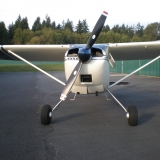
Cessna Skywagon -- accept no substitute!
Wed Jan 11, 2017 2:34 pm
Re: Peering down the c180/p135 rabbit hole...tips?
hotrod180 wrote:dpadvo wrote:...
-set up a drug testing program & procure an FAA letter of authorization for 25 mile radius or less sight seeing tours. there are a few neat loops that could be done around here that would come out to about an hour, which would be perfect for that....
Are those requirements new?
I seem to recall that back not too many years ago (say 10-20), all you needed for 25NM radius flightseeing was a commercial license and 100-hour inspections on the airplane. When did the LOA / drug program requirements take effect?
91.147 Passenger carrying flights for compensation or hire.
Each Operator conducting passenger-carrying flights for compensation or hire must meet the
following requirements unless all flights are conducted under §91.146.
(a) For the purposes of this section and for drug and alcohol testing, Operator means any person
conducting nonstop passenger-carrying flights in an airplane or helicopter for compensation or
hire in accordance with §§119.1(e)(2), 135.1(a)(5), or 121.1(d), of this chapter that begin and end
at the same airport and are conducted within a 25-statute mile radius of that airport.
(b) An Operator must comply with the safety provisions of part 136, subpart A of this chapter, and
apply for and receive a Letter of Authorization from the Flight Standards District Office nearest
to its principal place of business.
(c) Each application for a Letter of Authorization must include the following information:
(1) Name of Operator, agent, and any d/b/a (doing-business-as) under which that Operator does
business;
(2) Principal business address and mailing address;
(3) Principal place of business (if different from business address);
(4) Name of person responsible for management of the business;
(5) Name of person responsible for aircraft maintenance;
(6) Type of aircraft, registration number(s), and make/model/series; and
(7) An Antidrug and Alcohol Misuse Prevention Program registration.
(d) The Operator must register and implement its drug and alcohol testing programs in accor-
dance with part 120 of this chapter.
(e) The Operator must comply with the provisions of the Letter of Authorization received.
[Doc. No. FAA-1998-4521, 72 FR 6911, Feb. 13, 2007, as amended by Amdt. 91-307, 74 FR
22652, May 14, 2009; Amdt. 91-320, 76 FR 8893, Feb. 16, 2011]
Wed Jan 11, 2017 3:07 pm
Re: Peering down the c180/p135 rabbit hole...tips?
mtv wrote:glacier wrote:Since the 206 suggestion came up, what about a Cherokee Six? Maintenance seems less, and possibly upfront cost too?
On the other hand, I've always wondered why Southeast Alaska operators favored Cherokees while western Alaska favored 206's and 207's (before Caravans took hold everywhere anyhow...). Is it because it's hard to taxi with the low wing around snow berms, which are much more persistent out west?
Actually, many years ago, Orin Seybert, owner of Peninsula Airways, got rid of all his 206s and replaced them with Cherokee Sixes. I asked Orin about this decision at the time, and his response was mostly that the 6 has a great load capacity, easy to operate, better engine (Lycoming) with longer tbo, and they're tougher than trucks. I couldn't disagree with any of those arguments.
MTV
^All that plus they handle wind better. Not as 'nice' to fly I'd say, but again, that doesn't matter to the business or passengers. Can fit more in the 'kee than a 206 and they're half the price to buy.
But while a 206 makes a great floatplane or off airport wheel plane, and even a passable skiplane, a Cherokee is strictly a strip to strip plane. Sure, hard beaches or small rock gravel bars are no problem, but for a plane to use off-airport the Cessna will win hands down. Of course, as has been learned over and over by operators around the state (including Pen Air), off-airport is not good business. That's why we make airstrips. And for village to village runs in a small piston singe, Cherokee Six is a Rock Star!
- North River offline
- Posts: 88
- Joined: Sat Nov 24, 2012 3:02 pm
- Location: The Last Frontier
DISPLAY OPTIONS
Who is online
Users browsing this forum: No registered users and 0 guests
Latest Features
-
Live to Tell
A Minnesota pilot is surprised to learn that the sudden asymmetric drag of an out-of-rig ski can…Read More -
Creators
Working in some of the Yukon's most beautiful and remote environments, photographer Simon Blakesley captures aircraft in…Read More -
Aircraft Ownership and Maintenance
Upgrading to big tires can make a huge difference in backcountry performance, but with those gains come…Read More -
Tales from Yesteryear
In this tale from bush flying yesteryear, Don Cogger signs up to help Atlee Dodge Jr recovery…Read More


Latest Knowledge Base
-
Destinations
A regional guide with ideas for winter camping destinations in California, Nevada, New Mexico, and Arizona.Read More -
Aircraft
Finding an affordable aircraft that can handle the backcountry for $80K or less? A challenge for sure, but with the…Read More -
Aircraft
01.29.2018 - Zane - Updated tire diameter graphic to add 8.50x10 Guide to tires for use in the backcountry and off-airport landing…Read More -
Pilots
12.22.2013 - Initial article format Operating aircraft on skis and negotiating a snow-covered landscape is an entirely unique skillset and environment.…Read More


