I just flew a nice 172 to town yesterday, cruised at about 95 kts. Was pretty happy with that.
Flew a PA-18 back. Cruised at about 75 kts. Was pretty happy with that.
If all you guys need your airplane ferried to the place where it is fun to fly it, let me know. Happy to help. I really do love to fly any speed.
Personal cruise speed tolerance
Sun Apr 17, 2016 11:28 pm
- Troy Hamon offline

- Posts: 913
- Joined: Tue Apr 06, 2010 8:27 am
- Location: King Salmon
- FindMeSpot URL: http://share.findmespot.com/shared/face ... 04iX0FXjV2
- Aircraft: Piper PA-22
Wed Apr 20, 2016 5:03 pm
Re: Personal cruise speed tolerance
Anything less than 120 kts over the ground.
Below that point, I think of the winds aloft forecast and look to move altitude to a faster situation...
So I guess that means 120 kts for me.
Any slower, and I feel like I might as well be dragging bigger tires and more STOL mods through the air, to justify travelling such a slow speed. No STOL mods, well then you might as well be going 180 kts with the same engine is a streamlined plane.
Below that point, I think of the winds aloft forecast and look to move altitude to a faster situation...
So I guess that means 120 kts for me.
Any slower, and I feel like I might as well be dragging bigger tires and more STOL mods through the air, to justify travelling such a slow speed. No STOL mods, well then you might as well be going 180 kts with the same engine is a streamlined plane.

Thu Apr 21, 2016 8:40 am
Re: Personal cruise speed tolerance
I'm kind of surprised that there's been 4 pages of responses on this thread. Just about everyone is basically saying "I wouldn't put up with a cruise speed any lower than what my airplane delivers"-- whether it's Battson's 120 knot Bearhawk or Ultralights 80 knot minimum.. Seems to me that for anything other than a high-speed traveler, people own whatever kind of airplane blows their skirt up and just put up with whatever cruise speed they get.

Cessna Skywagon -- accept no substitute!
Fri Apr 22, 2016 4:01 pm
Re: Personal cruise speed tolerance
hotrod180 wrote:I'm kind of surprised that there's been 4 pages of responses on this thread. Just about everyone is basically saying "I wouldn't put up with a cruise speed any lower than what my airplane delivers"-- whether it's Battson's 120 knot Bearhawk or Ultralights 80 knot minimum.. Seems to me that for anything other than a high-speed traveler, people own whatever kind of airplane blows their skirt up and just put up with whatever cruise speed they get.
Lol, very true. There are two versions of deciphering that - one is you buy what you feel fills the best mission statement for you, (one parameter of course is the speed range) and the second is you justify what you purchase.
And of course, perhaps the middle range (for BCP) is where the majority always runs. Seems the middle range here is pretty much 100 mph.
pb
Fri Apr 22, 2016 6:41 pm
Re: Personal cruise speed tolerance
Besides pure speed, another consideration is fuel range. Fuel stops take a lot of time and rarely do the stops fall on the shortest lay line. So there is time wasted for diversion, descent, traffic pattern, landing roll, taxi, fueling process, restart, run up, taxi out, takeoff, climb, etc. It adds up big time. It usually costs me me 30 to 60 minutes at a minimum, and the bigger the airport the worse it is.
If I'm going somewhere, it is always faster to throw in the pee bottle, pull back the throttle, and keep her in the air. Admittedly, my preferred legs are 3 hours or less, but 5 or 6 hour legs are doable if prepared for them. If that eliminates 1 or 2 fuel stops, I'm way ahead time wise. A personal minimum reserve is 10 gallons, or about 1-hour in cruise so I'm good for 6-hours at 117 kts at altitude (above 7,000 feet), or a 700 nm non-stop range.
That can be pushed close to 1,000 nm going above 12k with O2 and tailwinds. on the other hand with strong headwinds, I'm lower and will push the fuel burn up to 12 to 13 gph to maintain ground speed but that is still 4.5 to 5 hours of air time, or just under a 600 nm range.
I'm sure glad to be back on the ground and done flying after those long legs, however. I non-stop Elko to Tucson and the reverse fairly often. Those trips range from 4.5 to 4.5 hours depending on winds. I considered getting a small go-fast to do the same thing then realized with a fuel stop, I wouldn't be saving any time, but it would burn less fuel, but I wouldn't be able to carry as much stuff. Trade offs abound!
If I'm going somewhere, it is always faster to throw in the pee bottle, pull back the throttle, and keep her in the air. Admittedly, my preferred legs are 3 hours or less, but 5 or 6 hour legs are doable if prepared for them. If that eliminates 1 or 2 fuel stops, I'm way ahead time wise. A personal minimum reserve is 10 gallons, or about 1-hour in cruise so I'm good for 6-hours at 117 kts at altitude (above 7,000 feet), or a 700 nm non-stop range.
That can be pushed close to 1,000 nm going above 12k with O2 and tailwinds. on the other hand with strong headwinds, I'm lower and will push the fuel burn up to 12 to 13 gph to maintain ground speed but that is still 4.5 to 5 hours of air time, or just under a 600 nm range.
I'm sure glad to be back on the ground and done flying after those long legs, however. I non-stop Elko to Tucson and the reverse fairly often. Those trips range from 4.5 to 4.5 hours depending on winds. I considered getting a small go-fast to do the same thing then realized with a fuel stop, I wouldn't be saving any time, but it would burn less fuel, but I wouldn't be able to carry as much stuff. Trade offs abound!
- blackrock offline

- Posts: 1576
- Joined: Tue Jan 29, 2008 6:54 pm
- Location: Elko, NV
- FindMeSpot URL: http://share.findmespot.com/shared/face ... BFmtASxjeV
- Aircraft: Bearhawk
Fri Apr 22, 2016 7:57 pm
Re: Personal cruise speed tolerance
I think maybe the speed that most of us are comfortable with is directly proportional to the thickness of our wallets! 
80-100kts seems affordable to most guys but once you go over 100 kts the fuel Burn seems to add up to 50%. I looked at 180/182's for my next plane but could never get the extra speed and fuel Burn match my airplane funds, especially since the kids are grown and gone, no real need for a heavy hauler with speed. To be perfectly honest, I just love being up flying around with no place in particular to go. Pull the throttle back and enjoy the scenery.
80-100kts seems affordable to most guys but once you go over 100 kts the fuel Burn seems to add up to 50%. I looked at 180/182's for my next plane but could never get the extra speed and fuel Burn match my airplane funds, especially since the kids are grown and gone, no real need for a heavy hauler with speed. To be perfectly honest, I just love being up flying around with no place in particular to go. Pull the throttle back and enjoy the scenery.
Fri Apr 22, 2016 9:29 pm
Re: Personal cruise speed tolerance
As I type this, a solo pilot is crossing the Northern Pacific at 39 kt, so I guess he has the best cruise speed tolerance.
https://www.backcountrypilot.org/forum/ ... 50#p266750
https://www.backcountrypilot.org/forum/ ... 50#p266750
- deckofficer offline

- Posts: 225
- Joined: Sun Nov 24, 2013 2:10 pm
- Location: 1st Aero Squadron Airpark NM09, New Mexico
Bob
Fri Apr 22, 2016 9:51 pm
Re: Personal cruise speed tolerance
WWhunter wrote:I think maybe the speed that most of us are comfortable with is directly proportional to the thickness of our wallets!
80-100kts seems affordable to most guys but once you go over 100 kts the fuel Burn seems to add up to 50%. I looked at 180/182's for my next plane but could never get the extra speed and fuel Burn match my airplane funds, especially since the kids are grown and gone, no real need for a heavy hauler with speed. To be perfectly honest, I just love being up flying around with no place in particular to go. Pull the throttle back and enjoy the scenery.
Slower is certainly less expensive per hour and not just with airplanes, but cars, boats, and trains too. Something about drag being proportional to the square of velocity...
Hard to beat the 2-seat Rotax powered planes for economy and still being fast enough to get someplace.

- blackrock offline
- Posts: 1576
- Joined: Tue Jan 29, 2008 6:54 pm
- Location: Elko, NV
- FindMeSpot URL: http://share.findmespot.com/shared/face ... BFmtASxjeV
- Aircraft: Bearhawk
Sat Apr 23, 2016 7:51 am
Re: Personal cruise speed tolerance
Throttled back I have a calculated 8+15 endurance. That's with the VFR reserve already subtracted.
I'm not planning on testing that
I'm not planning on testing that
- CamTom12 offline

- Posts: 3705
- Joined: Sun Jul 08, 2012 1:08 pm
- Location: Huntsville
- FindMeSpot URL: https://share.delorme.com/camtom12
- Aircraft: Ruppe Racer
Experimental Pacer
home hand jam "wizard"
Sat Apr 23, 2016 8:11 am
Re: Personal cruise speed tolerance
Eight hours plus is very impressive. How much range does that get you?
- blackrock offline
- Posts: 1576
- Joined: Tue Jan 29, 2008 6:54 pm
- Location: Elko, NV
- FindMeSpot URL: http://share.findmespot.com/shared/face ... BFmtASxjeV
- Aircraft: Bearhawk
Sat Apr 23, 2016 2:09 pm
Re: Personal cruise speed tolerance
blackrock wrote:Eight hours plus is very impressive. How much range does that get you?
The math says about 820 nm. I can get ~100 kn at ~7 gph. I've got 61 gal capacity, so that's where all the big numbers come from.
- CamTom12 offline
- Posts: 3705
- Joined: Sun Jul 08, 2012 1:08 pm
- Location: Huntsville
- FindMeSpot URL: https://share.delorme.com/camtom12
- Aircraft: Ruppe Racer
Experimental Pacer
home hand jam "wizard"
Sat Apr 23, 2016 2:52 pm
Re: Personal cruise speed tolerance
Cam's Pacer would outrun and use less fuel than the most common pipeline airplane, the 172. Insurance problems with older aircraft on DOT work is probably why some good older airplanes are not used. Also parts availability.
- contactflying offline
- Posts: 4972
- Joined: Wed Apr 03, 2013 7:36 pm
- Location: Aurora, Missouri 2H2
Download my free "https://tinyurl.com/Safe-Maneuvering" e-book.
Sat Apr 23, 2016 3:10 pm
Re: Personal cruise speed tolerance
Left unasked is: how short and rough of terrain do you want to land? I would have a very low tolerance for a faster plane that needed airstrips more then a few hundred feet long. About anthing we do to increase STOL ops decreases cruise speed. So, pick what you want, can't have both.
Some of the all composite European LSA types cruise well over 100 knots, at 3 or 4 gph. They are the speed v. fuel burn champs right now, but they're not landing at my place, once, maybe.
Some of the all composite European LSA types cruise well over 100 knots, at 3 or 4 gph. They are the speed v. fuel burn champs right now, but they're not landing at my place, once, maybe.
- courierguy offline

- Posts: 4197
- Joined: Thu Mar 31, 2005 6:52 pm
- Location: Idaho
"Its easier to apologize then ask permission"
Tex McClatchy
Tex McClatchy
Sun Apr 24, 2016 8:10 am
Re: Personal cruise speed tolerance
My criteria:
4 seats
cavernous baggage compartment
1000# useful load
150 mph cruise
30 mph stall
burns 7 gph
purchase price under $40K
What should I buy?
(oops, almost forgot the )
)
4 seats
cavernous baggage compartment
1000# useful load
150 mph cruise
30 mph stall
burns 7 gph
purchase price under $40K
What should I buy?
(oops, almost forgot the
)Cessna Skywagon -- accept no substitute!
Sun Apr 24, 2016 8:34 am
Re: Personal cruise speed tolerance
Here you go, this should do it.,
Hotrod180 wrote:
My criteria:
4 seats
cavernous baggage compartment
1000# useful load
150 mph cruise
30 mph stall
burns 7 gph
purchase price under $40K
What should I buy?
It’s out of the UK.
Not sure who the US distributor is.


Mon Apr 25, 2016 6:41 pm
Re: Personal cruise speed tolerance
hotrod180 wrote:My criteria:
4 seats
cavernous baggage compartment
1000# useful load
150 mph cruise
30 mph stall
burns 7 gph
purchase price under $40K
What should I buy?
(oops, almost forgot the
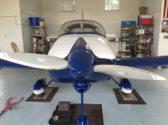
Yeah but... It don't burn 7 gph at 150 mph. (Unless it's an RV!).
Mon Apr 25, 2016 7:19 pm
Re: Personal cruise speed tolerance
Yeah, the Rv's I've seen come into JC, that group of trouble makers,  ,always make damn impressive short landings, especially when compared to their cruise speeds. I remember when the RV 9 first came out, and it's lower landing speed with still decent cruise speeds were hyped. My first thought was: put VG's and and Airstreaks on it...... and maybe still cruise 125-135 mph ( I have a Montana friend who cruises his at 150 mph, at 5 gph), but still have a bit of STOL. But if I did that, I'd want Cub style gear, even then, maybe still above 100 mph cruise, maybe 115 or so? All the RV's I seen are into fast, not slow and short,
,always make damn impressive short landings, especially when compared to their cruise speeds. I remember when the RV 9 first came out, and it's lower landing speed with still decent cruise speeds were hyped. My first thought was: put VG's and and Airstreaks on it...... and maybe still cruise 125-135 mph ( I have a Montana friend who cruises his at 150 mph, at 5 gph), but still have a bit of STOL. But if I did that, I'd want Cub style gear, even then, maybe still above 100 mph cruise, maybe 115 or so? All the RV's I seen are into fast, not slow and short,- courierguy offline
- Posts: 4197
- Joined: Thu Mar 31, 2005 6:52 pm
- Location: Idaho
"Its easier to apologize then ask permission"
Tex McClatchy
Tex McClatchy
DISPLAY OPTIONS
Who is online
Users browsing this forum: No registered users and 0 guests
Latest Features
-
Live to Tell
A Minnesota pilot is surprised to learn that the sudden asymmetric drag of an out-of-rig ski can…Read More -
Creators
Working in some of the Yukon's most beautiful and remote environments, photographer Simon Blakesley captures aircraft in…Read More -
Aircraft Ownership and Maintenance
Upgrading to big tires can make a huge difference in backcountry performance, but with those gains come…Read More -
Tales from Yesteryear
In this tale from bush flying yesteryear, Don Cogger signs up to help Atlee Dodge Jr recovery…Read More


Latest Knowledge Base
-
Destinations
A regional guide with ideas for winter camping destinations in California, Nevada, New Mexico, and Arizona.Read More -
Aircraft
Finding an affordable aircraft that can handle the backcountry for $80K or less? A challenge for sure, but with the…Read More -
Aircraft
01.29.2018 - Zane - Updated tire diameter graphic to add 8.50x10 Guide to tires for use in the backcountry and off-airport landing…Read More -
Pilots
12.22.2013 - Initial article format Operating aircraft on skis and negotiating a snow-covered landscape is an entirely unique skillset and environment.…Read More


