This subject is near and dear to me, and it saddens me that there is still a need to discuss it. So this will be the roughest post you’ve ever read from me.
If you can only afford ONE "rescue/body recovery" device the only one to have is a tracking device - period - it's not up for debate, and I'll tell you why in a minute.
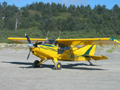
When I'm flying in either the SQ2 or the 185 I have on board: 406 ELT, inReach (which is always turned on before I take off and tracking, part of my takeoff checklist), a PLB, and an Iridium Satellite Phone. I realize I'm very fortunate to be able to afford all these.
If I could only have one of these in my plane it would be the inReach, no questions asked. And that's because a tracking device, and inReach is the best, is the only one of all these devices that doesn't require an "event" to help rescue/recovery personnel find you (assuming you have it turned on and tracking of course). It’s tracking your lat/long/altitude/and speed. Of course you are smart enough to share your tracking website link with your friends and loved ones, and post it here as part of your profile. And should you be in good enough shape after the crash, or have enough time before the crash, you can switch it to S.O.S mode.
406 ELT, requires a crash to be activated and even then you can't count on it activating. You can turn on a 406 independent of a crash, from the switch on the panel, but you might not have time to activate it before, or be too injured or dead afterwards.
PLB, requires you activate it, if your injured same thing, you might not be able to, obviously if your dead you can’t. And you’d better have it hanging around your neck at all times or you might not be able to get to it if you are still alive.
Satellite Phone requires you be able to turn it on and operate it, which you might not be able to do after a crash.
A little over a year ago a very good friend of mine, and fellow BCPr, took off around 7am in his Citabria for parts unknown as he did every weekend. When he missed a get together with a friend at 10:30am his uncle called me and he and I started the search. We had no idea where he had headed or how far he had gone. Think about it. You have to figure on full fuel at launch, and now it’s 3 1/2 hours later. How far could you fly in 3 1/2 hours. Go ahead, plot that out from your airport, out 3 1/2 hours, and now draw a circle with that distance. That’s an enormous search area.
You can read the original post about the crash here, and if you haven’t you should:
https://www.backcountrypilot.org/forum/we-lost-one-of-our-own-this-morning-15784Thanks to Hank’s GoPro, from which the NTSB was able to recover video, we know what happened. He was cruising the treetops when he suddenly spotted high tension wires directly ahead. No time to trip the 406, no time to turn on a PLB had he had one, no time to activate the S.O.S on an inReach had he had one. Only time enough to dive the plane to get under the wires, which he did successfully. Unfortunately his left wing impacted an oak tree branch and that flipped his plane over and he impacted rising terrain upside down. The plane slide on its back for about 75 feet or yards, I don’t recall which, and at some point caught fire. The entire aircraft was consumed leaving only the charred steel fuselage tubing, and Hank’s skeleton.
The autopsy told us that Hank most likely died of blunt force trauma to the head, not from burning up with the plane. He was as tall as me.
The 406 ELT never activated, and of course burned up with the rest of the plane. And remember that 3 1/2 hour radius search area? He crashed just a couple of miles from my airport, on a deserted ranch, at around 7:30am. Had his fire not ignited a 30+ acre brush fire we’d have never found him.
Obviously none of these devices will save you if you are killed, but what about your loved ones getting answers sooner, rather then later, or perhaps never. With an inReach tracking rescuers would have your last plotted location from where to begin searching. My inReach plots me every two minutes.
Sorry for dragging everyone down, this is just really important to me. Get an inReach, and use it, before you upgrade your 121.5 ELT, and before you buy a PLB. You owe it to your family and friends if not to yourself.
Oh, and where does it go if you trigger the S.O.S. on the inReach?
Behind every inReach is GEOS. Behind GEOS is the IERCC — formally known as the International Emergency Response Coordination Center. Send an SOS message through inReach, and it goes directly to the IERCC. More specifically, it goes to a secure underground bunker located north of Houston. It has redundant electrical grids, generators, and a potable water supply from an underground well. In short, complete self-dependence if the outside world “goes away.”
The team at the IERCC is staffed and ready 24/7, 365 days per year, with SAR Mission Coordinators and Duty Officers. As soon as they receive your message, they’ll track your device and notify emergency contacts and responders in the area — they’ll also stay connected to provide updates on your location or to communicate with you. As soon as you activate your inReach, you have full, free access to the IERCC through GEOS SOS monitoring and emergency dispatch.