I bought a Northern Companion from one of our folks here, although I haven't used it yet. Other than some moisture damage to the sack, it looks as if it was never used. It uses MSR's all fuel XGK stove. I already had one of those and attempted to create a pre-heater with it, but my efforts weren't nearly as elegant as the Northern Companion. Compared to any other MSR stove, the XGK sounds like a jet engine about to kick in the after burner!
I have a Reiff Standard on my airplane, which I use all winter. I also have the optional oil cooler heater element. With a cowl cover, it does a great job heating the engine in just a few hours in my unheated hangar. Outside, it takes a little longer. The only problem I've run into away from home is needing a long extension cord at times, and otherwise, the glue holding the heater element on the crankcase failed after a few years, so that that element burned up and had to be replaced.
I also have a cabin heater mounted under the passenger seat, so that I can preheat the instruments and seats. It's a standard cabin heater for vehicles, made by Kats, about $80 from an auto supply store. I have one of those in my car, too, and all of my vehicles have engine heaters. I guess my 3 years in Alaska back in the early 70s made me realize how much of a benefit preheating engines and interiors can be, so I've installed engine heaters on every vehicle I've owned since then. Today's FI vehicle engines will start anyway, but it's a lot easier on them to preheat them.
Incidentally, I just this morning read a paper produced by a grad student at the University of Manitoba that indicated that virtually any engine heater will produce its maximum heat gain in the first 2 hours of operation, and that running the heater any longer than 4 hours was unlikely to warm the engine any further. He used a couple different types of engines and several different heaters of varying wattages, in a controlled environment so that he could have different ambient temperatures ranging from -50F to right at freezing.
Finally getting back to the OP, the engine heater I have just installed on my Class B camper van is a 600 watt version. Plugging it into the van's electrical system, which has two 200 amp hour 12v lithium batteries and a 2000 watt inverter, that 600 watt heater draws 50 amps from the batteries. I could realistically run the heater for about 3 hours, assuming that the batteries were pretty full, which would greatly benefit the Mercedes diesel on a really cold morning. The combination of the two large lithium batteries and the inverter probably weigh in the neighborhood of 50 lbs. although I've not weighed them. Each of the batteries is about the size of a type 30 battery, and the inverter is about the size of a shoe box. So I'm pretty sure that any attempt to get around using a generator to run a Tanis would weigh close to twice what a 1000 watt Honda would weigh, and take up more room.
Some years ago, I bought a 600 watt Coleman generator, which is powered by a 2 cycle Subaru engine of dubious reliability, thinking that I could carry it in the airplane. It's much smaller than a Honda 1000, about a foot cube, and it will handle the Reiff's electrical needs. When the Windsor tornado hit 10 years ago, I used it to keep my ol' Ma's refrigerator running for the several days that she was without power, having to refuel the tank about every 4 hours, so it is pretty economical. But it's got to be the noisiest little generator ever made! It's also hard to start, regardless of situation--good for building muscles, unlike a Honda that will start on the first pull. Whether there would be a market for a little one of 500 or 600 watts using one of the Honda mini engines is hard to say. Some of us would buy it, but that's a pretty small market.
Cary
Power supply to run Tanis Heater
Fri Nov 23, 2018 4:52 pm

"I have slipped the surly bonds of earth..., put out my hand and touched the face of God." J.G. Magee
Sat Nov 24, 2018 7:00 am
Re: Power supply to run Tanis Heater
I am a big fan of Honda engines, have always had several around for different applications, they start easy. However, I have two small generators at the cabin, an older Honda 1000 and new Honda 2000i, neither of these wants to start when it is much below freezing (yes, I always use fresh premium gas and thin oil), I have to bring them in by the wood stove and let them warm up first. I may just have two exceptionally bad starting Honda generators, but with that knowledge, wonder how dependable a small generator would be to start if it was needed to warm up a plane in extremely cold temps, without itself first needing to be warmed up?
Courierguy, I am with you, nice to get out by yourself in the middle of nowhere sometimes.
Courierguy, I am with you, nice to get out by yourself in the middle of nowhere sometimes.

Sat Nov 24, 2018 8:02 am
Re: Power supply to run Tanis Heater
I recall hearing about the small Honda's having some issue with a vent freezing up, and there is even a fix for it. The Yamaha's don't seem to have that problem, but the main reason I bought it is it's 1 lb. lighter and I think a few db quieter. But yes, an unreliable small gen set would be worse then none at all, and I can see the combustion type pre heating methods winning in that respect, somewhat balancing out the fire concern.
I have one other winter camping possible destination, a summer range rider (real cowboys....who live out all summer, keeping an eye on the cattle) cabin in the Lemhi's. Real funky, no woodstove, but at least walls and a roof. I need to track down the rancher and get permission, which I wouldn't expect to be any problem as no one in their right mind would want to camp there anyway, I know many ranchers in the area, and have done solar water pumping work for them, they are all great people.
I have one other winter camping possible destination, a summer range rider (real cowboys....who live out all summer, keeping an eye on the cattle) cabin in the Lemhi's. Real funky, no woodstove, but at least walls and a roof. I need to track down the rancher and get permission, which I wouldn't expect to be any problem as no one in their right mind would want to camp there anyway, I know many ranchers in the area, and have done solar water pumping work for them, they are all great people.
- courierguy offline

- Posts: 4197
- Joined: Thu Mar 31, 2005 6:52 pm
- Location: Idaho
"Its easier to apologize then ask permission"
Tex McClatchy
Tex McClatchy
Sat Nov 24, 2018 8:38 am
Re: Power supply to run Tanis Heater
I have had the same experience with my Honda's (2-1000's &1-2000) with hard starting. They heat twice (just like cutting and burning wood), by the time you get them started your body is heated up!
As mentioned, maybe they don't like extremely cold weather. Starts on the first pull if it's warm. Definitely nice and quite, along with fuel efficient.
I'm going to try to see if it works better with 100LL.
Honda made a 600W years ago I believe. Not sure if it was much lighter that the current 1000W though. I see them from time to time for sale.
As mentioned, maybe they don't like extremely cold weather. Starts on the first pull if it's warm. Definitely nice and quite, along with fuel efficient.
I'm going to try to see if it works better with 100LL.
Honda made a 600W years ago I believe. Not sure if it was much lighter that the current 1000W though. I see them from time to time for sale.

Sat Nov 24, 2018 10:03 am
Re: Power supply to run Tanis Heater
I'm no sort of small engine expert, but my guess is that 100ll will make cold starts harder, not easier, because it's less volatile than lower octane fuel and therefore less likely to vaporize in the combustion chamber. Liquid fuel isn't combustable, only the vapors from the fuel can burn, so you want a fuel that will vaporize at the lowest temperature possible. Isn't that why people use ether engine starter fluid in the cold...because it vaporizes when it's too cold for the fuel to vaporize?
I guess for the extremely risk-adverse you could use a combustion heater to warm up your generator, and the generator to warm up your airplane.
Frankly, for someone who puts some thought into what they're doing and keeps vigilant during the process, I think that combustion heaters are perfectly safe.
I guess for the extremely risk-adverse you could use a combustion heater to warm up your generator, and the generator to warm up your airplane.
Frankly, for someone who puts some thought into what they're doing and keeps vigilant during the process, I think that combustion heaters are perfectly safe.


Sat Nov 24, 2018 11:53 am
Re: Power supply to run Tanis Heater
Hammer's points are good. 100LL is slower vaporizing when cold than regular fuel.
I like using a can of starting fluid to get equipment going when cold or poorly choked/too much air. Used in limited quantity it causes no harm. Engine's fire a few revs then the onboard fuel take over the process. A cold engine will condense regular fuel back to liquid between the carb and in combustion chamber while cranking and cause a lean fuel mixture. Starting fluid vapors pass through better.
Honda and I assume most other small generators pump fuel up to the carb from the onboard tank. The carb's float bowl is vented with small clear tubing and can gradually loose fuel content when tipped or through simple vaporizing when sitting. Then it takes several pulls to refill the carb so it'll again supply fuel. The pump depends on crankcase vacuum/pressure created during cranking to flex a diaphragm that pulls in and pumps out fuel.
Supply the carb with starting fluid by temporarily removing the air filter element then replace.
Edit: One disadvantage to the Honda EU2000 generator is the rubber timing belt used to activate the camshaft and valves. Gets stiff when cold and can slow cranking. Both Honda and Yamaha 1000 units use direct drive gears between the crankshaft and cam so are easier to crank when cold.
Gary
I like using a can of starting fluid to get equipment going when cold or poorly choked/too much air. Used in limited quantity it causes no harm. Engine's fire a few revs then the onboard fuel take over the process. A cold engine will condense regular fuel back to liquid between the carb and in combustion chamber while cranking and cause a lean fuel mixture. Starting fluid vapors pass through better.
Honda and I assume most other small generators pump fuel up to the carb from the onboard tank. The carb's float bowl is vented with small clear tubing and can gradually loose fuel content when tipped or through simple vaporizing when sitting. Then it takes several pulls to refill the carb so it'll again supply fuel. The pump depends on crankcase vacuum/pressure created during cranking to flex a diaphragm that pulls in and pumps out fuel.
Supply the carb with starting fluid by temporarily removing the air filter element then replace.
Edit: One disadvantage to the Honda EU2000 generator is the rubber timing belt used to activate the camshaft and valves. Gets stiff when cold and can slow cranking. Both Honda and Yamaha 1000 units use direct drive gears between the crankshaft and cam so are easier to crank when cold.
Gary
Last edited by PA1195 on Sat Nov 24, 2018 12:23 pm, edited 2 times in total.
Sat Nov 24, 2018 11:54 am
Re: Power supply to run Tanis Heater
.
Last edited by glacier on Wed Feb 03, 2021 5:52 am, edited 1 time in total.
Sat Nov 24, 2018 4:55 pm
Re: Power supply to run Tanis Heater
I got my heater to run, just a lot more venting. The draft is lower, but still a lot of heat coming out the hose. I plan to use this in the hangar (I have no power), and stick to the Whisperlite setup when Im out and about.

- daedaluscan offline


- Posts: 1269
- Joined: Sat Jan 12, 2013 1:06 pm
- Location: Texada BC
Sat Nov 24, 2018 5:42 pm
Re: Power supply to run Tanis Heater
Stick one of these in the bottom of the heat shroud: https://www.coolerguys.com/collections/dc-12-volt-fans Power with small battery charged in vehicle used to go to and from hangar.
Gary
Gary
Sat Nov 24, 2018 6:15 pm
Re: Power supply to run Tanis Heater
This question is meant for argument's sake. I lean toward the MSR-powered solution.
I also realize it's in direct contradiction to OP's question.
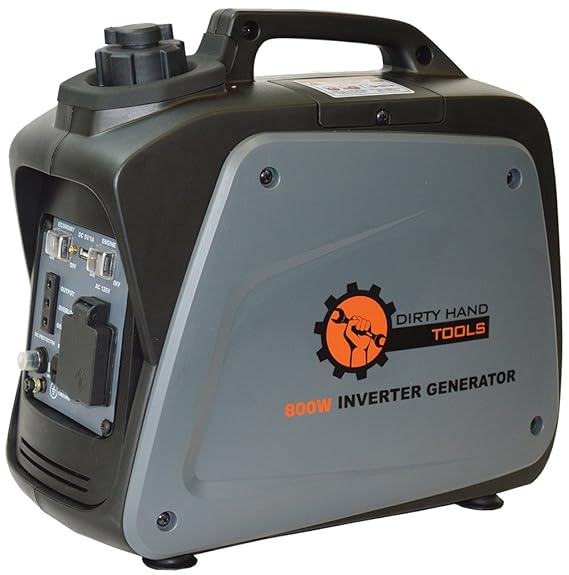
I have one of those sump patch heaters on my 320. Will a tiny 800W generator work ok?
I think I read that it's less than 2A continuous load at 115VAC to heat one. These ultralight generators supposedly weigh 19 lbs, and they'd work for other useful tasks like charging batteries for cameras and phones and stuff.
https://amzn.to/2Rieiva
I also realize it's in direct contradiction to OP's question.
gypsywagon wrote:... rather than a 20 lb generator.
I have one of those sump patch heaters on my 320. Will a tiny 800W generator work ok?
I think I read that it's less than 2A continuous load at 115VAC to heat one. These ultralight generators supposedly weigh 19 lbs, and they'd work for other useful tasks like charging batteries for cameras and phones and stuff.
https://amzn.to/2Rieiva
- Zzz offline


- Posts: 2855
- Joined: Fri Oct 08, 2004 11:09 pm
- Location: northern
- Aircraft: Swiveling desk chair
Half a century spent proving “it is better to be thought a fool than to open your mouth and remove all doubt.”
Sat Nov 24, 2018 6:56 pm
Re: Power supply to run Tanis Heater
The more dependable the better when it comes to outdoors activity. Creating an internal combustion fire to make electricity to make heat with a generator assumes the components will work when needed, especially in extremes of weather. Just making a fire with a cook stove or catalytic heater is simpler and works most of the time.
The only issue for me has been wind and cold. Keeping a cook stove running then is a challenge plus heat is lost on the way to the engine. Having a heater in the engine compartment (electric or catalytic) can be better.
I suggest having a couple options in case one method fails.
Gary
The only issue for me has been wind and cold. Keeping a cook stove running then is a challenge plus heat is lost on the way to the engine. Having a heater in the engine compartment (electric or catalytic) can be better.
I suggest having a couple options in case one method fails.
Gary
Sat Nov 24, 2018 8:03 pm
Re: Power supply to run Tanis Heater
The Hondas have a bad reputation around here for not starting in the cold (as well as the breather freezing). One -30F day I was responding to a clinic with a power outage. Grabbed two ~4000w Honda generators from the main hospital, ran them both for a few minutes before loading into the pickup for a five mile drive to the clinic. Neither would start again until warmed up inside for a while. 
- marcusofcotton offline

- Posts: 257
- Joined: Sun Jan 02, 2011 6:44 am
- Location: Northern MN
Sat Nov 24, 2018 8:49 pm
Re: Power supply to run Tanis Heater
Most of today's power tool engines are EPA/CARB compliant. Lean run jetting and chokes that are just a suggestion. Use starting fluid and 5W-30 or thinner synthetic oil. Honda makes an electric breather hose heater but wrapping it with insulative material can also help prevent internal ice buildup and then oil blow-out past the seals.
Gary
Gary
Sat Nov 24, 2018 11:08 pm
Re: Power supply to run Tanis Heater
Zzz wrote:This question is meant for argument's sake. I lean toward the MSR-powered solution.
I also realize it's in direct contradiction to OP's question.gypsywagon wrote:... rather than a 20 lb generator.
I have one of those sump patch heaters on my 320. Will a tiny 800W generator work ok?
I think I read that it's less than 2A continuous load at 115VAC to heat one. These ultralight generators supposedly weigh 19 lbs, and they'd work for other useful tasks like charging batteries for cameras and phones and stuff.
https://amzn.to/2Rieiva
This is my planned solution. A local store use to sell these same generators under a different brand. They had a lot of customers say they liked them and had very few customers dislike them. Also, I have several other uses for a small, light weight generator. 800W is plenty for a sump heater and is enough to power the Tanis engine heater I plan to install on my plane.
I've used a multi-fuel stove in the past and it worked fine but I rather do something besides baby-sit the airplane for several hours. If the intention is just to get the engine started then 30min of hot air is plenty. If you want to actually preheat the engine then it is going to take a chunk of time.

Sun Nov 25, 2018 4:28 pm
Re: Power supply to run Tanis Heater
daedaluscan wrote:I really haven't had the time to look into it. I think it is the draught from the pipe causing too much flow over the pilot light sensor. It works fine without the ducting installed. I am trying to make a baffle to direct the draught away.
I did shorten the shroud in length as I initially thought that it was restricting oxygen flow to the burner. I may try with a 4" duct to reduce the airflow, I wanted the 5" to get more heat under the cowling faster.
One serious caveat with these setups is that it would be a shame to burn an airplane up trying to preheat. Caution and a fire extinguisher. No dripping gascolators.
The Buddy heaters are very sensitive to low oxygen, winds and being tipped. I personally wouldn’t want to rely on one in the backcountry for preheating.
J

Sun Nov 25, 2018 7:55 pm
Re: Power supply to run Tanis Heater
Good find! I sure as hell have never seen that, 19 lbs., pretty good. Even better would a 500 watt one at maybe 13 lbs! Let us know how it works out. Tractor Supply, CAL Ranch, or Bingham Coop? CAL I'm thinking....
- courierguy offline
- Posts: 4197
- Joined: Thu Mar 31, 2005 6:52 pm
- Location: Idaho
"Its easier to apologize then ask permission"
Tex McClatchy
Tex McClatchy
Sun Nov 25, 2018 8:55 pm
Re: Power supply to run Tanis Heater
courierguy wrote:Good find! I sure as hell have never seen that, 19 lbs., pretty good. Even better would a 500 watt one at maybe 13 lbs! Let us know how it works out. Tractor Supply, CAL Ranch, or Bingham Coop? CAL I'm thinking....
You sure about that? [emoji6]
viewtopic.php?t=19387
CAL doesn’t carry them anymore.
Tue Nov 27, 2018 7:16 pm
Re: Power supply to run Tanis Heater
Hey, I knew it looked familiar!
I spotted this at Costco today. Painted Yamaha blue, with the word Yamaha scattered around, it took a while to see it was NOT an all Yamaha genset, but one that does at least use a Yamaha motor. An interesting bit of marketing! Seems like a pretty killer price, as you never see the little 1 KW blue or red ones for less then about $750.00. Unless the generator side of things was a total piece of crap.
I spotted this at Costco today. Painted Yamaha blue, with the word Yamaha scattered around, it took a while to see it was NOT an all Yamaha genset, but one that does at least use a Yamaha motor. An interesting bit of marketing! Seems like a pretty killer price, as you never see the little 1 KW blue or red ones for less then about $750.00. Unless the generator side of things was a total piece of crap.
- courierguy offline
- Posts: 4197
- Joined: Thu Mar 31, 2005 6:52 pm
- Location: Idaho
"Its easier to apologize then ask permission"
Tex McClatchy
Tex McClatchy
Sat Dec 29, 2018 2:54 pm
Re: Power supply to run Tanis Heater
whee wrote:Zzz wrote:This question is meant for argument's sake. I lean toward the MSR-powered solution.
I also realize it's in direct contradiction to OP's question.gypsywagon wrote:... rather than a 20 lb generator.
I have one of those sump patch heaters on my 320. Will a tiny 800W generator work ok?
I think I read that it's less than 2A continuous load at 115VAC to heat one. These ultralight generators supposedly weigh 19 lbs, and they'd work for other useful tasks like charging batteries for cameras and phones and stuff.
https://amzn.to/2Rieiva
This is my planned solution. A local store use to sell these same generators under a different brand. They had a lot of customers say they liked them and had very few customers dislike them. Also, I have several other uses for a small, light weight generator. 800W is plenty for a sump heater and is enough to power the Tanis engine heater I plan to install on my plane.
I've used a multi-fuel stove in the past and it worked fine but I rather do something besides baby-sit the airplane for several hours. If the intention is just to get the engine started then 30min of hot air is plenty. If you want to actually preheat the engine then it is going to take a chunk of time.
I just picked up this exact generator on amazon and can attest that it is in fact less than 20lbs. It is a perfect size for the back of my 180 and it opens up the ability to do a lot more with a little bit of power than any battery back or camp stove does. I plan on testing it out this coming weekend 1/5/18 on my EZ-heat pad in Colorado to see how well it does. So far I haven't ran it on 100ll so when I do ill report back here. I had borrowed an old dragon heater from a friend and it is in a metal tool box and it is about the same weight as the generator and the generator is more versatile.
- tgundersen offline
- Posts: 3
- Joined: Fri Oct 05, 2018 2:51 pm
- Location: Henderson
- Aircraft: C180K
Sun Dec 30, 2018 9:58 am
Re: Power supply to run Tanis Heater
daedaluscan wrote:One serious caveat with these setups is that it would be a shame to burn an airplane up trying to preheat. Caution and a fire extinguisher. No dripping gascolators.
Reason enough to use a generator and a Reiff or Tanis system!
- NunavutPA-12 offline
- Posts: 123
- Joined: Sat Feb 22, 2014 8:52 pm
- Location: Kugluktuk
DISPLAY OPTIONS
Who is online
Users browsing this forum: No registered users and 11 guests
Latest Features
-
Live to Tell
A Minnesota pilot is surprised to learn that the sudden asymmetric drag of an out-of-rig ski can…Read More -
Creators
Working in some of the Yukon's most beautiful and remote environments, photographer Simon Blakesley captures aircraft in…Read More -
Aircraft Ownership and Maintenance
Upgrading to big tires can make a huge difference in backcountry performance, but with those gains come…Read More -
Tales from Yesteryear
In this tale from bush flying yesteryear, Don Cogger signs up to help Atlee Dodge Jr recovery…Read More


Latest Knowledge Base
-
Destinations
A regional guide with ideas for winter camping destinations in California, Nevada, New Mexico, and Arizona.Read More -
Aircraft
Finding an affordable aircraft that can handle the backcountry for $80K or less? A challenge for sure, but with the…Read More -
Aircraft
01.29.2018 - Zane - Updated tire diameter graphic to add 8.50x10 Guide to tires for use in the backcountry and off-airport landing…Read More -
Pilots
12.22.2013 - Initial article format Operating aircraft on skis and negotiating a snow-covered landscape is an entirely unique skillset and environment.…Read More


