Backcountry Pilot • Pucker Factor in a Stinson

Pucker Factor in a Stinson

Links to general aviation backcountry flying-oriented videos. It can be yours or stuff you find on the internet. Please no airline/military.
23 postsPage 2 of 21, 2

Re: Pucker Factor in a Stinson

highroad wrote:this reminds me of the importance of always having a "shut it down and get on the brakes point" on the takeoff roll.


I never could figure out how that works, alot of the short field flying I've done involved strips not much longer than the aircraft actually needed for the conditions (load, temp, field elevation, and runway surface). Sometimes the 206 would need 700 feet or even all of the 800 foot strip/gravel bar to get airborne. Aborting anytime before that would be just silly, and attempting to stop by then wouldn't be possible. On a lot of strips, the landing abort decision had to be made right in the flare, as any float at all would result in an overrun on rollout, and aborting too late at gross would mean wobbling off the end of the strip in ground effect and into the brush.
born2flyak offline
User avatar
Posts: 190
Joined: Sat Dec 06, 2008 9:41 pm
Location: Anchorage
FindMeSpot URL: http://share.findmespot.com/shared/face ... GrbFWMETdm

Re: Pucker Factor in a Stinson

one thing I learned from towing in a fast paced environment-minimal checklist verbalization (Gas, Flaps, Trim) while pointing/looking at each. IF utilizing a rolling T/O may save you. It sure saved my bacon more times than one. Granted it's not complete but will get you in the air.

I still say it everytime I put in the coals even after A full checklist.
FLYNAKD offline
User avatar
Posts: 172
Joined: Thu May 20, 2010 2:34 pm
Location: Littleton
Aircraft: Super Stinson 108-3

Re: Pucker Factor in a Stinson

born2flyak wrote:
highroad wrote:this reminds me of the importance of always having a "shut it down and get on the brakes point" on the takeoff roll.


I never could figure out how that works, alot of the short field flying I've done involved strips not much longer than the aircraft actually needed for the conditions (load, temp, field elevation, and runway surface). Sometimes the 206 would need 700 feet or even all of the 800 foot strip/gravel bar to get airborne. Aborting anytime before that would be just silly, and attempting to stop by then wouldn't be possible. On a lot of strips, the landing abort decision had to be made right in the flare, as any float at all would result in an overrun on rollout, and aborting too late at gross would mean wobbling off the end of the strip in ground effect and into the brush.

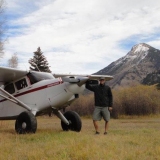
Some people call it the 50/70 rule. By the time you reach the 50% point of the runway, you need to have achieved 70% of your takeoff speed. Otherwise, you abort, then wait for more favorable winds or cooler temperatures.
kevbert offline
Posts: 948
Joined: Thu Jul 24, 2008 11:10 am
Location: Idaho

DISPLAY OPTIONS

Previous
23 postsPage 2 of 21, 2

Who is online

Users browsing this forum: No registered users and 3 guests

Latest Features

Latest Knowledge Base