Posted this to Skywagon guys too but…
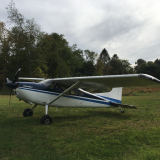
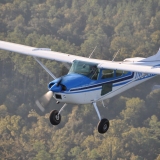
Recently I’ve noticed a slight drop in rpm on takeoff. 1979 A185F io520 with 3blade MT. Rpm is limited to 2700rpm and I noticed last few takeoffs to be 50rpm shy of full rpm. Can weather conditions adversely affect the rpm? Still relatively low time in the Skywagon(260hrs) and I’m learning every time I fly. Is the 50 rpm worth chasing?
Also on this topic…the poh states with the old prop that 2850rpm at 300hp for climb out and continuous operation at 2700 at 285hp. Does that mean that now that I’m prop limited to 2700 rpm that my max hp is 285?
thanks in advance, B
RPM ON TAKEOFF
Mon Jul 12, 2021 10:02 am
Mon Jul 12, 2021 11:39 am
Re: RPM ON TAKEOFF
Yes, you are prop limited to 2700, so you are only getting 285hp now due to the MT. That is part if the MT STC, limits you to 2700RPM.L16Driver wrote:Posted this to Skywagon guys too but…
Recently I’ve noticed a slight drop in rpm on takeoff. 1979 A185F io520 with 3blade MT. Rpm is limited to 2700rpm and I noticed last few takeoffs to be 50rpm shy of full rpm. Can weather conditions adversely affect the rpm? Still relatively low time in the Skywagon(260hrs) and I’m learning every time I fly. Is the 50 rpm worth chasing?
Also on this topic…the poh states with the old prop that 2850rpm at 300hp for climb out and continuous operation at 2700 at 285hp. Does that mean that now that I’m prop limited to 2700 rpm that my max hp is 285?
thanks in advance, B
If you are noticing a difference then it's worth chasing. Maybe your tach is just off a bit. Check it with a digital tach to confirm that it is reading correct.


Mon Jul 12, 2021 11:49 am
Re: RPM ON TAKEOFF
I’m referencing the engine monitor for rpm. Good information. I’ll investigate further. Thank you for your reply!
Mon Jul 12, 2021 2:19 pm
Re: RPM ON TAKEOFF
Yes, definitely find out what's going on with the drop in RPM. 50 rpm doesn't sound like much, but....it's not providing rated power or thrust.
Also, understand that engine horsepower is one metric, but THRUST is what makes an airplane go, NOT so much horsepower.
There is no such thing as a 100 % efficient propeller, but modern propeller technology has dramatically improved the EFFICIENCY of the newer propellers. If you've been around a while, you'll have seen some very dramatic changes in propeller blade shape over the last 30 or 40 years. That's a good thing, these newer propellers are significantly more efficient at turning torque and horsepower into thrust, which is ultimately what makes our plane accelerate and climb.
So, while your engine is now rpm limited to 2700 horsepower, that MT prop is probably in fact making as much or more THRUST at 2700 rpm as the old prop made at 2850 rpm. I know that Flight Resource has done some testing along that line and found that to be true.
It's been well documented that with the long two bladed props on those engines, the prop tips were entering the transonic speed range, and in that range, those prop tips were using horsepower to make noise, effectively.
Finally, based on the way the IO-520 engines were rated, they often don't make a full 300 horsepower anyway.
But, what many folks don't appreciate is that thrust is what we should really be concerned with. Horsepower, not so much.
An interesting but side note: I purchased an MT Ultra prop for my 180 hp Cessna 175. When I took the prop out of the box, I was pretty skeptical....the blades on this prop are fairly slender, compared to the 80 inch Hartzell propeller that the MT was replacing. I wondered what the performance would be like. After the first takeoff, all of those thoughts went in the trash....this thing pulls like a tugboat. So appearances can also be deceiving.
MTV
Also, understand that engine horsepower is one metric, but THRUST is what makes an airplane go, NOT so much horsepower.
There is no such thing as a 100 % efficient propeller, but modern propeller technology has dramatically improved the EFFICIENCY of the newer propellers. If you've been around a while, you'll have seen some very dramatic changes in propeller blade shape over the last 30 or 40 years. That's a good thing, these newer propellers are significantly more efficient at turning torque and horsepower into thrust, which is ultimately what makes our plane accelerate and climb.
So, while your engine is now rpm limited to 2700 horsepower, that MT prop is probably in fact making as much or more THRUST at 2700 rpm as the old prop made at 2850 rpm. I know that Flight Resource has done some testing along that line and found that to be true.
It's been well documented that with the long two bladed props on those engines, the prop tips were entering the transonic speed range, and in that range, those prop tips were using horsepower to make noise, effectively.
Finally, based on the way the IO-520 engines were rated, they often don't make a full 300 horsepower anyway.
But, what many folks don't appreciate is that thrust is what we should really be concerned with. Horsepower, not so much.
An interesting but side note: I purchased an MT Ultra prop for my 180 hp Cessna 175. When I took the prop out of the box, I was pretty skeptical....the blades on this prop are fairly slender, compared to the 80 inch Hartzell propeller that the MT was replacing. I wondered what the performance would be like. After the first takeoff, all of those thoughts went in the trash....this thing pulls like a tugboat. So appearances can also be deceiving.
MTV


Mon Jul 12, 2021 4:37 pm
Re: RPM ON TAKEOFF
Thanks again for all the info regarding details on how the propeller does its thing! I’ll be pulling the cowling and checking for full unrestricted travel. We will make the adjustments to governor as needed. Overall very happy with the prop.
Best, B
Best, B
Mon Jul 12, 2021 5:44 pm
Re: RPM ON TAKEOFF
I have a three-blade MT on my 185 with the IO-520d engine, and therefore, I have the prop limited to 2700.
Prior to my MT, I had a 3-blade 88" Mac. I had done many flight tests for takeoff at 2850 and 2700. With the exception of the initial pull at 2850, all of my takeoffs at 2700 were better. 2850 feels like being stuck in first gear. With the MT, I have never thought that 2850 would be better than 2700. The only direction for me to go for more power is displacement.....not RPM.
Regarding your max RPM of 2650, I would look into it for the reason that you want to know why there is a change. I personally chase these things on my plane. I don't like random changes.
Prior to my MT, I had a 3-blade 88" Mac. I had done many flight tests for takeoff at 2850 and 2700. With the exception of the initial pull at 2850, all of my takeoffs at 2700 were better. 2850 feels like being stuck in first gear. With the MT, I have never thought that 2850 would be better than 2700. The only direction for me to go for more power is displacement.....not RPM.
Regarding your max RPM of 2650, I would look into it for the reason that you want to know why there is a change. I personally chase these things on my plane. I don't like random changes.
Mon Jul 12, 2021 8:58 pm
Re: RPM ON TAKEOFF
Ambient conditions would only affect the RPM on a constant speed prop if it is operating on the fine pitch limit, so if the pitch limit was too coarse, the prop acts like a fixed pitch with regards to rpm. If the pitch is set too fine, you can’t make usable power in case of a governor failure, so the pitch limit is a balance on those to conditions. Conveniently we don’t have to figure that out because it’s specified. I have read of MT props loosing their fine pitch setting. It’s adjusted by the nut on the tip of the hub and has a second jam nut to keep the adjustment from changing. If not properly torqued, the setting could migrate.
I’ve experienced rpm slowly changing overtime and it ended up being the governor letting me know it was time for an overhaul. My case was I had to start pulling the rpm knob back to keep from over-speeding the prop on takeoff, so opposite direction in rpm compared to what your seeing. Since the governor has to supply oil pressure to make the pitch more coarse, I wouldn’t expect a failing governor to be providing extra oil pressure, but maybe there’s a failure mode that causes that; I don’t know.
Not saying either of those issues apply to you, just info to add to consideration, but like others have said, something has changed ands it’s worth figuring out what it is.
I’ve experienced rpm slowly changing overtime and it ended up being the governor letting me know it was time for an overhaul. My case was I had to start pulling the rpm knob back to keep from over-speeding the prop on takeoff, so opposite direction in rpm compared to what your seeing. Since the governor has to supply oil pressure to make the pitch more coarse, I wouldn’t expect a failing governor to be providing extra oil pressure, but maybe there’s a failure mode that causes that; I don’t know.
Not saying either of those issues apply to you, just info to add to consideration, but like others have said, something has changed ands it’s worth figuring out what it is.
Wed Sep 15, 2021 5:52 pm
Re: RPM ON TAKEOFF
I’d like to update any who are interested… I did pull the cowling before Oshkosh and made a small adjustment to the gov. I am back to 2700rpm. Actually it’s just a tad high at full rpm… so I am just pulling it back to 2700 on takeoff. I feel this is better than not reaching full rpm although it is a little more to do while on climb out. Thanks to all for the advice and shared knowledge. Like I’ve said before I’m still learning.
Thu Sep 16, 2021 6:48 am
Re: RPM ON TAKEOFF
Thanks for the follow up!
MTV
MTV
DISPLAY OPTIONS
Who is online
Users browsing this forum: No registered users and 0 guests
Latest Features
-
Live to Tell
A Minnesota pilot is surprised to learn that the sudden asymmetric drag of an out-of-rig ski can…Read More -
Creators
Working in some of the Yukon's most beautiful and remote environments, photographer Simon Blakesley captures aircraft in…Read More -
Aircraft Ownership and Maintenance
Upgrading to big tires can make a huge difference in backcountry performance, but with those gains come…Read More -
Tales from Yesteryear
In this tale from bush flying yesteryear, Don Cogger signs up to help Atlee Dodge Jr recovery…Read More


Latest Knowledge Base
-
Destinations
A regional guide with ideas for winter camping destinations in California, Nevada, New Mexico, and Arizona.Read More -
Aircraft
Finding an affordable aircraft that can handle the backcountry for $80K or less? A challenge for sure, but with the…Read More -
Aircraft
01.29.2018 - Zane - Updated tire diameter graphic to add 8.50x10 Guide to tires for use in the backcountry and off-airport landing…Read More -
Pilots
12.22.2013 - Initial article format Operating aircraft on skis and negotiating a snow-covered landscape is an entirely unique skillset and environment.…Read More


