The experienced pilot uses the stall down approach rather than the round out, flair, and hold off approach.
More pledge. That one is from Wolfgang Langewiesche in Stick and Rudder.
Stall Down Approach
Mon May 13, 2013 9:23 am
- contactflying offline
- Posts: 4972
- Joined: Wed Apr 03, 2013 7:36 pm
- Location: Aurora, Missouri 2H2
Download my free "https://tinyurl.com/Safe-Maneuvering" e-book.
Mon May 13, 2013 9:34 am
Re: Stall Down Approach
Excuse my ignorance please. What exactly is a "stall down approach"?
Mon May 13, 2013 10:25 am
Re: Stall Down Approach
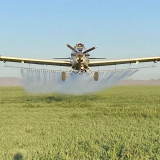
If my memory serves me right, It would be the way you brought that 206 into my ag strip 
Some people 'hang ion the prop' some 'hang it on the wing' (think landing a 'falling leaf')
And yet others, just approach, flair, and plop
Am I close contact?
My opinion of a Master, is the guy who is hanging it on both
situation dependant of course....
Some people 'hang ion the prop' some 'hang it on the wing' (think landing a 'falling leaf')
And yet others, just approach, flair, and plop
Am I close contact?
My opinion of a Master, is the guy who is hanging it on both
situation dependant of course....

Mon May 13, 2013 11:28 am
Re: Stall Down Approach
Yes Rob, both are accurate. Your old crop duster buddies just continually slowed up until they got to the numbers in a stall. I have tried to apply Army helicopter descriptions of the apparent brisk walk rate of closure approach to describe it. It is a see, feel, and do sort of thing. None of it is displayed on the dash. Since it has to do with ground speed, not airspeed, it has nothing to do with the airspeed indicator. The airspeed indicator is a trend instrument and a crutch that can trip you up as you get more experienced. You can hit things or fall out of the sky while looking at that dam thing.
- contactflying offline
- Posts: 4972
- Joined: Wed Apr 03, 2013 7:36 pm
- Location: Aurora, Missouri 2H2
Download my free "https://tinyurl.com/Safe-Maneuvering" e-book.
Mon May 13, 2013 12:06 pm
Re: Stall Down Approach
contactflying wrote: Since it has to do with ground speed, not airspeed, it has nothing to do with the airspeed indicator. The airspeed indicator is a trend instrument and a crutch that can trip you up as you get more experienced. You can hit things or fall out of the sky while looking at that dam thing.
And yet using ground reference alone can knock you out of the sky as well, as talked about recently with the "downwind turn." As we know, turning downwind in significant wind does not have the wind shear effect that some mistakenly believe, but rather exposes the pilot to a visual illusion of increased speed that, if the pilot reacts by pitching or banking in such as way as to attempt to arrest the speed, can produce an accelerated stall.
In that case, I'd argue against the "crutch" opinion of the airspeed indicator. It's not perfect, but it does give some good indication to the pilot in an otherwise deceptive site picture.
- Zzz offline


- Posts: 2855
- Joined: Fri Oct 08, 2004 11:09 pm
- Location: northern
- Aircraft: Swiveling desk chair
Half a century spent proving “it is better to be thought a fool than to open your mouth and remove all doubt.”
Mon May 13, 2013 12:51 pm
Re: Stall Down Approach
Turning with the wind behind us on base to final at 100' AGL, or any other place where terrain or obstructions are close, will cause us to close with terrain and obstructions exactly as much faster as the wind is blowing. It is called ground speed. Ground reference maneuvers, like takeoff and landing, are near terrain and obstructions. It is much easier to maneuver to miss terrain and obstructions at slower ground speeds. In ground reference, or contact, maneuvers, we best manage our ground speed or we will hit something. Ground reference maneuvers should have to do with wind (ground speed) management. What part of a level turn requires more or less bank is academic. Airspeed is academic. How to use the wind to help us safely maneuver around things on the ground is more practical.
Kinetic energy of pressure airspeed is what keeps the wing alive. If we need an instrument to keep the wing alive, we have real problems with ground reference, contact maneuvers.
Knowing that we are drifting with the air mass in any turn, upwind or downwind, helps us with visualizing the side slip necessary to counter that drift in a crosswind. Knowing that we are drifting with the air mass helps us understand that we can use the backing us up character of an air mass moving downwind of the airport to approach the airport slower, on base. Now we just have to choose the upwind base. Knowing that the downwind turn doesn't affect the airspeed here has no practical meaning. Who cares. We want to approach the base to final turn slowly, with reference to the ground.
In emergencies, we respond based mostly on what we believe. Indoctrination, even brain washing, is a good educational practice. We just need to think hard about what we want to indoctrinate. It might come back to bite us.
Kinetic energy of pressure airspeed is what keeps the wing alive. If we need an instrument to keep the wing alive, we have real problems with ground reference, contact maneuvers.
Knowing that we are drifting with the air mass in any turn, upwind or downwind, helps us with visualizing the side slip necessary to counter that drift in a crosswind. Knowing that we are drifting with the air mass helps us understand that we can use the backing us up character of an air mass moving downwind of the airport to approach the airport slower, on base. Now we just have to choose the upwind base. Knowing that the downwind turn doesn't affect the airspeed here has no practical meaning. Who cares. We want to approach the base to final turn slowly, with reference to the ground.
In emergencies, we respond based mostly on what we believe. Indoctrination, even brain washing, is a good educational practice. We just need to think hard about what we want to indoctrinate. It might come back to bite us.
- contactflying offline
- Posts: 4972
- Joined: Wed Apr 03, 2013 7:36 pm
- Location: Aurora, Missouri 2H2
Download my free "https://tinyurl.com/Safe-Maneuvering" e-book.
Mon May 13, 2013 4:33 pm
Re: Stall Down Approach
Zzz-You have a valid concern. We have to teach them to sense changes in relative wind noise, see ground speed with knowledge of wind (wind management,) feel relative buoyancy, sense behind the power curve mush vs. high pressure airspeed dive, sense (not look) stick position and relative wind pressure against controls, and feel and avoid gs. We have to teach addition of power and/or release of back pressure to relieve load factor regardless of altitude. One hundred feet of altitude is a world of gravity thrust for a confident pilot.
- contactflying offline
- Posts: 4972
- Joined: Wed Apr 03, 2013 7:36 pm
- Location: Aurora, Missouri 2H2
Download my free "https://tinyurl.com/Safe-Maneuvering" e-book.
Mon May 13, 2013 5:20 pm
Re: Stall Down Approach
sometimes 100 feet becomes 0 feet... in about 3 seconds. PHD talk and death. Bad combination. Somewhat stable approach (with backcountry mods applied) and a decent airspeed indicator. Keeps me alive.
- flightlogic offline
- Posts: 616
- Joined: Wed Dec 24, 2008 2:51 pm
- Location: Prescott
Flying is dangerous. If you think otherwise, you are new at this sport. Mind the gravity not the gap.
Mon May 13, 2013 5:47 pm
Re: Stall Down Approach
I think the last time I look at the airspeed is when I get slow enough to pull the flaps?
Don't think I look inside after that.
Has worked for me.
Also about the time I pull the flaps I shut the Headsets off.
My $.02 fwiw
GT
Don't think I look inside after that.
Has worked for me.
Also about the time I pull the flaps I shut the Headsets off.
My $.02 fwiw
GT
- M6RV6 offline
- Posts: 2313
- Joined: Mon Feb 25, 2008 5:52 pm
- Location: Rice Wa. 82WN Magee Creek AERODROME
- FindMeSpot URL: http://share.findmespot.com/shared/face ... sWKXuhKlg2
Have as much Fun as is Safe, and Keep SMILIN! GT,
Mon May 13, 2013 7:09 pm
Re: Stall Down Approach
Kinetic energy of pressure airspeed is what keeps the wing alive
I know I'm a hopeless simpleton, but I always thought it had something to do with angle of attack (which I understand completely, and which I know is some function of airspeed and wing loading). Not having an angle of attack indicator in the 'ole Stinson, though, I feel pretty good about flying something close to 1.3Vso on approach (give or take, based on my transverse colon (gut)) and not yanking back or turning too much. What did I miss?
And this whole "see ground speed with knowledge of wind" thing- well that's great- how do I know what the wind shear is doing to me through descent on a windy day?
Again, I'm admittedly simple, but if my flight instructor had thrown some of this stuff at me I probably would have quit. But of course my flight instructror was probably teaching down to the lowest common denominator (me) and this stuff is on a whole other "plane".
Anyway, next time I bang out a few touch and goes I suspect I'll be paying attention to the seat of my pants, and yes- the airspeed indicator, rather then trying to guess what my buoyancy and kinetic energy of pressure airspeed might be. YMMV.
- RDUStinson offline
- Posts: 268
- Joined: Thu Jan 21, 2010 3:37 pm
- Location: Raleigh, North Carolina
108-3
Tue May 14, 2013 8:17 am
Re: Stall Down Approach
Stall down approach seems to be the way most people make off airport short landings? I like to keep the field made the entire pattern and start slipping hard on the base to final turn with 30 flaps. As steep of an approach as possible, when very short final pull 40 flaps and line up with runway before touchdown, always a little different how and when what happens. The way I see it, it's a good idea to be able to make the field with an engine out, but still land as early as possible; thus using a slip for rapid descent.
What's the old saying about slips "nose high you die"? Be careful slipping with 40 flaps, there's really no need to do that IMO and causes some serious buffeting. IMO the maneuver I described is much more deadly than even the dreaded hydroplaning of the tires and I hope that people always get familiar with any new maneuver at altitude, especially one that requires being uncoordinated on the edge of a stall close to the ground Be warned this info is comin from someone that has only been flying for just over two years and I don't want to sound like any kind of authority on anything!!!
Lookin at the airspeed indicator is a nice reference, but I agree it can distract when eyes should be outside. I dang near hit a brand new powerline once, that appeared one day where it previously had not been on an LZ I was very familiar with, while lookin at the airspeed when I'd only had my ticket a few months. Got over needing that reference really quickly after that...still a great tool to have.
What's the old saying about slips "nose high you die"? Be careful slipping with 40 flaps, there's really no need to do that IMO and causes some serious buffeting. IMO the maneuver I described is much more deadly than even the dreaded hydroplaning of the tires and I hope that people always get familiar with any new maneuver at altitude, especially one that requires being uncoordinated on the edge of a stall close to the ground
Be warned this info is comin from someone that has only been flying for just over two years and I don't want to sound like any kind of authority on anything!!!Lookin at the airspeed indicator is a nice reference, but I agree it can distract when eyes should be outside. I dang near hit a brand new powerline once, that appeared one day where it previously had not been on an LZ I was very familiar with, while lookin at the airspeed when I'd only had my ticket a few months. Got over needing that reference really quickly after that...still a great tool to have.
Tue May 14, 2013 8:24 am
Re: Stall Down Approach
Oh and if I really need to fall like a broken elevator, I use the "Super Swingle Side to Side Slip"
I don't know the guy but I saw that he does that too in his videos, and made up the name flyin with 55' the other week. Not sure if its just my head or just alot of fun, but when slipping hard from one side to the other you can zig zag a bit on final and lose what seems like significantly more altitude than just a steady slip. This maneuver is definitely really dangerous, don't try at home!
I don't know the guy but I saw that he does that too in his videos, and made up the name flyin with 55' the other week. Not sure if its just my head or just alot of fun, but when slipping hard from one side to the other you can zig zag a bit on final and lose what seems like significantly more altitude than just a steady slip. This maneuver is definitely really dangerous, don't try at home!
Tue May 14, 2013 9:21 am
Re: Stall Down Approach
Skalywag wrote:What's the old saying about slips "nose high you die"?
This has nothing relevant to do with slips.... If you aren't holding the nose up in a slip, you are for all intents and purposes wasting effort and energy... Letting the nose fall through in a slip is like setting the parking brake and going full throttle
I am guessing you are under the impression that simply being cross controlled at the stall is what's needed to induce a spin. Skidding at the break will spin you, and flopping back and forth will lead you to inadvertently skidding you're airplane. Break the stall here and it will roll over faster than you can save it at those altitudes....
Slipping correctly is a gas, and will drop you like a stone, but there is nothing to fear about stalling in a slip
get a model airplane out and imagine the whole sequence (paying close attention to which wing is producing lift / drag) and you will see that when it breaks in a slip, it will be the top wing that breaks first, bringing you through 'wings level' on the way down... here you just relax pressure and you are flying again.. so you see the slip actually puts your controls in an anti spin position...Take care, Rob
Last edited by Rob on Tue May 14, 2013 11:28 am, edited 3 times in total.
Tue May 14, 2013 9:38 am
Re: Stall Down Approach
Luke,
it's actually pretty groovy that you brought the slip into this thread...
The nose low slip is really simply a dive where the fuselage is being used as an speed brake. That's why people think they are doing some kinda decent magic it is also why people that haven't mastered the slip find themselves floating after release of the slip... because all they are doing here is releasing the airbrakes they had on in the dive...
Not in your head... When you modulate from side to side you are releasing the speed brake and diving faster
This is the antithesis of a stall down approach!
A nose high slip on the other hand where you are tickling the stall, is the epitome of a stall down approach Here you are in a textbook, controlled stall (read; going as slow as you can) all the way down to the touch down. Here releasing the slip will not lend itself to that feeling of stepping on a wet bar of soap
Try one on for size, with your big fowlers, you really don't need it, but on a Tcart or the likes it's the stuff...
Take care, Rob
it's actually pretty groovy that you brought the slip into this thread...
The nose low slip is really simply a dive where the fuselage is being used as an speed brake. That's why people think they are doing some kinda decent magic
it is also why people that haven't mastered the slip find themselves floating after release of the slip... because all they are doing here is releasing the airbrakes they had on in the dive...Skalywag wrote:Not sure if its just my head or just alot of fun, but when slipping hard from one side to the other you can zig zag a bit on final and lose what seems like significantly more altitude than just a steady slip.
Not in your head... When you modulate from side to side you are releasing the speed brake and diving faster
This is the antithesis of a stall down approach!
A nose high slip on the other hand where you are tickling the stall, is the epitome of a stall down approach
Here you are in a textbook, controlled stall (read; going as slow as you can) all the way down to the touch down. Here releasing the slip will not lend itself to that feeling of stepping on a wet bar of soap Try one on for size, with your big fowlers, you really don't need it, but on a Tcart or the likes it's the stuff...
Take care, Rob
Tue May 14, 2013 10:25 am
Re: Stall Down Approach
I've used the "nose-low slip" or "airbrake slip" before whn I accidently arrived at the runway with too much airspeed. rather than float & float & float, I kept a level pitch attitude & threw in a slip to scrub off airspeed, when it seemed to be down ariund where I wanted it I let off the slip flared & landed.
I agree that you can't fixate on the ASI, but IMHO you can't depend strictly on visual cues either. The ground goes by a lot slower with a 15 mph headwind than it does in calm conditions. I usually check airspeed downwind abeam which is usually where I pull on abut half flaps, again when turning final which is where I usually pull on the rest of the flaps, & again (for the last time) as I'm slowing down more as I come over the fence. A quick glance, not a fixated stare, so I can still watch the foliage, powerlines, or whatever as I go by and/or through them.
I agree that you can't fixate on the ASI, but IMHO you can't depend strictly on visual cues either. The ground goes by a lot slower with a 15 mph headwind than it does in calm conditions. I usually check airspeed downwind abeam which is usually where I pull on abut half flaps, again when turning final which is where I usually pull on the rest of the flaps, & again (for the last time) as I'm slowing down more as I come over the fence. A quick glance, not a fixated stare, so I can still watch the foliage, powerlines, or whatever as I go by and/or through them.
Cessna Skywagon -- accept no substitute!
Tue May 14, 2013 10:30 am
Re: Stall Down Approach
Rob, yeah I am definitely nose high and on edge of stall or in stall doing the slips I'm talkin bout, just kinda threw that saying out there as a caution for those that are unfamiliar. Guess I better quit throwing out sayings, seems I've heard most of them used out of context
Personally, I actually do stall the plane in a full cross controlled slip and drop like a rock, using elevator to control the descent, as well as small amounts of throttle adjustments. My experience has been that the 180 is very honest and predictable in stalls and use them as a tool on almost every landing. Seems like some passengers don't enjoy the slip so I keep it pretty straight and level (boring) when hauling non-pilots around.
On another note, flying with 55' with his Sportsman and Wing-X I was totally blown away by how stable the stall was. With just us in the plane and medium fuel you can do a coordinated power-off stall and put the yoke full back in your lap and it descends beautifully at about 500' fpm. Not sure it would be useful or realistic for rough surfaces, off-airport stuff, or with lots of obstacles, but it would be really cool to master a landing like that for purpose of Valdez type super STOL landing etc. Our ground speed was ridiculously slow and airspeed indicator totally dead (Oh NO!)
Personally, I actually do stall the plane in a full cross controlled slip and drop like a rock, using elevator to control the descent, as well as small amounts of throttle adjustments. My experience has been that the 180 is very honest and predictable in stalls and use them as a tool on almost every landing. Seems like some passengers don't enjoy the slip so I keep it pretty straight and level (boring) when hauling non-pilots around.
On another note, flying with 55' with his Sportsman and Wing-X I was totally blown away by how stable the stall was. With just us in the plane and medium fuel you can do a coordinated power-off stall and put the yoke full back in your lap and it descends beautifully at about 500' fpm. Not sure it would be useful or realistic for rough surfaces, off-airport stuff, or with lots of obstacles, but it would be really cool to master a landing like that for purpose of Valdez type super STOL landing etc. Our ground speed was ridiculously slow and airspeed indicator totally dead (Oh NO!)
Tue May 14, 2013 11:21 am
Re: Stall Down Approach
I think lots of people are timid of a true useful slip rob... And I'm just guessing hear but thinking one big reason may be most people have been scared off from them by pilots or instructors who don't know or don't wanna take the time to show and explain it. Just simpler to not take any chances on someone getting hurt by scaring them away from it rather than teaching it. I've found that true with lots o things in aviation. Like the hydro planing deal. Wayyyy to much hype on that sucker. But I'm not going to recommend it to anyone due to the liability. Unless I really know someone can fly. People tried to scare me death from T6's. I had it in my mind it would eat your lunch. "Its called a Harvard cause it will school ya" type talk. Day came. No big deal. Just a plane.
On the ground speed reference thing. Keep in my mind I don't follow the conversation well at times so I may once again be missing the boat but.. I don't really use ground speed reference for anything other than am I going to fit in my spot at an acceptable speed for the terrain or be able to exit it in the same fashion. I fly the wind as slow as possible regardless of direction its blowing. Keeping in mind what it will do when direction is changed. i.e crosswind to downwind turn. So much of this wording is hard for me to take in or pu it put tho. I always just say its a feel. Regardless what it is most of the time. Hard to teach feel I guess. Just time and experience.
Cool thread. Keep up the brain talk. Makes me think. Hurts sometimes.
Skalywag. No need to shy away from any discussion or opinions. Your a rare breed buddy. Your a natural and your talent and abilities far exceed your log book hours.
Rob. Your brilliant bro. I can always understand your explanations clearly and you always make sense. Wish I could verbalized my thoughts like you man.
On the ground speed reference thing. Keep in my mind I don't follow the conversation well at times so I may once again be missing the boat but.. I don't really use ground speed reference for anything other than am I going to fit in my spot at an acceptable speed for the terrain or be able to exit it in the same fashion. I fly the wind as slow as possible regardless of direction its blowing. Keeping in mind what it will do when direction is changed. i.e crosswind to downwind turn. So much of this wording is hard for me to take in or pu it put tho. I always just say its a feel. Regardless what it is most of the time. Hard to teach feel I guess. Just time and experience.
Cool thread. Keep up the brain talk. Makes me think. Hurts sometimes.
Skalywag. No need to shy away from any discussion or opinions. Your a rare breed buddy. Your a natural and your talent and abilities far exceed your log book hours.
Rob. Your brilliant bro. I can always understand your explanations clearly and you always make sense. Wish I could verbalized my thoughts like you man.
Tue May 14, 2013 6:41 pm
Re: Stall Down Approach
Scaly,
I apologize for the assumptions. I had heard you were a natural, and so the comment caught me off guard....
Short 'natural' story;
I have a friend who is a bonafide 'grew up in the bush' bush rat. He is the most gifted 'natural' I Have ever seen...One year while wintering down south he proclaims ' I hear they're having a May Day fly in in Valdez'. He grew up very close to Gulkana, and frequented those good ole events as a kid. This was the first or second year they had things going in Valdez...now keep in mind he hadn't been in an airplane in months...
So he proceeds to catch a smoker up two days before the show and shake out his cub. A very nice, but basic cub the way, and I'll be damned if the guy didn't post the best landing of the event, and a good enough combined score to make third in bush...
Had it been me, I would have done good just to remember how to start the dang thing...
Why do I have to work so hard to be only OK???


Take care, Rob
I apologize for the assumptions. I had heard you were a natural, and so the comment caught me off guard....
Short 'natural' story;
I have a friend who is a bonafide 'grew up in the bush' bush rat. He is the most gifted 'natural' I Have ever seen...One year while wintering down south he proclaims ' I hear they're having a May Day fly in in Valdez'. He grew up very close to Gulkana, and frequented those good ole events as a kid. This was the first or second year they had things going in Valdez...now keep in mind he hadn't been in an airplane in months...
So he proceeds to catch a smoker up two days before the show and shake out his cub. A very nice, but basic cub the way, and I'll be damned if the guy didn't post the best landing of the event, and a good enough combined score to make third in bush...
Had it been me, I would have done good just to remember how to start the dang thing...
Why do I have to work so hard to be only OK???
Take care, Rob
Wed May 15, 2013 10:06 am
Re: Stall Down Approach
"World of gravity thrust", "high pressure airspeed dive", "kinetic energy of pressure airspeed", "apparent brisk walk rate of closure approach", plus some other phrases on other threads. I have a hard time following when you refer to these terms and/or techniques which I've never even heard of before. Did you make these up for your book, or is there a whole 'nother world of aviation references which I'm missing out on? Perhaps making your points using more widely-used terms would make it easier for me to get your drift.
As for airspeed, I disagree that it is a "crutch"-- IMHO the old saying "airspeed is life and altitude is life insurance" has a lot of merit. You don't fly on groundspeed, you fly on airspeed which is closely related to angle of attack. Without an AOA instrument, airspeed and seat of the pants feel is all the reference we have. Lots of people have crashed looking out the window and trying to fly using groundspeed cues with a tailwind, esp in the fabled and dreaded "downwind turn".
As for airspeed, I disagree that it is a "crutch"-- IMHO the old saying "airspeed is life and altitude is life insurance" has a lot of merit. You don't fly on groundspeed, you fly on airspeed which is closely related to angle of attack. Without an AOA instrument, airspeed and seat of the pants feel is all the reference we have. Lots of people have crashed looking out the window and trying to fly using groundspeed cues with a tailwind, esp in the fabled and dreaded "downwind turn".
Cessna Skywagon -- accept no substitute!
Wed May 15, 2013 11:14 am
Re: Stall Down Approach
All this talk of airspeed is confusing me? It is really obvious in every plane I have flown when the wing/lift is giving out and on the edge of a stall, not that the list includes a vast array of planes. The STOL type aircraft I have flown usually get slow enough power-on that the airspeed starts bouncing around or even goes dead before a stall. As far as planes with comparatively more dramatic stalls I've flown an Extra 300, a souped up Chipmunk, a Baron, and an Arrow, all of these low wings also gave plenty of warning before stall. Although the high speed stalls on the Extra took me totally by suprise
In my ignorant perspective, if you are low and slow and do not know your plane well enough to "feel" the controls getting really mushy/less responsive and that the wing is losing lift, amongst all of the other cues, what are you doing low and slow, other than landing on an improved runway surface???
The very first flight/flight lesson I ever had all we did was stalls at altitude and slow flight for over 2 hours...get to know your plane at all power settings and configurations, that seems to be aviation 101!!!
Seriously, is it crazy to think that when people get checked out in planes the first thing they should do is practice stalls and slow-flight at different power settings and configurations?
In my ignorant perspective, if you are low and slow and do not know your plane well enough to "feel" the controls getting really mushy/less responsive and that the wing is losing lift, amongst all of the other cues, what are you doing low and slow, other than landing on an improved runway surface???
The very first flight/flight lesson I ever had all we did was stalls at altitude and slow flight for over 2 hours...get to know your plane at all power settings and configurations, that seems to be aviation 101!!!
Seriously, is it crazy to think that when people get checked out in planes the first thing they should do is practice stalls and slow-flight at different power settings and configurations?
DISPLAY OPTIONS
Who is online
Users browsing this forum: No registered users and 2 guests
Latest Features
-
Live to Tell
A Minnesota pilot is surprised to learn that the sudden asymmetric drag of an out-of-rig ski can…Read More -
Creators
Working in some of the Yukon's most beautiful and remote environments, photographer Simon Blakesley captures aircraft in…Read More -
Aircraft Ownership and Maintenance
Upgrading to big tires can make a huge difference in backcountry performance, but with those gains come…Read More -
Tales from Yesteryear
In this tale from bush flying yesteryear, Don Cogger signs up to help Atlee Dodge Jr recovery…Read More


Latest Knowledge Base
-
Destinations
A regional guide with ideas for winter camping destinations in California, Nevada, New Mexico, and Arizona.Read More -
Aircraft
Finding an affordable aircraft that can handle the backcountry for $80K or less? A challenge for sure, but with the…Read More -
Aircraft
01.29.2018 - Zane - Updated tire diameter graphic to add 8.50x10 Guide to tires for use in the backcountry and off-airport landing…Read More -
Pilots
12.22.2013 - Initial article format Operating aircraft on skis and negotiating a snow-covered landscape is an entirely unique skillset and environment.…Read More


