Hey guys,
I have a question for you all!
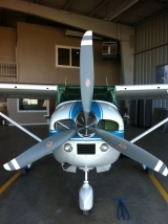
I really want to kill our avionics guy, but that isnt the point. What precautions would you take in starting my continental 520 that has not been run since May of this year? The plane has been sitting in the avionics shop since then, not run. We had a very hot summer in the fresno area where the plane is.
The engine only has 155hr on it! I definitely do not want to do some sort of damage to the engine with that low of time on it!
Thanks Guys
Mike
Starting one that hasnt flown in a while
Thu Oct 23, 2014 9:11 am
Thu Oct 23, 2014 10:04 am
Re: Starting one that hasnt flown in a while
Make sure you cycle your prop to clear all the sludge from the hub. Otherwise you may get some unwanted surging on your new engine. When my plane is flown regularly, I cycle once to make sure the governor is working. In your case I would cycle the prop at least twice and maybe thrice to put fresh oil up there.
Thu Oct 23, 2014 10:14 am
Re: Starting one that hasnt flown in a while
There are warnings about letting a plane sit without running the engine, but it doesn't sound like these conditions and this duration will be detrimental to the health of your engine. It sounds like it hasn't experienced any freezing cycles, which is a good thing. An engine that has sat for years in a unheated tee-hangar in cold and wet country is at much higher risk of stagnation damage than one that has sat for a few months in 70 +/-20 degree temperatures. The former would be the conditions that lead to cautionary tales of stagnation damage. It If it were my plane, I'd make sure that it has been serviced properly, wait for the heat of the day so that the oil is ready to flow, then pull several blades through with the mags off in an effort to circulate a little some oil, then fire the beast up.
- Scolopax offline

- Posts: 1696
- Joined: Tue Sep 27, 2005 5:02 pm
- Location: Nottingham
- FindMeSpot URL: http://share.findmespot.com/shared/face ... 4aYqSexnZC
Thu Oct 23, 2014 3:36 pm
Re: Starting one that hasnt flown in a while
Have you thought about preheating the oil to running temperature, just to make sure it gets lubrication as fast as possible? Might be overkill, but that's what we did for our first run. You know all the oil has drained out of those cylinders into the sump.

Thu Oct 23, 2014 8:29 pm
Re: Starting one that hasnt flown in a while
Honestly, I'd be surprised if there's anything necessary to do, at all. Just start it, and don't let it rev up--just like you do normally (you do that, right?). Taxi it out to the run-up area, do a normal run-up, and fly it.
I'd be more concerned about the state of the fuel that's been sitting--so be sure to tap the tanks and the gascolator to make sure that no moisture has crept in.
The manufacturers want engines pickled any time they're going to sit for more than a month, but that's impractical for most of us--things like poky IAs and avionics shops make it hard to predict.
Cary
I'd be more concerned about the state of the fuel that's been sitting--so be sure to tap the tanks and the gascolator to make sure that no moisture has crept in.
The manufacturers want engines pickled any time they're going to sit for more than a month, but that's impractical for most of us--things like poky IAs and avionics shops make it hard to predict.
Cary
"I have slipped the surly bonds of earth..., put out my hand and touched the face of God." J.G. Magee
Thu Oct 23, 2014 8:55 pm
Re: Starting one that hasnt flown in a while
If you are looking for oil pressure before start up crank it over with the mags off until you see pressure?
Throw a charger on the battery the night before.
Throw a charger on the battery the night before.
- Terry offline
- Posts: 1365
- Joined: Sat Nov 10, 2007 9:11 pm
- Location: Willamette Valley
- FindMeSpot URL: http://share.findmespot.com/shared/face ... 4GzPHI6t1d
Thu Oct 23, 2014 9:53 pm
Re: Starting one that hasnt flown in a while
My plane gets pickled in the summer months here in Alaska. I don't think twice about it any more, drain the pickle oil change the filter do a damn good pre flight sump the tanks several times pull the prob through a few times and go fly until all that 3 or 4 month old gas is burnt out and then I land and fill up with brand new gas and fly some more.
I wouldn't worry about yours. Change the oil, sump the tanks and burn that gas. Then go fill up with some new gas....
I wouldn't worry about yours. Change the oil, sump the tanks and burn that gas. Then go fill up with some new gas....
Thu Oct 23, 2014 9:58 pm
Re: Starting one that hasnt flown in a while
Whoah, roamak. Why are you not flying the summer months?
- Zzz offline


- Posts: 2855
- Joined: Fri Oct 08, 2004 11:09 pm
- Location: northern
- Aircraft: Swiveling desk chair
Half a century spent proving “it is better to be thought a fool than to open your mouth and remove all doubt.”
Thu Oct 23, 2014 10:19 pm
Re: Starting one that hasnt flown in a while
When my engine was brand new, my mechanic "pre-oiled" it, once, and then once again when a week had passed, just for extra good measure. This was all prior to first start. Not sure exactly what that entailed, but could find out.
- denalipilot offline

- Posts: 2789
- Joined: Mon Oct 15, 2007 4:53 pm
- Location: Denali
- Aircraft: C-170B+
Thu Oct 23, 2014 10:30 pm
Re: Starting one that hasnt flown in a while
denalipilot wrote:When my engine was brand new, my mechanic "pre-oiled" it, once, and then once again when a week had passed, just for extra good measure. This was all prior to first start. Not sure exactly what that entailed, but could find out.
Best way to pre-oil is to pull off the oil pressure hose and pressure it up with a surenge full of engine oil. This is common on baby continentals and can be done on Lycomings as well to help prime the system. But even then your engine hasn't sat long enough in poor conditions to worry about anything, especially with it being a Continental. If it were a Lycoming then I would of ran Camguard in it before it sat that long.

Fri Oct 24, 2014 7:57 am
Re: Starting one that hasnt flown in a while
Zzz wrote:Whoah, roamak. Why are you not flying the summer months?
Unfortunately my job in remote construction takes me away for months at a time from break up to freeze up. Most of the time to places there would be no way to get my plane there let alone have time to fly. I'm used to it now so no biggie.
Fri Oct 24, 2014 11:32 am
Re: Starting one that hasnt flown in a while
I thought pulling the prop through before starting did more harm than good. By doing so you are not developing the oil pressure that a running engine has to splash on all the parts, you are just rubbing oil-starved metal on metal.
- scottf offline

- Posts: 650
- Joined: Fri Mar 23, 2012 9:56 am
- Location: Meridian, ID
- FindMeSpot URL: http://share.findmespot.com/shared/face ... cbQCpIqefS
Fri Oct 24, 2014 11:39 am
Re: Starting one that hasnt flown in a while
scottf wrote:I thought pulling the prop through before starting did more harm than good. By doing so you are not developing the oil pressure that a running engine has to splash on all the parts, you are just rubbing oil-starved metal on metal.
I agree. If it was my plane I'd just check the oil, sump the fuel and fire it up. If you are close to changing the oil then change it otherwise don't. Pre-oiling it might be beneficial and if you have the ability then might be worth doing but in reality it hasn't been sitting that long and it hasn't been cold.

Sat Oct 25, 2014 9:51 am
Re: Starting one that hasnt flown in a while
Thanks for the tips guys, im going in to pick it up first of next week. Going to do a very thorough preflight, then im gonna roll!
Mike
Mike
DISPLAY OPTIONS
Who is online
Users browsing this forum: No registered users and 0 guests
Latest Features
-
Live to Tell
A Minnesota pilot is surprised to learn that the sudden asymmetric drag of an out-of-rig ski can…Read More -
Creators
Working in some of the Yukon's most beautiful and remote environments, photographer Simon Blakesley captures aircraft in…Read More -
Aircraft Ownership and Maintenance
Upgrading to big tires can make a huge difference in backcountry performance, but with those gains come…Read More -
Tales from Yesteryear
In this tale from bush flying yesteryear, Don Cogger signs up to help Atlee Dodge Jr recovery…Read More


Latest Knowledge Base
-
Destinations
A regional guide with ideas for winter camping destinations in California, Nevada, New Mexico, and Arizona.Read More -
Aircraft
Finding an affordable aircraft that can handle the backcountry for $80K or less? A challenge for sure, but with the…Read More -
Aircraft
01.29.2018 - Zane - Updated tire diameter graphic to add 8.50x10 Guide to tires for use in the backcountry and off-airport landing…Read More -
Pilots
12.22.2013 - Initial article format Operating aircraft on skis and negotiating a snow-covered landscape is an entirely unique skillset and environment.…Read More


