Axes for Pilots
Thu Nov 07, 2019 11:33 am
Re: Axes for Pilots
Oh lord I'm glad I didn't tie down next to any of you serious outdoorsmen in the back country. I now realize how pathetic my kit is. I also realize that I'm not out in the woods enough to get really proficient with any of the axes discussed. Maybe I should continue packing presto logs and propane in my plane and carry a space blanket until the helicopter arrives after I hit the "help" button on my Garmin Reach Mini. Actually, my "backcountry" is mostly on the near edge of civilization and I pick the windows for my brief visits to coincide with a high probability of good weather. Still, you've given me one more thing to feel inadequate about. It's tough being an infrequent visitor to this aviation niche environment in between $100 hamburgers.

Thu Nov 07, 2019 12:05 pm
Re: Axes for Pilots
I've been thinking about this thread. You might say Hammer hit the nail on the head.
Walking in the woods with my GB Forest axe gives me a primordial satisfaction that is hard to match. The ability to bend one's environment to one's will, to survive and more, must have been a pretty pivotal moment in the human psyche as tools became commonplace.
A Leatherman Wave isn't exactly an heirloom tool but it gives me the same sense of quiet competence. And my 45-70 Guide Gun too, but that is just because it is a cool lever action beast and my only wood gun. And I never feel inadequate because I can't sharpen it.
Walking in the woods with my GB Forest axe gives me a primordial satisfaction that is hard to match. The ability to bend one's environment to one's will, to survive and more, must have been a pretty pivotal moment in the human psyche as tools became commonplace.
A Leatherman Wave isn't exactly an heirloom tool but it gives me the same sense of quiet competence. And my 45-70 Guide Gun too, but that is just because it is a cool lever action beast and my only wood gun. And I never feel inadequate because I can't sharpen it.
Thu Nov 07, 2019 8:36 pm
Re: Axes for Pilots
I used a framing hammer a lot of years, over 30, and learned how to control it pretty well, so a small hatchet works for me, but my use is usually just splitting kindling not heavy use. The last few years I've carried an old dry wall hatchet, with a steel handle. This predates drywall screws and screw guns! I had a pro sharpening job done by a buddy on the hatchet end, and the waffle head hammer end works great for my tie down pins, and it fits in the same bag as the tie downs. Plus this pull saw, 8 ozs.,and damn does it cut! I can carry it in my bike handle bars bag, and I use it to trim up my property's bike path. In the plane it's hell on sage brush, after I've landed some place I shouldn't.
- courierguy offline

- Posts: 4197
- Joined: Thu Mar 31, 2005 6:52 pm
- Location: Idaho
"Its easier to apologize then ask permission"
Tex McClatchy
Tex McClatchy
Fri Nov 08, 2019 5:47 am
Re: Axes for Pilots
Great read, thanks everyone.
I always carried either a Hatchet or smaller ax when going flying/camping.
Three years ago I bought a Gomboy as it was much easier to carry in my 90hp J3.
I went to an abandoned airstrip in the deep North that I had been to when it was still active many years earlier.
Over the many years of of neglect the trees and brush had closed in on the sides of the strip but after a couple of low passes determined it was safe. Landed and set up camp. Collected firewood and used the Gomboy to cut it to length. The next morning the real test came when I determined it would be in my best interest to cut back as much of the growth along the sides as possible. There were a many trees that were 3-4" at the base. All I can say is that thing is wonderful. I had a smile on my face much of the 3 hours I worked in disbelief as to how easy it was to clear as much as I did.
I now have a 185 and carry a small ax for splitting along with the Gomboy but if I could carry only one it would definitely be a Gomboy.
I always carried either a Hatchet or smaller ax when going flying/camping.
Three years ago I bought a Gomboy as it was much easier to carry in my 90hp J3.
I went to an abandoned airstrip in the deep North that I had been to when it was still active many years earlier.
Over the many years of of neglect the trees and brush had closed in on the sides of the strip but after a couple of low passes determined it was safe. Landed and set up camp. Collected firewood and used the Gomboy to cut it to length. The next morning the real test came when I determined it would be in my best interest to cut back as much of the growth along the sides as possible. There were a many trees that were 3-4" at the base. All I can say is that thing is wonderful. I had a smile on my face much of the 3 hours I worked in disbelief as to how easy it was to clear as much as I did.
I now have a 185 and carry a small ax for splitting along with the Gomboy but if I could carry only one it would definitely be a Gomboy.
- a3holerman offline
- Posts: 278
- Joined: Mon Oct 05, 2015 7:29 am
- Location: Cape Cod
- Aircraft: Cessna 185
Fri Nov 08, 2019 8:12 am
Re: Axes for Pilots
We love our Sven Saws. Keep 'em in our trucks and planes. Axes, too.
Learning how to use an axe is a great skill and definitely does quicken the firewood and "bushcraft" aspects of making a camp. But as Vivion points out - fraught with potential peril. Practice!
Learning how to use an axe is a great skill and definitely does quicken the firewood and "bushcraft" aspects of making a camp. But as Vivion points out - fraught with potential peril. Practice!

Fri Nov 08, 2019 10:12 am
Re: Axes for Pilots
Thanks for all the feedback folks. I’m glad the article is bringing some enjoyment, and I’m particularly glad I’ve managed to drag some people down into my own personal hell of sharp-steel obsessiveness. I find using axes incredibly enjoyable and rewarding, as I do all muscle-powered wood cutting tools.
For those getting almost but not quite to hair-popping sharpness, the difference is usually a rigid strop impregnated with aluminum oxide. It doesn’t seem like it would be that dramatic a change from a honed edge, but it is.
Akgreg...5 axes? Nicely done! You're going to need a bigger airplane.
As for the dogma that axes are dangerous and a saw does everything better anyway…folks that believe that should definitely stick to saws. It’s pretty hard to get a serious injury with a hand saw no matter how clumsy or inattentive you are, and a good saw is a great thing to have. There’s one in the back of my airplane on every flight…sometimes two.
But I’ll defer to true experts on the weight-vs-utility-vs-risk of an axe:
Take a gander at the Yukon Quest dog sled race that goes from Fairbanks to Whitehorse (1,034 miles), starting February 1 of each year. It’s the bad-boy of dog sled races…colder, darker, and less supported than the Iditarod, and just finishing it will earn a person serious credibility in a group of people who are notoriously difficult to impress. The people who get to the level of being able to enter the race don’t spend one or two days out in the cold, they spend their lives out in the cold.
The contestants push themselves to the very limit of endurance and sleep deprivation, and a spare pair of socks is considered a foolish excess of weight for the mushers trying to place in the money. They are as weight-conscious as astronauts while operating in some of the coldest and most remote terrain in North America with VERY little support network.
There are 7 items that every musher must have in possession at the six check points in order to proceed. Number 1 is a “proper cold weather sleeping bag”. And number 2 is a “hand ax with an overall length of at least 22 inches”. Saws are not on the list.
PLB’s, emergency food, map and compass, parka, and first aid kits are “strongly recommended”, but the ax is mandatory.
Now maybe these folks who dedicate their lives to mushing in the remote arctic wilderness and who will forgo even the most basic of comforts to save weight are a bunch of dullards who haven’t figured out than a saw does everything better than an ax while weighing less…someone who attended a survival school should probably set them straight.
But my money is on them being pretty keen about what works and what doesn’t, and that, apparently, is an ax. If there’s a better endorsement for the one tool you want to live, work, and survive in the wilderness, I don’t know what it is.
For those getting almost but not quite to hair-popping sharpness, the difference is usually a rigid strop impregnated with aluminum oxide. It doesn’t seem like it would be that dramatic a change from a honed edge, but it is.
Akgreg...5 axes? Nicely done! You're going to need a bigger airplane.
As for the dogma that axes are dangerous and a saw does everything better anyway…folks that believe that should definitely stick to saws. It’s pretty hard to get a serious injury with a hand saw no matter how clumsy or inattentive you are, and a good saw is a great thing to have. There’s one in the back of my airplane on every flight…sometimes two.
But I’ll defer to true experts on the weight-vs-utility-vs-risk of an axe:
Take a gander at the Yukon Quest dog sled race that goes from Fairbanks to Whitehorse (1,034 miles), starting February 1 of each year. It’s the bad-boy of dog sled races…colder, darker, and less supported than the Iditarod, and just finishing it will earn a person serious credibility in a group of people who are notoriously difficult to impress. The people who get to the level of being able to enter the race don’t spend one or two days out in the cold, they spend their lives out in the cold.
The contestants push themselves to the very limit of endurance and sleep deprivation, and a spare pair of socks is considered a foolish excess of weight for the mushers trying to place in the money. They are as weight-conscious as astronauts while operating in some of the coldest and most remote terrain in North America with VERY little support network.
There are 7 items that every musher must have in possession at the six check points in order to proceed. Number 1 is a “proper cold weather sleeping bag”. And number 2 is a “hand ax with an overall length of at least 22 inches”. Saws are not on the list.
PLB’s, emergency food, map and compass, parka, and first aid kits are “strongly recommended”, but the ax is mandatory.
Now maybe these folks who dedicate their lives to mushing in the remote arctic wilderness and who will forgo even the most basic of comforts to save weight are a bunch of dullards who haven’t figured out than a saw does everything better than an ax while weighing less…someone who attended a survival school should probably set them straight.
But my money is on them being pretty keen about what works and what doesn’t, and that, apparently, is an ax. If there’s a better endorsement for the one tool you want to live, work, and survive in the wilderness, I don’t know what it is.


Fri Nov 08, 2019 10:18 am
Re: Axes for Pilots
The important question is:
Is it ax...or axe? Have I been unwittingly euro all this time?
Is it ax...or axe? Have I been unwittingly euro all this time?

Fri Nov 08, 2019 2:08 pm
Re: Axes for Pilots
Hammer wrote:Thanks for all the feedback folks. I’m glad the article is bringing some enjoyment, and I’m particularly glad I’ve managed to drag some people down into my own personal hell of sharp-steel obsessiveness. I find using axes incredibly enjoyable and rewarding, as I do all muscle-powered wood cutting tools.
For those getting almost but not quite to hair-popping sharpness, the difference is usually a rigid strop impregnated with aluminum oxide. It doesn’t seem like it would be that dramatic a change from a honed edge, but it is.
Akgreg...5 axes? Nicely done! You're going to need a bigger airplane.
As for the dogma that axes are dangerous and a saw does everything better anyway…folks that believe that should definitely stick to saws. It’s pretty hard to get a serious injury with a hand saw no matter how clumsy or inattentive you are, and a good saw is a great thing to have. There’s one in the back of my airplane on every flight…sometimes two.
But I’ll defer to true experts on the weight-vs-utility-vs-risk of an axe:
Take a gander at the Yukon Quest dog sled race that goes from Fairbanks to Whitehorse (1,034 miles), starting February 1 of each year. It’s the bad-boy of dog sled races…colder, darker, and less supported than the Iditarod, and just finishing it will earn a person serious credibility in a group of people who are notoriously difficult to impress. The people who get to the level of being able to enter the race don’t spend one or two days out in the cold, they spend their lives out in the cold.
The contestants push themselves to the very limit of endurance and sleep deprivation, and a spare pair of socks is considered a foolish excess of weight for the mushers trying to place in the money. They are as weight-conscious as astronauts while operating in some of the coldest and most remote terrain in North America with VERY little support network.
There are 7 items that every musher must have in possession at the six check points in order to proceed. Number 1 is a “proper cold weather sleeping bag”. And number 2 is a “hand ax with an overall length of at least 22 inches”. Saws are not on the list.
PLB’s, emergency food, map and compass, parka, and first aid kits are “strongly recommended”, but the ax is mandatory.
Now maybe these folks who dedicate their lives to mushing in the remote arctic wilderness and who will forgo even the most basic of comforts to save weight are a bunch of dullards who haven’t figured out than a saw does everything better than an ax while weighing less…someone who attended a survival school should probably set them straight.
But my money is on them being pretty keen about what works and what doesn’t, and that, apparently, is an ax. If there’s a better endorsement for the one tool you want to live, work, and survive in the wilderness, I don’t know what it is.
Ahh, citing the Yukon Quest now...... Yep, those folks are tough. For a few years, I flew support for the race. The required items were based on what the old timers had available to them, and fine pruning saws weren't a thing back in the 1890s.
I've got fires going many times in minutes, using a pruning saw in that country......the Taiga.....loosely interpreted as "Land of Little Sticks". Not many actual trees there, at least by the definition most of us use.
But, if carrying around and using an axe gives you a woody (pun intended), go for it. But, I worked in some of the country that the Quest traverses for twenty winters, and never saw any use for one. To each his or her own, I reckon.
MTV


Fri Nov 08, 2019 2:28 pm
Re: Axes for Pilots
Zzz wrote:The important question is:
Is it ax...or axe? Have I been unwittingly euro all this time?
It depends on which side of the pond you're on and what kind of instrument you're grinding.
As in "Let me axe you a question: what kind of body spray do you wear while in the backcountry?"
Fri Nov 08, 2019 2:59 pm
Re: Axes for Pilots
Zzz wrote:The important question is:
Is it ax...or axe? Have I been unwittingly euro all this time?
actually, the important question is which one will put my adsb into anonymous mode faster, axe or saw?
RE: Yukon quest. Dog mushers use axes to cut up frozen dog food, something that a hand saw would suck at.
Sun Nov 10, 2019 9:18 am
Re: Axes for Pilots
CAVU wrote:Zzz wrote:The important question is:
Is it ax...or axe? Have I been unwittingly euro all this time?
It depends on which side of the pond you're on and what kind of instrument you're grinding.
As in "Let me axe you a question: what kind of body spray do you wear while in the backcountry?"
Alright.........that was funny.
I love lurking on this forum. I carry an axe and a saw, so there. Problem solved. Thanks for the right up Hammer. Always great, well thought out information that a person can use.
Brent
Sent from my iPhone using Tapatalk
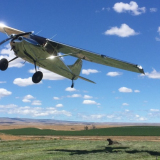
'49 170A. (his)
'56 172. (hers)
'56 172. (hers)
Mon Nov 11, 2019 5:06 pm
- qmdv offline

- Posts: 3635
- Joined: Wed Feb 15, 2006 10:22 pm
- Location: Payette
- FindMeSpot URL: http://share.findmespot.com/shared/face ... I5tqEOk0rc
- Aircraft: Cessna 182
Mon Nov 11, 2019 5:36 pm
Re: Axes for Pilots
I carry a 3/4 length handle single blade axe because it is hard to hammer in duckbills with a saw.
DENNY
DENNY
DENNY
Mon Nov 11, 2019 6:39 pm
Re: Axes for Pilots
qmdv wrote:This maybe https://www.captainswagger.net/products ... gCyBz01t2I
OK...that is freaking AWSOME!
For those with a web browser that filters out child pornography, snuff films, North Korean incentivization documentaries or captainswagger.net, let me quote the structural diagram from top to bottom:
Starting at the top and working down...(try to fathom that this is all incorporated into just ONE tool that sells for only $39.99!!!)
•Safety cone (...never worry about being run over again...)
•Whistle
•Magnesium rod
•Extension rod
•Fish cutter (WTF?)
•Saw tooth (maximum safety with minimum weight and better overall than hammer which is sharpened on side for striking down or upward)
•Universal knife (infinitely superior to the more common Regional knife)
•Extension rod, anti-skid!
•Screwdriver ( + / - )...good thing to know that it will twist both ways
•Extension rod (you can never have enough)
•Rotating fitting nut (a cromulent feature)
•Nut for the spindle (sounds like something you'd get offered at a bar in Pat Pong)
•Hex tool (appears to be the name for the crease created when they folded the pot mettle over to make the "shovel")
•Bottle opener (ok...that's valid)
•Sawtooth, Knife, and Shovel (also know as a shovel with one dull side and one uniformly dented side)
But if that wasn't enough to rock your world...they make it in MINI SIZE: "ladies can also use"! And..."inner strands of the paracord loop can be used to suture and stitch up open wounds": No more bleeding to death with inferior survival shovel fish-cutting tools...
But perhaps this endorsement from the creator of the Tactical Waist Pack & Multi-Tools says it best:
"【MULTI-FUNCTION】- Digging, Sawing, Chopping, Cutting, Picking, Prying, Hammering, Bottle opening, Shoveling.High quality steel material,can peel animal skins,scale fish phosphorus,cut the rope;Magnesium and whistle:2.95inch magnesium rod,easy to make fire."
Well...we can all learn from that and be humble for the chance. It's nothing short of a technological advancement in hand-toolery with gooder ergonomics plus super-capable and nice for the survival.

••••••••••••••••
DENNY wrote:I carry a 3/4 length handle single blade axe because it is hard to hammer in duckbills with a saw.
DENNY
You're doing to wrong...saws are superior in every aspect. Try again.
Mon Nov 11, 2019 7:41 pm
Re: Axes for Pilots
Saw for all my forest work except EFF and trails. Never ever needed anything more than that when making tracks year around except a small, sturdy knife for making fuzz sticks and pitch sticks.
Ever.
For the other work, axes, and the ability to use them efficiently were the job. I went through 1-2 double bits per person per summer, burying them ceremoniously as high as we could in large spruces and firs when the case hardening was finally sharpened through, as mysteries for the attentive passerby.
Hatchets seemed the habit of those who didn't yet evaluate the necessity to haul such a limited and heavy item with them down the trail.
Ever.
For the other work, axes, and the ability to use them efficiently were the job. I went through 1-2 double bits per person per summer, burying them ceremoniously as high as we could in large spruces and firs when the case hardening was finally sharpened through, as mysteries for the attentive passerby.
Hatchets seemed the habit of those who didn't yet evaluate the necessity to haul such a limited and heavy item with them down the trail.
Tue Nov 12, 2019 3:08 am
Re: Axes for Pilots
Hammer wrote:DENNY wrote:I carry a 3/4 length handle single blade axe because it is hard to hammer in duckbills with a saw.
DENNY
You're doing to wrong...saws are superior in every aspect. Try again.
Hilarious!
Of course we all know that saws are superior... But us axe-swingers, we just want to look cool!

Tue Nov 12, 2019 6:38 am
Re: Axes for Pilots
Deleted.
Last edited by Bagarre on Wed Nov 13, 2019 9:48 am, edited 1 time in total.
Tue Nov 12, 2019 9:40 am
Re: Axes for Pilots
This probably should have been posted at the very beginning. Weed out some of the comments.

Tue Nov 12, 2019 10:20 am
Re: Axes for Pilots
It's just another checkbox in your IACRA.

Tue Nov 12, 2019 11:30 am
Re: Axes for Pilots
I don't want anyone to think saws are something I avoid. A good saw is much better at preparing lots of firewood compared to an axe. As a child on the farm we heated with wood and my brother and I did cut firewood with a two man saw when we ran low one spring, so I do know how to drive one. If I was planing on cutting any amount of firewood or clear brush my first choice would be a chainsaw!! For non powered firewood cutting I would use my Large single man bow saw. For brush I would use loppers. If I do have a campfire I usually build a lazy man fire with long dead logs/branches. No need to cut them short just keep shoving them into the fire as they burn down. I have the gerber shovel/multi tool It is OK for the weight but I may go back to a Old GI folding shovel if I can find a good one they are just tough as nails. Now that we are talking shovels, I will usually carry a #2 full size shovel and rake if we are taking several planes (hunting/camping) to new or unknown strips. That way we can dig a good latrine and fix any strip issues for the Cessna pilots.
DENNY
DENNY
DENNY
DISPLAY OPTIONS
Who is online
Users browsing this forum: No registered users and 0 guests
Latest Features
-
-
Featured Bush Planes
As one of the undisputed legends of bush flying, the Cessna 180 hauls a…Read More -
Aircraft Ownership and Maintenance
9 modification mistakes aircraft owners make when trying to "bush out" their birds—why some…Read More -
Live to Tell
A Minnesota pilot is surprised to learn that the sudden asymmetric drag of an…Read More


Latest Knowledge Base
-
Destinations
Canada offers some of the most spectacular backcountry flying on the continent. Here's what you need to know before you go.Read More -
Safety and Survival
Hope that you never have to use your survival vest but knowing you have it and knowing how to use…Read More -
Destinations
A regional guide with ideas for winter camping destinations in California, Nevada, New Mexico, and Arizona.Read More -
Aircraft
Finding an affordable aircraft that can handle the backcountry for $80K or less? A challenge for sure, but with the…Read More