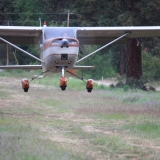
A buddy of mine flies his Cessna 182 into some pretty amazing places. Stock engine with Sportsman Stol. 8's on the mains, 6 on the nose. Uses flaps and a homeschool version of the zoom reserve program.
Here's another one.
Makes me want to finish my 1960 model....
C-182; what can it do?
Tue Sep 06, 2016 8:37 pm
Tue Sep 06, 2016 8:41 pm
Re: C-182; what can it do?
oops, not sure what went wrong.
https://www.youtube.com/watch?v=ddzf49ppmM8
https://www.youtube.com/watch?v=7PlLhuyH_80
Now that the airplane is Ponk Honked (PPonked), with an MT propeller, Simonds happens with 3-180 lb men.
Do that to your 182 and combined with Stene Aviation's Sportsman Stol, it becomes a Zoom Bush Wonder.
https://www.youtube.com/watch?v=ddzf49ppmM8
https://www.youtube.com/watch?v=7PlLhuyH_80
Now that the airplane is Ponk Honked (PPonked), with an MT propeller, Simonds happens with 3-180 lb men.
Do that to your 182 and combined with Stene Aviation's Sportsman Stol, it becomes a Zoom Bush Wonder.
Tue Sep 06, 2016 11:09 pm
Re: C-182; what can it do?
...not sure what went wrong
just the file name not the entire URL will work...
- Code: Select all
[youtube]ddzf49ppmM8[/youtube]
[youtube]7PlLhuyH_80[/youtube]

CFII, MEI, CFISES, ATPME, IA/AP, RPPL, Ski&Amphib ops, RHC mechanic cert, RHC SC— 3000TT
Tue Sep 06, 2016 11:26 pm
C-182; what can it do?
The 182 will do 100% of what 90% of all 180 drivers do with their airplanes.
I do regret not holding out for a 180 with a float kit. A 182 will never be more then a novelty of a ski plane and they are expensive to put on floats. That's really my only182 gripe.
I can't say if it will do what you want. I sure would love to take you out flying anytime in my 182 or just talk about them.
The p-ponk was a great upgrade and if you fly with any weight in the airplane it really shines.
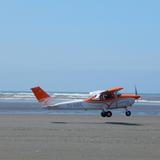
This has been my summer this year.
Beaches yup.

Gravel sure.

Muddy deep grass.

Tundra ridges.

Random cool spot.

Super Soft sand

I do regret not holding out for a 180 with a float kit. A 182 will never be more then a novelty of a ski plane and they are expensive to put on floats. That's really my only182 gripe.
I can't say if it will do what you want. I sure would love to take you out flying anytime in my 182 or just talk about them.
The p-ponk was a great upgrade and if you fly with any weight in the airplane it really shines.
This has been my summer this year.
Beaches yup.
Gravel sure.
Muddy deep grass.
Tundra ridges.
Random cool spot.
Super Soft sand

Tue Sep 06, 2016 11:33 pm
Re: C-182; what can it do?
That's what I'm talking about!
Anyone in the market for a 12?
Anyone in the market for a 12?
- Arctic Flyer offline


- Posts: 63
- Joined: Fri Sep 02, 2016 11:07 pm
- Location: Nome
- Aircraft: 1974 C-180J
Wed Sep 07, 2016 6:34 am
Re: C-182; what can it do?
PAMR MX wrote:The 182 will do 100% of what 90% of all 180 drivers do with their airplanes.
I do regret not holding out for a 180 with a float kit. A 182 will never be more then a novelty of a ski plane and they are expensive to put on floats. That's really my only182 gripe.
I can't say if it will do what you want. I sure would love to take you out flying anytime in my 182 or just talk about them.
The p-ponk was a great upgrade and if you fly with any weight in the airplane it really shines.
This has been my summer this year
What size tires do you have on your 182?
Wed Sep 07, 2016 7:47 am
Re: C-182; what can it do?
I think that with your level of experience you would get along just fine with a 182. I don't know about you, but with family aboard my threshold for pain is quite low. My guess is most of us are that way. It's great to share the adventure with others.
Fri Sep 09, 2016 4:41 pm
Re: C-182; what can it do?
Back in 1975, I partnered in a 1970 Skylane. We put about 1300 hours on it before trading it for a new TR182 in 1979, which we kept for about 7 years before my pard insisted on trading for a new T210 in 1986. Without looking in my logbooks, I'd guess that I had about 6-700 hours in the straight 182 and another 6-700 hours in the TR182. Both of the 182 variants were taken into gravel and grass strips by both of us.
However, neither of us took them into really rough areas. Bumpy, yes, rough, no. Both of us were aware of the reputation of a relatively weak nose gear in the straight 182 and relatively weak mains on the TR182. As a consequence, neither airplane was ever structurally damaged.
In addition, I've flown a number of other 182s, also into similar strips, and I did some instruction in various models of 182s.
A couple of years ago, just before I retired, I was involved in a lawsuit involving a 182, in which its nose gear had been structurally damaged a couple of times during its life, and it hadn't been properly repaired. Because of that, I learned a whole more than I ever knew about 182s in general--actually all legacy Cessna fixed gear singles.
Here's what I learned: 172s, 177s, and 182s share similar issues, because the nose gear structure is directly attached to the firewall. 206s and 207s have materially stronger nose gear, because it doesn't rely on the firewall for its attachment. If a firewall is damaged in the 100 series, it will take around $15-20,000 or so to repair/replace, mostly due to labor. If the damage extends to the tunnel behind the firewall, add another $8-9000. In either case, getting parts in a timely fashion has become more problematic--one of my friends waited 13 months for his Cessna-provided 177 firewall to arrive after being ordered by his IA.
How have most of these damaged 172s and 182s suffered their damage? Surprisingly, my research was that it hasn't been on rough strips. Most of it has been on paved strips or pretty smooth unpaved strips, caused by PIOs, often caused by too high approach speeds and the pilot's attempt to plant the airplane when it's floating. It doesn't take much PIO before the nose gear is damaged, even if the pilot doesn't lose it altogether and run off the runway, and even if the nose gear doesn't actually collapse.
My feeling, from both my experience in the airplane and from my research, is that if the pilot flies the airplane properly, it can handle relatively bumpy strips without fear of damage. If the pilot doesn't fly it properly, it can be damaged without much effort. I think Motoadve's videos and experience bears that out.
Cary
However, neither of us took them into really rough areas. Bumpy, yes, rough, no. Both of us were aware of the reputation of a relatively weak nose gear in the straight 182 and relatively weak mains on the TR182. As a consequence, neither airplane was ever structurally damaged.
In addition, I've flown a number of other 182s, also into similar strips, and I did some instruction in various models of 182s.
A couple of years ago, just before I retired, I was involved in a lawsuit involving a 182, in which its nose gear had been structurally damaged a couple of times during its life, and it hadn't been properly repaired. Because of that, I learned a whole more than I ever knew about 182s in general--actually all legacy Cessna fixed gear singles.
Here's what I learned: 172s, 177s, and 182s share similar issues, because the nose gear structure is directly attached to the firewall. 206s and 207s have materially stronger nose gear, because it doesn't rely on the firewall for its attachment. If a firewall is damaged in the 100 series, it will take around $15-20,000 or so to repair/replace, mostly due to labor. If the damage extends to the tunnel behind the firewall, add another $8-9000. In either case, getting parts in a timely fashion has become more problematic--one of my friends waited 13 months for his Cessna-provided 177 firewall to arrive after being ordered by his IA.
How have most of these damaged 172s and 182s suffered their damage? Surprisingly, my research was that it hasn't been on rough strips. Most of it has been on paved strips or pretty smooth unpaved strips, caused by PIOs, often caused by too high approach speeds and the pilot's attempt to plant the airplane when it's floating. It doesn't take much PIO before the nose gear is damaged, even if the pilot doesn't lose it altogether and run off the runway, and even if the nose gear doesn't actually collapse.
My feeling, from both my experience in the airplane and from my research, is that if the pilot flies the airplane properly, it can handle relatively bumpy strips without fear of damage. If the pilot doesn't fly it properly, it can be damaged without much effort. I think Motoadve's videos and experience bears that out.
Cary
"I have slipped the surly bonds of earth..., put out my hand and touched the face of God." J.G. Magee
Fri Sep 09, 2016 6:00 pm
Re: C-182; what can it do?
I love my 182. Yes a 180 would of been awesome, but for initial money and the difference in annual insurance premiums I can't be more happy with my decision.
I don't fly true "off airport", but roughy backcountry strips are no sweat.


Sent from my iPhone using Tapatalk
I don't fly true "off airport", but roughy backcountry strips are no sweat.
Sent from my iPhone using Tapatalk
Sun Sep 11, 2016 8:08 pm
Re: C-182; what can it do?
Thanks for the great discussion.
Please complete this statement. The 182 is a xxx foot airplane.
I know there are tons of variables. When I work my PA-12, I will land somewhere 'good' and unload it. I will take almost everything out of it, and drain the fuel. Then I will put in just what I need to be 'sporty'. It's a lot of fun! Sometimes I put a lot of air in the 31s so they'll roll easier, dance for additional wind, etc., etc.
Without doing all that nonsense I consider my PA-12 to be a 500' aircraft. All other things equal. With me, 1/2 tanks or more and some gear it's a 500' aircraft.
Any guesses on what the 182 is? 600', 800', 1000'?
Please complete this statement. The 182 is a xxx foot airplane.
I know there are tons of variables. When I work my PA-12, I will land somewhere 'good' and unload it. I will take almost everything out of it, and drain the fuel. Then I will put in just what I need to be 'sporty'. It's a lot of fun! Sometimes I put a lot of air in the 31s so they'll roll easier, dance for additional wind, etc., etc.
Without doing all that nonsense I consider my PA-12 to be a 500' aircraft. All other things equal. With me, 1/2 tanks or more and some gear it's a 500' aircraft.
Any guesses on what the 182 is? 600', 800', 1000'?
- Arctic Flyer offline
- Posts: 63
- Joined: Fri Sep 02, 2016 11:07 pm
- Location: Nome
- Aircraft: 1974 C-180J
Mon Sep 12, 2016 7:34 am
Re: C-182; what can it do?
I think it depends a bit on which model 182 and what mods.
My 73 with VGs and Sportsman STOL, MT prop and light weight can do consistently 600 feet.(less on good days )
)
I guess an earlier 182 with mods can do better.
And the re start 182s with Lycoming I have not seen many in the backcountry (they are heavier) so might take up more distance.
My 73 with VGs and Sportsman STOL, MT prop and light weight can do consistently 600 feet.(less on good days
)I guess an earlier 182 with mods can do better.
And the re start 182s with Lycoming I have not seen many in the backcountry (they are heavier) so might take up more distance.
Mon Sep 12, 2016 12:56 pm
Re: C-182; what can it do?
In addition to which model, how much weight, and which mods, where you're flying (i.e., density altitude) makes the biggest difference. Lightened up with maybe quarter tanks, and it's an incredible short field take off airplane, even at higher density altitudes of say 5000' or so. But at 10,000' DA, that changes a lot, as it does with any other airplane. Then load that with a bunch of people and/or camping gear, and what was sprightly becomes pretty doggish.
Cary
Cary
"I have slipped the surly bonds of earth..., put out my hand and touched the face of God." J.G. Magee
Tue Sep 13, 2016 6:35 am
Re: C-182; what can it do?
So much of this is risk tolerance. I have a Pponked 1961 Cessna 182. The mains are 8.00's and the nose is a 7.00 on a 206 fork.
The 1961 model is the last year (I believe) for the narrower fuselage so its a little lighter.
For the last few years, we have pounded the Frank Church and Montana strips with the 182 (and sometimes the bonanza). I think last year I did 60+ flights into the various backcountry strips as we live just 30 miles away.
The 182 can do about 90-95%% of the strips with absolute ease. Hell, our bonanza can do about 80% of them. The limit, for me, is the nose wheel/firewall concerns and that is where your level of risk tolerance comes in. As a previous poster pointed out: "It works until it doesn't". As an example, I've landed at Soldier Bar and Cabin Creek which are not very difficult approaches but have those damnable water bars. (videos linked to bottom of post) Surprisingly, Cabin Creek's have gotten much worse over the course of the summer. Soldier Bar's water bars are always there. Im willing to go to Cabin Creek over and over because its gorgeous and has access to good fishing. Soldier Bar has difficult access to water etc. In short, the risk/benefit equation isn't there for me for Soldier Bar. A 206 has a better nose gear attachment system and is a bit better for the rough stuff than the 182. . That, and the doors, is why all the commercial guys use them.
In summary..... the 182 can do a lot of the stuff the original poster wants to do if he has a pretty decent tolerance for risk. The risk goes down a bit if you spring for the STC's that allows big beefy forks and tires. The risk goes down further with a 206 and it goes down to 0 with any of the tail wheel cessnas in terms of nose wheel/firewall issues.
In response to realistic take off distances, check the videos of Krassel and Reed below and you can judge for yourself the 182 capability. Well off before half way with me and Nora, the wonder lab.
Backcountry videos: https://www.youtube.com/user/camasprarie
The 1961 model is the last year (I believe) for the narrower fuselage so its a little lighter.
For the last few years, we have pounded the Frank Church and Montana strips with the 182 (and sometimes the bonanza). I think last year I did 60+ flights into the various backcountry strips as we live just 30 miles away.
The 182 can do about 90-95%% of the strips with absolute ease. Hell, our bonanza can do about 80% of them. The limit, for me, is the nose wheel/firewall concerns and that is where your level of risk tolerance comes in. As a previous poster pointed out: "It works until it doesn't". As an example, I've landed at Soldier Bar and Cabin Creek which are not very difficult approaches but have those damnable water bars. (videos linked to bottom of post) Surprisingly, Cabin Creek's have gotten much worse over the course of the summer. Soldier Bar's water bars are always there. Im willing to go to Cabin Creek over and over because its gorgeous and has access to good fishing. Soldier Bar has difficult access to water etc. In short, the risk/benefit equation isn't there for me for Soldier Bar. A 206 has a better nose gear attachment system and is a bit better for the rough stuff than the 182. . That, and the doors, is why all the commercial guys use them.
In summary..... the 182 can do a lot of the stuff the original poster wants to do if he has a pretty decent tolerance for risk. The risk goes down a bit if you spring for the STC's that allows big beefy forks and tires. The risk goes down further with a 206 and it goes down to 0 with any of the tail wheel cessnas in terms of nose wheel/firewall issues.
In response to realistic take off distances, check the videos of Krassel and Reed below and you can judge for yourself the 182 capability. Well off before half way with me and Nora, the wonder lab.
Backcountry videos: https://www.youtube.com/user/camasprarie
Tue Sep 13, 2016 11:04 am
Re: C-182; what can it do?
What are cruise speeds with the big tires?
- fast eddie offline
- Posts: 37
- Joined: Sun Dec 28, 2014 8:45 pm
- Location: ABILENE
- Aircraft: Carbon Cub
Tue Sep 13, 2016 12:28 pm
Re: C-182; what can it do?
I always have to laugh when someone from Alaska asks about "Off Airport" capabilities/performance and many if not most of the responses describe operations on lower 48 airstrips, most of which, at least in my experience are pretty smooth.
That's why I said in my earlier response that it really depends on one's definition of "Rough". Rough can mean a lot of things to a lot of folks.
Mile Hi??? Sorry, that ain't "Rough" in my book. A kind of challenging (but actually more intimidating) strip, but rough? Not really.
I've been into some mine strips in Alaska that I'd call rough, no matter what you're flying. But, when you start playing in the true off airport world, rough has an entire different meaning.
And, ANY nosewheel airplane will play that game up to a point. But, beyond that point, you're going to break something. As has been discussed, the 182 and 172 nosegears have the disadvantage that the gear attaches to the firewall, so if you break it, you do a LOT of airframe damage.
I've flown 206s into places I'd really prefer NOT to take a 185, but it wasn't because it was rough.
My point is, the single controlling factor on how well a 182 performs in the off airport world, or even on many of the backcountry strips in Alaska is the pilot in command.
Ever look at a "gravel bar", then run the tires on it, and realize just how big diameter that "gravel" is? I have. It's pretty hard to judge off airport landing zones, but with lots of practice you can get pretty good at it.
I remember landing in a bay on Kodiak Island in the Beaver. Just after I landed, an air taxi pilot came over in a 185 and asked me how rough the water was. I told him it was sorta rough, but wasn't too bad. He landed and proceeded to chew me out there on the beach for misleading him about how rough the water was......I simply responded "You couldn't see what I am flying, and understand that what's sorta rough for a Beaver might be brutal for a 185?"
But, the bottom line is: There's a very fine line between what will break something and what will not in nosegear airplanes.
MTV
That's why I said in my earlier response that it really depends on one's definition of "Rough". Rough can mean a lot of things to a lot of folks.
Mile Hi??? Sorry, that ain't "Rough" in my book. A kind of challenging (but actually more intimidating) strip, but rough? Not really.
I've been into some mine strips in Alaska that I'd call rough, no matter what you're flying. But, when you start playing in the true off airport world, rough has an entire different meaning.
And, ANY nosewheel airplane will play that game up to a point. But, beyond that point, you're going to break something. As has been discussed, the 182 and 172 nosegears have the disadvantage that the gear attaches to the firewall, so if you break it, you do a LOT of airframe damage.
I've flown 206s into places I'd really prefer NOT to take a 185, but it wasn't because it was rough.
My point is, the single controlling factor on how well a 182 performs in the off airport world, or even on many of the backcountry strips in Alaska is the pilot in command.
Ever look at a "gravel bar", then run the tires on it, and realize just how big diameter that "gravel" is? I have. It's pretty hard to judge off airport landing zones, but with lots of practice you can get pretty good at it.
I remember landing in a bay on Kodiak Island in the Beaver. Just after I landed, an air taxi pilot came over in a 185 and asked me how rough the water was. I told him it was sorta rough, but wasn't too bad. He landed and proceeded to chew me out there on the beach for misleading him about how rough the water was......I simply responded "You couldn't see what I am flying, and understand that what's sorta rough for a Beaver might be brutal for a 185?"
But, the bottom line is: There's a very fine line between what will break something and what will not in nosegear airplanes.
MTV


Tue Sep 13, 2016 12:31 pm
Re: C-182; what can it do?

I love mine. I operate out of a 1000ft grass strip at near sea level- 620 msl. We have some hot and humid summers, but no crazy DA's like out west. I still have small tires on mine 6.00 mains and 5.00 on the nose. I have a Sportsman and VG's also. Its fairly light at 1640 empty weight with unusable fuel.
I continue to be impressed with this airplane. I am still learning to trust the wing at slow airspeeds. The airplane is still way more capable than I am with about 60 hours in it thus far. She is fast and slow. I love it.
Here is a video of me landing at my house after commuting home from work on a Friday evening. The winds were reported at 5G 20 from 050 to 110 and you can see the effect of the wind on the corn field. This was my 5th pass. It was truly a matter of timing with the gusts. I can say if I would've been flying a 180, I would have not attempted this. Runway orientation is 13/31. It was a ride. There is typically a sinker at the end of the runway which is why the reason for the high approach. I was in and out of a forward and a side slip making adjustments with power. This may be the toughest landing I have ever attempted. The video quality is kinda crappy so my apologies there.
The 182 is the best value airplane on the market, especially these early straight tail models. I still miss the tailwheel... but my wallet loves the nosewheel. I will end up putting a big fork and tires on it in the near future.


Edit: Here is a short takeoff with about half fuel, and some gear on board, leaving FARMAULE's strip in WV.
- Crzyivan13 offline
- Posts: 1811
- Joined: Sat Nov 24, 2012 9:50 pm
- Location: Ohio- OI27 Checkpoint Charlie
- FindMeSpot URL: https://share.delorme.com/EvanDavis
- Aircraft: 1957 Cessna 182A
Sat Sep 17, 2016 12:06 pm
Re: C-182; what can it do?
mtv wrote:I always have to laugh when someone from Alaska asks about "Off Airport" capabilities/performance and many if not most of the responses describe operations on lower 48 airstrips, most of which, at least in my experience are pretty smooth.
That's why I said in my earlier response that it really depends on one's definition of "Rough". Rough can mean a lot of things to a lot of folks.
Mile Hi??? Sorry, that ain't "Rough" in my book. A kind of challenging (but actually more intimidating) strip, but rough? Not really.
I've been into some mine strips in Alaska that I'd call rough, no matter what you're flying. But, when you start playing in the true off airport world, rough has an entire different meaning.
And, ANY nosewheel airplane will play that game up to a point. But, beyond that point, you're going to break something. As has been discussed, the 182 and 172 nosegears have the disadvantage that the gear attaches to the firewall, so if you break it, you do a LOT of airframe damage.
I've flown 206s into places I'd really prefer NOT to take a 185, but it wasn't because it was rough.
My point is, the single controlling factor on how well a 182 performs in the off airport world, or even on many of the backcountry strips in Alaska is the pilot in command.
Ever look at a "gravel bar", then run the tires on it, and realize just how big diameter that "gravel" is? I have. It's pretty hard to judge off airport landing zones, but with lots of practice you can get pretty good at it.
I remember landing in a bay on Kodiak Island in the Beaver. Just after I landed, an air taxi pilot came over in a 185 and asked me how rough the water was. I told him it was sorta rough, but wasn't too bad. He landed and proceeded to chew me out there on the beach for misleading him about how rough the water was......I simply responded "You couldn't see what I am flying, and understand that what's sorta rough for a Beaver might be brutal for a 185?"
But, the bottom line is: There's a very fine line between what will break something and what will not in nosegear airplanes.
MTV
I had an interesting discussion with the examiner about soft field technique after my commercial checkride. I pull the nosewheel up then let it settle to barely tap along the surface, as that is the way you get a short-soft-field combo to work best in my experience. He wanted that nose gear high off the surface. In my PA-22 if I do that on soft enough material I can't ever get off the ground...too much drag. You make more drag on the mains by loading them up that way and you add massive air drag. I flew it his way after he asked, but he wanted to talk about it after we got on the ground...and the reason he wanted to talk about it is he recognized that he had never operated on a soft field. Never. Was a good discussion.
Sent from my iPad using Tapatalk
- Troy Hamon offline
- Posts: 913
- Joined: Tue Apr 06, 2010 8:27 am
- Location: King Salmon
- FindMeSpot URL: http://share.findmespot.com/shared/face ... 04iX0FXjV2
- Aircraft: Piper PA-22
Sat Sep 17, 2016 12:30 pm
Re: C-182; what can it do?
Troy Hamon wrote:mtv wrote:I always have to laugh when someone from Alaska asks about "Off Airport" capabilities/performance and many if not most of the responses describe operations on lower 48 airstrips, most of which, at least in my experience are pretty smooth.
That's why I said in my earlier response that it really depends on one's definition of "Rough". Rough can mean a lot of things to a lot of folks.
Mile Hi??? Sorry, that ain't "Rough" in my book. A kind of challenging (but actually more intimidating) strip, but rough? Not really.
I've been into some mine strips in Alaska that I'd call rough, no matter what you're flying. But, when you start playing in the true off airport world, rough has an entire different meaning.
And, ANY nosewheel airplane will play that game up to a point. But, beyond that point, you're going to break something. As has been discussed, the 182 and 172 nosegears have the disadvantage that the gear attaches to the firewall, so if you break it, you do a LOT of airframe damage.
I've flown 206s into places I'd really prefer NOT to take a 185, but it wasn't because it was rough.
My point is, the single controlling factor on how well a 182 performs in the off airport world, or even on many of the backcountry strips in Alaska is the pilot in command.
Ever look at a "gravel bar", then run the tires on it, and realize just how big diameter that "gravel" is? I have. It's pretty hard to judge off airport landing zones, but with lots of practice you can get pretty good at it.
I remember landing in a bay on Kodiak Island in the Beaver. Just after I landed, an air taxi pilot came over in a 185 and asked me how rough the water was. I told him it was sorta rough, but wasn't too bad. He landed and proceeded to chew me out there on the beach for misleading him about how rough the water was......I simply responded "You couldn't see what I am flying, and understand that what's sorta rough for a Beaver might be brutal for a 185?"
But, the bottom line is: There's a very fine line between what will break something and what will not in nosegear airplanes.
MTV
I had an interesting discussion with the examiner about soft field technique after my commercial checkride. I pull the nosewheel up then let it settle to barely tap along the surface, as that is the way you get a short-soft-field combo to work best in my experience. He wanted that nose gear high off the surface. In my PA-22 if I do that on soft enough material I can't ever get off the ground...too much drag. You make more drag on the mains by loading them up that way and you add massive air drag. I flew it his way after he asked, but he wanted to talk about it after we got on the ground...and the reason he wanted to talk about it is he recognized that he had never operated on a soft field. Never. Was a good discussion.
Sent from my iPad using Tapatalk
One of the biggest reasons that pilots (not just DPEs) haven't ever operated on soft fields is the restrictions FBOs and flight schools put on using the airplanes on soft fields. Whether it's really insurance driven or not, I don't know, but over the years, I've certainly been told by most of the various places I trained or rented that off pavement ops were verboten. I was fortunate that the Elmendorf Aeroclub had no such restrictions, so some of my training way back then was on softer surfaces.
I specifically looked at that issue when I insured my current airplane as well as the airplanes I owned in partnership, and none of the insurance companies involved had any restrictions on the kind of surface, only that it was actually an airstrip and not some open field somewhere.
To my way of thinking, teaching pilots soft field technique without using soft fields makes little sense. And using Troy's DPE's method is why so many trainers have bent tail tiedown rings! Although I put a tail skid on my airplane "just in case", I've never yet scraped any tiedown ring or the tail skid, because Troy's method is the same as I have always used.
Cary
"I have slipped the surly bonds of earth..., put out my hand and touched the face of God." J.G. Magee
Sat Sep 17, 2016 12:53 pm
Re: C-182; what can it do?
And I have no experience with what the lower-48ers consider soft fields. Would be interesting to compare to ash fields, cinder blows, and beaches...but I've seen those photos of rutted grass oopses...looks like there is some real soft available out there for all of us if we go look. The important skill is knowing what is too soft. If I touch down to drag a strip in my PA-22 and it feels like something is grabbing at my plane, I get out of there. If it is just mild rolling resistance, that is usually fine. But sometimes the rolling resistance is just enough that I can tell if I stop...I might not get back in the air...those are the important judgement calls.
And now I see I have wandered completely off topic.
So...C182! Great airplane! Treat it well! Have fun!
Sent from my iPad using Tapatalk
And now I see I have wandered completely off topic.
So...C182! Great airplane! Treat it well! Have fun!
Sent from my iPad using Tapatalk
- Troy Hamon offline
- Posts: 913
- Joined: Tue Apr 06, 2010 8:27 am
- Location: King Salmon
- FindMeSpot URL: http://share.findmespot.com/shared/face ... 04iX0FXjV2
- Aircraft: Piper PA-22
Mon Sep 19, 2016 9:17 am
Re: C-182; what can it do?
I brought a 100' tape and orange cones to a dirt strip near home. 4700' MSL..Temp in 70's. Mains come off the ground at 300', good positive rate of climb in 500'. Consistently stop in 500' or less from touchdown point.
1964 182-G. 300HP IO550. Sportsman STOL, Wing-X extensions, Micro aero vortex generators, MT prop, 29" ABW'S, 8.50 nose on Landis fork.
This plane beat every TD at the STOL drag race at last year's High Sierra Fly In, except Eldredge's super duper cub, and the overall winner Wilga. Besides strong acceleration, I can brake harder.
Atlee Dodge bush seats and Selkirk extended luggage gives lots of flexibility. If I'm not hauling a bunch of gear or rear pax, I put one or two 5 gal. water jugs back in the extended luggage. Helps keep the nose up.
I'm slowly learning to evaluate off field conditions. So far mostly dirt strips and dry lakes.
Pierre
1964 182-G. 300HP IO550. Sportsman STOL, Wing-X extensions, Micro aero vortex generators, MT prop, 29" ABW'S, 8.50 nose on Landis fork.
This plane beat every TD at the STOL drag race at last year's High Sierra Fly In, except Eldredge's super duper cub, and the overall winner Wilga. Besides strong acceleration, I can brake harder.
Atlee Dodge bush seats and Selkirk extended luggage gives lots of flexibility. If I'm not hauling a bunch of gear or rear pax, I put one or two 5 gal. water jugs back in the extended luggage. Helps keep the nose up.
I'm slowly learning to evaluate off field conditions. So far mostly dirt strips and dry lakes.
Pierre
- Pierre_R offline

- Posts: 312
- Joined: Mon Sep 30, 2013 3:17 am
- Location: Minden, Northern Nevada
- FindMeSpot URL: https://share.findmespot.com/shared/fac ... 5KFquxzBYq
- Aircraft: 1964 C182 IO550 on Aerocet 3400's.
Aerotrek A220.
TBM 850
DISPLAY OPTIONS
Who is online
Users browsing this forum: No registered users and 0 guests
Latest Features
-
Live to Tell
A Minnesota pilot is surprised to learn that the sudden asymmetric drag of an out-of-rig ski can…Read More -
Creators
Working in some of the Yukon's most beautiful and remote environments, photographer Simon Blakesley captures aircraft in…Read More -
Aircraft Ownership and Maintenance
Upgrading to big tires can make a huge difference in backcountry performance, but with those gains come…Read More -
Tales from Yesteryear
In this tale from bush flying yesteryear, Don Cogger signs up to help Atlee Dodge Jr recovery…Read More


Latest Knowledge Base
-
Destinations
A regional guide with ideas for winter camping destinations in California, Nevada, New Mexico, and Arizona.Read More -
Aircraft
Finding an affordable aircraft that can handle the backcountry for $80K or less? A challenge for sure, but with the…Read More -
Aircraft
01.29.2018 - Zane - Updated tire diameter graphic to add 8.50x10 Guide to tires for use in the backcountry and off-airport landing…Read More -
Pilots
12.22.2013 - Initial article format Operating aircraft on skis and negotiating a snow-covered landscape is an entirely unique skillset and environment.…Read More


