If you are going to fly in canyons, or bad weather, and push the edge then you had better learn to fly your airplane to its limits!!! If you don't know how to use everything then find an instructor that can show you how, using EVERYTHING, IT IS AS SIMPLE AS THAT!!! Other things to think about is do you turn into the rocks or away from the rocks? If you turn away and into the soup you will lose ground reference. Just something to think about when scud running. ALWAYS be prepared to land on whatever is ahead of you. Sometimes not turning is the best choice. Just suck it up, get some new gear, struts, paint, and helo ride in the process. We lost another one at Birchwood today, it is not just the canyons that can kill you!!! LEARN TO FLY YOUR PLANE!!!! Fly it to the crash site, do not spin in. I am a bit raw tonight because I have seen too many burnt people.
DENNY
Canyon turn
Sat Aug 13, 2016 11:00 pm
DENNY
Sat Aug 13, 2016 11:58 pm
Re: Canyon turn
Denny, sorry to hear that.
Sent from my iPad using Tapatalk
Sent from my iPad using Tapatalk
- Troy Hamon offline
- Posts: 915
- Joined: Tue Apr 06, 2010 8:27 am
- Location: King Salmon
- FindMeSpot URL: http://share.findmespot.com/shared/face ... 04iX0FXjV2
- Aircraft: Piper PA-22
Sun Aug 14, 2016 7:19 pm
Re: Canyon turn
Every year after that, I'd finish the rest of that unit, then come over the top of that tight little crack and give those sheep a little thrill. worked every time, and on one count, we counted over forty sheep that came out of that patch of alders hidden down in that crack in the rocks.
MTV[/quote]
So did you write yourself up for harassing Wildlife?? Or is it OK to do that when you have your suit on?? Just Dissin ya!!
I here ya should not do that to walrus on the beach!!
 [/quote]
We did a lot of stuff that wouldn't be "recommended" for civilians. Besides, I needed to get those sheep a little tuned up for the upcoming sheep season.....
MTV
MTV[/quote]
So did you write yourself up for harassing Wildlife?? Or is it OK to do that when you have your suit on?? Just Dissin ya!!
I here ya should not do that to walrus on the beach!!
[/quote]We did a lot of stuff that wouldn't be "recommended" for civilians. Besides, I needed to get those sheep a little tuned up for the upcoming sheep season.....
MTV


Sun Aug 14, 2016 11:45 pm
Re: Canyon turn
Rob,
Well said about energy management transcending turns. I harp on that aspect so much because it has the potential to save so many lives. You are right about gravity, ground effect, zoom climbs, gravity thrust, thermal lift, orographic lift, and much more energy outside the instrument flight excess engine thrust for climb and strict level turn box.
Orthodoxy kills like it would have had Scully followed proper procedure. You are also right that working outside that proper procedural box can be dangerous for those Indoctrinated in it, with thousands of hours committed to it. We are talking about the best pilots with the best records over so many years and hours. These are good men and our industry is indebted to them.
How do we move on? Innovative men like Boyd, the greatest energy management thinker, generally have little clout and are generally less obnoxious. God bless the Marines. Like Pip, in "Great Expectations, "and our own Rob, "We look about us."
It is good to have friends in the bog.
Your friend,
Jim
Well said about energy management transcending turns. I harp on that aspect so much because it has the potential to save so many lives. You are right about gravity, ground effect, zoom climbs, gravity thrust, thermal lift, orographic lift, and much more energy outside the instrument flight excess engine thrust for climb and strict level turn box.
Orthodoxy kills like it would have had Scully followed proper procedure. You are also right that working outside that proper procedural box can be dangerous for those Indoctrinated in it, with thousands of hours committed to it. We are talking about the best pilots with the best records over so many years and hours. These are good men and our industry is indebted to them.
How do we move on? Innovative men like Boyd, the greatest energy management thinker, generally have little clout and are generally less obnoxious. God bless the Marines. Like Pip, in "Great Expectations, "and our own Rob, "We look about us."
It is good to have friends in the bog.
Your friend,
Jim
- contactflying offline
- Posts: 4972
- Joined: Wed Apr 03, 2013 7:36 pm
- Location: Aurora, Missouri 2H2
Download my free "https://tinyurl.com/Safe-Maneuvering" e-book.
Mon Aug 15, 2016 11:35 am
Re: Canyon turn
Great thread, and thanks to everyone for their sharing of knowledge, advice, etc. One of the things I've learned through these canyon turn threads is that believe it or not several of us have been or are talking about "shades of gray" on the same basic technique, but we're talking about it from entirely different perspectives. I've never sprayed crops, surveyed sheep north of Fairbanks, or dodged bullets in a combat zone. Some of you guys have done those things, I respect your achievements.
In any of the canyon flying I ever did, I never had any power available to use in a canyon turn... the energy management, gravity, and lift forces that Contact teaches were the only thing that the glider guys like me had available.
So consider this; two or three highly experienced pilots sharing their experience on this forum (and including video from crop spraying and dual instruction in a 172) have been discussing shallow, moderate, and steep "energy management turns", where you use gravity and unloading the wing to reverse direction safely in a short distance (spanwise).
A while ago on another canyon turn thread, I posted my opinion about a hammerhead turn maneuver being an emergency option in a really narrow canyon. A few folks soiled their undergarments and quickly called my sanity into question. But with just a temporary name change for the maneuver, it seems pretty obvious now that the hammerhead turn (or "stall turn" to use the textbook name) I had referred to is nothing more than a very steep energy management turn.
One of the things I got from watching the two different videos is that the horizontal (spanwise) offset distance using the energy management turn is inversely proportional to the steepness of the climb and dive in the energy management turn. It seems to me that the higher the climb/descent angle of the energy management turn, the less spanwise distance is used up to reverse direction (achieved turn diameter).
A logical progression of this is that if you use a very steep climb and descent (say vertically up and vertically down), you might even be able to reverse direction with zero spanwise offset.
So it seems that making use of ALL of these examples and theories, and forgetting about what name any of these maneuvers are called in any textbook, the narrower the canyon you have to escape, the steeper the angle of climb/descent you need to use in your energy management turn. Anywhere from a 10 or 20 degree climb/descent to a 90 degree climb/descent.
And before anyone says it, for the 500th time, having to use any of these maneuvers usually means that the pilot has done something stupid or poorly planned, and put himself into a needlessly dangerous situation in that canyon, a situation which he should not ever have gotten himself into intentionally.
Unless you're a sailplane racer
In any of the canyon flying I ever did, I never had any power available to use in a canyon turn... the energy management, gravity, and lift forces that Contact teaches were the only thing that the glider guys like me had available.
So consider this; two or three highly experienced pilots sharing their experience on this forum (and including video from crop spraying and dual instruction in a 172) have been discussing shallow, moderate, and steep "energy management turns", where you use gravity and unloading the wing to reverse direction safely in a short distance (spanwise).
A while ago on another canyon turn thread, I posted my opinion about a hammerhead turn maneuver being an emergency option in a really narrow canyon. A few folks soiled their undergarments and quickly called my sanity into question. But with just a temporary name change for the maneuver, it seems pretty obvious now that the hammerhead turn (or "stall turn" to use the textbook name) I had referred to is nothing more than a very steep energy management turn.
One of the things I got from watching the two different videos is that the horizontal (spanwise) offset distance using the energy management turn is inversely proportional to the steepness of the climb and dive in the energy management turn. It seems to me that the higher the climb/descent angle of the energy management turn, the less spanwise distance is used up to reverse direction (achieved turn diameter).
A logical progression of this is that if you use a very steep climb and descent (say vertically up and vertically down), you might even be able to reverse direction with zero spanwise offset.
So it seems that making use of ALL of these examples and theories, and forgetting about what name any of these maneuvers are called in any textbook, the narrower the canyon you have to escape, the steeper the angle of climb/descent you need to use in your energy management turn. Anywhere from a 10 or 20 degree climb/descent to a 90 degree climb/descent.
And before anyone says it, for the 500th time, having to use any of these maneuvers usually means that the pilot has done something stupid or poorly planned, and put himself into a needlessly dangerous situation in that canyon, a situation which he should not ever have gotten himself into intentionally.
Unless you're a sailplane racer
.
Mon Aug 15, 2016 2:38 pm
Re: Canyon turn
EZFLAP,
The energy management turn , whether steep or shallow bank, is totally a coordinated turn. Except for the energy managed in the zoom climb to trade cruise airspeed for altitude and to slow down and the zoom climb to finish, it is just a cruise power descending turn.
The hammerhead, split S, or any acrobatic maneuver is totally inappropriate and tremendously dangerous. Neither the hammerhead nor split S is specifically and throughout a turn to target.
Acrobatics involves full deflection of controls and precision timing of roll out. Way too complicated and violent for maneuvering flight. Energy management is simply going along with smooth maneuvers that the airplane wants to do anyway. Turn one of those well built flying model airplanes loose, without remote control, and everything it does is energy management.
With indoctrination and iterations, energy management turns become normal turns. Except for IFR , I haven't made more than a handful of regular turns in forty years. They are not complicated, weird, crazy, dangerous, or acrobatic.
Thanks for the questions though. They give me a chance to defend my favorite, my airplane's favorite turn.
Contact
The energy management turn , whether steep or shallow bank, is totally a coordinated turn. Except for the energy managed in the zoom climb to trade cruise airspeed for altitude and to slow down and the zoom climb to finish, it is just a cruise power descending turn.
The hammerhead, split S, or any acrobatic maneuver is totally inappropriate and tremendously dangerous. Neither the hammerhead nor split S is specifically and throughout a turn to target.
Acrobatics involves full deflection of controls and precision timing of roll out. Way too complicated and violent for maneuvering flight. Energy management is simply going along with smooth maneuvers that the airplane wants to do anyway. Turn one of those well built flying model airplanes loose, without remote control, and everything it does is energy management.
With indoctrination and iterations, energy management turns become normal turns. Except for IFR , I haven't made more than a handful of regular turns in forty years. They are not complicated, weird, crazy, dangerous, or acrobatic.
Thanks for the questions though. They give me a chance to defend my favorite, my airplane's favorite turn.
Contact
- contactflying offline
- Posts: 4972
- Joined: Wed Apr 03, 2013 7:36 pm
- Location: Aurora, Missouri 2H2
Download my free "https://tinyurl.com/Safe-Maneuvering" e-book.
Mon Aug 15, 2016 5:44 pm
Re: Canyon turn
So lets introduce wind and it's effects into the discussion. That complicates things but is real life and certainly changes how we should react.
Of course, we shouldn't be there if the winds are over about 25 kts at peak altitude, but it isn't always that clear-cut and even when winds are light, the occasional gust may have to be dealt with. I'm not talking just about turbulence, but actual airflow in all directions up, down, left, right, heads, and tails.
Of course, we shouldn't be there if the winds are over about 25 kts at peak altitude, but it isn't always that clear-cut and even when winds are light, the occasional gust may have to be dealt with. I'm not talking just about turbulence, but actual airflow in all directions up, down, left, right, heads, and tails.
- blackrock offline
- Posts: 1576
- Joined: Tue Jan 29, 2008 6:54 pm
- Location: Elko, NV
- FindMeSpot URL: http://share.findmespot.com/shared/face ... BFmtASxjeV
- Aircraft: Bearhawk
Mon Aug 15, 2016 6:07 pm
Re: Canyon turn
blackrock wrote:So lets introduce wind and it's effects into the discussion. That complicates things but is real life and certainly changes how we should react.
Of course, we shouldn't be there if the winds are over about 25 kts at peak altitude, but it isn't always that clear-cut and even when winds are light, the occasional gust may have to be dealt with. I'm not talking just about turbulence, but actual airflow in all directions up, down, left, right, heads, and tails.
Excellent question and point Mike. I brought up the same question in the last Canyon turn thread, because you routinely hear people say they can turn their airplane around in 'X' distance, but I often wonder if out in the open they know what 'X' distance looks like, and more important if they know what that distance through the moving air looks like when you over lay it against the stationary ground... It's very easy to burn up twice the ground distance you actually need because you turned the wrong way (flew up the wrong side of the canyon).


Mon Aug 15, 2016 6:20 pm
Re: Canyon turn
Rob wrote:blackrock wrote:So lets introduce wind and it's effects into the discussion. That complicates things but is real life and certainly changes how we should react.
Of course, we shouldn't be there if the winds are over about 25 kts at peak altitude, but it isn't always that clear-cut and even when winds are light, the occasional gust may have to be dealt with. I'm not talking just about turbulence, but actual airflow in all directions up, down, left, right, heads, and tails.
Excellent question and point Mike. I brought up the same question in the last Canyon turn thread, because you routinely hear people say they can turn their airplane around in 'X' distance, but I often wonder if out in the open they know what 'X' distance looks like, and more important if they know what that distance through the moving air looks like when you over lay it against the stationary ground... It's very easy to burn up twice the ground distance you actually need because you turned the wrong way (flew up the wrong side of the canyon).
For sure!
And along with that, despite what everyone says about flying the right side of the canyon, fly the side that has free lift. Rather it's the wind or morning sun giving lift. A big fly-in is the only reason I can think of for not doing this, even then you do what you have to do to get out safely.
- Terry offline
- Posts: 1365
- Joined: Sat Nov 10, 2007 9:11 pm
- Location: Willamette Valley
- FindMeSpot URL: http://share.findmespot.com/shared/face ... 4GzPHI6t1d
Mon Aug 15, 2016 8:00 pm
Re: Canyon turn
I would never consider a hammerhead/stall turn as a means of reversing course in a canyon. There are 2 main reasons:
1. Typically, the need to reverse course in the tightest space possible is caused because the airplane has already run out of its ability to outclimb the canyon--it's already at Vx or even slower. That means there isn't any possibility of commencing the hammerhead at the optimum airspeed, which is typically near maneuvering speed in order to gain the most altitude before making the vertical rudder turn.
2. Aerobatic maneuvering relies a whole lot on the ability to judge pitch and bank with reference to the horizon. In a canyon, the "horizon" simply doesn't exist, at least in a way that is usable for aerobatics. It would be very easy to get too twisted up and lose control. I'm sure no expert on aerobatics (9.8 hours in a basic aerobatics course some 35 years ago is all I claim), but in that short time, I did a number of hammerheads, even tail slides, and I have to conclude that an expert aerobatics pilot who does aerobatics nearly daily might make use of a hammerhead in a canyon, but not you or me.
If I absolutely had to use an energy management turn to reverse course in a canyon, it would be a relatively benign steep descending turn. But as I said earlier, just slowing down allows a very tight turn. If it's commenced on the correct (downwind) side of the canyon, no problem. Even if it's on the upwind side, it still can be quite tight if done at a slow enough airspeed. It's foolish to zoom through canyons; slow down and live, think ahead, don't wait to reverse course, etc.
Cary
1. Typically, the need to reverse course in the tightest space possible is caused because the airplane has already run out of its ability to outclimb the canyon--it's already at Vx or even slower. That means there isn't any possibility of commencing the hammerhead at the optimum airspeed, which is typically near maneuvering speed in order to gain the most altitude before making the vertical rudder turn.
2. Aerobatic maneuvering relies a whole lot on the ability to judge pitch and bank with reference to the horizon. In a canyon, the "horizon" simply doesn't exist, at least in a way that is usable for aerobatics. It would be very easy to get too twisted up and lose control. I'm sure no expert on aerobatics (9.8 hours in a basic aerobatics course some 35 years ago is all I claim), but in that short time, I did a number of hammerheads, even tail slides, and I have to conclude that an expert aerobatics pilot who does aerobatics nearly daily might make use of a hammerhead in a canyon, but not you or me.
If I absolutely had to use an energy management turn to reverse course in a canyon, it would be a relatively benign steep descending turn. But as I said earlier, just slowing down allows a very tight turn. If it's commenced on the correct (downwind) side of the canyon, no problem. Even if it's on the upwind side, it still can be quite tight if done at a slow enough airspeed. It's foolish to zoom through canyons; slow down and live, think ahead, don't wait to reverse course, etc.
Cary

"I have slipped the surly bonds of earth..., put out my hand and touched the face of God." J.G. Magee
Mon Aug 15, 2016 8:06 pm
Re: Canyon turn
And if we are flying very near the ridge downwind of the valley, the ridge that has the ridge lift, we are in perfect position to make our turn back into a headwind. This headwind will help our ground track go over the bottom of the valley, the terrain farthest from us and well away from the opposite ridge, the one with the strong lee wind problem.
Of course if our energy management turn is a turn to target and the target is the bottom of the valley, all that wind energy is working for us. We don't have to dive to the bottom of the valley, just that is the proper target. Who knows where we will end up, both in relation to the ridge valley system and its wind system, with a level turn to heading.
A warning, however. Wind energy can work to both our advantage and our disadvantage. That is why we need always manage it as much as possible. Like Mike, Hammer, Cary, and others have said, we can avoid the whole thing by staying high or staying out.
The situation that often results in fatality is the one with the Cherokee that Cary mentioned. In a fairly low power to weight airplane, even those trying to stay high and stay out of ridge valley systems can in fact find themselves in ridge valley systems. Even ol Contact has run out of orographic wind energy when a big turn in the ridge made an upwind situation a downwind lee side situation or he couldn't make the jump from the downwind ridge to the pass. So we turn back. The only difference than in the classic energy management turn is that we are probably pitched up to Vy pitch attitude just to maintain altitude in a neutral natural lift or to maintain max climb rate in a positive natural lift. So no zoom climb. We are already slow. Just turn, and release any back pressure, to the best target, the middle of the valley.
I truely believe the Cherokee pilot with family had no intention of getting into the difficult, not impossible, situation. What made it impossible is that, as Rob has pointed out, he had nothing in his experience but a level, altitude maintenance attempt no matter what (enter stall warning horn), turn. Just a simple cruise or full power diving turn to the valley would have saved him. With energy management in his box, just another day when we have to turn back.
I truely believe the Cessna Cardinal instructor pilot at Cheyenne, yes the one with the little girl making a cool cross country trip, would have survived: taking off toward lower terrain or making an energy management turn back to lower terrain. We all saw he had at least fifty feet of altitude in the news reel. We crop dusters and pipeline pilots know that is a lot of gravity thrust to make a turn back without stalling. Are crop dusters and pipeline pilots the only pilots who deserve the indoctrination, training, and iterations to survive?
I know he was a bit overweight. He would not have been in Alaska. What is the meaning of that? Like the author of "Why Airplanes Crash," David Sousie said, the meaning is Cover the FAA's ass first, find blame with the pilot, mechanic, and/or operator second. And finally as an afterthought to be worked out by junior agents, figure out how similar events could be prevented.
Of course if our energy management turn is a turn to target and the target is the bottom of the valley, all that wind energy is working for us. We don't have to dive to the bottom of the valley, just that is the proper target. Who knows where we will end up, both in relation to the ridge valley system and its wind system, with a level turn to heading.
A warning, however. Wind energy can work to both our advantage and our disadvantage. That is why we need always manage it as much as possible. Like Mike, Hammer, Cary, and others have said, we can avoid the whole thing by staying high or staying out.
The situation that often results in fatality is the one with the Cherokee that Cary mentioned. In a fairly low power to weight airplane, even those trying to stay high and stay out of ridge valley systems can in fact find themselves in ridge valley systems. Even ol Contact has run out of orographic wind energy when a big turn in the ridge made an upwind situation a downwind lee side situation or he couldn't make the jump from the downwind ridge to the pass. So we turn back. The only difference than in the classic energy management turn is that we are probably pitched up to Vy pitch attitude just to maintain altitude in a neutral natural lift or to maintain max climb rate in a positive natural lift. So no zoom climb. We are already slow. Just turn, and release any back pressure, to the best target, the middle of the valley.
I truely believe the Cherokee pilot with family had no intention of getting into the difficult, not impossible, situation. What made it impossible is that, as Rob has pointed out, he had nothing in his experience but a level, altitude maintenance attempt no matter what (enter stall warning horn), turn. Just a simple cruise or full power diving turn to the valley would have saved him. With energy management in his box, just another day when we have to turn back.
I truely believe the Cessna Cardinal instructor pilot at Cheyenne, yes the one with the little girl making a cool cross country trip, would have survived: taking off toward lower terrain or making an energy management turn back to lower terrain. We all saw he had at least fifty feet of altitude in the news reel. We crop dusters and pipeline pilots know that is a lot of gravity thrust to make a turn back without stalling. Are crop dusters and pipeline pilots the only pilots who deserve the indoctrination, training, and iterations to survive?
I know he was a bit overweight. He would not have been in Alaska. What is the meaning of that? Like the author of "Why Airplanes Crash," David Sousie said, the meaning is Cover the FAA's ass first, find blame with the pilot, mechanic, and/or operator second. And finally as an afterthought to be worked out by junior agents, figure out how similar events could be prevented.
- contactflying offline
- Posts: 4972
- Joined: Wed Apr 03, 2013 7:36 pm
- Location: Aurora, Missouri 2H2
Download my free "https://tinyurl.com/Safe-Maneuvering" e-book.
Mon Aug 15, 2016 8:53 pm
Re: Canyon turn
Agree with Cary. On this dumb "smartphone," I must post what is up immediately or I lose situational awareness.
- contactflying offline
- Posts: 4972
- Joined: Wed Apr 03, 2013 7:36 pm
- Location: Aurora, Missouri 2H2
Download my free "https://tinyurl.com/Safe-Maneuvering" e-book.
Mon Aug 15, 2016 10:43 pm
Re: Canyon turn
Every argument being presented here, except one, is being made on the assumption that there are hundreds of feet of horizontal room (between canyon walls) in which to perform the maneuvers being discussed.
.
Wed Aug 17, 2016 1:38 pm
Re: Canyon turn
EZFlap wrote:Every argument being presented here, except one, is being made on the assumption that there are hundreds of feet of horizontal room (between canyon walls) in which to perform the maneuvers being discussed.
Well, yeah! Flying between narrow canyon walls only slightly wider than the wingspan is a good example of stupid pilot tricks. I suspect most who've done no canyon flying at all would get flustered in a half mile wide canyon, as they feel the walls closing in on them. So being semi-realistic, let's assume that you're in a canyon between walls that are 1500' apart. That's actually a pretty narrow canyon, both in reality and psychologically.
How much room do you need to turn around, i.e., make a 180 degree turn? That depends on your angle of bank vs. your airspeed vs. your airplane's stall speed. If your plan is to do it with a steep 60 degree bank, you have to go faster to keep from stalling. But going faster means that the turn diameter is greater. And for many, a 60 degree bank is a good way to lose control (nobody here, of course, but that's why the FAA decided that "steep turns" were only 45 degree banked turns).
If we can make the turn at 60 knots/70 mph, bank only to 30 degrees, we'll be safely above stall speed in just about any of our SE airplanes and can complete the turn in under 1100' diameter, in a level turn. Steepen the bank to 45 degrees, don't go any faster, and we'll be close to a stall--so that's where the descending energy management turn fits, as we unload the wing and effectively reduce the stall speed, and reduce the turn diameter to about 1000'. Either way, without resorting to pseudo-aerobatics, we get turned around with plenty of room to spare in that 1500' wide canyon, assuming that we flew as we should on one side of the canyon and not down the middle.
Incidentally, I'm not smart enough to figure this out myself, but I've located some resources where others have done the calculating. Google is your friend!
Cary
"I have slipped the surly bonds of earth..., put out my hand and touched the face of God." J.G. Magee
Wed Aug 17, 2016 2:39 pm
Re: Canyon turn
Just a note to remind folks that not all canyons are "symmetrical" in shape.
As Cary says, there is no place for a "hammerhead" turn in mountain flying for the reasons he noted.
MTV
As Cary says, there is no place for a "hammerhead" turn in mountain flying for the reasons he noted.
MTV
Wed Aug 17, 2016 4:01 pm
Re: Canyon turn
OK, let's all agree on that. Mountain canyons are at least 1200-1500 feet wide.
Considering this recent geographic discovery, the climbing and descending coordinated "energy management turn", as taught and recommended by Contactflying and others, is clearly the best solution to reverse course in that specific canyon environment. (Sincerely, it's certainly what I would prefer to use in that situation)
Any other purely theoretical discussions about narrower canyons, and what type(s) of flight maneuver theoretically could allow an aircraft to escape a narrower canyon when there is less than 1200 feet to maneuver in, are obviously irrelevant to this discussion.
Please accept my apology for starting the whole "hammerhead" aspect of this discussion quite a while ago, and my further apology for subsequent attempts to discuss the physics and aerodynamics involved in such a theoretical emergency maneuver. A tragic miscalculation of the level of curiosity of my fellow pilots, it was indeed.
Considering this recent geographic discovery, the climbing and descending coordinated "energy management turn", as taught and recommended by Contactflying and others, is clearly the best solution to reverse course in that specific canyon environment. (Sincerely, it's certainly what I would prefer to use in that situation)
Any other purely theoretical discussions about narrower canyons, and what type(s) of flight maneuver theoretically could allow an aircraft to escape a narrower canyon when there is less than 1200 feet to maneuver in, are obviously irrelevant to this discussion.
Please accept my apology for starting the whole "hammerhead" aspect of this discussion quite a while ago, and my further apology for subsequent attempts to discuss the physics and aerodynamics involved in such a theoretical emergency maneuver. A tragic miscalculation of the level of curiosity of my fellow pilots, it was indeed.
.
Wed Aug 17, 2016 5:12 pm
Re: Canyon turn
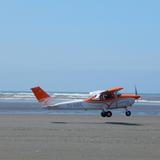
Applied some of the advice , shorter radius.
was full power but 20 degrees of flaps, not full flaps, practice practice practice.
Its an important tool to have specially in Idaho.
was full power but 20 degrees of flaps, not full flaps, practice practice practice.
Its an important tool to have specially in Idaho.
Wed Aug 17, 2016 6:24 pm
Re: Canyon turn
EZ, ya sure maybe we are in a narrower canyon. So let's say we are, and the clouds have us pushed down or rising terrain has us at Vx trying to out climb it. Neither of these cases allows us to do a hammerhead. If we have enough speed and elevation change to pull off a hammerhead, there's a a pretty good chance that we could out climb the canyon walls.
So sure your theory could take place, in a very narrow canyon that has a sudden dead end. Even then, to have to room and speed to pull off a hammerhead perfectly are very very slim...
So sure your theory could take place, in a very narrow canyon that has a sudden dead end. Even then, to have to room and speed to pull off a hammerhead perfectly are very very slim...
Wed Aug 17, 2016 9:08 pm
Re: Canyon turn
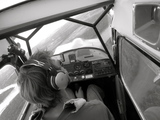
Motoadve,
I think that one is very good. Allowing the nose to go down turned the stall horn off. As Rob has pointed out, we need to consider and manage all energy available. Using a zoom climb, at full power, to slow down would have been more energy efficient than using flaps only to slow down. With just enough pitch up to slow down and not even turn the horn on, you would have been slow enough. And if the horn is going to come on anyway, why cause that with a level bank. Why not cause that with an altitude gaining zoom climb. Scary, yes. The trick is to initiate the turn out of the wings level zoom climb aggressively while allowing the nose to fall through. Not a stall hammerhead. We just have to use lots of rudder in the direction of the bank to get that nose down.
Again, try some em turns to bring the nose onto a section line you are about to cross in the desert. Once comfortable with that, go for the turn to a near target under a wing. The nearer the target, the greater the pitch up and zoom to slow and bank angle to engage and RUDDER required to get the nose on target before putting a wing into terrain. We have to get the wing level before pull up even if we are not on target. Lazy rudder will get you killed in this game.
The greater the bank, the greater will be the natural pitch down. The airplane knows what it is doing. Let it. Only in the very steep banks, the wing over but not hammerhead, will the nose tuck uncomfortably. Here the airplane is trying to return to cruise too fast. Once the nose is well down, we can hold a bit of back pressure.
Keep the sticky side down. Well kinda.
Contact
I think that one is very good. Allowing the nose to go down turned the stall horn off. As Rob has pointed out, we need to consider and manage all energy available. Using a zoom climb, at full power, to slow down would have been more energy efficient than using flaps only to slow down. With just enough pitch up to slow down and not even turn the horn on, you would have been slow enough. And if the horn is going to come on anyway, why cause that with a level bank. Why not cause that with an altitude gaining zoom climb. Scary, yes. The trick is to initiate the turn out of the wings level zoom climb aggressively while allowing the nose to fall through. Not a stall hammerhead. We just have to use lots of rudder in the direction of the bank to get that nose down.
Again, try some em turns to bring the nose onto a section line you are about to cross in the desert. Once comfortable with that, go for the turn to a near target under a wing. The nearer the target, the greater the pitch up and zoom to slow and bank angle to engage and RUDDER required to get the nose on target before putting a wing into terrain. We have to get the wing level before pull up even if we are not on target. Lazy rudder will get you killed in this game.
The greater the bank, the greater will be the natural pitch down. The airplane knows what it is doing. Let it. Only in the very steep banks, the wing over but not hammerhead, will the nose tuck uncomfortably. Here the airplane is trying to return to cruise too fast. Once the nose is well down, we can hold a bit of back pressure.
Keep the sticky side down. Well kinda.
Contact
- contactflying offline
- Posts: 4972
- Joined: Wed Apr 03, 2013 7:36 pm
- Location: Aurora, Missouri 2H2
Download my free "https://tinyurl.com/Safe-Maneuvering" e-book.
Thu Aug 18, 2016 12:44 am
Re: Canyon turn
contactflying wrote:Scary, yes. The trick is to initiate the turn out of the wings level zoom climb aggressively while allowing the nose to fall through. Not a stall hammerhead. We just have to use lots of rudder in the direction of the bank to get that nose down.
Contact
Can we agree that it is OK to skid this turn as the bank increases and the nose comes down?
DISPLAY OPTIONS
Who is online
Users browsing this forum: No registered users and 5 guests
Latest Features
-
-
Featured Bush Planes
As one of the undisputed legends of bush flying, the Cessna 180 hauls a…Read More -
Aircraft Ownership and Maintenance
9 modification mistakes aircraft owners make when trying to "bush out" their birds—why some…Read More -
Live to Tell
A Minnesota pilot is surprised to learn that the sudden asymmetric drag of an…Read More




Latest Knowledge Base
-
Destinations
Canada offers some of the most spectacular backcountry flying on the continent. Here's what you need to know before you go.Read More -
Safety and Survival
Hope that you never have to use your survival vest but knowing you have it and knowing how to use…Read More -
Destinations
A regional guide with ideas for winter camping destinations in California, Nevada, New Mexico, and Arizona.Read More -
Aircraft
Finding an affordable aircraft that can handle the backcountry for $80K or less? A challenge for sure, but with the…Read More



