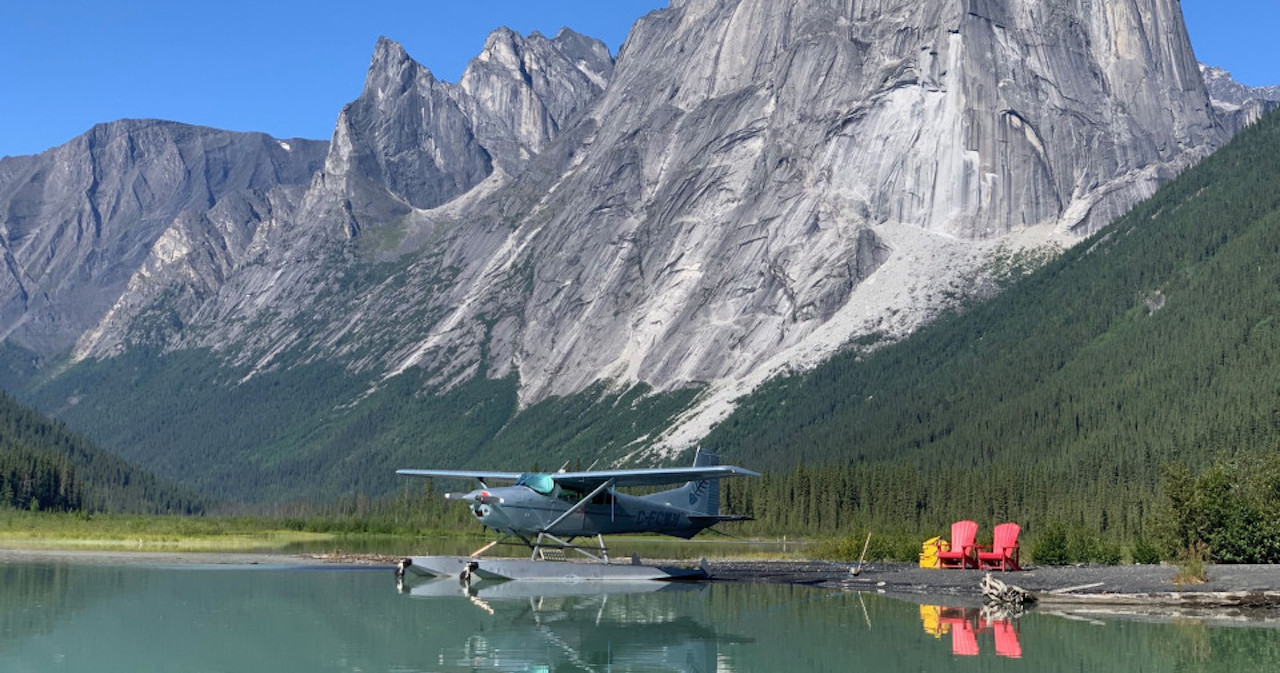
Canyon turn
Thu Aug 18, 2016 12:58 am
Re: Canyon turn
The thing I don't like about attempting a hammerhead is you probably don't have any attitude reference in that situation...certainly no horizon. The nice thing about the energy management turn is that it is a turn to target...meaning you have something to anchor your attitude reference to.
Thu Aug 18, 2016 1:16 am
Re: Canyon turn
Either way, you need the energy to pull it off, and if you don't have that...slow and level is all you have left.
Thu Aug 18, 2016 1:19 am
Re: Canyon turn
CFOT wrote:contactflying wrote:Scary, yes. The trick is to initiate the turn out of the wings level zoom climb aggressively while allowing the nose to fall through. Not a stall hammerhead. We just have to use lots of rudder in the direction of the bank to get that nose down.
Contact
Can we agree that it is OK to skid this turn as the bank increases and the nose comes down?
Thu Aug 18, 2016 7:59 am
Re: Canyon turn
CFOT,
You are absolutely right. Once we (actually the airplane does this) have the nose down, we can do anything we wish with the rudder. We use the side slip for crosswind landing, we use the forward slip to lose altitude on approach, and we can use the skid to bring the nose onto target. In my experience with many Ag students, it is not a getting the nose around with skid problem, it is a not using enough rudder problem. Too many who have so few iterations of steep turns, especially steep energy management turns, do not use enough rudder in the direction of the turn. The result is a lazy rudder, nose hanging up, inefficient, dangerous, slow rate of turn.
Another phenomenon, that has puzzled me all my life, is the reluctance of pilots to just let the nose go down in any and all turns like it wants to do. It is amazing how little faith the aviation community has in their aircraft. The design of the airplane is to fly. Only the pilot in command can dictate otherwise.
Kevin will determine how much time, other than filming, we have on Monday and Tuesday in Reno after the races. I hope we have time to fly with several pilots. Energy management, so simple and so easy, and so natural will be a central part of every flight with every pilot we have time to work with. It is that important. And for ol Contact, it is muscle memory and the only way he knows how to turn.
Energy management in the pattern? Of course, once we have made a low 360 to be sure we are alone. All steep turns? No. Steep turns are only necessary for a turn to a near target. A quarter mile distant is beginning to be a far target. Once energy management is the default turn, upsets are a non event. Why has energy management been taboo so long in this very dangerous maneuvering flight phase that pilots encounter twice on every flight?
Thanks for running the video training event at Reno. I am not the most organized person, pilot or otherwise, in the room. Just ask my wife.
Contact
You are absolutely right. Once we (actually the airplane does this) have the nose down, we can do anything we wish with the rudder. We use the side slip for crosswind landing, we use the forward slip to lose altitude on approach, and we can use the skid to bring the nose onto target. In my experience with many Ag students, it is not a getting the nose around with skid problem, it is a not using enough rudder problem. Too many who have so few iterations of steep turns, especially steep energy management turns, do not use enough rudder in the direction of the turn. The result is a lazy rudder, nose hanging up, inefficient, dangerous, slow rate of turn.
Another phenomenon, that has puzzled me all my life, is the reluctance of pilots to just let the nose go down in any and all turns like it wants to do. It is amazing how little faith the aviation community has in their aircraft. The design of the airplane is to fly. Only the pilot in command can dictate otherwise.
Kevin will determine how much time, other than filming, we have on Monday and Tuesday in Reno after the races. I hope we have time to fly with several pilots. Energy management, so simple and so easy, and so natural will be a central part of every flight with every pilot we have time to work with. It is that important. And for ol Contact, it is muscle memory and the only way he knows how to turn.
Energy management in the pattern? Of course, once we have made a low 360 to be sure we are alone. All steep turns? No. Steep turns are only necessary for a turn to a near target. A quarter mile distant is beginning to be a far target. Once energy management is the default turn, upsets are a non event. Why has energy management been taboo so long in this very dangerous maneuvering flight phase that pilots encounter twice on every flight?
Thanks for running the video training event at Reno. I am not the most organized person, pilot or otherwise, in the room. Just ask my wife.
Contact
- contactflying offline
- Posts: 4972
- Joined: Wed Apr 03, 2013 7:36 pm
- Location: Aurora, Missouri 2H2
Download my free "https://tinyurl.com/Safe-Maneuvering" e-book.
Mon Aug 22, 2016 9:25 pm
Re: Canyon turn
One final note on wind management, so wisely brought up by blackrock. We should be flying up the downwind ridge of a valley going up to the pass only with ridge lift help. We don't know what is coming off the lee side of that upwind ridge forming the other side of the valley, but we should expect downdraft. Any turn not steep enough to make mid valley will likely put us into around 1,000 fpm downdraft over toward the other ridge given blackrock's 25 kt wind.
I expect this is what happened with the Cherokee west of Denver. I expect many indoctrinated in level turns to maintain altitude at all cost find themselves there. Our safer instructors train pilots not to be there. Once there, for whatever reason, the level turn to maintain altitude is simply not going to work in normal heat of day summer conditions.
That is why I have always taught worst case scenario orientation and energy management maneuvering flight training. I know I set a poor example to train for survival. I am willing to absorb criticism to train for survival. And I don't ask any pilot to do anything he is uncomfortable doing.
I expect this is what happened with the Cherokee west of Denver. I expect many indoctrinated in level turns to maintain altitude at all cost find themselves there. Our safer instructors train pilots not to be there. Once there, for whatever reason, the level turn to maintain altitude is simply not going to work in normal heat of day summer conditions.
That is why I have always taught worst case scenario orientation and energy management maneuvering flight training. I know I set a poor example to train for survival. I am willing to absorb criticism to train for survival. And I don't ask any pilot to do anything he is uncomfortable doing.
- contactflying offline
- Posts: 4972
- Joined: Wed Apr 03, 2013 7:36 pm
- Location: Aurora, Missouri 2H2
Download my free "https://tinyurl.com/Safe-Maneuvering" e-book.
Mon Jun 05, 2017 4:08 pm
Re: Canyon turn
After my second trip to Idaho, Im convinced you better be proficient at doing canyon turns, if you are flying on your own trying to find some strips, its very easy to get into the wrong canyon.
I know some can do it tighter than me,but after lots of practice Im consistent and comfortable doing them,this is what I wanted to achieve.
I know some can do it tighter than me,but after lots of practice Im consistent and comfortable doing them,this is what I wanted to achieve.
Mon Jun 05, 2017 4:35 pm
Re: Canyon turn
I'd say use as much bank as is necessary for the available clearance from terrain. No need to over-steepen the turn, even if you're not loading the wing, if you're going to clear the far side of the canyon by 500 feet. Nice video though.

Mon Jun 05, 2017 5:16 pm
Re: Canyon turn
AoA is a great tool for such a turn. It forces you to drop the nose to keep the AoA constant.
Do you use the blue dot for best turn, Moto?
Do you use the blue dot for best turn, Moto?
- CamTom12 offline

- Posts: 3705
- Joined: Sun Jul 08, 2012 1:08 pm
- Location: Huntsville
- FindMeSpot URL: https://share.delorme.com/camtom12
- Aircraft: Ruppe Racer
Experimental Pacer
home hand jam "wizard"
Mon Jun 05, 2017 5:19 pm
Re: Canyon turn
Very nice and pleasant canyon turns. And absolutely correct with the banking. The target is the stream at the bottom of the canyon. The target is not close to the other side of the canyon where the worst of the downdrafts and the irregular terrain could cause us to have to pull up suddenly.
This is not acrobatics. Neither is it the place to avoid banking enough to be sure to get around before contact with the upwind wall of the canyon. This is also why using lots of rudder, even at the risk of skidding, is appropriate. Skidding is not a problem with the nose well down. Slipping, allowing the nose to hang up and come around slowly, is deadly.
Again, very good energy management turns. Remember, at higher DA, we are not able to bring the nose up so much to slow down and gain altitude. We may be near ceiling and already near Vy just to maintain altitude. The turn is the same otherwise. Just turn at enough bank to nail the bottom of the canyon and allow the nose to go down.
This is not acrobatics. Neither is it the place to avoid banking enough to be sure to get around before contact with the upwind wall of the canyon. This is also why using lots of rudder, even at the risk of skidding, is appropriate. Skidding is not a problem with the nose well down. Slipping, allowing the nose to hang up and come around slowly, is deadly.
Again, very good energy management turns. Remember, at higher DA, we are not able to bring the nose up so much to slow down and gain altitude. We may be near ceiling and already near Vy just to maintain altitude. The turn is the same otherwise. Just turn at enough bank to nail the bottom of the canyon and allow the nose to go down.
- contactflying offline
- Posts: 4972
- Joined: Wed Apr 03, 2013 7:36 pm
- Location: Aurora, Missouri 2H2
Download my free "https://tinyurl.com/Safe-Maneuvering" e-book.
Mon Jun 05, 2017 5:41 pm
Re: Canyon turn
CamTom12 wrote:AoA is a great tool for such a turn. It forces you to drop the nose to keep the AoA constant.
Do you use the blue dot for best turn, Moto?
Blue dot for this turn I think is too slow, and will set the stall warning off,I had 2 yellows so some lift is available.
Mon Jun 05, 2017 5:55 pm
Re: Canyon turn
I have no experience with the indicator, Cam, but have to believe allowing the nose to just go down as designed to do is safer. And an instrument based control movement requires three steps: look, interpret, do. Contact flying requires only look and do. Especially when the airplane will do most of it by itself naturally.
- contactflying offline
- Posts: 4972
- Joined: Wed Apr 03, 2013 7:36 pm
- Location: Aurora, Missouri 2H2
Download my free "https://tinyurl.com/Safe-Maneuvering" e-book.
Mon Jun 05, 2017 5:57 pm
Re: Canyon turn
contactflying wrote:I have no experience with the indicator, Cam, but have to believe allowing the nose to just go down as designed to do is safer. And an instrument based control movement requires three steps: look, interpret, do. Contact flying requires only look and do. Especially when the airplane will do most of it by itself naturally.
I don't think you're wrong in feeling out a 1g turn. Proprioceptive is a pretty powerful indicator. What I was getting at is the AoA indicator shows what you're talking about - allowing the nose to drop allows a steep turn which gives a shorter radius without fear of stalling the wing.
- CamTom12 offline
- Posts: 3705
- Joined: Sun Jul 08, 2012 1:08 pm
- Location: Huntsville
- FindMeSpot URL: https://share.delorme.com/camtom12
- Aircraft: Ruppe Racer
Experimental Pacer
home hand jam "wizard"
Mon Jun 05, 2017 6:03 pm
Re: Canyon turn
You are right, Cam. I'm used to airspeed indicator lag. Thanks for pointing that out.
- contactflying offline
- Posts: 4972
- Joined: Wed Apr 03, 2013 7:36 pm
- Location: Aurora, Missouri 2H2
Download my free "https://tinyurl.com/Safe-Maneuvering" e-book.
Tue Jun 06, 2017 8:36 am
Re: Canyon turn
Most important determinate of turn radius is speed. The slower the tighter at any given angle of bank.
Stall speed is related to angle of bank.
So, slowest safe speed (I use 60 MPH) , partial flaps if called for (I use 24*) , reasonable but not extreme bank angle (I use 45*) , and allow altitude loss if terrain permits. This lowers AOA and further increases stall speed.
Stall speed is related to angle of bank.
So, slowest safe speed (I use 60 MPH) , partial flaps if called for (I use 24*) , reasonable but not extreme bank angle (I use 45*) , and allow altitude loss if terrain permits. This lowers AOA and further increases stall speed.
- Mountain Doctor offline
- Posts: 641
- Joined: Fri May 01, 2015 3:33 pm
- Location: Richland
- Aircraft: Maule MXT-7 180A
Tue Jun 06, 2017 9:12 am
Re: Canyon turn
Excellent point, Mountain Doctor, about the slower we go the tighter we turn at a given bank. Having flown really low powered airplanes on downwind ridges in valley systems up to high passes, I have found the need to be close to the ridge to get the best ridge lift. When very close to terrain, I am uncomfortable with anything less than the most kinetic energy I can attain from all sources. Cruise airspeed at zero flap can easily be exchanged for altitude while slowing to 60 and flaps, if you like. That needs to be done wings level to prevent the greater load factor of turning with back pressure on the stick. In the turn, now higher and at 60, we can allow the nose to go down as much as the airplane is comfortable with creating only 1g in the turn.
- contactflying offline
- Posts: 4972
- Joined: Wed Apr 03, 2013 7:36 pm
- Location: Aurora, Missouri 2H2
Download my free "https://tinyurl.com/Safe-Maneuvering" e-book.
Tue Jun 06, 2017 9:27 am
Re: Canyon turn
I know it is a hard truth, in the aviation community, but the angle of bank is of no concern, in the energy management turn, except for the important concern with not hitting any terrain and avoiding downdrafts under the upwind ridge of the valley system running up to the pass.
The apparent need for the canyon turn has ended the objective of making the pass on this run.
Turn around (safely) don't drown.
The apparent need for the canyon turn has ended the objective of making the pass on this run.
Turn around (safely) don't drown.
- contactflying offline
- Posts: 4972
- Joined: Wed Apr 03, 2013 7:36 pm
- Location: Aurora, Missouri 2H2
Download my free "https://tinyurl.com/Safe-Maneuvering" e-book.
Tue Jun 06, 2017 10:55 am
Re: Canyon turn
I rarely use any flaps, or at most 10 (first notch), in canyon turns. I've never had to make such a tight turn that I needed to drop the nose to unload the wing, other than in practice, and I rarely use more than a 45 degree bank. By slowing to 80-85 mph, it's amazing how tight a radius the turn can be.
FWIW, that puts the needle of my AoA indicator about in the middle of the yellow, which coincides with Moto's 2 yellows (different style of indicator), so well above stall, which in my airplane with 10 flaps occurs with the needle a bit into the red. By having the AoA indicator on the top of the panel, it's in peripheral vision, so there's no need to look for it, nor does it take any interpretation: green is outstanding, yellow is be careful, and red is no-no!
Cary
FWIW, that puts the needle of my AoA indicator about in the middle of the yellow, which coincides with Moto's 2 yellows (different style of indicator), so well above stall, which in my airplane with 10 flaps occurs with the needle a bit into the red. By having the AoA indicator on the top of the panel, it's in peripheral vision, so there's no need to look for it, nor does it take any interpretation: green is outstanding, yellow is be careful, and red is no-no!
Cary
"I have slipped the surly bonds of earth..., put out my hand and touched the face of God." J.G. Magee
Tue Jun 06, 2017 1:00 pm
Re: Canyon turn
I recall several have previously observed that the goal in canyon flying is to avoid having to do the emergency procedure called a 'canyon turn'. That's my goal too, and so far I've not had to use that maneuver in a clutch. A few years ago a C206 hauling a wilderness crew in to a back country strip made a wrong turn in the mountains of MT. I'm sure many on forum recall the resulting accident because the coroner declared all aboard dead, with at least two pax completely consumed in the post crash fire. A couple of days later the two missing persons flagged down a truck about 10 miles or so from the crash site. In that accident the pilot wasn't familiar with the route. Stuff happens, it's easy to become disoriented in poor vis where canyons take on a similar look. The full blown 'Canyon Turn' energy management maneuver is one I practice. Level,turns that are no flap, medium bank to me are a 'normal' maneuver I use before I screw up and find myself beyond Sparky's "point of no return".
- PapernScissors offline
- Posts: 419
- Joined: Sun Mar 06, 2016 8:49 pm
- Location: Spokane
- Aircraft: Cessna 172
Tue Jun 06, 2017 1:51 pm
Re: Canyon turn
Like stall practice mitigates stall fear, energy management turn practice mitigates canyon turn or can't make the pass fear.
Unlike stall proficiency, energy management turn proficiency is useful at any AGL altitude.
Unlike stall proficiency, energy management turn proficiency is useful at any AGL altitude.
- contactflying offline
- Posts: 4972
- Joined: Wed Apr 03, 2013 7:36 pm
- Location: Aurora, Missouri 2H2
Download my free "https://tinyurl.com/Safe-Maneuvering" e-book.
Tue Jun 06, 2017 2:55 pm
Re: Canyon turn
Excess engine thrust for climb is so puny up against God
Fact of facts.
Fact of facts.
- Mountain Doctor offline
- Posts: 641
- Joined: Fri May 01, 2015 3:33 pm
- Location: Richland
- Aircraft: Maule MXT-7 180A
DISPLAY OPTIONS
Who is online
Users browsing this forum: No registered users and 1 guest
Latest Features
-
-
Featured Bush Planes
As one of the undisputed legends of bush flying, the Cessna 180 hauls a…Read More -
Aircraft Ownership and Maintenance
9 modification mistakes aircraft owners make when trying to "bush out" their birds—why some…Read More -
Live to Tell
A Minnesota pilot is surprised to learn that the sudden asymmetric drag of an…Read More


Latest Knowledge Base
-
Destinations
Canada offers some of the most spectacular backcountry flying on the continent. Here's what you need to know before you go.Read More -
Safety and Survival
Hope that you never have to use your survival vest but knowing you have it and knowing how to use…Read More -
Destinations
A regional guide with ideas for winter camping destinations in California, Nevada, New Mexico, and Arizona.Read More -
Aircraft
Finding an affordable aircraft that can handle the backcountry for $80K or less? A challenge for sure, but with the…Read More