Backcountry Pilot • Cessna 170/172 Flaps for Takeoff

Cessna 170/172 Flaps for Takeoff

Share tips, techniques, or anything else related to flying.
66 postsPage 4 of 41, 2, 3, 4

Re: Cessna 170/172 Flaps for Takeoff

mtv wrote:
Levi wrote:MTV,

This question is for you.

I was practicing for the short take off contest last night and I am guessing that you have run into this before operating seaplanes.

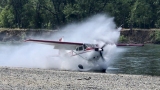
With 35 degrees of flaps(approximately) the plane would get up on step and immediately begin to turn hard to the left even with full right rudder.

It doesn't do this nearly as bad with 20 degrees of flaps. I understand P-factor, but is it really this much worse just after getting on step with nearly full flaps?

Should I be going from 20 degrees to full flaps just prior to rotation to try to lessen this effect? (keep in mind the electric flaps are rather slow)

Also, have you quickly pushed the yoke forward to submerge more of the floats just before rotating? (Some people will call this dangerous I am sure)

-Levi


Levi,

Interesting. Only plane I ever met that would do that was a Beaver on 4580 floats, but even that plane was fine except in a slight left crosswind.

First: You said a C 172 with O 320, but what make and model floats? What model 172, ie: straight tail/swept tail, flat back/omni vision, ventral fin or not?

Second: Have you checked the float rigging PRECISELY? Send me a PM with a phone number if you don't know how to do this. It's not that hard.

Third: Do your flaps deploy symmetrically? As in, do they both deploy equally? A protracted can answer that question.

Fourth: Are your water rudders rigged absolutely straight aligned with the keels when in the UP position? No offense, but you are taking off with the rudders up, right?

I'll give this a bit more thought and if I think of anything else, I'll let you know.

I suspect that what's going on is that you're blanking out the rudder with that much flap deployed, and it may be that you'll just have to use a little less flap.....maybe.

In any case, verifying all the above will help your takeoff distance if any of this is off.

MTV


MTV,

I was able to play around tonight with the short take off technique. I was real light on fuel and it was dead calm and about 70-75 degrees outside.

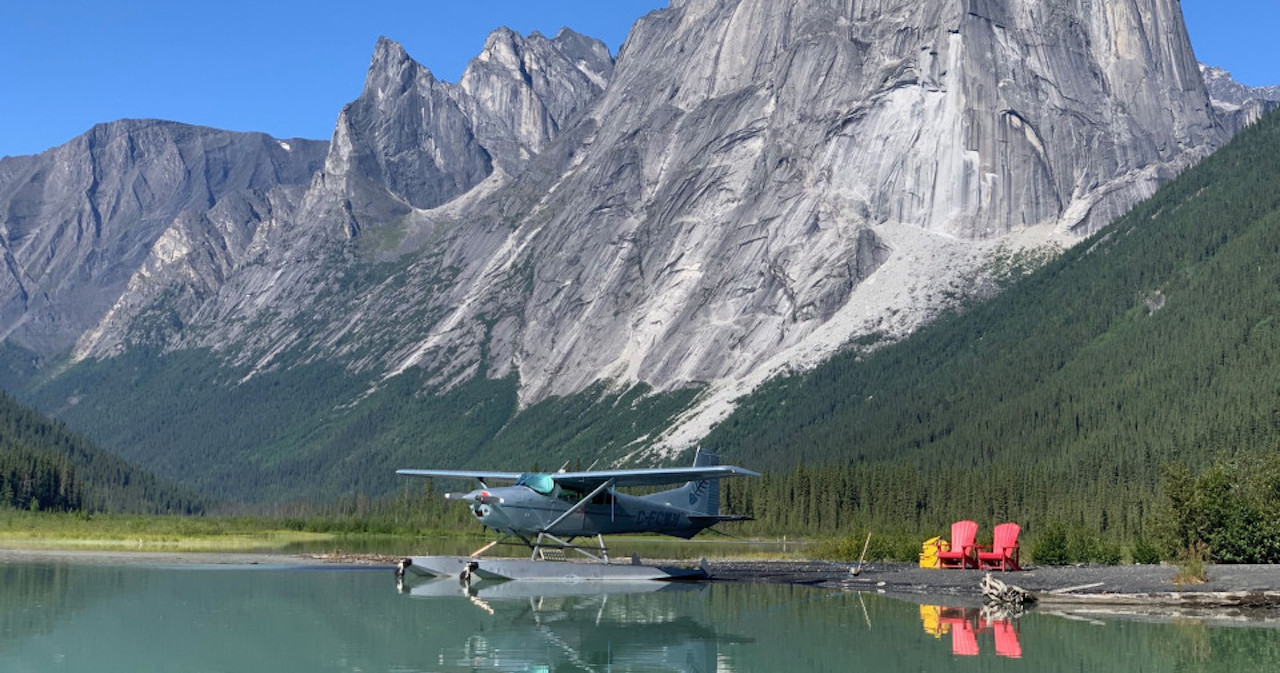
The plane is a 1968 172 I, with a 150 hp O-320 on EDO 2000 floats, and I think the W+B has it a little over 1300lbs. I have to believe the floats were rigged correctly as the A&P mechanic from PK Floats and I rigged these floats this spring in addition to sealing the floats and rebuilding and re-rigging the water rudder assemblies.

It is funny you mention the left crosswind, because I believe that was what was causing my problems the other night. Because tonight when it was calm it, it did not have the tendency to veer hard to the left. The flaps must have been blanketing the rudder enough combined with the slight cross wind the other night.

I think I will begin practicing with 20 degrees until on step, then going to full flaps before ripping it off the water.

Do you have and tips for getting on step quicker. I see the 180/185 guys moving the yoke back and forth, making the plane porpoise onto step. Does this work do you think?

Thank you for the advise
-Levi
Levi offline
User avatar
Posts: 66
Joined: Thu Oct 06, 2011 10:21 am
Location: Maine

Re: Cessna 170/172 Flaps for Takeoff

I seriously doubt a 68 172 on floats weighs a little over 1300lbs. If that's what the W&B says... It's wrong.
robw56 offline
User avatar
Posts: 3263
Joined: Thu Jan 18, 2007 9:30 pm
Location: Ward
Aircraft: 1957 C-180A

Re: Cessna 170/172 Flaps for Takeoff

Levi wrote:The International Seaplane Fly-in in Greenville, ME starts 3 weeks from today. During this fly-in there are various contests, spot landing, water bombing, step taxi, bush pilot canoe race and the short take off contest. The pilots that fly in the short take off contest take it very seriously. I have spent a lot of time discussing technique, power vs. weight, flap settings, different float models and modifications with my mechanic who happens to be the head judge of the contests during the fly-in. This will be my first year flying in the contests and I think my plane has the capability to do good in the short take off contest. I will have about 100 hours of flying floats this summer in my plane, quite a bit of that has been operating out of a small lake.

I would like your opinion on flap settings for this short take off contest. Keep in mind that the plane is a 1968 172 with a O-320 with electric flaps on EDO 2000 floats. It is very light as it is and I will pull out all the seats except mine, ditch the survival gear and waders and ropes on shore, and have the minimum 1 hour of fuel on board.

The guy who has taught me the most about flying on floats and skis, my mechanic, has recommended 35 degrees of flaps, get it on step and yard it off as soon as there is any sign of airspeed.

In practicing this I have found that I works but it has to be timed perfectly. If to slow on airspeed and it drags the heels of the floats and it wallows at a high angle of attack for a while before lifting off. Wait one second longer and it is fine. But there is hardly any air speed to work with once in the air and the under powered plane has a hard time building speed with this much flap.

Keep in mind the lake is at 1000' MSL and in September the air is cool and there is usually some wind.

Does this flap setting seem reasonable for a 150 hp 172? The 180/185 drivers pop the flap to the last notch ever time as they pull the yoke back to the stops during this contest. This works for them, they have the HP. I'm in a different category, thankfully. I will be going against 170's, 140's 172's and maybe a maule in the 125-179 HP category.

Maybe it is just a matter of getting a feel for the right airspeed? (The ASI is useless at this slow speed and my stall horn hasn't worked for the past 70 hours or so)

What do you guys think?


Well how did you do?
Tom offline
Posts: 791
Joined: Mon Mar 03, 2008 12:17 pm
Location: Loudon NH
Aircraft: PA-18 7EC C-172

Re: Cessna 170/172 Flaps for Takeoff

Yes, the 1300 pound weight might be on wheels, but definitely not floats.

In answer tipi your question about pumping the elevator to induce porpoising as a "technique" to get on the step quicker, consider this: As you pull the yoke back, you cause the heels of the floats to dig in, creating more drag. Then, you pump the yoke forward, forcing the bows of the floats to dig in, creating more drag. Repeat. How does creating more drag get you on the step quicker?

There are ADD type pilots. Some folks feel like if they're not doing SOMETHING every instant, the airplane can't function. In my experience, the airplane generally does pretty well by itself, guided perhaps by some SMOOTH inputs from the pilot.

Generally :D .

MTV
mtv offline
Knowledge Base Author
User avatar
Posts: 10514
Joined: Sat Feb 25, 2006 1:47 am
Location: Bozeman

Re: Cessna 170/172 Flaps for Takeoff

There wasn't a category for the old Skyhawk this year due to a lack of participation. Maybe next year. As for the empty weight, I may have been a little optimistic but I know it is light.
Levi offline
User avatar
Posts: 66
Joined: Thu Oct 06, 2011 10:21 am
Location: Maine

Re: Cessna 170/172 Flaps for Takeoff

Levi wrote:There wasn't a category for the old Skyhawk this year due to a lack of participation. Maybe next year. As for the empty weight, I may have been a little optimistic but I know it is light.


It would be a light 172 if it weighed 1300 empty on wheels.... :D

More like 1440 on floats. Maybe....or maybe you've been reading and acting on all these strip your plane threads.... 8) .

MTV
mtv offline
Knowledge Base Author
User avatar
Posts: 10514
Joined: Sat Feb 25, 2006 1:47 am
Location: Bozeman

DISPLAY OPTIONS

Previous
66 postsPage 4 of 41, 2, 3, 4

Who is online

Users browsing this forum: No registered users and 1 guest

Latest Features

Latest Knowledge Base